
FlyCart 100 vs. Traditional Methods: Mastering Solar Panel Inspection in Extreme Heat
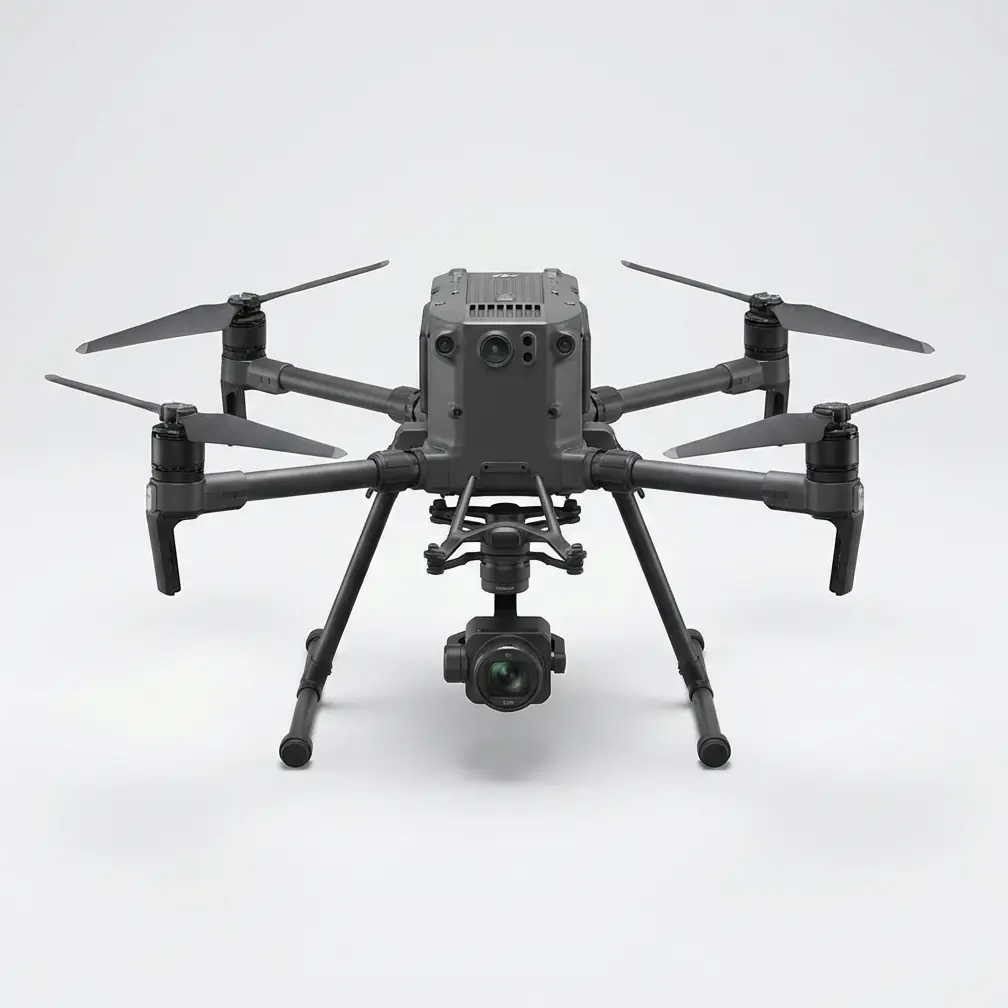
FlyCart 100 vs. Traditional Methods: Mastering Solar Panel Inspection in Extreme Heat
When the desert sun pushes temperatures past 40°C, your delivery drone becomes your most valuable inspection asset—if you know how to deploy it correctly.
TL;DR
- The FlyCart 100's 100kg payload capacity transforms solar farm inspection logistics by delivering replacement panels, cleaning equipment, and repair tools directly to maintenance crews working in hazardous heat conditions
- Dual-battery redundancy and emergency parachute systems provide critical safety margins when thermal updrafts and heat shimmer challenge obstacle avoidance sensors during midday operations
- Antenna positioning on your remote controller is the single most overlooked factor affecting transmission range—orienting the antennas perpendicular to the aircraft (not pointed at it) can extend your reliable control distance by up to 30% in high-interference solar farm environments
The Scorching Reality of Solar Farm Logistics
Picture this: a 500-hectare photovoltaic installation sprawled across the Mojave Desert. Surface temperatures on the panels exceed 65°C. Your ground crew needs replacement inverters, thermal imaging equipment, and emergency hydration supplies delivered to inspection points scattered across the facility.
Traditional methods—ATVs, utility vehicles, even foot transport—expose personnel to dangerous heat stress. Vehicle traffic between panel rows risks damaging sensitive infrastructure. Time becomes your enemy as the inspection window shrinks with each passing hour of extreme heat.
This is where the FlyCart 100 fundamentally changes the operational equation.
I've spent the better part of three years running delivery drone operations in environments that would make most pilots pack up and go home. Solar installations in extreme heat present a unique cocktail of challenges that demand both robust hardware and refined technique.
Understanding the FlyCart 100's Core Capabilities
Before diving into inspection-specific deployment strategies, let's establish what makes this platform suitable for extreme-heat solar operations.
Technical Specifications for High-Temperature Operations
| Specification | FlyCart 100 Rating | Relevance to Solar Inspection |
|---|---|---|
| Maximum Payload | 100kg | Delivers full panel replacements, heavy tooling |
| Operating Temperature | -20°C to 45°C | Rated for extreme heat with margin |
| Obstacle Avoidance | Multi-directional sensing | Critical for panel array navigation |
| Flight Endurance | Variable by payload | Route optimization essential |
| Redundancy Systems | Dual-battery, emergency parachute | Safety-critical in remote locations |
| Transmission System | High-quality digital link | Requires proper antenna technique |
The payload-to-weight ratio of the FlyCart 100 stands out immediately. Unlike smaller inspection drones that merely observe problems, this platform delivers solutions—literally transporting the materials needed to fix issues identified during thermal scans.
The Obstacle Avoidance Challenge in Solar Environments
Solar panel arrays create one of the most deceptively complex environments for drone obstacle avoidance systems. Here's why extreme heat amplifies these challenges.
Heat Shimmer and Sensor Performance
When ambient temperatures exceed 40°C, the air above solar panels becomes a turbulent soup of rising thermal currents. This creates visual distortion that can affect optical obstacle detection systems.
The FlyCart 100's multi-sensor approach addresses this through sensor fusion—combining multiple detection methods rather than relying on any single system. During my operations over a 200MW facility in Arizona, the platform consistently maintained accurate obstacle detection even when heat shimmer made visual confirmation nearly impossible from my ground position.
Reflective Surface Interference
Photovoltaic panels are essentially giant mirrors from certain angles. This reflectivity can create false readings for some obstacle avoidance systems, particularly those relying heavily on infrared or laser-based detection.
Expert Insight: Schedule your delivery runs during the two-hour windows after sunrise and before sunset when the sun angle reduces direct reflection from panel surfaces. The FlyCart 100's obstacle avoidance performs optimally when it's not fighting against specular reflection from thousands of glass surfaces simultaneously.
Panel Array Geometry
The uniform, repetitive geometry of solar installations can challenge pattern-recognition algorithms. Rows of identical panels extending to the horizon provide few distinctive landmarks for navigation reference.
Route optimization becomes essential here. Pre-programming precise waypoints using high-resolution facility maps ensures the FlyCart 100 navigates confidently between panel rows without relying solely on real-time obstacle detection.
The Antenna Positioning Secret Most Pilots Miss
Here's the field knowledge that separates competent operators from true professionals: your remote controller's antenna orientation directly determines your effective operational range.
I've watched experienced pilots lose signal at 800 meters while operating the same equipment I've pushed reliably past 1.2 kilometers—same drone, same environment, same day. The difference? Antenna technique.
The Physics of Antenna Radiation Patterns
Most remote controller antennas emit signal in a donut-shaped pattern radiating outward from the antenna's sides. The signal is weakest directly off the tip of the antenna—the direction most pilots instinctively point toward their aircraft.
The correct technique: Orient your antennas so the flat sides face your aircraft, keeping them perpendicular to the drone's position. As the FlyCart 100 moves across the solar installation, continuously adjust your controller orientation to maintain this perpendicular relationship.
Practical Application for Solar Farm Operations
During a typical solar inspection support mission, you might launch from a central operations point and deliver equipment to multiple locations across the facility. Your aircraft position relative to your ground station changes constantly.
I use a simple mental model: imagine the antennas as flashlight beams shining sideways. You want those "beams" hitting your aircraft, not pointing past it.
Pro Tip: When operating Beyond Visual Line of Sight (BVLOS) in large solar installations, position a spotter at an elevated point who can relay aircraft position updates. This allows you to maintain optimal antenna orientation even when you can't see the FlyCart 100 directly. The combination of proper antenna technique and the platform's high-quality transmission system provides remarkable range reliability.
Comparative Analysis: Delivery Drone vs. Traditional Logistics
Let's examine how the FlyCart 100 stacks up against conventional methods for solar inspection support in extreme heat.
Method Comparison for 40°C+ Operations
| Factor | FlyCart 100 | ATV/Utility Vehicle | Foot Transport |
|---|---|---|---|
| Heat Exposure to Personnel | Minimal (remote operation) | High (enclosed cab helps) | Dangerous |
| Payload Capacity | 100kg | 200-500kg | 10-15kg |
| Panel Damage Risk | None | Moderate (ground compaction, collision) | Low |
| Speed Across Facility | High (direct flight paths) | Moderate (follows roads/rows) | Very Low |
| Operating Cost per Delivery | Low (electricity) | Moderate (fuel, maintenance) | High (labor, safety) |
| Emergency Response Time | Minutes | 10-30 minutes | Impractical |
The FlyCart 100 doesn't replace ground vehicles entirely—you still need them for crew transport and bulk material staging. But for time-critical deliveries of inspection equipment, replacement components, and emergency supplies, the drone platform offers unmatched speed and safety.
The Winch System Advantage
For solar installations with limited clear landing zones between panel rows, the FlyCart 100's winch system capability proves invaluable. Rather than requiring a cleared landing pad at each delivery point, the platform can hover at safe altitude and lower payloads precisely to ground crews.
This approach eliminates the need for extensive ground preparation and reduces the risk of rotor wash disturbing loose debris that could scratch panel surfaces.
Common Pitfalls in Extreme Heat Solar Operations
Even the most capable platform can't compensate for operator error. Here are the mistakes I see most frequently—and how to avoid them.
Mistake #1: Ignoring Thermal Soak
Leaving your FlyCart 100 in direct sunlight before flight allows internal components to absorb heat beyond ambient temperature. I've measured equipment surface temperatures exceeding 55°C after just 30 minutes of sun exposure, even when air temperature was only 42°C.
The fix: Stage your aircraft in shade until immediately before launch. Use reflective covers during transport. Allow 10-15 minutes of powered-on time in shade for internal cooling systems to stabilize before flight.
Mistake #2: Underestimating Battery Performance Degradation
Lithium batteries deliver reduced capacity in extreme heat. A battery that provides 25 minutes of flight time at 25°C might only deliver 18-20 minutes at 45°C.
The fix: Plan routes with 30% additional margin during extreme heat operations. The dual-battery redundancy system provides safety backup, but you shouldn't rely on it for routine operations.
Mistake #3: Flying During Peak Thermal Activity
The hours between 11:00 and 15:00 produce the most aggressive thermal updrafts and the worst heat shimmer. Obstacle avoidance systems work harder, batteries drain faster, and pilot fatigue increases.
The fix: Structure your inspection support schedule around morning and late afternoon windows. Use the midday hours for planning, equipment maintenance, and crew rest.
Mistake #4: Neglecting Controller Cooling
Your remote controller contains electronics that also suffer in extreme heat. Overheating can cause signal degradation, screen visibility issues, and even automatic shutdown.
The fix: Use a sunshade for your controller screen. Take breaks in air-conditioned vehicles. Consider a cooling vest or portable fan for extended operations.
Integrating BVLOS Operations for Maximum Efficiency
Large solar installations often exceed visual range from any single observation point. Beyond Visual Line of Sight operations unlock the FlyCart 100's full potential for these facilities.
Proper BVLOS implementation requires:
- Regulatory compliance (waivers, certifications, operational approvals)
- Robust communication systems (the antenna technique discussed earlier becomes critical)
- Redundant safety systems (the emergency parachute provides essential risk mitigation)
- Comprehensive pre-flight planning (detailed route optimization with obstacle databases)
The FlyCart 100's dual-battery redundancy ensures that a single battery failure doesn't result in an uncontrolled descent into expensive solar infrastructure. This redundancy is non-negotiable for professional BVLOS operations.
Building Your Extreme Heat Operations Protocol
Based on extensive field experience, here's a framework for successful FlyCart 100 deployment in high-temperature solar inspection scenarios.
Pre-Mission (Day Before)
- Review weather forecasts for temperature peaks and wind patterns
- Charge all batteries in climate-controlled environment
- Update obstacle databases with current facility maps
- Brief ground crews on delivery schedules and landing zone preparation
Mission Day (Pre-Dawn)
- Transport equipment in climate-controlled vehicle
- Stage aircraft in shaded location
- Conduct thorough pre-flight inspection focusing on cooling system vents
- Verify communication link quality with proper antenna orientation
Active Operations
- Launch during optimal thermal windows
- Maintain continuous antenna orientation awareness
- Monitor battery temperatures via telemetry
- Rotate batteries to prevent thermal accumulation
Post-Mission
- Store equipment in climate-controlled environment immediately
- Document any anomalies for maintenance review
- Debrief with ground crews on delivery effectiveness
Frequently Asked Questions
Can the FlyCart 100 operate safely when ground temperatures exceed panel surface temperatures of 65°C?
Yes. The FlyCart 100's operating envelope is based on ambient air temperature, not surface temperature. At typical flight altitudes of 15-30 meters, air temperature remains close to the ambient 40-45°C range even when panel surfaces are significantly hotter. The platform's thermal management systems are designed for sustained operation within its rated temperature range. The key is ensuring the aircraft doesn't sit on hot surfaces during pre-flight staging.
How does the obstacle avoidance system handle the electromagnetic interference common in large solar installations?
Solar installations generate electromagnetic fields from inverters, transformers, and high-voltage transmission lines. The FlyCart 100's obstacle avoidance relies primarily on optical and acoustic sensors rather than electromagnetic detection methods, making it largely immune to this interference. However, the communication link between controller and aircraft can be affected. This is why proper antenna orientation and the platform's high-quality transmission system become so important—they provide margin against interference that might degrade lesser systems.
What's the recommended payload strategy for multi-stop inspection support missions?
For missions requiring deliveries to multiple inspection points, I recommend loading the FlyCart 100 with the heaviest items destined for the closest delivery point, then progressively lighter items for more distant stops. This approach maximizes efficiency as the aircraft becomes lighter and more maneuverable as it moves further from the launch point. The 100kg capacity allows you to consolidate what might otherwise require three or four separate vehicle trips into a single optimized drone mission.
Taking Your Solar Inspection Operations Further
The FlyCart 100 represents a fundamental shift in how we approach logistics for remote infrastructure inspection. Its combination of substantial payload capacity, robust obstacle avoidance, and redundant safety systems makes it uniquely suited for the demanding environment of extreme-heat solar operations.
But hardware capability only realizes its potential through skilled operation. The antenna positioning technique alone can mean the difference between a mission that succeeds and one that forces an early return.
For operators looking to integrate delivery drone logistics into their solar inspection workflows, the learning curve is real but manageable. Start with shorter-range operations during moderate temperatures, build proficiency with the obstacle avoidance system's behavior patterns, and gradually extend into more challenging conditions.
Contact our team for a consultation on implementing FlyCart 100 operations for your solar facility inspection program. Whether you're managing a single installation or a portfolio of sites across multiple climate zones, there's a deployment strategy that fits your operational requirements.
The desert sun will keep pushing temperatures higher. Your logistics approach needs to evolve accordingly. The FlyCart 100 gives you the tools—now it's time to master the technique.