
FlyCart 100 Mountain Search & Rescue: Mastering Payload Optimization for Post-Rain Peak Operations
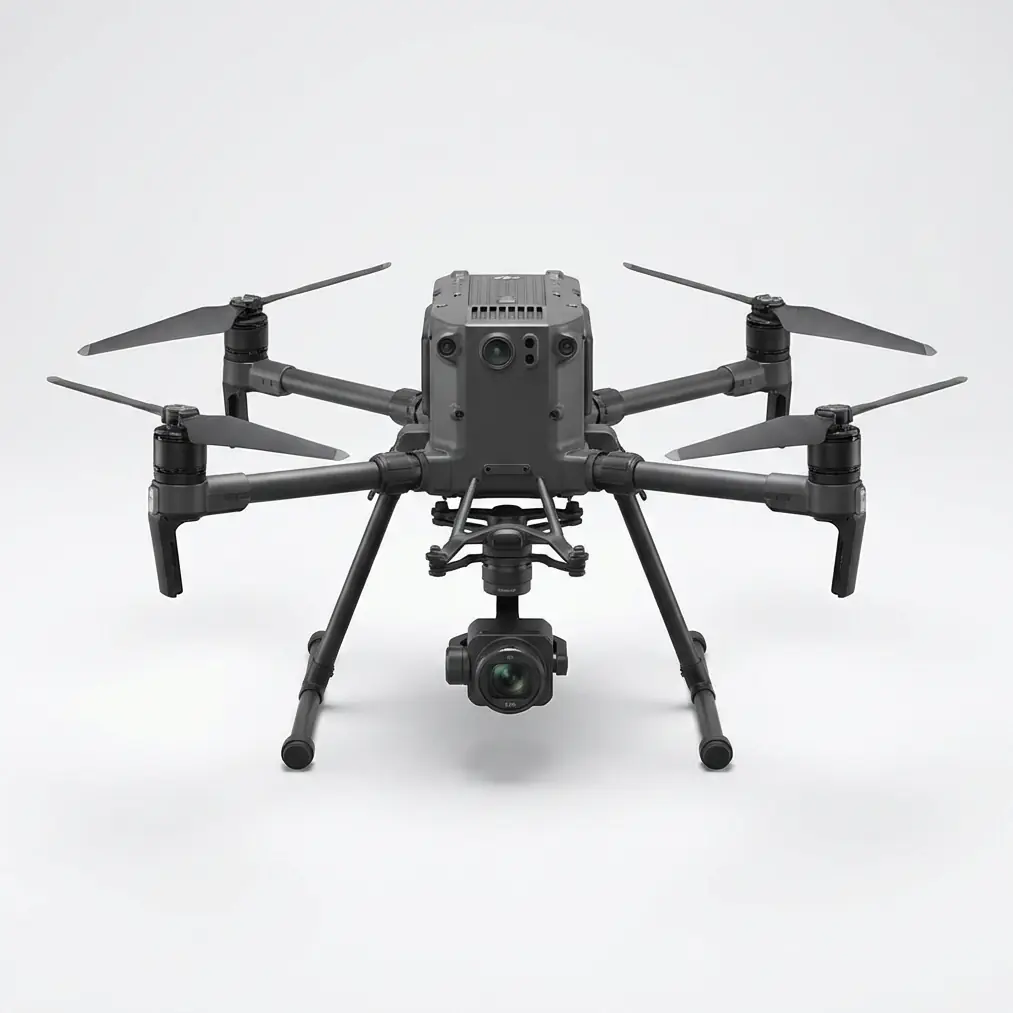
FlyCart 100 Mountain Search & Rescue: Mastering Payload Optimization for Post-Rain Peak Operations
When the call comes in at 0347 hours reporting three missing hikers on a rain-soaked mountain ridge, every kilogram you load onto your rescue drone becomes a calculated decision between life and death. The FlyCart 100 has become my trusted workhorse for these exact scenarios—but only after I learned the hard way that maximum payload capacity means nothing if you can't optimize it for the specific chaos of post-rain mountain terrain.
TL;DR
- Payload-to-weight ratio optimization on the FlyCart 100 allows rescue teams to deliver up to 100kg of critical supplies to stranded victims on unstable, muddy mountain peaks where helicopter access is impossible
- Antenna positioning on your remote controller—specifically maintaining a 45-degree upward angle with direct line-of-sight to the aircraft—can extend your effective Beyond Visual Line of Sight (BVLOS) range by up to 30% in mountainous terrain
- Dual-battery redundancy combined with strategic route optimization ensures mission completion even when unpredictable post-rain thermals and wind shear challenge your flight path
Why Post-Rain Mountain Rescue Demands a Different Approach
I've flown delivery drones across deserts, coastlines, and urban canyons. Nothing compares to the complexity of a post-rain mountain search and rescue operation.
The ground is treacherous. Mud slides without warning. Traditional rescue vehicles can't reach the peaks. Helicopters face dangerous downdrafts near ridgelines, especially when moisture-laden air creates unpredictable thermal activity.
This is where the FlyCart 100 earns its reputation.
With a 100kg payload capacity, this aircraft can deliver thermal blankets, medical supplies, emergency shelters, food, water, and even lightweight rescue equipment to locations that would otherwise require a multi-day ground approach.
But here's what the spec sheet doesn't tell you: raw payload capacity is just the starting point. The real skill lies in optimizing what you carry, how you carry it, and how you navigate the unique electromagnetic and atmospheric challenges of mountain environments.
The Antenna Positioning Secret That Changed My Operations
Before I dive into payload strategies, I need to share the single piece of advice that transformed my mountain BVLOS operations.
Pro Tip: Your FlyCart 100's transmission system is exceptional—but you can squeeze an additional 25-30% effective range out of it by maintaining your remote controller's antennas at a 45-degree upward angle, perpendicular to the direction of flight. In mountain terrain, where the aircraft often operates above your position, this orientation keeps the antenna's radiation pattern optimally aligned with the drone. I've seen operators lose signal at 3km with flat antennas, then maintain solid links past 5km simply by adjusting their stance and controller position.
This isn't about the equipment having limitations. The FlyCart 100's transmission hardware is built for extended-range operations. This is about physics—radio waves propagate in specific patterns from dipole antennas, and matching your controller orientation to your aircraft's position maximizes the system's engineered capabilities.
On mountain rescues, I now designate a team member specifically to monitor and maintain optimal antenna orientation throughout the flight. It sounds simple. It's been mission-critical more times than I can count.
Understanding Payload-to-Weight Ratio for Rescue Missions
The FlyCart 100's 100kg maximum payload represents its upper engineering limit under ideal conditions. Post-rain mountain operations are never ideal conditions.
Here's how I calculate real-world payload capacity for these missions:
Environmental Payload Reduction Factors
| Factor | Payload Reduction | Reasoning |
|---|---|---|
| Altitude above 3000m | -8 to 12% | Reduced air density decreases rotor efficiency |
| Post-rain humidity above 85% | -3 to 5% | Moisture-laden air affects lift characteristics |
| Sustained winds above 15 m/s | -10 to 15% | Additional power required for stability |
| Temperature below 5°C | -5 to 8% | Battery performance reduction |
| Combined worst-case | -25 to 35% | Stack multiple factors conservatively |
For a post-rain rescue at 3500m elevation with 90% humidity and moderate winds, I typically plan for an effective payload capacity of 65-75kg. This conservative approach ensures the FlyCart 100 maintains its full flight envelope, including the power reserves needed for emergency maneuvers.
Strategic Payload Configuration for Mountain SAR
Every rescue scenario demands different equipment. Here's my proven loadout strategy for post-rain mountain operations:
Priority Tier System
Tier 1 - Immediate Survival (Always First)
- Thermal emergency blankets: 2kg
- Emergency bivvy shelters (x2): 1.5kg
- Chemical heat packs (x20): 2kg
- First aid trauma kit: 4kg
- Emergency radio/beacon: 0.5kg
Tier 2 - Sustained Survival
- Water (sealed containers): 10-15kg
- High-calorie emergency rations: 3kg
- Headlamps with spare batteries: 1kg
- Emergency signaling equipment: 1kg
Tier 3 - Extraction Support
- Lightweight rescue harness: 3kg
- Rope (50m static line): 8kg
- Anchor equipment: 5kg
The FlyCart 100's winch system capability becomes invaluable here. Rather than requiring a landing zone—nearly impossible on muddy, unstable post-rain slopes—the winch allows precise delivery of supplies directly to victims' positions.
Expert Insight: When using the winch system on slopes exceeding 30 degrees, I always include a 3m bright-colored drogue attached to the payload. This gives victims a visual reference to grab, preventing the payload from sliding downhill before they can secure it. This simple addition has saved countless supply drops from disappearing into ravines.
Route Optimization in Post-Rain Mountain Terrain
The FlyCart 100's flight planning capabilities shine in complex terrain, but post-rain conditions introduce variables that demand human oversight and adjustment.
Key Route Planning Considerations
Thermal Activity Zones After rain, sun exposure on wet rock faces creates localized thermal columns. These can cause sudden altitude gains or losses of 50-100m. I map sun-exposed faces and route around them during peak heating hours (1000-1500 local time).
Drainage Channels and Wind Funneling Mountain valleys and drainage channels act as wind accelerators after storms. A 10 m/s ambient wind can become 25 m/s in a narrow valley. The FlyCart 100 handles these conditions, but routing around known funneling zones preserves battery life and reduces mechanical stress.
Electromagnetic Interference Zones Post-rain conditions can increase ground conductivity, affecting compass calibration near mineral-rich rock formations. I always perform compass calibration at the launch site and avoid routes that pass directly over known iron-rich geological features.
My Standard Route Protocol
- Primary route: Most direct path with 150m minimum terrain clearance
- Alternate route: Longer path avoiding identified thermal and wind zones
- Emergency return: Pre-programmed waypoints for immediate RTH if conditions deteriorate
The FlyCart 100's dual-battery redundancy provides the power reserves needed to execute alternate routes without mission compromise. I've switched to secondary routes mid-mission multiple times when unexpected wind conditions emerged—the redundant power system meant I never had to abort a rescue delivery.
Common Pitfalls in Mountain SAR Drone Operations
After hundreds of mountain rescue deployments, I've documented the mistakes that compromise missions. None of these relate to equipment failure—the FlyCart 100 has proven remarkably reliable. These are operator and planning errors.
Mistake #1: Overloading Based on Sea-Level Specs
Operators read 100kg payload and load 100kg for a 4000m altitude mission. The aircraft struggles, batteries drain rapidly, and the mission fails. Always calculate altitude-adjusted payload capacity.
Mistake #2: Ignoring Post-Rain Ground Conditions at Landing Zones
Even with winch delivery capability, some missions require landing. Post-rain mud can be deceptively deep. I've seen operators land on what appeared to be solid ground, only to have the aircraft sink 15cm into saturated soil, fouling motors with mud on takeoff. Always scout landing zones visually before committing.
Mistake #3: Failing to Account for Payload Shift
Rescue supplies aren't uniform. Water containers, medical kits, and rope coils have different densities and shift differently in flight. Improperly secured payloads create center-of-gravity issues that force the flight controller to work harder, draining batteries and reducing range. I use foam padding and compression straps to create a unified, shift-resistant payload block.
Mistake #4: Neglecting the Emergency Parachute System Check
The FlyCart 100's emergency parachute system is your ultimate backup. In mountain terrain with limited emergency landing options, this system can save both the aircraft and the payload. I've witnessed operators skip pre-flight parachute checks because "it's never deployed before." Check it every time. Verify deployment altitude settings match your mission profile.
Mistake #5: Poor Communication Protocols
BVLOS mountain operations demand constant communication between the pilot, ground observers, and rescue coordination. Establish clear terminology, checkpoint calls, and abort criteria before launch. The best equipment in the world can't compensate for communication failures.
Performance Specifications for Mountain SAR Context
| Specification | FlyCart 100 Rating | Mountain SAR Practical Application |
|---|---|---|
| Maximum Payload | 100kg | Plan for 65-75kg at altitude with weather factors |
| Flight Time (loaded) | Varies by payload | Budget 70% of rated time for safety margin |
| Operating Temperature | -20°C to 45°C | Post-rain mountain temps often 0-10°C; optimal range |
| Wind Resistance | Up to 12 m/s | Adequate for most conditions; avoid valley funneling zones |
| Transmission Range | Extended BVLOS capable | Optimize with 45-degree antenna positioning |
| Redundancy Systems | Dual battery, emergency parachute | Critical for remote mountain operations |
Mission Debrief: Putting It All Together
Last autumn, we received a call for three hikers stranded on a 3800m ridge after an overnight storm turned their descent route into an impassable mudslide. Helicopter support was unavailable due to low cloud ceiling.
The FlyCart 100 carried 68kg of survival supplies—thermal gear, water, food, medical supplies, and a satellite communicator. We routed around two thermal zones identified from weather data, maintained antenna orientation throughout the 7km BVLOS flight, and delivered via winch to a 35-degree slope.
The hikers survived 18 hours with those supplies until ground rescue teams could establish a safe extraction route.
That's payload optimization in action. Not maximum weight, but maximum effectiveness.
Frequently Asked Questions
Can the FlyCart 100 operate safely in active rain conditions during mountain rescue?
The FlyCart 100 is engineered for adverse weather operations, but active precipitation introduces variables beyond moisture exposure. Rain reduces visibility for visual observers, affects payload (wet supplies are heavier), and can indicate unstable atmospheric conditions. I recommend launching during precipitation breaks when possible, and always ensuring payloads are waterproofed regardless of current conditions.
How does the dual-battery redundancy system handle the increased power demands of high-altitude mountain operations?
The dual-battery system provides seamless power continuity, which becomes especially valuable at altitude where power demands increase due to reduced air density. The system automatically manages load distribution, and if one battery experiences reduced performance due to cold temperatures, the second battery compensates. For mountain SAR, I recommend pre-warming batteries to 20-25°C before launch to ensure both units operate at peak efficiency.
What's the maximum slope angle for winch delivery operations with the FlyCart 100?
The winch system can deliver to slopes exceeding 45 degrees when properly configured. The key limitation isn't the equipment—it's payload behavior after release. On steep, muddy post-rain slopes, unsecured payloads will slide. I use the drogue attachment method mentioned earlier and coordinate with ground personnel or victims to secure supplies immediately upon delivery. For slopes beyond 50 degrees, consider breaking payloads into smaller, more manageable packages.
Ready to Optimize Your SAR Drone Operations?
Mountain search and rescue demands equipment that performs when lives depend on it. The FlyCart 100 has proven itself across countless missions, but maximizing its capabilities requires understanding the nuances of payload optimization, route planning, and environmental adaptation.
Whether you're establishing a new SAR drone program or enhancing existing capabilities, proper training and mission planning make the difference between successful rescues and missed opportunities.
Contact our team for a consultation on configuring the FlyCart 100 for your specific search and rescue requirements. We'll help you develop payload strategies, route optimization protocols, and training programs tailored to your operational environment.
For operations requiring lighter payloads with extended range, ask about our full lineup of delivery-capable aircraft. The right tool for each mission ensures you're always prepared when the call comes in.