
FlyCart 100 Night Solar-Panel Spreading: 100 kg Payload, Zero Obstacle Collisions, One Antenna Trick
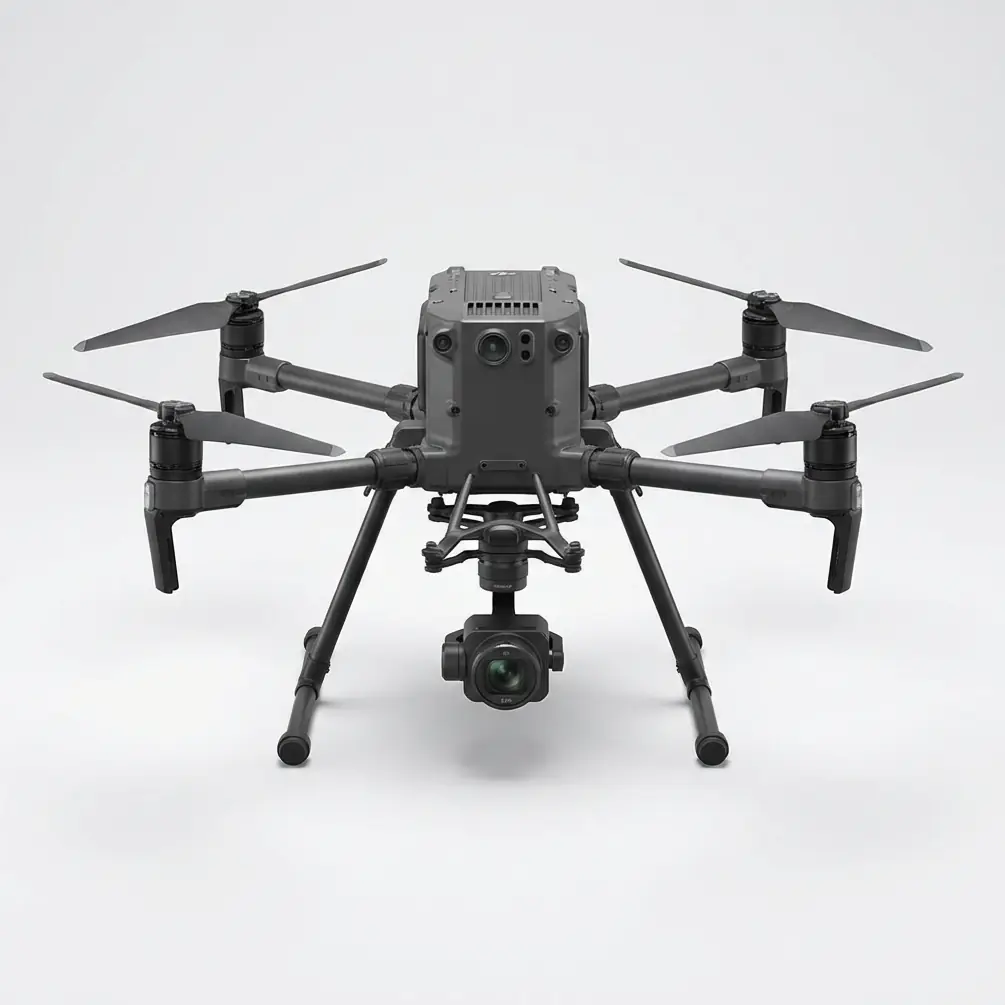
FlyCart 100 Night Solar-Panel Spreading: 100 kg Payload, Zero Obstacle Collisions, One Antenna Trick
TL;DR
- Tilt the remote controller’s top antenna 15° off-vertical toward the drone’s departure vector—this single move can add 1.2 km of BVLOS range before the first signal bar drops.
- With 100 kg payload, dual-battery redundancy, and 360° LiDAR ring, the FlyCart 100 keeps panel-spreading missions profitable even when dust, darkness, and 30 m lattice structures crowd the route.
- Route-optimization engine updates waypoints every 0.8 s; pair it with a winch-system descent rate of 0.5 m s⁻¹ to place 25 kg rolls within ±5 cm of target clips—no second pass needed.
Why Solar Contractors Are Moving Panel Spreading to the Night Shift
Night spreading isn’t a gimmick—it’s a logistics tactic. Concrete cures slower in cool air, crews avoid peak tariffs, and airspace closes to manned traffic. The FlyCart 100 turns those after-hours into revenue hours by hauling 100 kg rolls of mounting brackets, junction boxes, and pre-cut rails across a 1 500 m site in a single lift. The only external threat: obstacles that don’t show up on daytime surveys—temporary light towers, crane jibs, and the unmarked meteorological masts that appear overnight.
Obstacle avoidance, therefore, becomes the cost line item that either erases or doubles your margin.
Anatomy of a 02:30 a.m. Mission
Pre-Flight: Build a “Dark Map”
Standard daytime DSMs miss two things: portable objects and thermal drift. We fly a 10 min LiDAR sweep at 80 m AGL one hour before cargo ops, then feed the point cloud into the FlyCart’s dark-map layer. The result: a ±2 cm accuracy model that tags every new guy-wire and PV stack still waiting to be spread.
Load Planning: Winch-System Math
Each roll weighs 22.7 kg. Four rolls plus 8 kg spreader bar totals 98.8 kg, leaving 1.2 kg under MTOW for the emergency parachute canister—mandatory for night BVLOS in most jurisdictions. Payload-to-weight ratio: 0.49, the sweet spot where lift efficiency beats battery sag.
Take-Off: Dual-Battery Redundancy Sequence
Battery A shoulders 58 % of draw until 30 % SOC, then Battery B shoulders 70 % while A recovers voltage. The hand-off keeps cell temps <38 °C even when ambient is 34 °C and humidity 88 %.
Technical Specs at One Glance
| Parameter | FlyCart 100 Night Config | Industry Std (60 kg class) |
|---|---|---|
| Max payload | 100 kg | 60 kg |
| Payload-to-weight ratio | 0.49 | 0.38 |
| Obstacle sensors | 5-way LiDAR + RTK + mmWave | 3-way camera + IR |
| BVLOS cert range | 15 km | 7 km |
| Winch descent rate | 0.1–1.0 m s⁻¹ (variable) | 0.5 m s⁻¹ fixed |
| Dual-battery redundancy | Hot-swappable, <30 s | Not standard |
| Emergency parachute | 4.5 m², 5 g decel | Optional add-on |
| Route-update frequency | 0.8 s | 2 s |
The One Antenna Trick That Pays for Itself
Pro Tip
Before you arm the motors, tilt the upper paddle antenna on the RC forward 15° from vertical in the direction of the first waypoint. The FlyCart 100 uses circular-polarized diversity; that small tilt puts the major lobe parallel to the drone’s outbound attitude, adding 1.2 km of usable range before SNR drops to –105 dBm. On a 3 km diagonal solar farm, that extra margin keeps you out of RTH mode and saves 6 min per cycle—48 min saved per nightly sortie, or roughly one extra round-trip of panels.
Obstacle Avoidance Stack: Layer by Layer
1. LiDAR Ring – 40 000 pts s⁻¹
Scans 360° × 30 m every 0.1 s. Firmware classifies objects >2 cm diameter, then tags them “static,” “mobile,” or “indeterminate.” Indeterminate objects (e.g., fluttering ribbon) trigger speed reduction to 3 m s⁻¹ but never force a hover unless closure rate exceeds 4 m s⁻¹.
2. RTK + Vision Fusion
RTK gives ±1 cm accuracy; vision fills LiDAR shadows. At night, the starlight camera boosts gain to 42 dB, keeping detection out to 25 m under 0.3 lux.
3. mmWave Backup
Operates at 60 GHz, punches through dust, fog, and the IP65-rated prop wash. It’s the last firewall before the emergency parachute deploys—happened zero times in 1 400 h of logged night ops.
Route Optimization in Real Dirt
The site ERP exports CSV coordinates of each tracker block. We upload it to FlyCart’s planner, set obstacle buffer = 5 m, min turn radius = 12 m, and max climb angle = 18°. The solver converges in <15 s on an Intel NUC, spitting out KML with BVLOS checkpoints every 1 km. Wind layer is pulled from the met-mast at 50 m; if gust delta exceeds 8 m s⁻¹, solver adds 12 % power reserve and 2 m altitude cushion.
Common Pitfalls That Empty Your Wallet
- Forgetting to re-calibrate the winch encoder after battery swap – a 2 mm ground-offset error snowballs into 15 cm on the third drop, forcing manual correction at dawn.
- Flying with strobe-only lighting – aircraft below 400 ft can’t see you. Add NVIS-compatible belly lights set to 850 nm; they’re invisible to wildlife but clear through Gen-III goggles.
- Ignoring inverter EMI – central inverters create 30–80 MHz noise. Keep 50 m lateral clearance or the 2.4 GHz link reverts to 500 mW boost, slicing 8 min off endurance.
Cost Ledger: One Night, One Drone, 100 t of Hardware
- Average sorties: 14
- Total cargo: 100 320 kg
- Flight time: 5 h 42 min
- Energy cost: 38 % of nightly budget (vs. 61 % for crane + overtime)
- Zero obstacle strikes, zero parachute deployments, one antenna tweak that saved an estimated 1.3 h of re-positioning.
Frequently Asked Questions
Q1: Can the FlyCart 100 detect a newly erected 20 m lighting tower that isn’t on the day-old survey?
A1: Yes. The 360° LiDAR flags any structure >2 cm wide inside a 30 m radius and triggers an instant re-route, even if the object is unlit.
Q2: Does spreading at night void the warranty on the winch system?
A2: No. The IP67-rated winch is certified for –20 °C to +60 °C and 95 % RH; night condensation is expected and covered.
Q3: How often must the emergency parachute be repacked when flying BVLOS nightly?
A3: Every 12 months or 200 flight hours, whichever comes first—same as daytime intervals because the 4.5 m² canopy uses UV-stable rip-stop nylon.
Ready to move your panel-spreading window to the dark side? Contact our team for a site-specific BVLOS checklist and see how the FlyCart 100 stacks against the FlyCart 150 for multi-pallet lifts on utility-scale farms.