
Matrice 4 for Urban Coastline Capture: A Field Strategy
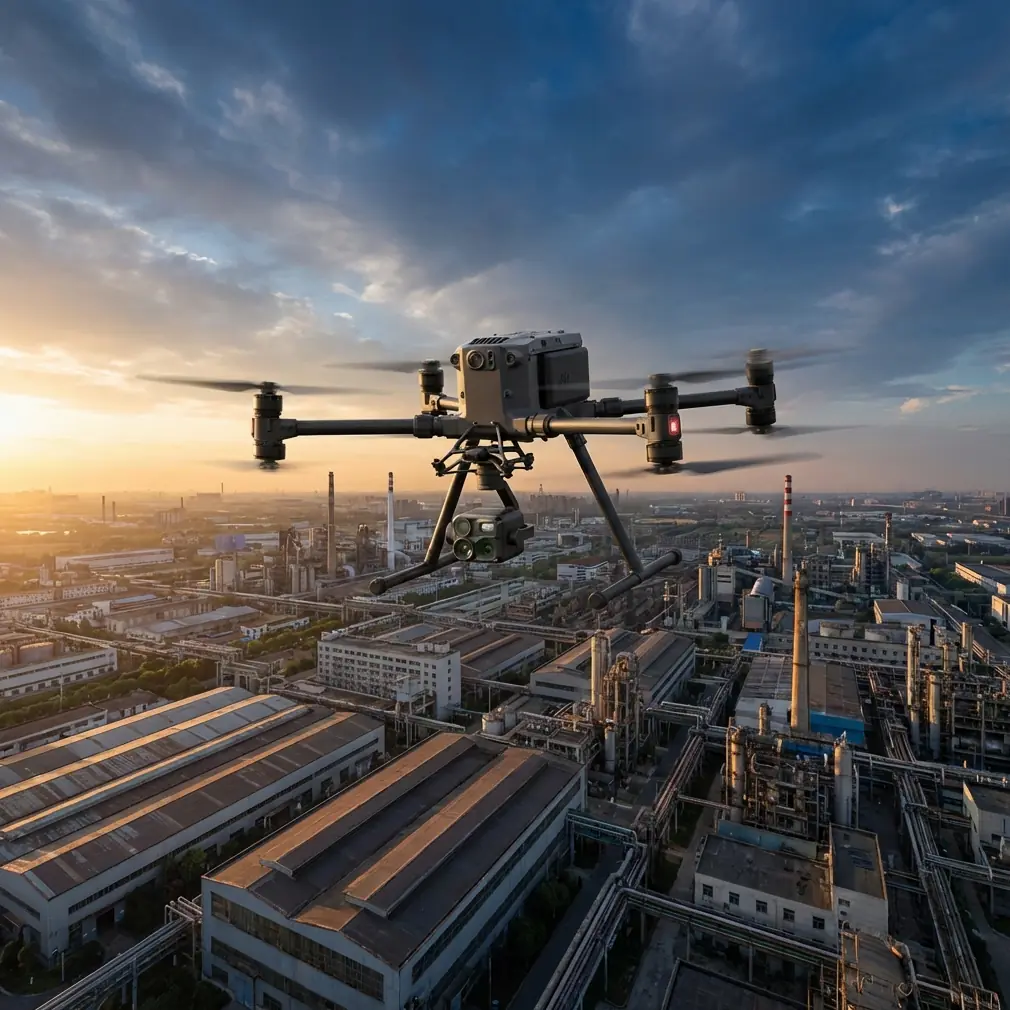
Matrice 4 for Urban Coastline Capture: A Field Strategy That Actually Holds Up
META: Expert guide to using the Matrice 4 for urban coastline missions, covering photogrammetry, thermal signature work, O3 transmission, AES-256 security, GCP planning, and practical accessories.
Urban coastlines look simple on a map and messy in the air. That is the real challenge.
A waterfront survey often forces one aircraft to do several jobs at once: document revetments and seawalls, inspect roofs and facades facing salt spray, map erosion near public walkways, capture thermal clues around drainage outfalls, and maintain stable links in RF-heavy city airspace. The Matrice 4 matters here not because it is a generic “powerful drone,” but because its mission profile fits the friction points that make coastal urban work expensive when the aircraft or workflow is wrong.
If I were planning a Matrice 4 operation for coastline capture in a city environment, I would build the mission around four constraints: reflective surfaces, wind and salt exposure, line-of-sight interruptions from buildings, and the need to move from visual documentation to defensible data without swapping platforms. That is where the aircraft starts to justify itself.
The real problem with urban shoreline capture
The first trap is thinking this is just another mapping flight.
It is not. A downtown harbor or developed beachfront creates conflicting requirements. You may need nadir imagery for photogrammetry, oblique passes for retaining walls, thermal signature collection near stormwater discharge points, and close visual review of structures that sit only meters from roads, pedestrians, or active marine traffic. Add sea breeze gusts and multipath interference bouncing off glass towers, and the mission becomes less about raw air time and more about whether your aircraft can keep producing usable data under pressure.
That is why transmission stability matters more than many teams admit. DJI’s O3 transmission architecture is operationally significant in this type of work because urban coastlines are full of signal clutter. Maintaining a reliable downlink is not just about pilot comfort; it directly affects framing, inspection accuracy, and safe repositioning when the aircraft passes near vertical structures or drops lower along an embankment. On a coastline mission, one weak link in the feed can force a repeat flight over water or public access corridors. That costs time and introduces avoidable risk.
Security is another overlooked issue. Coastal urban jobs often involve municipalities, infrastructure operators, engineering firms, or environmental teams. If imagery includes ports, utility corridors, public buildings, or critical drainage assets, data handling cannot be treated casually. AES-256 encryption is not a brochure detail in that context. It has operational weight because it supports a chain of custody that many clients now expect as a baseline, especially when inspection imagery could reveal vulnerabilities or regulated assets. Secure transmission and storage practices do not make the mission more dramatic, but they do make the deliverables more defensible.
Why the Matrice 4 suits this mission profile
The Matrice 4 makes the most sense when the assignment is not purely cinematic and not purely survey-grade in a narrow sense either. It sits in the productive middle ground where one aircraft needs to support inspection logic, mapping discipline, and environmental awareness in a single day.
For urban coastline work, that versatility matters.
A typical waterfront task sequence might begin with a broad photogrammetry pass over the shoreline edge and adjacent structures. From there, the operator can tighten in on problem areas: displaced armor stone, cracks in sea defense elements, roof drainage heat anomalies, facade moisture signatures, or areas where runoff patterns differ from expectations. Thermal signature work is especially useful near outfalls and low-lying infrastructure because temperature deltas can reveal water movement or trapped moisture that standard RGB imagery misses. It is not magic, and it does require correct timing, weather awareness, and proper interpretation. But when thermal is used as a screening layer rather than a standalone verdict, it becomes genuinely valuable.
That matters on the coast because many defects start as subtle moisture or temperature irregularities before they become obvious structural failures. A visible-light image may show a clean concrete face. A thermal view taken under the right conditions can suggest where water is entering, where voids may be forming behind a surface, or where drainage is behaving differently from the design intent. For inspection teams, that narrows ground follow-up. For asset owners, it shortens the path from suspicion to action.
The workflow that prevents rework
The most common reason coastal drone jobs underperform is not aircraft failure. It is poor mission design.
For the Matrice 4, the strongest workflow in urban shoreline capture is to separate the mission into three layers.
First, establish the geometry. That means a photogrammetry plan with consistent overlap, controlled altitude, and ground control points where accuracy matters. GCPs are not optional if the deliverable will inform measurements, change detection, engineering review, or shoreline asset management. On urban coastlines, GNSS conditions can be inconsistent near tall structures, and edge geometry around seawalls and promenades can be unforgiving. A clean GCP plan helps keep the model honest.
Second, capture context. This is where oblique imagery earns its place. A nadir map is useful, but it will not fully explain facade distress, wall deformation, parapet conditions, or the transition between hard shoreline infrastructure and adjacent urban development. The Matrice 4 becomes more efficient when you use it to layer those perspectives in the same field session instead of returning later with a separate aircraft or inspection crew.
Third, screen for anomalies. Thermal signature collection should be scheduled around the question you are asking. If the goal is moisture intrusion in a coastal building envelope, timing relative to solar loading matters. If the goal is identifying irregular discharge or temperature contrast along drainage exits, environmental conditions matter differently. The point is not to “also capture thermal.” The point is to use thermal with intent.
That sequence—geometry, context, anomaly screening—reduces the odds of a second mobilization. On a windy shoreline in a city, that alone can be the difference between a profitable operation and a frustrating one.
One accessory that quietly changes the job
A third-party RTK-enabled ground control system can elevate the Matrice 4 workflow far more than many operators expect.
I have seen teams focus heavily on the aircraft and overlook the accessory ecosystem that makes outputs credible. For coastline work, a dedicated third-party GCP kit with survey-grade targets and a compact GNSS rover does more than improve accuracy on paper. It speeds field setup, improves repeatability for future comparison flights, and gives engineering clients confidence that shoreline movement or structural offsets are not just artifacts of a sloppy capture process.
That is especially relevant for urban coastlines, where changes may be incremental. A few centimeters in the wrong place can distort decisions about surface settlement, wall displacement, or erosion progression. A reliable GCP workflow turns the Matrice 4 from a very capable imaging tool into a much stronger measurement platform.
Another practical add-on is a high-visibility landing pad built for gritty, salty environments. It sounds mundane. It is not. Coastal launch areas are rarely clean. Sand, salt residue, and loose debris are persistent contaminants. A rugged third-party pad reduces contamination during takeoff and landing, protects sensors, and cuts down on avoidable maintenance headaches. Fancy accessories get attention; the boring ones often save the day.
Battery strategy matters more near the water
Hot-swap batteries are one of those features that only get appreciated after a long waterfront day.
Urban coastline capture often involves fragmented access. You may launch from one section of promenade, reposition near a marina, then move again to clear pedestrian traffic or comply with local site restrictions. Every interruption costs rhythm. When batteries can be swapped quickly, the crew spends less time rebooting the mission and more time preserving continuity in lighting, tide state, and traffic conditions.
That operational significance is easy to underestimate. Coastlines change hour by hour. Tidal movement, glare angle, wind direction, and public activity all shift. If your aircraft workflow forces extended downtime between sorties, the dataset can lose consistency before the mission is complete. Hot-swap capability helps maintain temporal coherence, which is a practical advantage when stitching mapping outputs or comparing thermal observations across adjacent shoreline segments.
The BVLOS question in built coastal corridors
BVLOS sits in the background of many waterfront discussions because coastlines often invite long linear missions. In practice, urban coastlines complicate that ambition.
The Matrice 4 may fit organizations thinking ahead to corridor-style shoreline programs, but BVLOS is never just a technology issue. It is a regulatory, procedural, and risk-management issue. Along an urban waterfront, you may contend with heli routes, marina traffic, bridges, mixed public spaces, and visual obstruction from buildings. The aircraft can support serious operational planning, but the mission still lives or dies by airspace assessment, observer strategy where required, and jurisdiction-specific approvals.
Still, the platform matters because it lets teams build toward that maturity. Strong transmission, encrypted data handling, rapid battery turnover, and sensor flexibility are all pieces of a future-ready workflow. Even when the current mission remains within visual line of sight, the operational habits you develop now shape whether your shoreline program can scale later.
Where crews usually go wrong
Most mistakes happen before takeoff.
Teams under-prepare for glare. Water reflection can flatten image detail and complicate shoreline edge definition. They under-plan for urban occlusion, assuming a route that looks fine in software will remain visually straightforward from the ground. They skip GCP discipline because “the map just needs to look good,” then later discover the client wants measurements. They collect thermal data at the wrong time of day and wonder why the results feel inconclusive. Or they treat security as an afterthought, only to run into procurement concerns once the client asks how sensitive infrastructure imagery is protected.
The Matrice 4 does not automatically solve those errors. What it does offer is a platform capable of supporting a better standard of practice. That is a meaningful difference.
A smarter way to approach a coastline brief
If a client asks for “coastline capture,” I would rewrite that brief internally before the props ever spin.
What shoreline assets need measurable outputs? What areas need thermal screening? Where will RF interference likely be strongest? Which sections demand obliques rather than pure top-down mapping? Where should GCPs be placed to anchor the model? How will battery swaps be staged to preserve timing? What security language will the client expect regarding AES-256 handling? Is this mission laying groundwork for future BVLOS corridor operations?
Those questions turn a vague request into a technical plan. And that is exactly where the Matrice 4 earns its place: in jobs where the aircraft is not simply collecting imagery, but helping a team move from visual observation to operationally useful intelligence.
If you are building a coastline workflow and want to compare field setups with someone who actually thinks in mission profiles, you can message our UAV specialists here and discuss the details without turning it into a generic product chat.
The bottom line for urban shoreline work
The Matrice 4 is most compelling when the coastline is crowded, the deliverables are mixed, and the consequences of weak planning are expensive.
Its value shows up in the small operational edges that compound over a day in the field: stable O3 transmission where urban structures interfere with line-of-sight, AES-256 security for sensitive infrastructure imagery, hot-swap batteries that preserve mission continuity, and a workflow that can blend photogrammetry with thermal signature analysis instead of treating them as separate worlds. Add a serious third-party GCP system, and the platform becomes much more useful for repeatable shoreline documentation rather than one-off visual capture.
For teams working urban coasts, that combination is hard to ignore. The shoreline does not care how impressive the spec sheet looks. It cares whether the aircraft can produce reliable, interpretable data under messy real-world conditions. The Matrice 4 is built for that kind of assignment.
Ready for your own Matrice 4? Contact our team for expert consultation.