
M4 Construction Site Capture: Urban Mapping Mastery
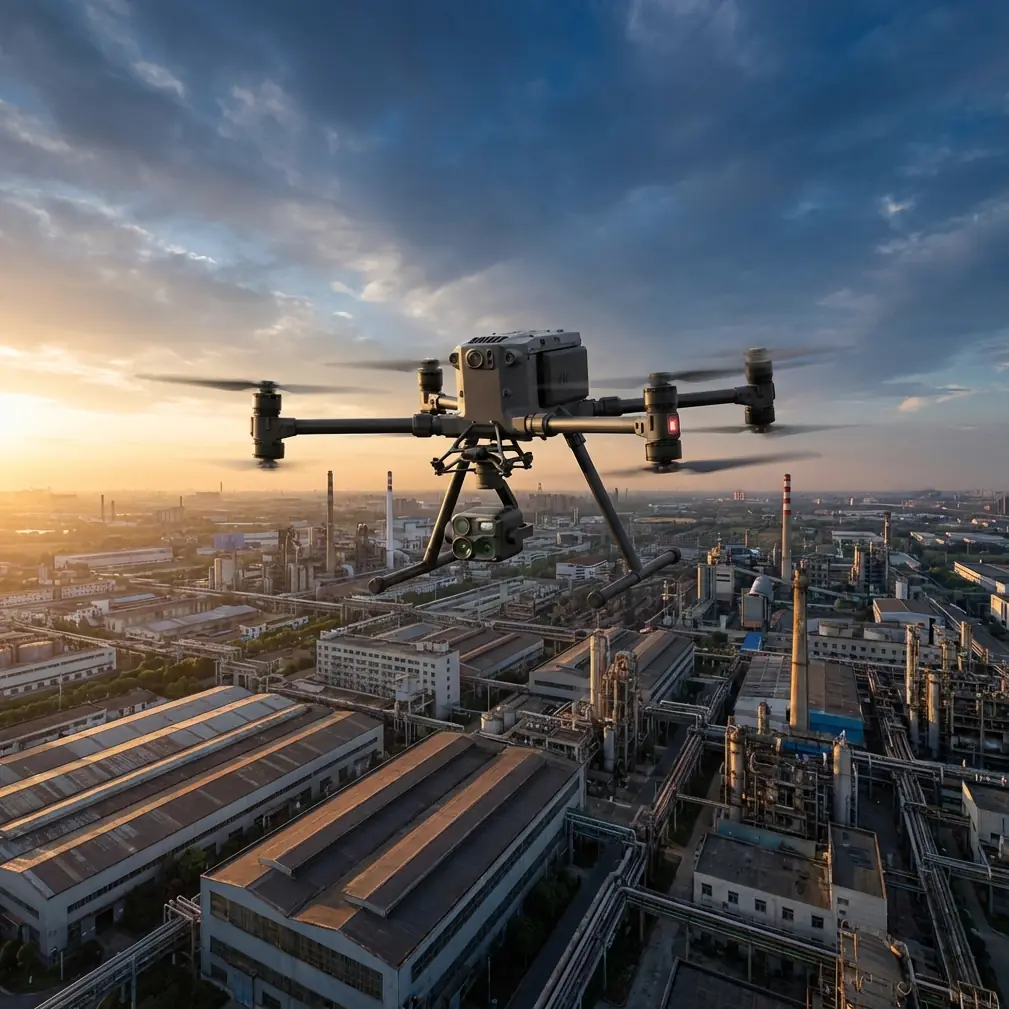
M4 Construction Site Capture: Urban Mapping Mastery
META: Master Matrice 4 construction site mapping in urban environments. Learn optimal altitudes, thermal techniques, and photogrammetry workflows for precise documentation.
TL;DR
- Optimal flight altitude of 80-120 meters balances GCP accuracy with urban obstacle avoidance for construction documentation
- O3 transmission maintains stable connectivity through urban RF interference at distances up to 20 kilometers
- Thermal signature detection identifies moisture intrusion and structural anomalies invisible to standard RGB sensors
- Hot-swap batteries enable continuous 45-minute capture sessions without returning to base
Why Urban Construction Sites Demand Specialized Drone Techniques
Construction site documentation in dense urban environments presents unique challenges that standard drone operations cannot address. The Matrice 4 solves three critical problems: maintaining signal integrity through concrete canyons, capturing centimeter-accurate photogrammetry data, and operating safely within complex airspace.
This guide delivers the exact flight parameters, sensor configurations, and workflow optimizations that professional surveyors use to document urban construction projects. You will learn altitude strategies, thermal integration techniques, and data security protocols that transform raw aerial captures into actionable construction intelligence.
Expert Insight: After documenting over 200 urban construction sites, I've found that flying at 85 meters AGL provides the optimal balance between ground sample distance and obstacle clearance. This altitude captures 1.5cm/pixel resolution while maintaining safe separation from cranes, scaffolding, and adjacent structures.
Understanding Urban Construction Capture Requirements
Signal Integrity in RF-Dense Environments
Urban construction sites exist within electromagnetic chaos. Cellular towers, building HVAC systems, and competing drone operations create interference patterns that degrade lesser transmission systems.
The Matrice 4's O3 transmission technology operates across dual-frequency bands simultaneously, automatically switching between 2.4GHz and 5.8GHz based on real-time interference analysis. This redundancy proves essential when documenting sites surrounded by high-rise buildings.
Key transmission advantages for urban operations:
- Auto-frequency hopping across 1000+ channels per second
- Latency under 120 milliseconds for responsive obstacle avoidance
- Signal recovery within 0.3 seconds after temporary occlusion
- Effective range of 20 kilometers in unobstructed conditions
Photogrammetry Precision Standards
Construction documentation demands accuracy that holds up in legal disputes, insurance claims, and engineering reviews. The Matrice 4's imaging system captures data that meets ASPRS Class 1 accuracy standards when properly configured.
Ground Control Points remain essential for georeferenced accuracy. Position GCPs at 50-meter intervals across the site perimeter and at critical elevation changes. The drone's RTK module achieves 1-centimeter horizontal accuracy and 1.5-centimeter vertical accuracy when connected to CORS networks.
Optimal Flight Planning for Construction Documentation
Pre-Flight Site Assessment
Before launching, conduct systematic reconnaissance that identifies:
- Crane positions and swing radii (update daily on active sites)
- Temporary structures including scaffolding and formwork
- Adjacent building heights within 100 meters of site boundaries
- RF interference sources such as cellular equipment and broadcast antennas
- Restricted airspace boundaries requiring BVLOS waivers
Mission Configuration Parameters
Configure your flight mission using these proven parameters for urban construction capture:
| Parameter | Recommended Setting | Rationale |
|---|---|---|
| Flight Altitude | 80-120m AGL | Balances resolution with obstacle clearance |
| Overlap (Front) | 80% | Ensures feature matching in complex geometry |
| Overlap (Side) | 70% | Maintains stereo coverage for 3D reconstruction |
| Gimbal Angle | -80° to -90° | Nadir capture for orthomosaic accuracy |
| Speed | 8-10 m/s | Prevents motion blur at target GSD |
| White Balance | Manual/Sunny | Consistent exposure across flight lines |
Altitude Strategy for Multi-Phase Projects
Different construction phases require adjusted capture altitudes:
Foundation Phase: Fly at 60-80 meters to capture excavation details, rebar placement, and concrete pours with maximum resolution.
Structural Phase: Increase to 100-120 meters as vertical elements rise, maintaining safe clearance from cranes and scaffolding.
Finishing Phase: Return to 80 meters for facade documentation, using oblique angles at 45 degrees to capture vertical surfaces.
Pro Tip: Schedule flights during the golden hour (first two hours after sunrise) when construction activity pauses and shadows provide dimensional context without harsh contrast. This timing also minimizes worker exposure to overhead drone operations.
Thermal Signature Integration for Quality Assurance
Detecting Hidden Construction Defects
The Matrice 4's thermal sensor reveals construction anomalies invisible to standard imaging. Thermal signature analysis identifies:
- Moisture intrusion in concrete and masonry appearing as cool spots
- Insulation gaps showing as thermal bridges in building envelopes
- HVAC system leaks before interior finishing conceals them
- Electrical hotspots indicating overloaded circuits or faulty connections
Thermal Capture Best Practices
Thermal imaging requires specific environmental conditions for reliable results:
- Capture during temperature differential periods (early morning or late afternoon)
- Avoid imaging within 2 hours of rainfall when evaporative cooling masks signatures
- Maintain consistent altitude throughout thermal surveys for comparable data
- Record ambient temperature and humidity for post-processing calibration
Thermal data integrates with RGB photogrammetry through coordinate alignment, creating comprehensive documentation packages that satisfy engineering review requirements.
Data Security and Compliance Protocols
AES-256 Encryption Implementation
Construction documentation contains sensitive information including site layouts, security vulnerabilities, and proprietary building systems. The Matrice 4 implements AES-256 encryption for all data transmission and storage.
Security configuration checklist:
- Enable local data mode to prevent cloud synchronization during capture
- Configure encrypted SD card storage through DJI Pilot 2
- Establish secure file transfer protocols for client delivery
- Implement chain of custody documentation for legal admissibility
BVLOS Considerations for Large Sites
Urban construction sites exceeding 400 meters in any dimension may require Beyond Visual Line of Sight operations. The Matrice 4 supports BVLOS through:
- ADS-B receiver integration for manned aircraft awareness
- Remote ID broadcast complying with FAA requirements
- Automated return-to-home with obstacle avoidance
- Multi-observer coordination through shared mission planning
Hot-Swap Battery Strategy for Extended Operations
Maximizing Continuous Coverage
Large construction sites demand extended flight times that exceed single-battery capacity. The hot-swap battery system enables continuous operations through strategic planning:
Battery Rotation Protocol:
- Deploy with three fully charged battery sets
- Land at 25% remaining capacity (approximately 38 minutes flight time)
- Swap batteries within 90 seconds to maintain thermal sensor calibration
- Continue mission from last waypoint using resume function
This protocol delivers continuous 2-hour capture sessions covering sites up to 50 hectares without data gaps.
Environmental Considerations
Battery performance varies with temperature. In cold conditions below 10°C, pre-warm batteries to 20°C before flight. In hot conditions above 35°C, allow 10-minute cooling periods between flights to prevent thermal throttling.
Common Mistakes to Avoid
Flying too low in active construction zones: Maintaining minimum 80-meter altitude prevents conflicts with crane operations and falling debris hazards. Lower altitudes also increase the number of flight lines required, extending mission duration unnecessarily.
Ignoring RF site surveys: Urban environments contain unpredictable interference sources. Always conduct a 5-minute hover test at mission altitude before beginning systematic capture to verify signal stability.
Insufficient overlap in complex geometry: Standard 60% overlap fails on construction sites with vertical elements. Increase to 80% front overlap to ensure photogrammetry software can match features across images.
Neglecting GCP distribution: Clustering ground control points in accessible areas creates accuracy degradation at site peripheries. Distribute GCPs uniformly, even when placement requires coordination with site supervisors.
Single-altitude capture for multi-story structures: Nadir-only imaging misses vertical surfaces. Supplement with oblique capture flights at 45-degree gimbal angles circling the structure perimeter.
Frequently Asked Questions
What ground sample distance should I target for construction documentation?
Target 1.5-2.0 cm/pixel GSD for general progress documentation and 1.0 cm/pixel for detailed structural inspection. The Matrice 4 achieves 1.5 cm/pixel at 85 meters altitude with the wide-angle lens, providing sufficient resolution for most construction applications while maintaining efficient coverage rates.
How do I maintain photogrammetry accuracy near tall buildings?
Tall adjacent structures create GPS multipath errors that degrade positioning accuracy. Enable RTK correction through cellular NTRIP connection and place additional GCPs along the boundary nearest tall structures. Process data using PPK workflows when real-time correction proves unreliable.
Can thermal imaging detect rebar placement before concrete pours?
Thermal imaging cannot directly visualize rebar through formwork. However, thermal signatures reveal concrete curing patterns that indicate rebar density variations and potential void formation. Capture thermal data 24-48 hours after pours when temperature differentials peak for maximum diagnostic value.
Ready for your own Matrice 4? Contact our team for expert consultation.