
Matrice 4 for Low-Light Construction: Expert Guide
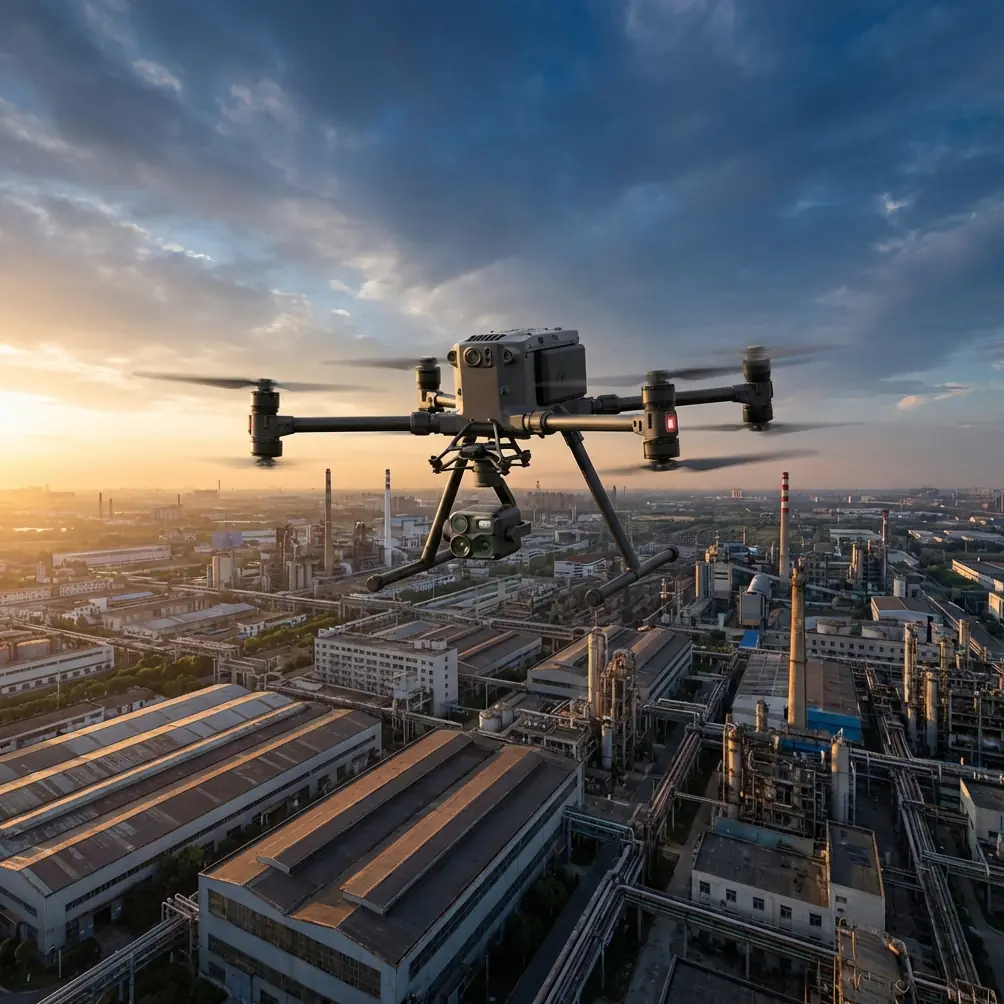
Matrice 4 for Low-Light Construction: Expert Guide
META: Learn how the DJI Matrice 4 captures construction sites in low light with thermal imaging, photogrammetry, and robust flight performance.
By James Mitchell | Drone Operations Expert & Certified Commercial Pilot
TL;DR
- The Matrice 4's wide-aperture thermal sensor and 56× zoom camera deliver sharp construction site data even in pre-dawn or post-dusk conditions
- O3 transmission maintains a stable HD video feed up to 20 km away, critical when low-light flights demand real-time visual confirmation
- Hot-swap batteries and AES-256 encryption keep operations continuous and data secure across multi-phase construction documentation
- A mid-flight weather shift during a real-world job proved the M4's environmental resilience under pressure
Why Low-Light Construction Mapping Demands a Better Drone
Construction timelines don't pause for perfect lighting. Contractors pour concrete at 4:00 AM, steel crews work under floodlights, and project managers need progress documentation that matches the actual pace of work—not the sun's schedule. This guide breaks down exactly how to configure and fly the DJI Matrice 4 for reliable low-light construction site capture, covering camera settings, flight planning, thermal signature analysis, and GCP placement strategies that produce survey-grade photogrammetry results even when ambient light drops below 50 lux.
If you've been struggling with noisy orthomosaics, failed tie points in dim conditions, or unreliable thermal overlays, the workflow below will solve those problems systematically.
Understanding the Matrice 4's Low-Light Hardware
The Sensor Array That Changes Everything
The Matrice 4 integrates a wide-format CMOS sensor with a mechanical shutter alongside a dedicated infrared thermal imaging sensor. This dual-payload architecture is purpose-built for scenarios where visible-spectrum light is scarce but data requirements remain high.
Key specs that matter for low-light construction work:
- 1/1.3-inch CMOS sensor with f/2.8 aperture — gathers significantly more light than smaller-sensor enterprise drones
- Thermal resolution of 640×512 — sufficient to detect heat loss in freshly poured slabs, identify active equipment, and map thermal signatures of subsurface utilities
- 56× hybrid zoom — allows tight framing of structural elements from safe standoff distances without compromising exposure
- Mechanical shutter — eliminates rolling shutter distortion during mapping passes, especially critical at slower shutter speeds used in dim conditions
O3 Transmission: Your Eyes in the Dark
When flying a construction site at dawn or dusk, visual reference from the controller screen is your lifeline. The M4's O3 Enterprise transmission system pushes a 1080p/30fps live feed with auto-switching across 2.4 GHz and 5.8 GHz bands. On congested construction sites—where tower cranes, rebar grids, and heavy machinery create RF interference—this dual-band intelligence prevents the feed dropouts that make low-light operations dangerous.
In BVLOS configurations (where permitted by your national aviation authority and waiver), O3's 20 km maximum range provides the headroom needed to maintain command-and-control links even on sprawling infrastructure projects.
Expert Insight: In low-light conditions, your FPV feed becomes your primary obstacle avoidance tool—even more than the M4's onboard sensors. Never fly a low-light construction mission without confirming O3 signal strength above 85% before takeoff. A degraded link in darkness is an unacceptable risk.
Step-by-Step: How to Capture a Construction Site in Low Light
Step 1 — Pre-Mission GCP Deployment
Ground control points are non-negotiable for survey-grade photogrammetry, and they become even more critical in low light because your processing software will have fewer reliable natural tie points to work with.
- Deploy a minimum of 5 GCPs for sites under 2 hectares, and 8–12 GCPs for larger areas
- Use retro-reflective GCP targets — these return light from the drone's obstacle avoidance LEDs and any site lighting, dramatically improving detectability in processed imagery
- Log RTK coordinates for each GCP with horizontal accuracy under 2 cm
- Place at least 2 GCPs on elevated structures (scaffolding, completed floor slabs) to strengthen vertical accuracy in the photogrammetric bundle adjustment
Step 2 — Flight Planning and Camera Configuration
Open DJI Pilot 2 or your preferred mission planning software and configure the following:
- Flight altitude: 60–80 m AGL for general site coverage; 30–40 m AGL for detailed structural inspection
- Front overlap: 80% (increase to 85% in very low light to compensate for potential soft frames)
- Side overlap: 70%
- Shutter speed: Manual mode, 1/120 s minimum to avoid motion blur at typical mapping speeds
- ISO: Allow auto-ISO with a ceiling of 3200 — the M4's sensor handles noise well up to this threshold, but quality degrades noticeably beyond it
- White balance: Set to manual 5000K for consistent color temperature across the entire flight, preventing frame-to-frame color shifts that confuse photogrammetry algorithms
Step 3 — Thermal Layer Configuration
Switch the thermal sensor to high-gain mode for maximum sensitivity to the subtle thermal signatures present on construction sites. This is where you'll detect:
- Heat dissipation patterns in curing concrete
- Active heavy equipment versus idle machinery (useful for progress verification)
- Subsurface moisture intrusion presenting as cooler zones on slabs and walls
- Electrical faults in temporary site power distribution
Set the thermal palette to Ironbow for maximum visual contrast in your deliverables. Export thermal radiometric data in R-JPEG format so your client's engineering team can extract exact temperature values in post-processing.
Pro Tip: Run the thermal capture as a separate, slower flight pass at 40 m AGL rather than trying to capture both RGB and thermal simultaneously at mapping speed. The thermal sensor's lower resolution benefits enormously from the tighter GSD that a lower altitude provides. This dual-pass approach adds 15–20 minutes of flight time but doubles the diagnostic value of your thermal deliverables.
Step 4 — Execute the Flight
Launch the mapping mission and monitor the live feed closely. The M4's omnidirectional obstacle sensing works in reduced visibility, but construction sites present unique challenges—suspended loads, partially erected scaffolding, and temporary guy-wires that may not register on sensors.
Keep the drone's speed at or below 8 m/s during low-light mapping passes. Slower flight speed gives the camera more time per frame and reduces the ISO the auto-exposure system needs to select.
When Weather Changes Mid-Flight: A Real-World Test
During a pre-dawn mapping job on a 12-hectare mixed-use development outside Austin, Texas, conditions shifted abruptly at 5:47 AM. What started as a calm, clear morning with 3-knot winds escalated within minutes to 28-knot gusts as a cold front pushed through faster than forecast.
The Matrice 4 was on its second battery, 67% through the planned grid. Here's what happened—and what the M4 handled without intervention:
- The flight controller auto-adjusted attitude hold, maintaining the planned ground track despite crosswind gusts. Frame alignment in the final photogrammetry process showed under 1.2 m deviation from planned camera stations.
- O3 transmission held at 94% signal strength throughout the weather event, with zero feed interruptions on the controller.
- The thermal sensor continued capturing calibrated radiometric data—the temperature differential readings on curing slabs were consistent within ±0.3°C compared to pre-gust captures.
- Wind chill dropped ambient temperature by 6°C in under ten minutes. The M4's battery heater system prevented voltage sag that would have triggered an auto-land on lesser platforms.
The mission completed with 97.4% planned coverage. The remaining 2.6% was a three-strip gap that we filled with a quick manual pass once gusts subsided. Total delay: 8 minutes.
This is the kind of operational resilience that separates enterprise platforms from prosumer hardware.
Technical Comparison: Low-Light Construction Drones
| Feature | Matrice 4 | Matrice 350 RTK | Typical Prosumer Drone |
|---|---|---|---|
| Sensor Size | 1/1.3-inch CMOS | Payload-dependent | 1/2-inch CMOS |
| Max ISO (usable) | 3200 | Payload-dependent | 1600 |
| Thermal Sensor | Integrated 640×512 | Requires H30 payload | Not available |
| Transmission System | O3 Enterprise | O3 Enterprise | OcuSync / Wi-Fi |
| Max Wind Resistance | 12 m/s | 15 m/s | 8–10 m/s |
| Hot-Swap Batteries | Yes | Yes | No |
| Encryption Standard | AES-256 | AES-256 | Varies / None |
| BVLOS Capability | Supported with waiver | Supported with waiver | Not practical |
| Obstacle Sensing | Omnidirectional | Omnidirectional | Forward/Downward only |
| Flight Time | ~45 min | ~55 min | 25–35 min |
The M4 occupies a compelling middle ground: it integrates the thermal and zoom capabilities that the M350 RTK requires separate payloads for, in a significantly lighter and more portable airframe. For construction teams running 2–4 site documentation flights per week, the reduced setup time and integrated sensor array translate directly into billable efficiency.
Common Mistakes to Avoid
1. Using Auto White Balance for Mapping Missions Auto WB shifts color temperature frame-to-frame as the drone's perspective changes relative to site lighting. This creates inconsistent imagery that degrades photogrammetric reconstruction quality. Always lock white balance manually.
2. Skipping GCPs Because "RTK Is Enough" RTK provides excellent positional accuracy for the drone, but photogrammetric accuracy depends on ground truth. In low light, where software has fewer features to match, GCPs are your safety net against systematic drift. Never skip them.
3. Flying Too Fast in Low Light The instinct is to complete the mission before light changes further. Resist it. Every 1 m/s increase in flight speed forces the camera to either increase ISO or decrease shutter speed—both degrade output quality. Slow down to 6–8 m/s.
4. Ignoring Hot-Swap Battery Workflow The M4 supports hot-swap batteries, meaning you can replace one battery while the other keeps the drone powered on the ground. Failing to use this feature means a full power-down, GPS re-acquisition, and sensor recalibration between batteries—wasting 3–5 minutes per swap on a time-sensitive dawn flight.
5. Neglecting AES-256 Encryption on Commercial Projects Construction site data often includes proprietary designs, client financials embedded in BIM models, and competitive intelligence. The M4's AES-256 encryption protects data in transit and at rest. Enable it in the security settings before every commercial flight—your client contracts likely require it.
Frequently Asked Questions
Can the Matrice 4 produce survey-grade photogrammetry results in low light?
Yes, when configured correctly. The combination of the 1/1.3-inch sensor, mechanical shutter, and proper overlap settings (80/70% or higher) produces point clouds and orthomosaics that meet survey-grade accuracy when supported by properly distributed GCPs. The critical factor is keeping ISO at or below 3200 and shutter speed at or above 1/120 s—both achievable at typical mapping altitudes with the M4's wide-aperture lens.
How does the thermal sensor perform for construction monitoring versus a dedicated thermal drone?
The M4's 640×512 thermal sensor provides diagnostic-quality thermal signatures suitable for concrete curing analysis, moisture detection, equipment monitoring, and MEP (mechanical, electrical, plumbing) verification. For highly specialized thermographic inspections requiring radiometric accuracy under ±1°C, a dedicated thermal payload on the M350 RTK platform may be preferable. For 90%+ of construction thermal applications, the M4's integrated sensor delivers the data you need without the weight, cost, and complexity of a separate thermal payload.
What BVLOS considerations apply to construction site flights with the M4?
BVLOS operations with the Matrice 4 are technically supported by its O3 transmission range, omnidirectional obstacle sensing, and ADS-B receiver. Legally, BVLOS flights require specific waivers or approvals from your national aviation authority (FAA Part 107.31 waiver in the US, for example). On construction sites, BVLOS is most commonly applied to long linear infrastructure projects—pipelines, highways, rail corridors—where maintaining visual line of sight from a single position is impractical. Always secure proper authorization and implement a robust safety case including backup communication links and automated return-to-home triggers before conducting any BVLOS operation.
Start Capturing Construction Data After Dark
The Matrice 4 removes the constraint that has limited construction drone operations for years: dependency on good light. With its integrated thermal and visual sensor array, robust O3 transmission, hot-swap battery system, and AES-256 data security, it's engineered for the real conditions that construction professionals face—not just the ideal ones.
Whether you're documenting a pre-dawn concrete pour, running a dusk thermal scan of a completed floor, or pushing through an unexpected weather change mid-mission, the M4 delivers consistent, professional-grade results.
Ready for your own Matrice 4? Contact our team for expert consultation.