
Matrice 4 in Windy Construction Conditions
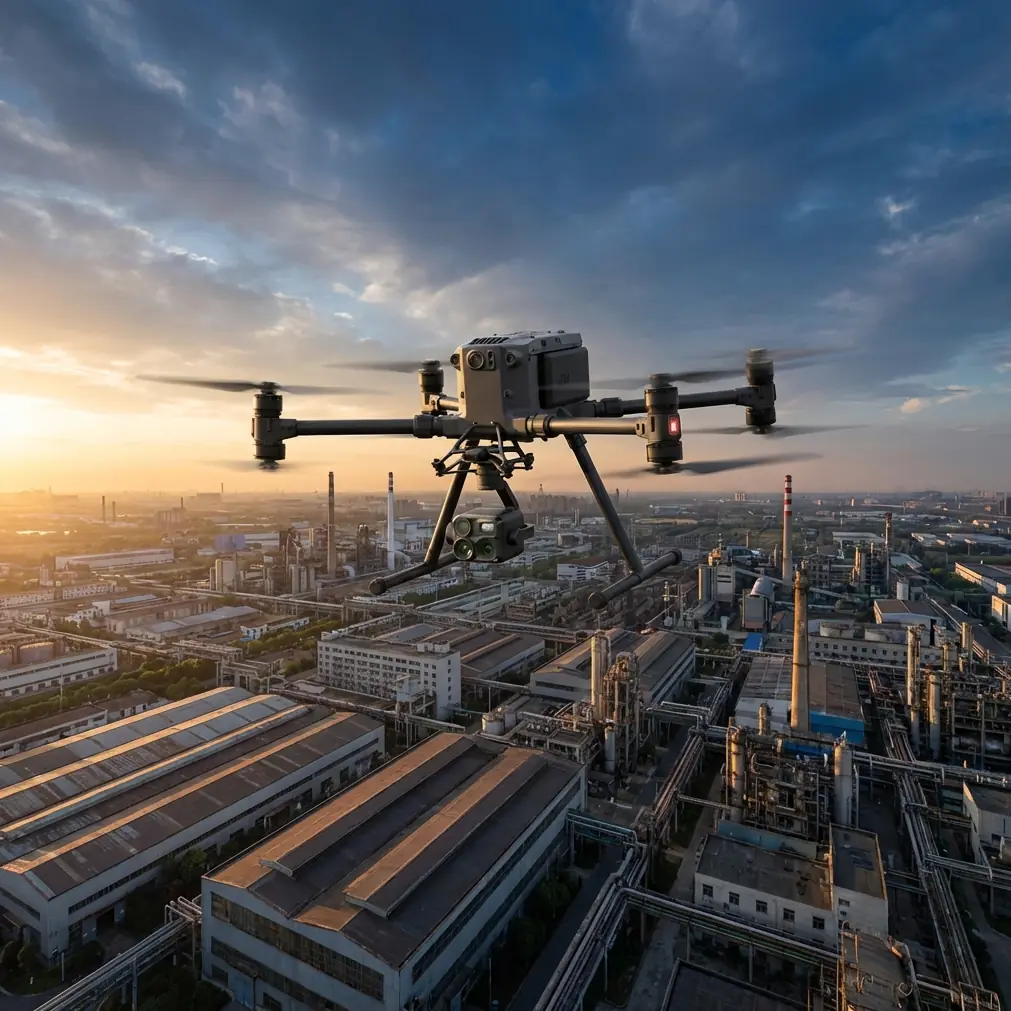
Matrice 4 in Windy Construction Conditions: A Field Case Study on Capture Discipline, Sensor Judgment, and Data You Can Actually Use
META: A practical Matrice 4 case study for windy construction site capture, covering photogrammetry, thermal workflows, O3 transmission, AES-256 security, hot-swap battery planning, and field best practices.
Wind changes everything on a construction site.
It changes the aircraft’s attitude in flight, the overlap consistency in a mapping run, the confidence of the pilot, and the usefulness of the final dataset. On paper, many drone missions look simple: fly the grid, collect the images, process the model, deliver the outputs. In the field, especially around steel, concrete, cranes, dust, temporary structures, and open elevations, the difference between a clean capture and a compromised one is often decided by how well the aircraft and crew handle instability.
That is where the Matrice 4 story gets interesting.
Rather than treating it as just another enterprise airframe, it makes more sense to look at it through a real operational lens: a windy construction documentation job, multiple stakeholders waiting on outputs, and a site team that needs both visual confidence and measurable data. This is not about generic capability claims. It is about what matters when you are trying to capture a dynamic site without wasting daylight, battery cycles, or processing time.
The assignment: progress capture under difficult wind
A recent construction documentation workflow centered on a large mixed-use build with exposed upper decks and minimal wind shelter. The brief was straightforward enough: produce current orthomosaic coverage, collect oblique imagery for stakeholder reporting, and use thermal signature review to identify moisture risk areas around recently enclosed sections of the structure.
The challenge was less straightforward. Wind sweeping across unfinished elevations was creating inconsistent gusts, especially along the perimeter where the site opened toward undeveloped land. That kind of airflow is exactly what exposes weaknesses in a platform, in mission planning, and in image discipline. If the drone struggles to maintain stable lines or camera orientation, the photogrammetry deliverable suffers first. You may still come home with hundreds of photos, but volume is not the same thing as usable data.
The Matrice 4 earns its place in this kind of work by combining three things that matter together, not separately: transmission reliability, disciplined sensor output, and practical field endurance.
Why O3 transmission matters more on a construction site than in a brochure
Construction pilots tend to talk about wind, batteries, and cameras. They should also talk more about link confidence.
On a complex site, signal quality is not a minor comfort feature. With cranes, rebar, concrete cores, scaffold, and temporary site cabins interfering with line of sight, transmission resilience affects command timing and visual awareness. The O3 transmission stack is operationally significant because it helps preserve a stable control and video link when site geometry gets messy. That matters in gusting conditions, where small delays in feedback can become larger path deviations over a long mapping leg.
For progress capture, that translates into tighter management of flight lines and cleaner execution of planned overlap. For visual inspection passes, it means the pilot can hold position and make more confident framing choices around facade details, roof penetrations, and material transitions. On a windy day, a stable link is not just nice to have. It directly supports image consistency, and image consistency is what makes downstream photogrammetry and reporting more trustworthy.
Hot-swap batteries change the rhythm of the day
Battery management on construction work is often discussed as a matter of endurance. In reality, it is also a matter of continuity.
Hot-swap batteries are one of those details that look ordinary until the schedule gets tight. On a live site, the ability to turn the aircraft around without a slow operational reset helps preserve mission momentum. It keeps the crew focused, the airframe moving, and the capture sequence coherent. That becomes especially useful when wind windows are inconsistent. If gusts ease for twenty minutes, you want to exploit that cleanly instead of losing part of the opportunity to battery handling friction.
In this case, hot-swap capability supported a segmented capture strategy. The crew broke the site into priority zones: first the exposed upper deck grid while the light and conditions were acceptable, then lower elevation obliques, then thermal passes around envelope transitions. That sequencing reduced the risk of returning later to discover the wind had picked up enough to compromise image quality.
On sites where every department wants its own output, preserving that operational tempo is a bigger advantage than people expect.
Photogrammetry in wind: where crews actually win or lose
Photogrammetry is unforgiving of casual flying.
When the mission objective is a model, orthomosaic, or measurable progress surface, a drone is not simply “taking pictures.” It is collecting geometry. In windy conditions, geometry gets damaged by yaw variation, altitude inconsistency, unplanned speed changes, and motion blur. Even if the software can force a result, the confidence in that result drops.
With the Matrice 4, the real advantage is not a magic immunity to weather. No serious operator should suggest that. The advantage is that the platform gives a disciplined crew the tools to maintain a higher-quality dataset when conditions are less than ideal.
That means:
- preserving planned overlap despite gusts
- keeping camera behavior predictable across repeated passes
- maintaining confidence in the live feed through O3 transmission
- shortening downtime between sorties with hot-swap batteries
On this job, the crew also tied the model to GCPs. Ground control points remain one of the best ways to keep a construction deliverable honest, especially when clients will use it for progress validation against design intent or quantity tracking. Wind can introduce subtle capture errors, but a site anchored with GCPs gives the processing workflow a better reference framework. If your deliverable is meant to support real project decisions, not just pretty visuals, that extra control is worth the setup time.
Thermal signature work on a windy site needs judgment, not just a thermal camera
The phrase “thermal signature” gets thrown around too casually. On construction sites, thermal data is useful, but only if the operator respects environmental context.
Wind can cool surfaces unevenly. Sunload, recent rain, material type, and enclosure state can all distort a quick thermal interpretation. That is why thermal collection on this site was not treated as a standalone spectacle. It was paired with visual context and scheduled around the building’s construction sequence.
The target areas were not random. They included recently enclosed facade sections, roof edge transitions, and zones where the site manager suspected trapped moisture or insulation inconsistency. The value of using a platform like the Matrice 4 for this kind of task is not just that it can collect thermal imagery. It is that the aircraft can move from broad site documentation into targeted thermal review without breaking workflow.
Operationally, that matters because construction decisions rarely happen in isolated data silos. The site team wants to compare a thermal anomaly with the actual visual condition of the same area and then place it on the broader site context. One coordinated mission can provide all three.
A wildlife moment that tested the sensor workflow
Construction sites are not sterile environments. They overlap with drainage corridors, undeveloped land, rooftop nesting zones, and temporary water collection areas. During one upper elevation pass on this project, the pilot identified movement near a partially screened roof section. A kestrel had crossed into the work area, likely hunting along the site perimeter where open ground met the new structure.
This is where sensor awareness and crew discipline matter more than bravado.
Rather than press the line and hope the bird veered away, the pilot used the live feed to assess separation, paused the run, adjusted the hold position, and repositioned for a safer restart after the airspace was clear. It was a small interruption, but a revealing one. Enterprise capture on construction sites is not just about fighting wind and meeting deadlines. It is also about understanding that sensors are part of a situational awareness system, not merely image collection tools.
That wildlife encounter had a practical outcome: the crew revised the roofline sequence to avoid repeated transitions through the same airspace corridor. The result was safer, cleaner, and ultimately faster than forcing the original path.
Security matters when project data is sensitive
Many construction teams now understand that aerial data is part of the project record. Fewer fully appreciate that it is also a security asset.
Detailed imagery of structural progress, MEP staging, access routes, and stored materials can expose sensitive commercial information if handled poorly. That is why AES-256 matters. In practical terms, it supports a stronger data security posture around transmitted and stored mission information. On a major site with multiple stakeholders, subcontractors, and external reporting requirements, secure handling of aerial data should be a baseline expectation.
This is not a glamorous feature, but it is a significant one. If the drone program is mature enough to support regular progress capture, then the data pipeline should be mature enough to respect confidentiality as well.
Can the Matrice 4 fit longer corridor and expanded site operations?
The term BVLOS often appears in enterprise drone discussions for good reason. Large project footprints, utility-linked developments, perimeter roads, and logistics corridors can quickly outgrow simple visual line-of-sight workflows. Whether a Matrice 4 deployment is actually used in a BVLOS framework depends on local regulations, approvals, operating procedures, and risk assessment. But from a planning standpoint, this matters for construction firms with sprawling sites or connected infrastructure packages.
The more relevant point for most readers is this: even when missions remain fully within standard visual oversight, the same attributes that make a platform useful for structured extended operations—stable link performance, efficient battery turnover, reliable sensor handoff, secure data practices—also improve ordinary site work.
So if your use case today is weekly progress mapping, those same strengths can still justify the platform long before any advanced operational framework enters the picture.
Practical capture best practices for windy construction work with Matrice 4
A capable aircraft helps. Method matters more.
Here is what consistently improved output quality on this type of mission:
1. Split the site by exposure, not just geography
Do not divide zones only by building section. Divide them by how wind behaves. Upper decks, facade corners, crane-adjacent airspace, and open perimeter areas should be treated as separate environmental problems.
2. Prioritize mapping before cinematic obliques
If the model is the critical deliverable, capture the photogrammetry dataset while conditions are cleanest. Obliques are more forgiving. Mapping runs are not.
3. Use GCPs when accountability matters
If the client wants repeatable measurement or defensible change tracking, GCPs improve confidence. They are especially useful when weather conditions are not ideal.
4. Treat thermal as a diagnostic layer, not a headline feature
Thermal output without environmental context can mislead. Pair it with visual imagery and site knowledge.
5. Build battery strategy around weather windows
Hot-swap batteries are most valuable when they help you exploit a short improvement in conditions. Plan sorties around likely wind lulls, not just battery percentages.
6. Brief for wildlife and site movement
Birds, mobile plant, suspended loads, and shifting access routes all affect mission safety and efficiency. A good preflight on a construction site should account for more than obstacles and GPS lock.
What makes Matrice 4 a strong fit for this reader scenario
For someone capturing construction sites in windy conditions, the Matrice 4 stands out not because it removes complexity, but because it handles complexity without turning every mission into a compromise.
The O3 transmission system supports steadier command and video confidence when site structures interfere with line of sight. Hot-swap batteries preserve workflow continuity during narrow weather windows. AES-256 aligns with the reality that project imagery is sensitive operational data. And the combination of visual and thermal capability gives site teams a more complete picture of progress and potential issues in a single field session.
That combination becomes especially valuable when deliverables are not just for one audience. Project managers want progress records. Survey teams want clean photogrammetry. Facilities and envelope specialists want thermal context. Executives want concise reporting. A flexible aircraft only matters if it can serve all of those demands without creating a fragmented workflow.
The Matrice 4 can.
If you are planning a similar construction capture workflow and want to compare field setups, this direct WhatsApp conversation can help: message our enterprise drone team
The real takeaway from the field
Windy construction capture is where weak assumptions get exposed.
You learn quickly whether your aircraft maintains discipline, whether your crew understands data quality beyond visual appeal, and whether your workflow can adapt when the site throws something unexpected at you—like a gust pattern around a concrete core or a kestrel cutting across the roofline.
The Matrice 4 is best understood in that environment. Not as a spec sheet object, but as a working platform for teams that need accurate, secure, repeatable site intelligence. When used with proper GCP planning, thoughtful thermal interpretation, strong flight sequencing, and realistic wind judgment, it becomes more than a camera in the sky. It becomes part of the project control process.
That is the standard construction teams should care about.
Ready for your own Matrice 4? Contact our team for expert consultation.