
Matrice 4 on a Frozen Jobsite: A Field Report on Inspection
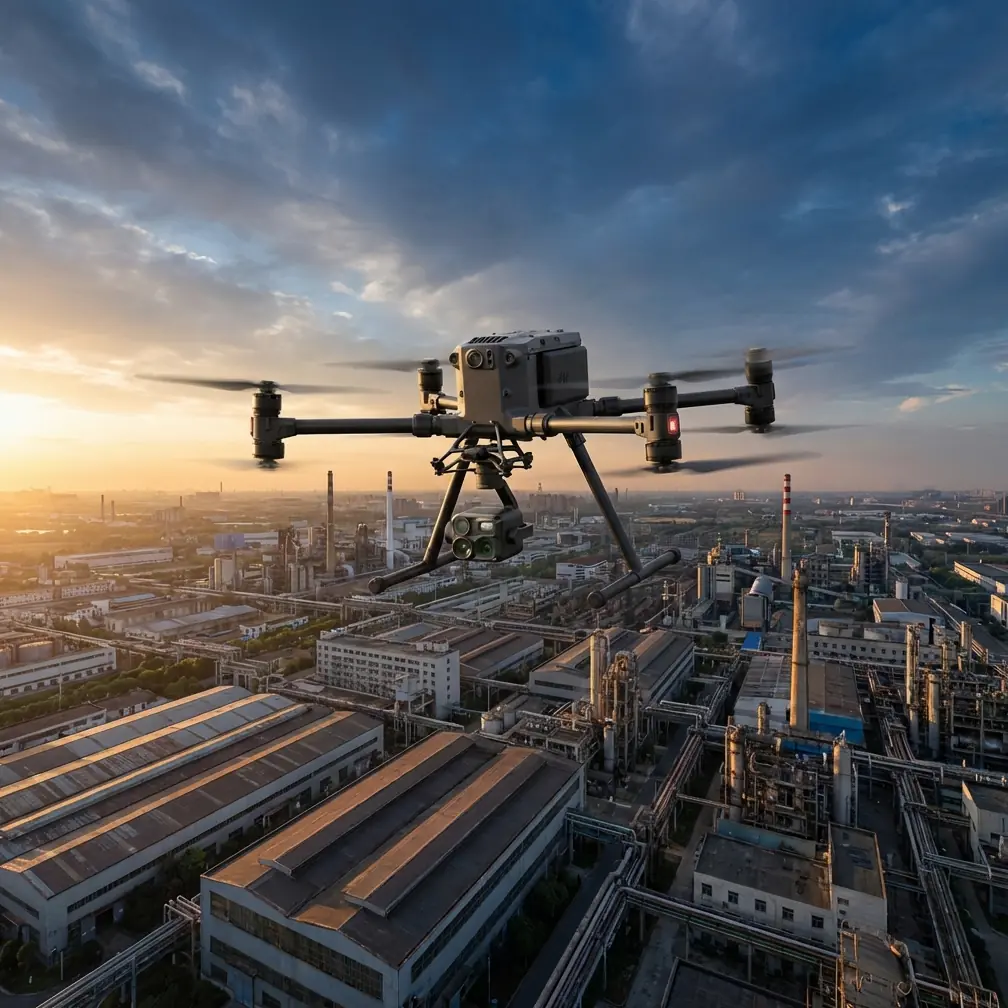
Matrice 4 on a Frozen Jobsite: A Field Report on Inspection Discipline, Thermal Clarity, and What Actually Keeps Missions Moving
META: Expert field report on using Matrice 4 for construction site capture in extreme temperatures, covering thermal inspection logic, maintenance discipline, error handling, transmission reliability, and mapping workflow.
I spent part of this winter on a construction corridor where the weather was swinging hard enough to expose every weak point in an aerial workflow. Batteries felt the cold first. Plastics stiffened. Frost built up in places crews usually ignore. The site itself was a mix of steel, poured concrete, temporary power, drainage runs, and partially enclosed structures that trapped heat in uneven ways. It was exactly the kind of environment where a Matrice 4 stops being a spec-sheet topic and becomes a test of systems thinking.
That is the right frame for this aircraft.
A lot of coverage around Matrice 4 tends to flatten the conversation into camera options, flight time, and whether it can produce clean models. Those things matter. But on a construction site in extreme temperatures, the more revealing question is this: can the aircraft help a team spot developing problems early enough to avoid downtime, rework, or safety-related operational delays?
That idea is straight out of established civil aircraft support philosophy. One of the core principles in maintenance planning is that inspections should reveal early signs of structural or system issues before they turn into consequences that affect use. That sounds abstract until you apply it to a live jobsite. Then it becomes very practical. You are no longer just flying for pretty visuals. You are trying to detect heat loss at a temporary enclosure, moisture intrusion around a roof tie-in, deformation near a façade anchor zone, overloaded temporary electrical components, blocked drainage paths, or surface anomalies that suggest a problem is starting rather than finished.
That shift in mindset is where Matrice 4 becomes valuable.
The mission was not “mapping the site.” It was separating signal from weather.
On one pre-dawn run, the goal was straightforward: capture thermal signature changes across a concrete staging area, a partially finished mechanical floor, and the outer envelope where overnight temperature differentials were likely to show insulation gaps and moisture behavior. The visible data was for context. The thermal layer was the real reason we launched.
Extreme temperatures distort judgment as much as they stress hardware. Crews often assume a visible frost line tells the whole story. It rarely does. Thermal imaging can expose uneven heat retention, but only if the flight is structured around repeatability. Same route. Same altitude bands. Controlled overlap. Stable transmission. Consistent timing relative to sunrise. If you don’t control those variables, your data becomes anecdotal.
The Matrice 4 handled that repeatability well, especially when paired with a disciplined photogrammetry plan and properly placed GCPs. Ground control points still matter, even when the conversation starts with thermal work. On a construction project, thermal findings often need to be tied back to exact building elements, slab sections, rooftop penetrations, or utility runs. If the geometry is loose, the conversation with the site manager gets muddy fast. You can say “there’s a hotspot over there,” but that is not how remedial work gets assigned. Precision is what turns thermal observations into work orders.
Why old aviation maintenance logic fits modern drone construction work
One detail from civil aircraft maintenance manuals deserves more attention in drone operations: the depth of an inspection depends on accessibility. In manned aviation, that can mean opening access panels, doors, or fairings to get close enough to inspect the relevant area properly. On a construction site, Matrice 4 becomes the airborne equivalent of that access strategy.
It allows teams to get close to façade joints, parapet transitions, temporary roof membranes, cable trays, exterior mechanical runs, and cladding details without building access around every single question. That does not eliminate physical inspection. It improves the odds that physical inspection happens in the right place.
Another detail from that same maintenance doctrine is even more useful in field operations: inspection criteria should not stop at obvious damage. The checklist includes things like cracks, deformation, dents, wear, leaks, overheating, fastener issues, damage to protective coatings, corrosion signs, and blocked drainage paths. Translate that into a winter construction environment and you have a powerful template for Matrice 4 mission design.
Instead of flying one generic “site progress” mission, break the job into problem classes:
- Structural surface changes
- Water intrusion indicators
- Overheating electrical components
- Drainage blockages
- Exterior wear at temporary installations
- Protective membrane inconsistencies
- Mechanical equipment heat anomalies
That is much closer to how experienced asset teams think. It also produces more useful data than broad, undirected capture.
The avionic lesson that matters in the field: not every problem should interrupt the mission
One of the more interesting references in the source material deals with mixed periodic and non-periodic task transmission. Put simply, systems work better when routine tasks run predictably, while asynchronous events can be inserted when needed. There is also a practical fault-handling model: non-critical errors can be logged into a queue and processed after the periodic task finishes, while high-priority faults should interrupt the flow immediately.
That architecture has obvious relevance for drone operations on a harsh construction site.
Your periodic tasks are the repeatable parts of the mission: grid flight, oblique capture set, thermal sweep, progress route, control-point checks, battery swap timing, and file verification. Your asynchronous tasks are the things the site throws at you: sudden crane movement, reflective glare from a newly installed panel, an unexpected heat plume from temporary equipment, a wind shift through a narrow corridor, or a wildlife interruption.
We had one of those interruptions halfway through a thermal pass near a drainage edge. A fox had moved into the warm gravel berm beside a runoff channel and was nearly invisible in visible light against the pre-dawn site clutter. The thermal sensor picked it up immediately as a distinct moving signature, and the route was adjusted before the aircraft closed the gap. That sounds like a small anecdote, but it captures the operational significance of good sensor integration. Thermal is not only for building diagnostics. It also gives the pilot an extra layer of environmental awareness when visibility, contrast, and temperature are working against you.
The larger point is this: Matrice 4 missions benefit from an error-management mindset borrowed from mature aviation systems. Minor irregularities should be captured, tagged, and reviewed without collapsing the whole workflow. Serious faults need immediate response. If your team treats every warning, anomaly, or transmission blip the same way, you either overreact or miss something that matters.
Transmission reliability is not glamorous, but it decides whether cold-weather data is usable
Construction professionals love talking about payloads. They should talk more about link integrity.
On a large site with steel, temporary offices, utility interference, and changing topography, O3 transmission stability becomes part of data quality, not just pilot convenience. If your live feed stutters while you are trying to evaluate thermal behavior around a roof edge or upper façade, you lose the confidence to make on-the-fly route adjustments. If your transmission is strong and your encryption layer is solid, including AES-256 where the workflow requires secured handling, the aircraft fits more comfortably into enterprise documentation practices.
This matters even more on projects where data moves quickly between field teams, consultants, and remote stakeholders. Some operators only think about BVLOS in terms of regulatory scope or range. A more grounded way to think about it is operational continuity: can the system maintain enough confidence in communication and situational awareness to support extended corridor work, perimeter documentation, or distributed site monitoring when the site footprint is too large for constant close-proximity hovering?
Even when the mission stays well within conventional site boundaries, the underlying discipline is the same. Good transmission lets the pilot preserve the mission rhythm. That means fewer broken capture sequences, fewer missed overlap zones, and fewer awkward re-flights later in the week when the light and thermal conditions have changed.
Hot-swap batteries are more than a convenience in extreme temperatures
Cold weather punishes downtime.
When crews have to stop a mission, walk back, power down awkwardly, warm batteries manually, and rebuild the route from memory, the hidden cost is not just time. It is data inconsistency. Thermal comparison loses value when timing slips. Shadow geometry changes. Site activity changes. Vehicles move. Temporary generators cycle differently. Workers open and close access points. The whole picture shifts.
That is why hot-swap batteries are operationally significant. They help preserve continuity in the capture window. On a site where the most useful thermal contrast may only last a narrow slice of the morning, the difference between a clean battery transition and a fragmented reset is enormous.
This is one of those areas where serious operators quietly separate themselves from hobby-minded workflows. The aircraft is only one piece. Battery staging, preheating strategy, route sequencing, and file handling are just as important.
Testing culture matters more than brand loyalty
Another reference detail worth pulling into the Matrice 4 discussion comes from avionics validation: interface testing should verify compatibility against a standard, with attention to electrical characteristics, protocol behavior, and noise. The source mentions 1553B and formal compatibility testing, which belongs to a very different aircraft domain, but the principle transfers perfectly.
Commercial drone teams should build the same habit at their own scale.
Do not assume that your payload settings, capture intervals, thermal palettes, RTK corrections, controller firmware, and data export chain are “fine” because they worked on the last project. Test them as a system. Verify behavior before the weather window opens. Run known-condition checks. Confirm your deliverable pipeline from field acquisition to map output to stakeholder review. Extreme temperatures expose weak interfaces fast.
That kind of discipline sounds excessive until the first day your thermal layer and visual layer don’t align cleanly, or your mapping output drifts enough to weaken confidence in progress claims. A Matrice 4 is capable hardware. Capability is not the same as assurance.
What the best Matrice 4 construction teams do differently
They do not treat site capture as one task.
They treat it as a chain:
- Define the operational question.
- Match sensors to that question.
- Structure repeatable routes.
- Control variables with GCPs and timing.
- Preserve continuity with battery planning.
- Log anomalies instead of improvising around them.
- Escalate only truly critical issues during the mission.
- Turn findings into location-specific actions.
That sequence is why some drone reports get ignored while others change the day’s work plan.
If you are evaluating Matrice 4 for construction in extreme temperatures, that is the lens I would use. Not “can it fly in the cold?” Most professional platforms can, within proper limits and procedures. The sharper question is whether the aircraft helps your team detect early-stage issues, maintain data integrity under environmental stress, and keep inspection logic consistent enough that site managers trust the output.
When it does, the value compounds. Thermal signature review becomes more than a novelty. Photogrammetry becomes more than a progress archive. The drone becomes part of the project’s diagnostic routine.
And that is what happened on this site. By the end of the week, the most useful findings were not the dramatic aerial hero shots. They were the quieter indicators: uneven thermal behavior along a temporary enclosure seam, a suspect drainage path beginning to trap freeze-thaw runoff, and a recurring hotspot around site power infrastructure that warranted closer inspection. None of those would have stood out as clearly from the ground. None required guesswork once the imagery was tied to accurate site geometry.
If you are building your own Matrice 4 workflow around winter capture, start there. Think like a maintenance planner, not just a pilot. Build routes around early warning signs. Respect asynchronous disruptions without letting them wreck the mission. Test your data chain the way serious avionics teams test interfaces. Use thermal and visible capture as evidence, not decoration.
If you need to compare notes on site setup or mission planning, you can message a field specialist here.
That is how Matrice 4 earns its place on a hard-weather construction project: not by flying despite the cold, but by making the cold reveal what the site is trying to hide.
Ready for your own Matrice 4? Contact our team for expert consultation.