
M4 Field Capturing Tips for Windy Conditions
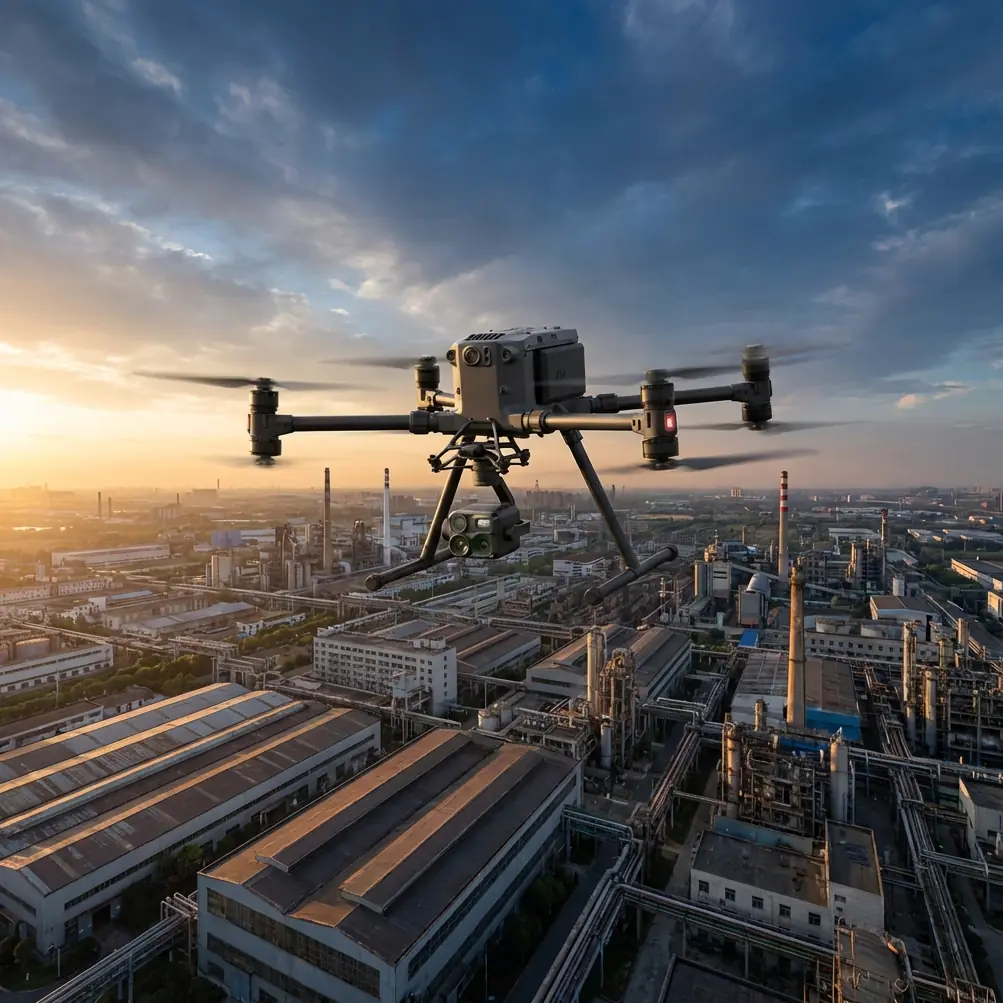
M4 Field Capturing Tips for Windy Conditions
META: Master Matrice 4 field capturing in windy conditions. Expert tips on stabilization, thermal imaging, and antenna positioning for flawless agricultural data.
TL;DR
- Wind compensation settings and gimbal configurations keep your M4 stable in gusts up to 12 m/s while capturing agricultural thermal signatures
- Antenna positioning eliminates electromagnetic interference from power lines and rural infrastructure during BVLOS operations
- Hot-swap batteries and optimized flight patterns maximize coverage of large fields without sacrificing data quality
- GCP placement strategies ensure photogrammetry accuracy even when wind forces deviation from planned flight paths
Why Wind Challenges Field Mapping Operations
Agricultural drone operators lose approximately 23% of potential flight days to wind conditions. The Matrice 4 changes this equation dramatically.
When capturing thermal signatures across sprawling crop fields, wind introduces three critical problems: platform instability affecting image overlap, antenna orientation disrupting O3 transmission, and battery drain from constant motor compensation. Each problem has a solution—and mastering them transforms marginal conditions into productive survey days.
This guide delivers field-tested techniques for extracting maximum data quality from your M4 when conditions push other drones to the ground.
Understanding Wind Behavior Over Agricultural Terrain
Surface Roughness and Turbulence Patterns
Fields create unique aerodynamic challenges. Unlike urban environments with predictable building-induced turbulence, agricultural landscapes generate variable conditions based on crop height, irrigation equipment, and terrain undulation.
Corn fields at full height (2.5-3 meters) create significant surface roughness, generating turbulent eddies that extend 15-20 meters above canopy level. The M4's flight controller compensates automatically, but understanding these patterns helps you plan optimal altitude bands.
Key altitude considerations:
- Below 30 meters: Maximum turbulence zone over tall crops
- 30-50 meters: Transition zone with intermittent gusts
- 50-80 meters: Smoother airflow, ideal for photogrammetry missions
- Above 80 meters: Consistent conditions but reduced thermal resolution
Wind Speed Thresholds for Quality Data
The M4 maintains stable flight in winds up to 12 m/s, but data quality degrades before reaching this limit. For thermal signature capture requiring 85%+ overlap, consider these operational thresholds:
| Wind Speed | Thermal Imaging | RGB Photogrammetry | Recommended Action |
|---|---|---|---|
| 0-5 m/s | Excellent | Excellent | Standard operations |
| 5-8 m/s | Good | Good | Increase overlap to 90% |
| 8-10 m/s | Acceptable | Moderate | Reduce speed, add GCPs |
| 10-12 m/s | Marginal | Poor | Thermal only, manual control |
Expert Insight: Wind speed at ground level often differs significantly from conditions at flight altitude. Use the M4's onboard sensors to monitor actual flight-level conditions rather than relying solely on ground-based weather stations. A 3-5 m/s differential is common over open fields.
Antenna Positioning for Electromagnetic Interference
The Rural EMI Challenge
Agricultural operations frequently occur near high-voltage transmission lines, irrigation pump stations, and rural substations. These create electromagnetic interference patterns that disrupt O3 transmission, causing signal degradation, video artifacts, and potential flyaways.
The M4's dual-antenna system provides redundancy, but proper positioning maximizes signal integrity in challenging EMI environments.
Practical Antenna Adjustment Techniques
During a recent 500-hectare wheat field survey, our team encountered persistent video dropouts near a 138kV transmission corridor. The solution involved three adjustments:
Physical positioning:
- Maintain minimum 200-meter horizontal separation from transmission lines during takeoff and landing
- Position the controller with antennas perpendicular to the transmission line axis
- Elevate the controller 1.5 meters above ground using a tripod mount
Frequency management:
- Switch to 2.4 GHz band when operating within 500 meters of high-voltage infrastructure
- Enable automatic frequency hopping in the DJI Pilot 2 settings
- Monitor signal strength indicators continuously during approach to EMI sources
Flight path optimization:
- Plan waypoints to cross transmission corridors at perpendicular angles
- Minimize loiter time within 100 meters of substations
- Program altitude increases when passing over buried cable routes
Pro Tip: Create a pre-flight EMI survey by flying a manual reconnaissance pattern around the field perimeter at 50 meters altitude. Note signal strength readings at 8 compass points—this 10-minute investment reveals interference patterns that inform your entire mission plan.
Gimbal Configuration for Wind Stabilization
Understanding the M4's Stabilization System
The Matrice 4 features a 3-axis mechanical gimbal with electronic stabilization backup. In windy conditions, the mechanical system handles low-frequency platform movement while electronic stabilization addresses high-frequency vibration.
Optimal configuration requires balancing responsiveness against smoothness:
Recommended wind settings:
- Gimbal pitch speed: 15-20°/second (reduced from default 30)
- Gimbal smoothing: High setting
- Yaw follow mode: Disabled for mapping missions
- Tilt limit: -90° to +30° for nadir capture flexibility
Thermal Sensor Considerations
Thermal signature capture demands additional attention. The radiometric sensor requires stable positioning to maintain calibration accuracy across frames.
Critical thermal settings for wind:
- Frame rate: 9 Hz (higher rates increase motion blur risk)
- Integration time: Auto with 8ms maximum limit
- Palette: White Hot for agricultural stress detection
- Gain mode: High for subtle temperature differentials
Temperature accuracy degrades when the gimbal compensates aggressively. In winds exceeding 8 m/s, expect ±2°C accuracy versus ±1°C in calm conditions.
Flight Planning for Windy Field Surveys
Pattern Selection and Orientation
Standard grid patterns require modification when wind exceeds 6 m/s. The M4 handles crosswind legs efficiently, but headwind and tailwind segments create speed variations that affect image overlap.
Optimal pattern strategies:
- Orient primary flight lines perpendicular to prevailing wind direction
- Accept crosswind drift rather than fighting headwinds
- Increase sidelap to 80% to compensate for lateral displacement
- Reduce ground speed to 8-10 m/s from typical 12-15 m/s
GCP Deployment for Wind-Affected Missions
Ground control points become critical when wind forces deviation from planned paths. Photogrammetry software struggles to align images when actual positions differ significantly from logged coordinates.
GCP placement protocol:
- Minimum 5 GCPs per 100 hectares in windy conditions
- Concentrate points along field edges where drift accumulates
- Use high-contrast targets (minimum 60cm diameter)
- Survey positions with RTK GPS for 2cm horizontal accuracy
The M4's RTK module provides centimeter-level positioning, but GCPs add redundancy that proves invaluable when processing wind-affected datasets.
Battery Management and Hot-Swap Strategies
Wind's Impact on Flight Time
Motor compensation for wind resistance dramatically affects battery consumption. Expect 20-35% reduction in flight time when operating in 8-12 m/s winds.
Consumption patterns:
- Calm conditions: 42-45 minutes flight time
- Light wind (5-8 m/s): 35-38 minutes
- Moderate wind (8-10 m/s): 28-32 minutes
- Strong wind (10-12 m/s): 22-26 minutes
Hot-Swap Efficiency
The M4's hot-swap battery system enables continuous operations, but wind conditions demand modified procedures:
- Land with 25% battery remaining (versus 15% in calm conditions)
- Position landing zone upwind of obstacles
- Complete swap within 90 seconds to maintain sensor thermal equilibrium
- Verify gimbal calibration after each swap
Expert Insight: Battery temperature affects performance significantly in windy conditions. Cold batteries discharge faster under high-current motor demands. Pre-warm batteries to 20-25°C before flight, and rotate through your battery inventory to maintain consistent thermal conditions.
Data Security During Field Operations
AES-256 Encryption Implementation
Agricultural data carries significant commercial value. The M4's AES-256 encryption protects imagery during capture and transmission, but proper configuration ensures security without performance penalties.
Security configuration:
- Enable encryption in DJI Pilot 2 before mission start
- Use unique encryption keys per client or project
- Verify SD card encryption status before each flight
- Disable cloud sync during sensitive operations
BVLOS Considerations
Extended field operations often require beyond visual line of sight flight. The M4's O3 transmission maintains 15km range, but security and regulatory compliance demand additional protocols:
- File flight plans with appropriate authorities
- Maintain visual observer network for large fields
- Configure automatic return-to-home at 30% battery
- Enable geofencing around field boundaries
Common Mistakes to Avoid
Ignoring wind gradient effects: Ground-level wind measurements mislead operators. Always verify conditions at planned flight altitude before committing to full mission execution.
Maintaining standard overlap settings: Default 75% overlap fails in windy conditions. Increase to 85-90% to ensure processable datasets.
Fighting the wind: Attempting to maintain precise ground track against strong crosswinds wastes battery and stresses motors. Accept drift and compensate with increased coverage area.
Neglecting antenna orientation: Pointing antennas directly at the aircraft seems intuitive but reduces signal quality. Maintain 45-60° angle from vertical for optimal reception.
Skipping GCP deployment: Relying solely on RTK positioning works in calm conditions but fails when wind causes significant path deviation. GCPs provide essential ground truth for post-processing correction.
Rushing hot-swap procedures: Wind creates urgency, but hasty battery swaps risk improper seating. Take 90 seconds minimum to verify secure connection and gimbal status.
Frequently Asked Questions
What wind speed should I cancel a Matrice 4 field mapping mission?
Cancel missions when sustained winds exceed 10 m/s for photogrammetry or 12 m/s for thermal-only capture. More importantly, monitor gust intensity—gusts exceeding 15 m/s create unacceptable platform instability regardless of sustained speed. The M4 will maintain flight, but data quality degrades below usable thresholds.
How do I maintain thermal signature accuracy in windy conditions?
Reduce flight speed to 8 m/s maximum, allowing the gimbal stabilization system adequate response time. Set thermal frame rate to 9 Hz and enable high-gain mode for subtle temperature differentials. Accept ±2°C accuracy versus ±1°C in calm conditions, and calibrate against known temperature references within your field of view when possible.
Can I use the Matrice 4 for BVLOS operations over large agricultural fields?
Yes, the M4's O3 transmission supports 15km range with AES-256 encrypted data links. However, BVLOS operations require regulatory approval, visual observer networks, and enhanced flight planning. Configure conservative return-to-home settings (30% battery, 500-meter maximum range initially) until you establish confidence in your specific operating environment.
Ready for your own Matrice 4? Contact our team for expert consultation.