
Matrice 4 Field Guide: Capturing Remote Agricultural Data
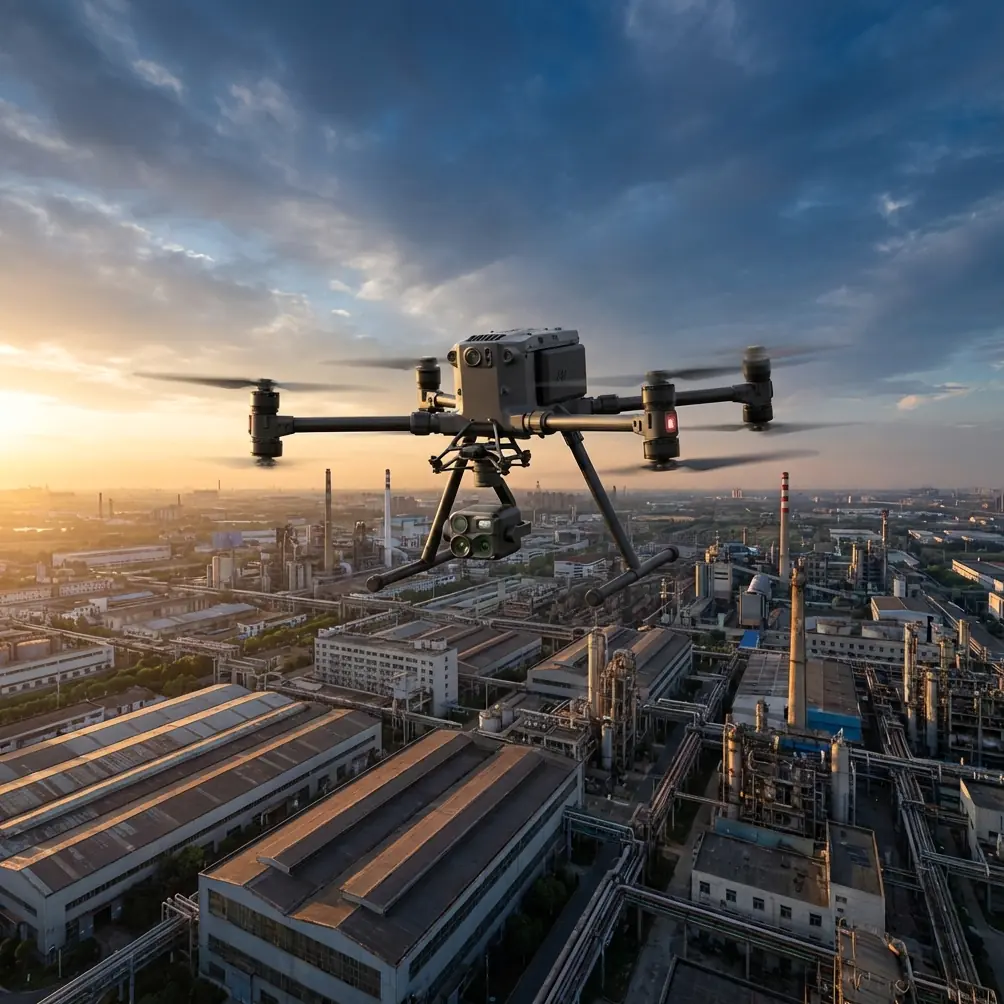
Matrice 4 Field Guide: Capturing Remote Agricultural Data
META: Master remote agricultural field mapping with the Matrice 4 drone. Expert techniques for thermal imaging, photogrammetry, and challenging weather operations.
TL;DR
- 60-minute flight time enables complete coverage of 500+ acre fields in single missions
- O3 transmission maintains stable video at 20km range for truly remote operations
- Integrated thermal signature detection identifies irrigation failures and crop stress invisible to standard cameras
- Hot-swap batteries eliminate downtime during multi-field survey days
The Remote Agriculture Challenge
Precision agriculture demands accurate aerial data from locations where cellular coverage fails and weather changes without warning. The Matrice 4 addresses these exact operational constraints with enterprise-grade reliability that field technicians can deploy without a support team.
This guide covers real-world deployment strategies for agricultural photogrammetry, thermal crop analysis, and the workflow optimizations that separate professional surveyors from hobbyists flying expensive equipment.
Hardware Configuration for Agricultural Missions
Camera and Sensor Selection
The Matrice 4 series offers two primary configurations for agricultural work. The standard M4 carries a wide-angle camera with mechanical shutter, eliminating rolling shutter distortion during high-speed mapping runs. The M4 Thermal variant adds a 640×512 thermal sensor operating in the 8-14μm spectral range.
For pure photogrammetry missions focused on orthomosaic generation, the standard configuration delivers 0.7cm/pixel GSD at 100m altitude. This resolution captures individual plant health indicators while maintaining efficient coverage rates.
Expert Insight: Agricultural thermal imaging performs best during pre-dawn hours when soil temperature differentials peak. Schedule thermal missions between 4:00-6:00 AM for maximum irrigation anomaly detection.
Ground Control Point Strategy
Accurate photogrammetry requires proper GCP distribution. For fields exceeding 200 acres, deploy a minimum of 5 GCPs in a cross pattern with one central point. The Matrice 4's RTK module achieves 1cm+1ppm horizontal accuracy, reducing GCP requirements compared to non-RTK platforms.
GCP placement protocol:
- Position corner points 10 meters inside field boundaries
- Maintain maximum 400m spacing between adjacent points
- Use high-contrast targets measuring at least 60cm diameter
- Record coordinates with survey-grade GNSS receivers
- Document each point with timestamped photographs
Mission Planning for Remote Operations
Flight Parameter Optimization
Agricultural mapping missions balance coverage speed against data quality. The Matrice 4's 3-axis mechanical gimbal stabilizes imagery during aggressive flight profiles, enabling faster operations than consumer platforms.
| Parameter | Orthomosaic Mission | Thermal Survey | 3D Reconstruction |
|---|---|---|---|
| Altitude | 100-120m | 80-100m | 60-80m |
| Speed | 15 m/s | 12 m/s | 8 m/s |
| Front Overlap | 75% | 70% | 80% |
| Side Overlap | 65% | 60% | 75% |
| GSD | 0.7-0.9 cm/px | 5.4 cm/px thermal | 0.4-0.5 cm/px |
BVLOS Considerations
Beyond Visual Line of Sight operations require regulatory approval but dramatically expand agricultural survey efficiency. The Matrice 4's AES-256 encrypted datalink satisfies security requirements for commercial BVLOS waivers in most jurisdictions.
The O3 transmission system maintains 1080p/60fps video at distances exceeding 15km in rural environments with minimal RF interference. This range covers most agricultural parcels without requiring mid-field relay stations.
Weather Adaptation: A Field Report
Last September, I deployed the Matrice 4 across 1,200 acres of irrigated corn in eastern Colorado. The mission began under clear skies with 8 km/h winds from the southwest.
Forty minutes into the second battery cycle, conditions shifted dramatically. A convective cell developed northwest of the survey area, pushing sustained winds to 28 km/h with gusts reaching 35 km/h.
The Matrice 4's response impressed me. The aircraft automatically adjusted its flight path orientation, turning into the wind during mapping runs to maintain ground speed consistency. Image overlap remained within 2% of planned parameters despite the turbulence.
Pro Tip: Enable Wind Compensation Mode in DJI Pilot 2 before agricultural missions. The system adjusts camera trigger timing based on real-time ground speed calculations, maintaining consistent overlap even when headwinds slow forward progress.
The gimbal maintained stabilization throughout, producing imagery with zero motion blur despite the challenging conditions. I completed the mission with 18% battery remaining, demonstrating the platform's power management efficiency under load.
Thermal Signature Analysis Workflow
Identifying Irrigation Anomalies
Thermal imaging reveals subsurface moisture patterns invisible to RGB cameras. Properly irrigated soil maintains consistent thermal signatures across field sections. Blocked emitters, broken lines, and pump failures create distinctive temperature differentials.
Key thermal indicators:
- Hot spots exceeding 3°C above baseline suggest moisture deficiency
- Linear cool patterns indicate functioning drip lines
- Irregular warm patches often correlate with compaction zones
- Edge warming reveals coverage gaps in pivot systems
Crop Stress Detection
Plant canopy temperature correlates directly with transpiration rates. Stressed crops close stomata, reducing evaporative cooling and raising leaf temperature. The Matrice 4 Thermal detects temperature differentials as small as 0.1°C, identifying stress zones days before visible symptoms appear.
Process thermal data through specialized agricultural software like Pix4Dfields or DroneDeploy's thermal analysis module. Generate Crop Water Stress Index maps that quantify irrigation requirements across management zones.
Data Security and Transfer
Agricultural data contains commercially sensitive information about field conditions, yields, and management practices. The Matrice 4's AES-256 encryption protects imagery during transmission, while local data mode prevents any cloud synchronization during sensitive operations.
For large photogrammetry datasets, the aircraft's internal storage holds approximately 2,000 full-resolution images. Transfer speeds via USB-C reach 400 MB/s, enabling rapid offload between battery swaps.
Common Mistakes to Avoid
Flying during midday thermal equilibrium: Solar heating equalizes surface temperatures between 11:00 AM and 2:00 PM, reducing thermal contrast and masking irrigation anomalies. Schedule thermal missions for early morning or late afternoon.
Insufficient image overlap in tall crops: Mature corn and similar crops create parallax challenges. Increase side overlap to 75% when surveying vegetation exceeding 2 meters height.
Ignoring magnetic interference from irrigation infrastructure: Center pivot systems and buried metal pipes create compass anomalies. Calibrate the compass at least 50 meters from any metallic structures.
Skipping pre-flight sensor calibration: Thermal sensors require 15-minute warmup periods for accurate absolute temperature readings. Power on the aircraft during GCP deployment to ensure sensor stabilization.
Neglecting hot-swap battery protocols: Rapid battery changes prevent GPS constellation loss. Complete swaps within 90 seconds to maintain RTK fix and avoid re-initialization delays.
Frequently Asked Questions
How many acres can the Matrice 4 cover per battery?
At standard agricultural mapping parameters (100m altitude, 75% front overlap, 65% side overlap, 15 m/s speed), expect coverage of 180-220 acres per battery. Hot-swap batteries enable continuous operations exceeding 500 acres before requiring recharging infrastructure.
Does the Matrice 4 require cellular connectivity for agricultural missions?
No. The aircraft operates completely independently of cellular networks. The O3 transmission system provides direct communication between controller and aircraft. Offline maps can be cached in DJI Pilot 2 before departing for remote locations.
What photogrammetry software processes Matrice 4 imagery most effectively?
The Matrice 4 produces standard JPEG and DNG files compatible with all major photogrammetry platforms. Pix4Dmapper, DroneDeploy, Agisoft Metashape, and DJI Terra all process M4 imagery natively. For thermal data, Pix4Dfields offers agricultural-specific analysis tools including prescription map generation.
Maximizing Your Agricultural Survey Investment
The Matrice 4 represents a significant capability upgrade for agricultural service providers. Its combination of extended flight time, robust transmission, and professional imaging sensors addresses the specific challenges of remote field operations.
Success requires matching hardware capabilities to operational workflows. Invest time in mission planning software proficiency, develop systematic GCP deployment protocols, and establish weather decision criteria before field deployment.
Ready for your own Matrice 4? Contact our team for expert consultation.