
Capturing Coastal Fields With Matrice 4: A Practical Flight
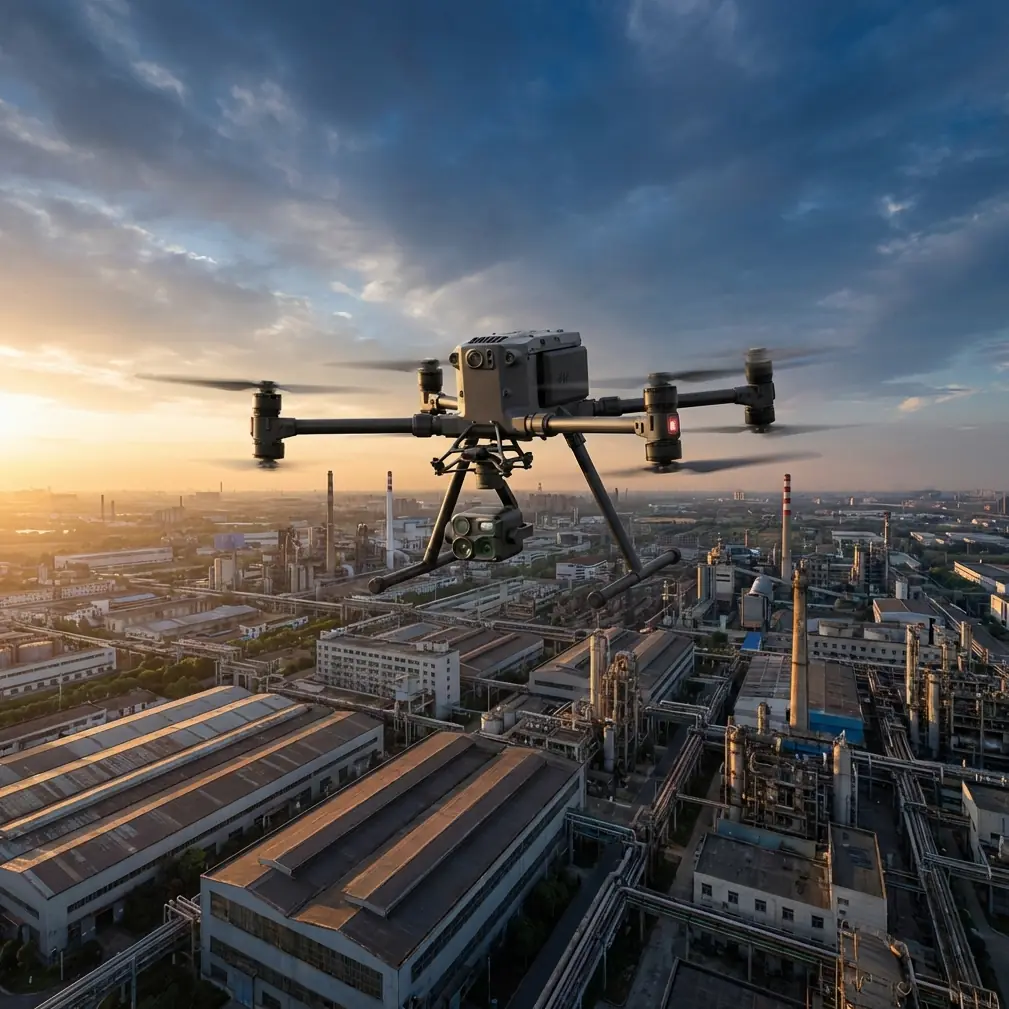
Capturing Coastal Fields With Matrice 4: A Practical Flight Strategy for Wind, Salt, and Patchy Light
META: Expert guide to using DJI Matrice 4 for coastal field mapping, thermal inspection, and reliable data capture with stronger workflows for wind, glare, and uneven terrain.
Coastal agriculture looks simple from a distance. Flat fields. Open sky. Easy access. In practice, it is one of the more punishing environments for aerial data collection. Wind direction changes fast. Salt haze softens contrast. Wet soil and standing water confuse thermal reads. Reflective surfaces make RGB reconstruction less forgiving than many operators expect.
That is exactly where the Matrice 4 becomes interesting.
Not because it magically removes the environmental penalties. It does not. What it does offer is a workflow advantage when the mission requires more than just pretty overhead imagery. If your goal is to capture usable field intelligence along a coastal margin—crop stress, drainage issues, plant stand irregularity, edge erosion, or heat anomalies from irrigation hardware—the Matrice 4 can be set up as a disciplined survey platform rather than a general-purpose flying camera.
I approach this from the perspective of operations, not brochure language. The real question is not whether the Matrice 4 is advanced. It is whether it helps you return from a coastal field with cleaner data, fewer reflights, and stronger confidence in what the maps actually mean.
The coastal problem is not one problem
A field near the coast usually creates three separate obstacles at once.
First, wind distorts consistency. Even when the aircraft remains stable, the image geometry can vary enough to affect overlap quality, especially at field edges where gusts accelerate over drainage channels, hedges, or embankments.
Second, the light is deceptive. Coastal air often carries haze, moisture, and glare that lower image contrast. Photogrammetry depends on recognizable features. If the surface is uniform, wet, or washed out by reflected light, reconstruction quality drops. You may complete the flight and still discover that the final model lacks sharp tie points.
Third, thermal interpretation becomes tricky. A warm patch in a field does not always mean plant stress. It may reflect moisture loss, shallow standing water warming unevenly, or a buried infrastructure issue affecting surface temperature. In coastal zones, thermal signature analysis needs better context than a single flight pass can provide.
This is why the Matrice 4 fits best when treated as a multi-layer data platform. You are not just collecting one dataset. You are cross-checking RGB, thermal, and positional accuracy under conditions that punish shortcuts.
Why Matrice 4 makes sense here
The Matrice 4 is especially useful for coastal field capture because mission reliability matters as much as sensor output. A technically good camera does not help much if transmission drops near tree lines, if the aircraft spends too long on the ground between sorties, or if data handling raises security concerns for sensitive agricultural operations.
Three details matter operationally.
The first is O3 transmission. In open farmland, reliable long-range signal behavior is not a luxury. It affects route confidence, especially when the pilot is working around wind shifts, low-contrast sightlines, and large irregular parcels. Stronger transmission stability means fewer interruptions during waypoint missions and better live awareness when checking edge conditions, standing water, or ditch lines.
The second is hot-swap batteries. Coastal field work often involves narrow weather windows. You may get one calm hour before wind picks up or marine fog rolls in. Hot-swap capability reduces dead time between missions. That sounds minor until you are trying to maintain similar sun angle and thermal consistency across several adjacent plots. Operationally, it means you can preserve dataset comparability instead of turning one survey into three mismatched sessions.
The third is AES-256 data protection. Many growers and land managers now treat aerial agronomic data as sensitive operational intelligence. Drainage patterns, crop vigor maps, and infrastructure condition records are not something every stakeholder wants casually circulating. Encrypted handling matters more when UAV programs move beyond experimentation and start influencing crop planning, maintenance scheduling, or insurance documentation.
These are not glamorous bullet points. They are the reasons a field program holds together.
The biggest mistake: flying coastal acreage like inland acreage
Operators often import standard grid missions from inland mapping jobs and assume the same settings will work near the coast. That usually fails in subtle ways.
A coastal field mission should begin by assuming lower visual consistency and greater microclimate variation. That changes planning.
For photogrammetry, I recommend higher overlap margins than you might accept on a dry inland parcel with stronger ground texture. If the field includes damp patches, reflective soil, low vegetation, or recently irrigated rows, the reconstruction engine will appreciate the extra redundancy. More image overlap is not just a safety margin. It is a way to protect the model from feature-poor segments.
This is also where GCPs become valuable. Ground control points are often skipped on smaller agricultural jobs because RTK or onboard positional data seems “good enough.” On coastal sites, GCPs help in two ways. They improve absolute accuracy, and they expose where the model is bending due to low-contrast imagery or marginal tie point quality. If a drainage swale or field edge appears displaced, GCP validation tells you whether the issue is real terrain behavior or mapping error.
That distinction matters. If you are making decisions about runoff, saltwater intrusion risk, or low-lying crop damage, a few centimeters of positional uncertainty can push you toward the wrong remediation plan.
Thermal is useful, but only when paired with timing discipline
Many operators want thermal first because it feels more diagnostic. For coastal fields, thermal can indeed reveal problems that RGB misses. Uneven irrigation performance, blocked emitters, stressed plant zones, leaking valves, and buried utility irregularities all leave thermal traces under the right conditions.
But thermal capture in this environment demands discipline.
Marine influence changes how surfaces heat and cool. A field edge exposed to steady coastal breeze may read differently from a sheltered interior section, even if crop health is similar. Wet ground can delay heating. Salt-affected soil can produce patterns that look operationally meaningful but are actually environmental artifacts.
The better workflow is to treat thermal as a comparison layer, not a standalone verdict. Fly thermal when the temperature gradient supports detection, then compare it against a high-quality RGB orthomosaic and your field notes. If possible, repeat a short segment under similar conditions rather than relying on one anomalous pass.
The Matrice 4 helps because it supports that repeatable mission mindset. You are not improvising every pass. You are building a controlled capture routine.
A smarter coastal workflow with Matrice 4
For a typical coastal agriculture mission, I would structure the work in five phases.
1. Pre-flight field segmentation
Do not map the entire property as one big rectangle unless the surface is truly uniform. Break it into operational zones: main crop area, drainage edge, ponded section, infrastructure corridor, and shoreline-adjacent margin if present. Coastal fields are rarely homogeneous in behavior.
2. GCP placement where distortion risk is highest
Place GCPs at corners, but also near transition areas: drainage channels, access roads, wet depressions, and edge zones where wind or glare may hurt reconstruction. That gives you a better read on whether the model remains honest in the difficult parts of the site.
3. RGB photogrammetry first if glare is manageable
Photogrammetry gives you the base geometry for everything else. If the sun angle is causing severe reflection from wet areas, adjust the schedule rather than forcing a compromised mission. Better to delay than rebuild weak data later.
4. Thermal follow-up under consistent environmental conditions
Keep your thermal route aligned to the RGB mission as much as possible. Matching geometry simplifies comparison. Focus on anomalies with operational relevance, not random hot spots that lack spatial context.
5. Rapid battery turnover to preserve consistency
This is where hot-swap batteries are especially useful. If several fields must be captured in sequence, you can maintain the same mission logic without introducing long timing gaps that make the datasets less comparable.
That workflow is not flashy. It is effective.
The accessory that genuinely expands coastal field value
One third-party addition I have seen make a measurable difference is a high-visibility landing pad with weighted edge design, especially from established accessory makers serving enterprise UAV crews. That may sound almost too basic to mention, but in coastal operations it solves a real problem.
Salt spray, sand, loose stubble, and damp soil can all complicate takeoff and landing. A stable landing surface reduces rotor wash contamination and lowers the chance of debris entering critical areas during repeated battery changes. When you are conducting multiple sorties and relying on hot-swap efficiency, a cleaner, faster turnaround matters.
I have also seen teams pair the Matrice 4 with third-party hard cases that include desiccant management and compartment isolation for coastal humidity. Again, not glamorous. Very useful.
If you are building a field workflow and want to compare setup options with an operations-minded team, this direct channel is useful in the middle of planning rather than after a poor first deployment: message a UAV specialist here.
When BVLOS enters the discussion
Some large coastal properties naturally push operators toward BVLOS thinking. The area is open, the field geometry is long, and line-of-sight management can become awkward when drainage features, tree belts, or infrastructure separate launch positions from target areas.
The Matrice 4 conversation often leads there, but the right framing is caution, not enthusiasm for its own sake. BVLOS is not simply a way to cover more acres. It changes the planning standard. Communication reliability, route predictability, airspace awareness, emergency procedures, and regulatory compliance all become more demanding.
That said, platforms with reliable transmission behavior and disciplined mission repeatability are better foundations for any advanced operational concept. If your long-term goal is to scale field capture across larger coastal zones, the Matrice 4 is more relevant as a system architecture choice than as a single-aircraft purchase decision.
What good data from a coastal field actually looks like
A successful mission is not defined by how smooth the flight felt. It is defined by the quality of decisions the data supports afterward.
For coastal field capture, good output usually means:
- An orthomosaic with enough consistency to inspect row gaps, drainage behavior, and field-edge change without second-guessing geometry
- Thermal layers that show repeatable anomalies rather than random heat clutter
- Position control strong enough to compare one survey against the next
- Mission logs and secure data handling robust enough for professional reporting
- A workflow efficient enough to revisit the site during the same environmental window if something needs confirmation
This is where the Matrice 4 earns attention. Its value is not that it flies over fields. Many aircraft can do that. Its value is that it supports disciplined, repeatable capture when the site conditions are working against you.
Final field advice from an operator’s standpoint
If you are preparing to capture coastal farmland with the Matrice 4, resist the urge to think in terms of maximum coverage. Think in terms of dependable interpretation.
Use photogrammetry to establish trustworthy spatial context. Use GCPs where the model is most likely to lie to you. Treat thermal signature as evidence, not proof. Protect mission continuity with hot-swap batteries. Rely on O3 transmission for steadier situational awareness, but do not confuse stronger link performance with permission to relax flight discipline. Keep sensitive field data secured with AES-256-aware workflows. And give at least some thought to simple third-party accessories that reduce contamination and speed up turnaround in wet, sandy launch areas.
That is how the Matrice 4 becomes a serious coastal field tool rather than a sophisticated aircraft looking for a use case.
Ready for your own Matrice 4? Contact our team for expert consultation.