
Matrice 4 in Coastal Field Capture: A Technical Review
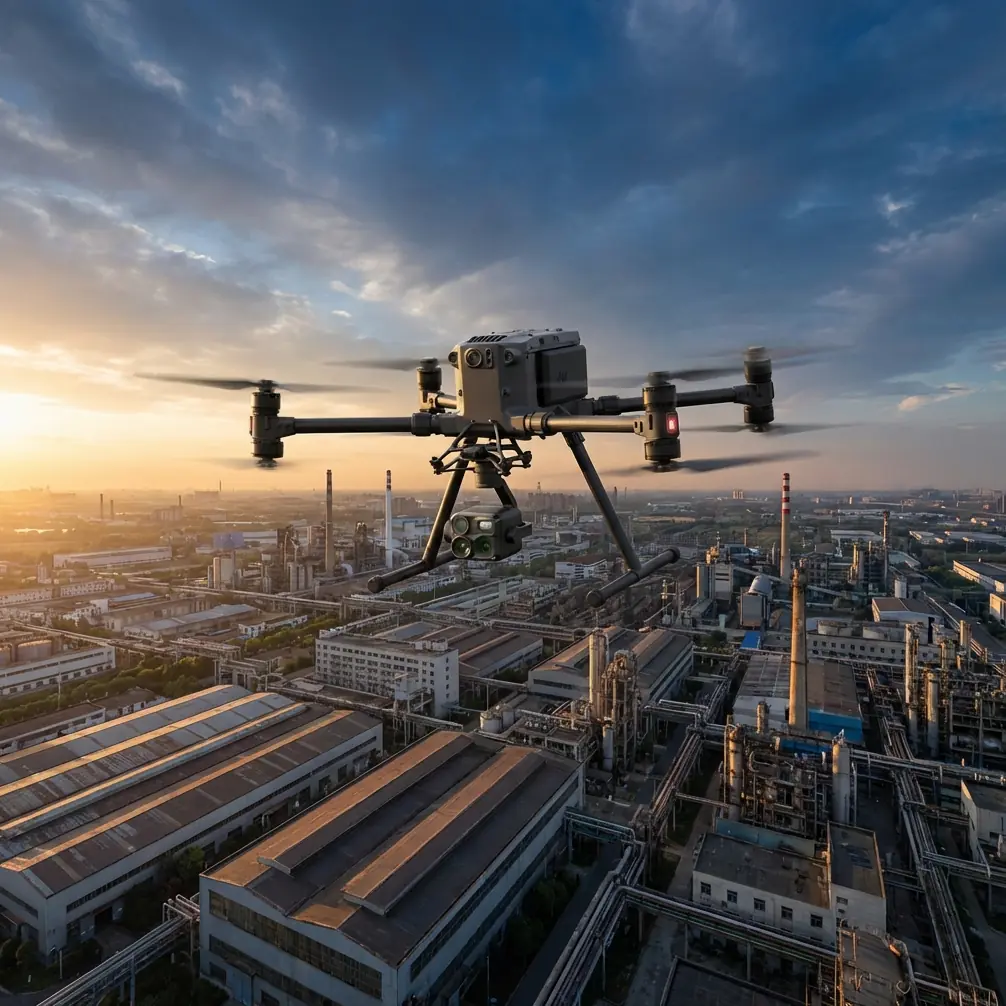
Matrice 4 in Coastal Field Capture: A Technical Review for Reliable Survey and Inspection Work
META: Expert review of Matrice 4 best practices for coastal field capture, covering photogrammetry, thermal workflows, O3 transmission, AES-256 security, hot-swap battery strategy, and practical accessory choices.
Coastal field work exposes every weakness in an airframe, sensor stack, and mission plan. Salt haze softens contrast. Wind shifts faster than inland crews expect. Uniform crop rows and reflective water can confuse both pilots and processing software. In that setting, the Matrice 4 stands out not because of headline hype, but because its platform logic fits the job: stable data capture, secure transmission, and faster turnaround when conditions change by the minute.
This review looks at the Matrice 4 through a specific operational lens: capturing fields in coastal environments where a team may need high-quality visual mapping in the morning, thermal follow-up later in the day, and minimal downtime between sorties. That is a narrower and more useful test than a generic spec-sheet recap. The question is simple: does the aircraft help a field team finish accurate work under messy real conditions?
From that perspective, a few features matter more than the rest. O3 transmission is one of them. AES-256 is another. Hot-swap batteries are not glamorous, but in coastal operations they can decide whether you finish the block before weather closes the window. Add proper ground control points, disciplined photogrammetry settings, and the right accessory stack, and the Matrice 4 becomes more than a general enterprise drone. It becomes a dependable field instrument.
Why coastal fields are harder than they look
A coastal agricultural site or low-lying field parcel presents a strange combination of simplicity and difficulty. The terrain may appear open and easy to fly, yet the data requirements are usually strict. If the mission is crop health mapping, missing overlap because of wind drift can compromise the orthomosaic. If the goal is drainage analysis, slight elevation inconsistencies can distort the output. If the team is tracking irrigation leaks or checking stressed vegetation with thermal signature data, timing and atmospheric conditions matter even more.
Wind is only the obvious problem. The harder challenge is consistency. Good photogrammetry depends on repeatable image geometry, predictable overlap, and steady exposure behavior. In coastal areas, thin cloud bands and reflective surfaces can alter scene brightness across a single flight. That pushes the operator to think beyond aircraft stability and into mission design.
This is where the Matrice 4 platform philosophy becomes relevant. A serious field drone is not just a camera with rotors. It is a capture system. Transmission resilience, battery workflow, and secure data handling all affect whether the final map is usable.
O3 transmission has direct value in open coastal environments
On paper, O3 transmission sounds like a link-layer feature. In practice, it changes how calmly a team can work near broad, exposed field edges, dikes, coastal roads, and water-adjacent plots. Open terrain often fools people into assuming signal conditions will be perfect. They are not always. Humidity, interference from nearby infrastructure, and long, flat distances can create operational friction even when there are no obvious obstructions.
A robust transmission system matters because coastal field missions tend to stretch laterally. You may be running long transects rather than compact inspection circles. When the pilot and visual observer are managing a wide capture box, stable video and command responsiveness reduce the temptation to fly too conservatively and leave coverage gaps. That has operational significance: better confidence in the link usually means cleaner line spacing, more consistent overlap, and fewer unnecessary pauses that break the rhythm of a mapping run.
For teams planning toward BVLOS-oriented workflows where regulation and authorization allow it, this matters even more. Reliable transmission does not replace compliance, but it does support the kind of disciplined operational envelope that professional crews need when expanding mission scope. A drone that feels predictable at distance is easier to integrate into formal procedures than one that always keeps the pilot guessing.
AES-256 is not just an IT detail
Many drone articles mention encrypted transmission as if it were a box to tick. That misses the real issue. Field capture increasingly feeds agronomic analysis, infrastructure planning, insurance documentation, and asset management systems. Coastal parcels can include sensitive boundaries, utility corridors, drainage routes, or commercially important crop intelligence. AES-256 matters because it protects the chain of custody for operational data while it is moving through the link.
That has practical value in two ways. First, it supports organizations that already have internal security requirements for imagery and location data. Second, it helps contractors win trust. If you are flying over managed farmland, reclaimed land, research plots, or mixed-use coastal property, secure transmission is not an abstract benefit. It is part of being taken seriously.
The Matrice 4 therefore fits a more mature enterprise conversation. Instead of asking only whether it can capture the image, professional users ask whether the image pipeline stands up to scrutiny. Encryption is part of that answer.
Photogrammetry success in coastal fields depends on discipline, not automation alone
The Matrice 4 can help a crew collect clean mapping data, but no platform fixes poor field method. Coastal photogrammetry magnifies small mistakes. Uniform textures such as sandy soil, low vegetation, or repetitive planted rows can reduce tie-point robustness. Add wind and variable illumination, and even capable software has less to work with.
That is why GCP deployment remains valuable. A coastal mapping team that relies entirely on onboard positioning may still get attractive outputs, but attractive is not the same as defensible. Ground control points anchor the deliverable to real-world coordinates and reduce the drift that can creep into large, open-area reconstructions. If the mission is tied to drainage corrections, plant-count comparisons, or repeatable change detection, GCPs are worth the setup time.
This is one of the biggest operational distinctions between casual capture and professional field data production. The Matrice 4 gives you a strong platform, but the operator still needs to build a workflow around it: proper overlap margins, altitude choices matched to crop height and required ground sample distance, and GCP placement that reflects the shape of the site rather than a lazy perimeter-only pattern.
In coastal conditions, I would rather see a slightly longer setup and a shorter argument later about whether the map can be trusted.
Thermal signature work is useful, but only when the mission timing is right
The thermal conversation around field capture often becomes too broad. Not every agricultural or land-management task needs thermal data. But in coastal settings, thermal signature analysis can reveal patterns that are easy to miss in standard visual imagery. Water intrusion, uneven drying, stress zones, compromised drainage lines, and equipment-related heat anomalies all become easier to isolate when the timing is controlled.
The key phrase is timing is controlled. Thermal flights in the wrong environmental window can produce noisy or misleading patterns. Coastal air masses change quickly. Surface temperatures can equalize faster near moisture-heavy zones, and wind can mask subtle heat differences. The Matrice 4 is a strong candidate for this kind of work because it supports a mixed mission profile: visual mapping for spatial context, then thermal follow-up for anomaly detection.
That pairing is where the aircraft becomes operationally efficient. You are not collecting thermal imagery in isolation. You are tying temperature variation back to a georeferenced visual map, which makes the thermal output easier to interpret and easier to explain to agronomists, site managers, or civil teams.
Hot-swap batteries can save the mission window
Battery strategy is often treated as logistics, but on coastal jobs it is part of data quality control. When wind is building, light is changing, and tide or site access windows are narrow, long pauses between flights create inconsistency across the dataset. Hot-swap batteries reduce that gap. The significance is simple: the less downtime between sorties, the more uniform the capture conditions across the whole project.
That matters a great deal during large-field photogrammetry. If one half of the site is flown under flat light and the second half under harsher contrast with stronger gusting, processing quality may suffer and the orthomosaic may require more cleanup. A platform that supports rapid battery turnover helps teams preserve continuity.
In operational terms, hot-swap capability also reduces pressure on the crew. Instead of rushing through preflight checks to chase a weather window, the team can maintain procedure while still moving quickly. That is the kind of advantage professionals value because it shows up in the finished deliverable, not just in marketing copy.
A third-party accessory that genuinely improves coastal capture
One of the most useful additions I have seen on coastal field operations is a high-visibility, weather-resistant landing pad from a third-party accessory manufacturer. That may sound modest next to sensors and transmission systems, but it solves a real problem. Coastal launch points are often dusty, sandy, damp, or uneven. Rotor wash can throw debris into the aircraft during takeoff and landing, and that risk grows when crews are swapping batteries in the field.
A durable landing pad improves turnaround discipline, protects the aircraft from loose particulate contamination, and gives the crew a defined operational zone when working from field margins or levees. In one sense it is a small upgrade. In another, it supports every flight of the day.
The same logic applies to quality RTK-compatible field kits and rugged GCP markers from specialist third-party suppliers. Accessories should not be bought for novelty. They should remove friction. In coastal field capture, good accessories do exactly that.
How I would configure a Matrice 4 workflow for a coastal field day
If the assignment is a mixed capture mission, I would structure it in layers. Start with a site walk and confirm where moisture, glare, and wind exposure are likely to be worst. Place GCPs where they strengthen the geometry of the site rather than just hugging convenient access points. Fly the visual photogrammetry mission first while lighting is still relatively stable. Keep overlap conservative. Coastal variability punishes aggressive efficiency.
Then assess whether the thermal objective is actually meaningful that day. If the mission is to identify drainage irregularities or stressed zones, wait for conditions that create interpretable temperature separation rather than collecting thermal data for the sake of it. Secure handling of all imagery should be part of the workflow from the beginning, which is where AES-256 becomes relevant as an operational control, not an afterthought.
The transmission link should be monitored with the same seriousness as the battery state. O3 gives the operator confidence, but confidence should be used to maintain mission discipline, not to push recklessly. And because battery swaps are fast, the crew can keep captures tight and organized rather than overextending a single sortie.
For teams trying to refine that field method, I usually recommend building a repeatable checklist around crop type, wind threshold, overlap target, GCP pattern, and thermal timing. If you want to compare notes with a specialist on mission setup, this Matrice 4 field workflow channel is a practical place to start.
Where the Matrice 4 fits best
The Matrice 4 is not most impressive when discussed in the abstract. It earns its place when the mission has enough complexity to expose weak systems. Coastal field capture does that quickly. Here, O3 transmission is not a slogan. It supports cleaner execution across wide open parcels. AES-256 is not background jargon. It strengthens professional data handling. Hot-swap batteries are not a convenience perk. They help preserve environmental consistency across multiple sorties. And when paired with disciplined GCP use, the aircraft becomes a credible photogrammetry platform rather than just a flying camera.
That is the real takeaway. The Matrice 4 works best for crews who understand that aircraft capability and field method are inseparable. In coastal operations especially, the margin between usable data and expensive rework is narrow. A platform that shortens turnaround, protects the link, supports secure handling, and adapts to both visual and thermal tasks gives teams a measurable advantage.
If your work involves coastal agriculture, drainage mapping, reclamation monitoring, or field inspection near water, the Matrice 4 deserves attention. Not because it promises magic, but because it supports the habits that produce reliable results.
Ready for your own Matrice 4? Contact our team for expert consultation.