
Matrice 4 in Broken Ground: A Field Report on Capturing
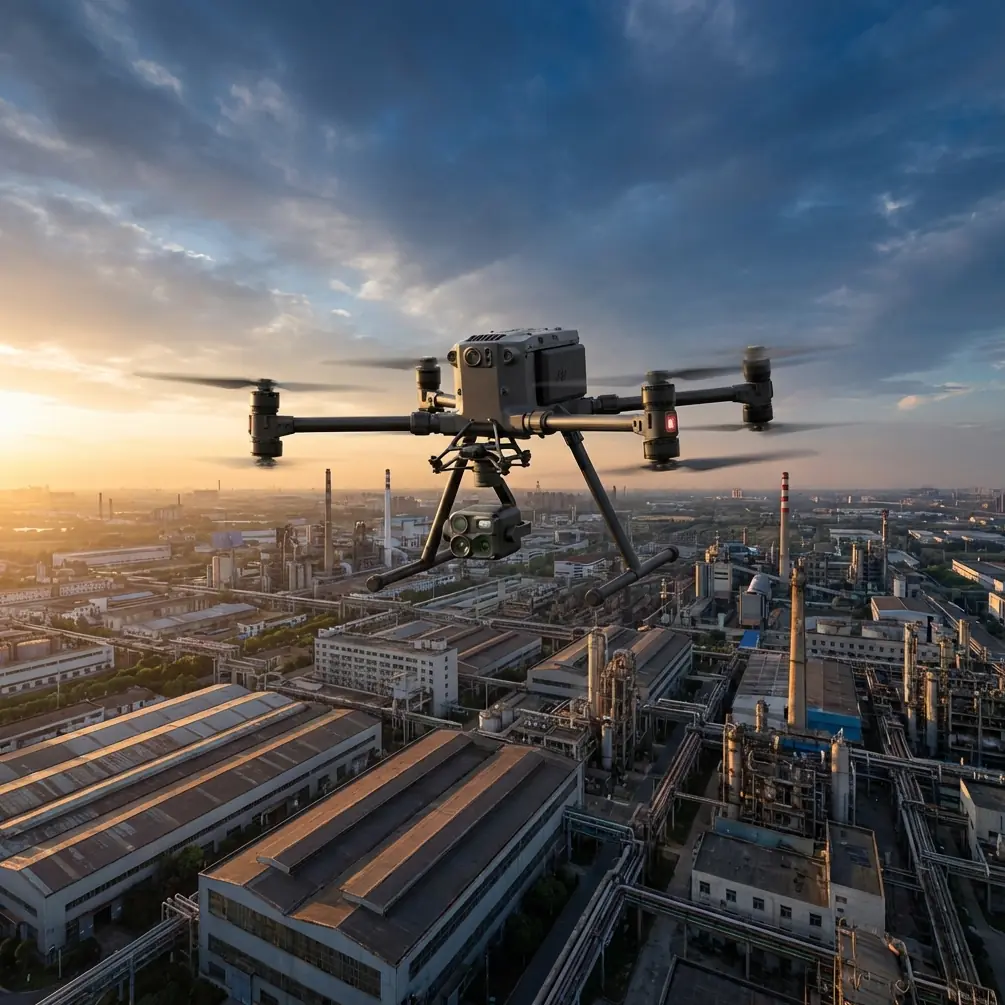
Matrice 4 in Broken Ground: A Field Report on Capturing Agricultural Terrain Without Losing Accuracy
META: Expert field report on using Matrice 4 for complex terrain mapping, thermal signature review, photogrammetry planning, GCP strategy, O3 transmission, AES-256 security, and pre-flight safety checks in uneven agricultural landscapes.
By Dr. Lisa Wang, Specialist
Flat farmland is easy to romanticize. Real field work is not. Terraced hillsides, drainage cuts, orchard rows on uneven grades, and ridgelines that interrupt signal paths all punish lazy planning. The Matrice 4 is often discussed as if the aircraft alone solves that problem. It does not. What matters is how the platform, mission design, structural logic, and data discipline come together when the land stops behaving like a rectangle.
This report is about that junction.
I spent the week thinking about Matrice 4 operations through the lens of two engineering ideas that usually live far away from day-to-day drone marketing. One comes from aircraft structural design: every additional separation interface in a structure adds weight, reinforcement, stress concentration, and fatigue risk. The other comes from vibration analysis: engineers reduce complex systems into manageable computational models so they can extract the low-order behaviors that matter most, often with acceptable error bounds. Those concepts may sound abstract, but they map surprisingly well onto how you should fly Matrice 4 over complex agricultural terrain.
If you are capturing fields in broken ground, the mission usually fails in one of three places. Not in the air. Before takeoff, during terrain-following execution, or later in model reconstruction.
The overlooked safety step: clean before you calibrate, not after
A lot of pilots rush the pre-flight sequence because the aircraft looks ready. Batteries seated. props clear. map loaded. That mindset causes subtle failures.
My first step on a Matrice 4 field day is not to power on and not to arm motors. It is a cleaning pass focused on vision and safety surfaces: obstacle sensing windows, camera glass, thermal lens cover area, downward sensors, and any exposed contacts around battery interfaces. Dust from dry access roads and sticky residue from crop environments can degrade both obstacle perception and image quality long before the pilot notices obvious faults. In sloped terrain, where obstacle avoidance may interpret treelines, poles, and rising ground in quick succession, sensor clarity is not cosmetic. It is a flight safety input.
The same goes for thermal work. A smudged thermal aperture can distort apparent thermal signature boundaries at the edge of irrigation leaks, stressed crop bands, or livestock shelter roofs. You may still get an image. You may not get a decision-grade image.
Complex terrain is where small contamination becomes operationally expensive.
Why Matrice 4 planning should mimic structural design discipline
One of the reference engineering facts states that designers try to reduce separation surfaces because each joint requires additional connectors and local reinforcement, increases structural weight, and creates stress concentrations that can trigger fatigue damage. The practical lesson for drone operators is simple: reduce unnecessary mission segmentation.
Pilots often break a complex field into too many flight blocks. One block for the lower terrace. Another for the orchard shoulder. Another for the irrigation contour. Another because the pilot is unsure about battery margin. On paper, that feels organized. In reality, every mission split acts like a structural joint. It adds a restart point, overlap uncertainty, altitude reconciliation problems, time loss, and one more opportunity for inconsistent light or wind conditions to corrupt the dataset.
That does not mean one flight should cover everything. It means the mission architecture should avoid fragmentation unless there is a hard operational reason. In aircraft design, removing a separation line improves fatigue strength. In photogrammetry, removing an unnecessary mission boundary often improves continuity.
For Matrice 4 users, this becomes especially relevant in hilly farmland where terrain compensation is active. If one block is flown with a slightly different height reference, shutter timing, or overlap setting, the merge penalty shows up later as warped edge geometry or inconsistent canopy reconstruction. You may salvage the orthomosaic. You may not trust the elevation model.
My rule is to split only when one of these conditions exists:
- terrain relief exceeds the mission profile’s safe tolerance,
- signal shielding from ridges threatens continuity,
- lighting changes are likely across time,
- battery logistics force a clean break,
- or the client needs independent deliverables by zone.
Anything else is just adding structural joints to a mission that should have stayed whole.
O3 transmission matters more in terrain than in distance marketing
People fixate on transmission range figures. In agricultural valleys and stepped ground, raw distance is not the point. Link resilience is.
O3 transmission is useful here not because the field is vast, but because the terrain is disruptive. A pilot may be only a short horizontal distance from the aircraft while still dealing with partial masking from tree belts, low ridges, sheds, or elevation transitions. In those conditions, robust transmission quality affects more than control confidence. It affects how aggressively you can execute terrain-aware routing and whether you can maintain visual interpretation of the live feed when the aircraft crosses visual clutter.
For survey-grade photogrammetry, stable transmission also reduces the temptation to improvise manually mid-flight. That matters. The moment a pilot starts reacting emotionally to minor signal behavior and overriding a planned capture pattern, overlap consistency suffers.
Complex terrain rewards pilots who trust the mission enough to leave it alone.
The data side: use GCPs where terrain actually lies to you
Ground control points are still treated too casually in uneven agricultural projects. The common mistake is to place them where access is easy rather than where geometry is weak.
If your field includes terraces, embankments, narrow drainage channels, or mixed vegetation heights, GCP placement should attack the terrain’s deceptions. Put control on elevation transitions, not just on broad flat access lanes. Put some where perspective changes sharply. Put some near edges where photogrammetry tends to stretch. Put some where the surface texture is repetitive, such as row crops or orchard grids.
This is where the second engineering reference becomes useful. In vibration analysis, methods like Rayleigh-Ritz are valued because they reduce equation order and simplify computation while preserving good approximations of the low-order modes that matter most. The reference also notes a practical benchmark: when reduction is done well, the lowest-order portion of the solution can stay within about 5% error. That is not a drone mapping specification, but it is a powerful analogy for field capture strategy.
You do not need to measure everything equally. You need to constrain the parts of the model that dominate final accuracy.
In drone mapping, that means the strongest control is not necessarily the largest number of GCPs. It is the right GCPs, placed to stabilize the low-frequency shape of the terrain model. Once the broad geometry is trustworthy, the fine texture has a much better chance of reconstructing honestly.
This is why I would rather see a thoughtful control network across slope breaks than a lazy pile of markers near the launch point.
Hot-swap batteries are not just about convenience
In difficult ground, battery management has a direct quality effect. Hot-swap batteries reduce downtime, but the larger benefit is continuity of operational rhythm. If your launch site is dusty, cramped, or perched on a narrow farm road shoulder, every unnecessary reset increases the chance of contamination, rushed checklists, or mission parameter drift.
A clean battery exchange process helps preserve the same capture logic across sorties. Same camera settings. Same overlap assumptions. Same route logic. Same pilot mindset.
That consistency is what allows separate flights to behave like one dataset.
When teams treat battery rotation casually, they often re-enter the mission with slightly changed assumptions. Different speed. Different height offset. Different angle toward the sun. None of these is catastrophic by itself. Together they create reconstruction noise that clients later describe as “soft spots,” “odd slope behavior,” or “mismatch at the boundary.”
AES-256 is operational, not decorative
Security is easy to ignore in field agriculture until it isn’t. If a Matrice 4 mission includes high-value crop trials, land development assessments, irrigation performance analysis, or pre-harvest health mapping, the data is commercially sensitive. AES-256 matters because agricultural imagery increasingly functions as business intelligence. Plant stress zones, yield variability, access infrastructure, and drainage failures are not trivial.
In regions where multiple contractors, agronomists, landowners, and service companies share data pathways, secure handling should be built into the workflow from the start. The aircraft is part of that chain, but so are storage, transfers, and collaboration practices.
A mature operator does not bolt security on after the mission. It is planned before first launch.
Thermal signature work in complex fields requires restraint
Thermal imaging over agricultural terrain attracts overconfidence. Users expect heat patterns to explain everything: irrigation leaks, blocked emitters, livestock shelter issues, even crop vigor variation. Sometimes they do. Sometimes the image mainly reflects sun angle, soil moisture inertia, canopy density, and slope orientation.
On complex terrain, thermal signature interpretation must account for aspect and timing. A west-facing slope and an east-facing slope can tell different thermal stories even when crop condition is similar. Tree shadows, wind exposure, and water retention all interfere. The Matrice 4 can collect strong thermal data, but the operator must separate temperature contrast from agronomic meaning.
That is why I prefer pairing thermal passes with photogrammetry rather than treating thermal as a standalone answer. Orthomosaics and elevation context help explain whether a hot band is a drainage issue, a soil compaction line, or simply a slope-driven drying pattern.
Thermal without terrain context is seductive. Terrain gives it discipline.
BVLOS discussions need practical boundaries
BVLOS enters the conversation whenever large or fragmented farmland is involved. In real operations, whether BVLOS is appropriate depends on local authorization, site risk, communications planning, and the mission’s actual purpose. For Matrice 4 users in complex terrain, the temptation is to think BVLOS automatically improves productivity. Sometimes it does. Sometimes the field geometry still demands intermediate observation planning, relocation of the ground team, or segmented operations because topography blocks situational awareness.
The aircraft can support sophisticated missions. The site still decides what is responsible.
What I watch for is whether the operator is using BVLOS thinking to solve a planning problem that should have been fixed another way. Better launch placement. Better relay of terrain knowledge. Better route design. Better sequencing between upper and lower elevations. BVLOS is not a substitute for understanding the landscape.
A practical mission pattern for uneven agricultural blocks
For Matrice 4 field capture in broken ground, my preferred sequence looks like this:
- Clean all sensing and imaging surfaces before power-up.
- Review wind direction against slope orientation and likely rotor wash dust.
- Walk GCP positions to cover elevation breaks and geometry weak points.
- Set one primary photogrammetry block with the fewest sensible splits.
- Use terrain-aware planning conservatively, especially near abrupt rises.
- Reserve thermal collection for timing windows that support interpretation.
- Keep battery swaps methodical so sorties remain operationally identical.
- Validate link behavior early in the mission, especially where O3 will face terrain masking.
- Secure files immediately under the same protection logic you planned before takeoff.
That sequence is not glamorous. It is what keeps a field job usable.
If you are trying to refine your own Matrice 4 workflow for orchards, terraces, or cut-up parcels, you can message our flight planning desk here and compare notes on mission structure, control strategy, or thermal capture timing.
The bigger lesson from the engineering references
The two source documents point to one habit shared by good aircraft engineers and good drone operators: simplify where complexity adds weakness, and model carefully where complexity cannot be removed.
The structural design reference warns that every added joint increases reinforcement needs, weight, and fatigue exposure. In Matrice 4 field operations, every unnecessary mission split adds friction, inconsistency, and dataset risk. The vibration analysis reference highlights reduction methods that lower computational burden while still capturing the most meaningful low-order behavior, with some reduced solutions holding error within 5% for the lowest modes when chosen properly. In terrain mapping, that principle becomes disciplined simplification: collect and constrain what drives model truth, rather than drowning the project in poorly targeted inputs.
This is the difference between flying a capable aircraft and running a reliable operation.
Matrice 4 is strong in the field when the operator respects continuity, sensor cleanliness, control geometry, transmission reality, and data security as one connected system. That is the real story in complex terrain. Not the brochure version. The one that shows up after you leave the launch point and the land starts fighting back.
Ready for your own Matrice 4? Contact our team for expert consultation.