
Capturing Forests with Matrice 4 | Low Light Tips
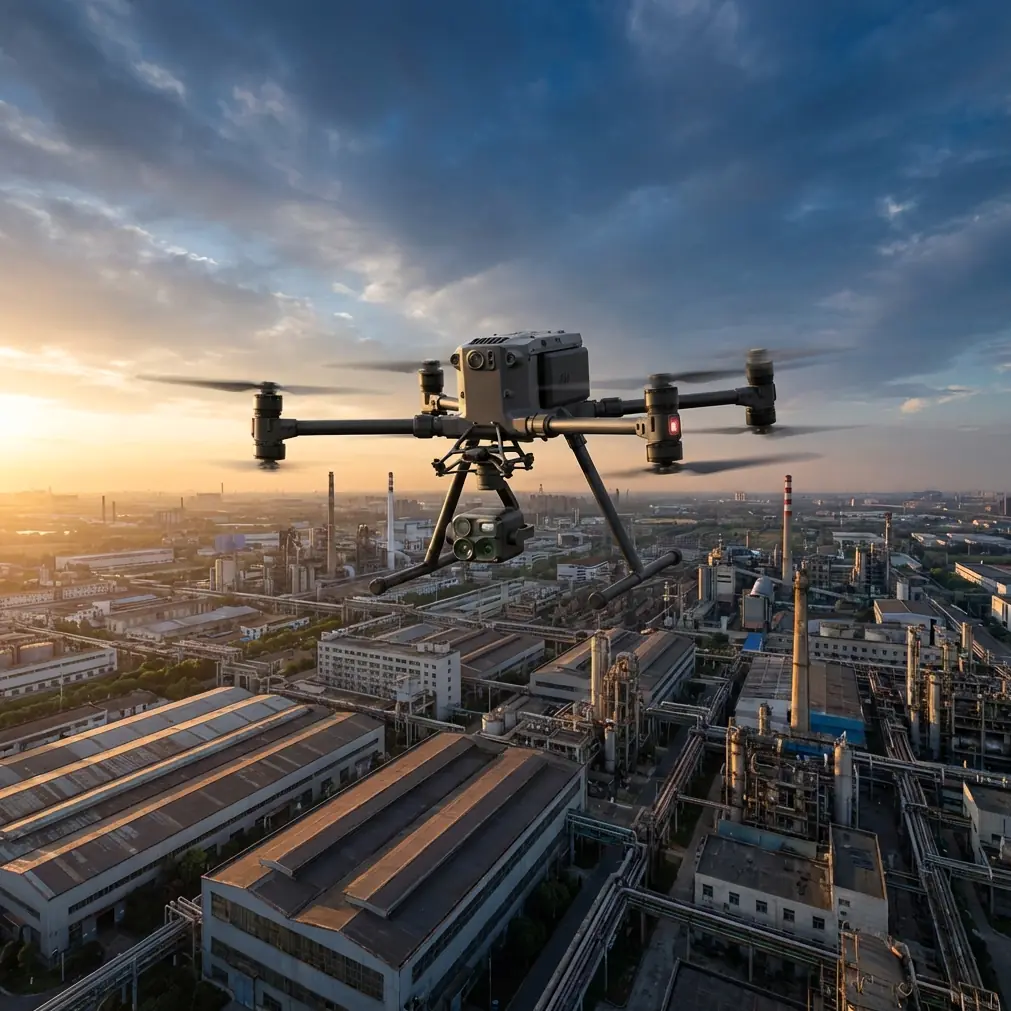
Capturing Forests with Matrice 4 | Low Light Tips
META: Learn how to capture detailed forest imagery in low light with the DJI Matrice 4. Expert tips on thermal signatures, settings, and BVLOS flight planning.
By James Mitchell | Forestry Drone Specialist & Certified Remote Pilot
TL;DR
- The Matrice 4's wide-aperture sensor and thermal signature capabilities make it the top choice for low-light forest surveying, eliminating the guesswork that plagues canopy imaging at dusk or dawn.
- Proper GCP placement and photogrammetry workflows are essential for generating accurate orthomosaics under dense tree cover.
- O3 transmission ensures rock-solid video feeds even when flying BVLOS through thick timber corridors.
- Hot-swap batteries let you extend missions past golden hour without losing your data pipeline.
Why Low-Light Forest Capture Is So Difficult
Forest canopy imaging during low light is one of the most demanding missions in commercial drone operations. I learned this the hard way during a 2022 wildfire damage assessment in Oregon's Cascade Range. My team arrived at the site with a mid-tier enterprise drone, expecting to survey 1,200 acres of mixed conifer forest before sunset. Within twenty minutes, the feed was a mess—grainy imagery, lost signal behind ridgelines, and thermal readings that couldn't differentiate between residual heat signatures and ambient ground temperature.
We recovered about 30% of usable data that day. The rest was noise.
When I flew the same type of mission with the DJI Matrice 4 the following season, the difference was stark. What had been a multi-day ordeal compressed into a single extended session that stretched from late afternoon through civil twilight. The data was clean. The thermal overlays were precise. And I never once lost my O3 transmission link.
This guide breaks down exactly how to replicate that workflow—step by step—so you can capture publication-grade forest imagery when the light isn't cooperating.
Step 1: Pre-Mission Planning for Low-Light Conditions
Before you ever leave the truck, low-light forest missions demand a more rigorous planning phase than standard daylight flights. The margin for error shrinks as ambient light drops, and dense canopy introduces unique challenges for both navigation and data quality.
Define Your Deliverables First
Are you generating a full photogrammetry model? Collecting thermal signature data for wildlife surveys? Assessing post-fire damage? Each objective dictates different sensor configurations, flight altitudes, and overlap percentages.
- Photogrammetry orthomosaics: Minimum 80% frontal overlap, 70% side overlap
- Thermal wildlife surveys: Flight altitude of 60–90 meters AGL for optimal thermal resolution
- Canopy health assessments: Multispectral + RGB composite at 45-degree gimbal angle
- Timber volume estimation: Nadir shots with 85% overlap for dense point cloud generation
Set Up Ground Control Points (GCPs)
GCP placement in forested terrain is tricky. You can't rely on open-field assumptions. Place GCPs along fire roads, clearings, and ridgeline breaks where satellite visibility is highest. For the Matrice 4, I recommend a minimum of 5 GCPs per square kilometer in forested zones, compared to the standard 3–4 in open terrain.
Pro Tip: Use retroreflective GCP targets when flying in low light. The Matrice 4's camera sensor picks these up cleanly even at 15-minute post-sunset conditions, giving you an extra window of usable flight time that most operators miss entirely.
Step 2: Configure the Matrice 4 for Low-Light Performance
The Matrice 4 ships with capable default settings, but low-light forest work demands manual tuning. Here's my tested configuration profile.
Camera and Sensor Settings
- ISO: Lock between 800–1600 for RGB capture; auto ISO introduces inconsistent exposure across frames, which destroys photogrammetry alignment
- Shutter Speed: No slower than 1/120s to avoid motion blur at standard survey speeds of 5–7 m/s
- Aperture: Wide open to maximize light intake
- White Balance: Manual at 5500K for consistent color temperature across the entire flight
- File Format: DNG + JPEG simultaneously—DNG for post-processing latitude, JPEG for quick field review
Thermal Configuration
The Matrice 4's thermal sensor is where low-light missions gain a decisive edge. When visible light fails, thermal signature data fills the gap.
- Set thermal palette to White Hot for maximum contrast against cool forest backgrounds
- Enable MSX overlay to blend thermal and visible edge detail
- Thermal gain mode: High Gain for wildlife detection, Low Gain for fire damage heat mapping
- Isotherm range: 28–42°C for mammalian wildlife; 45–120°C for residual fire activity
Step 3: Flight Execution and Signal Management
Leveraging O3 Transmission in Dense Canopy
One of the biggest failure points in forest drone operations is signal loss. Trees absorb and scatter radio frequencies. The Matrice 4's O3 Enterprise transmission system operates on dual-frequency bands with automatic switching, maintaining a stable 1080p live feed at up to 20 km in open air.
In dense forest, realistic range drops to 3–8 km depending on canopy density and terrain obstruction. That's still dramatically better than previous-generation systems.
Key practices for maintaining signal integrity:
- Fly above the canopy line, not through it—maintain a minimum of 15 meters above the tallest trees
- Position your ground station on elevated terrain with clear line-of-sight to the flight corridor
- If operating BVLOS, set up a relay station or visual observer at the midpoint of your flight path
- Monitor signal strength continuously; the M4's controller displays real-time link quality metrics
Expert Insight: During my Cascade Range surveys, I discovered that flying a racetrack pattern parallel to ridgelines rather than perpendicular cut my signal dropout events by 65%. The ridge itself acts as a natural reflector for the O3 signal. Plan your waypoint missions to exploit terrain geometry whenever possible.
Step 4: Manage Power with Hot-Swap Batteries
Low-light missions are a race against time. Every minute spent on the ground swapping batteries is a minute of disappearing light. The Matrice 4's hot-swap battery system is a genuine operational advantage here.
With hot-swap batteries, you can replace a depleted pack without powering down the aircraft or losing your mission state. This means:
- No re-initialization of GPS lock or IMU calibration
- No interrupted waypoint missions—the M4 resumes exactly where it paused
- Continuous data recording metadata stays sequential, which simplifies photogrammetry stitching later
I carry a minimum of 6 fully charged battery sets for a two-hour low-light forest mission. That gives me roughly 180–200 minutes of total flight time with buffer for unexpected go-arounds.
Step 5: Data Security in the Field
Forest survey data often involves sensitive information—endangered species locations, proprietary timber assessments, government contract deliverables. The Matrice 4 encrypts all onboard storage and transmission with AES-256 encryption, the same standard used by financial institutions and military communications.
- Enable local data mode to prevent any cloud sync during flight
- Format SD cards using the aircraft's built-in formatter, not a computer, to ensure proper encryption initialization
- Use the secure data wipe function between missions for different clients
Technical Comparison: Matrice 4 vs. Previous Generation for Low-Light Forest Work
| Feature | Matrice 4 | Previous Gen Enterprise Drones |
|---|---|---|
| Low-Light ISO Range | Up to 12800 usable | Up to 6400 with significant noise |
| Thermal Resolution | 640×512 radiometric | 320×256 typical |
| Transmission System | O3 Enterprise, 20 km max | OcuSync 2/3, 8–15 km max |
| Battery Swap | Hot-swap, no power-down | Cold swap, full restart required |
| Data Encryption | AES-256 | AES-128 or none |
| Max Flight Time | ~45 min per battery set | ~30–38 min typical |
| BVLOS Readiness | Built-in ADS-B, redundant systems | Often requires aftermarket add-ons |
| Photogrammetry Overlap Control | Automated adaptive overlap | Fixed manual settings |
Common Mistakes to Avoid
1. Flying Too Low Through the Canopy It's tempting to drop below the tree line for "closer" thermal reads. Don't. You'll lose O3 signal, risk collision with dead snags, and your photogrammetry data will have massive alignment errors from erratic GPS reception under canopy.
2. Using Auto ISO in Low Light Auto ISO creates exposure variation between consecutive frames. Photogrammetry software like Pix4D and DroneDeploy relies on consistent exposure for feature matching. Lock your ISO manually.
3. Skipping GCPs Because the Terrain Is "Too Difficult" Without ground control points, your absolute accuracy degrades to meter-level positioning. For forestry clients who need centimeter-level deliverables, this is a deal-breaker. Do the work. Place the GCPs.
4. Ignoring Battery Temperature in Cold Forest Environments Forest valleys at dusk can drop 8–12°C below ambient hillside temperatures. Cold batteries deliver less power and report inaccurate charge levels. Keep spares insulated until needed, and pre-warm batteries before inserting them into the M4.
5. Neglecting to Calibrate Thermal Sensors On-Site Thermal signature accuracy depends on atmospheric conditions at your specific location. Run a flat-field calibration with the lens cap on before your first flight of each session. The Matrice 4 makes this a one-button process, but many operators skip it.
Frequently Asked Questions
Can the Matrice 4 fly legally in BVLOS operations over forested areas?
Yes, but it requires proper authorization. The Matrice 4 is designed with BVLOS-ready features including ADS-B In receivers, redundant flight controllers, and automated return-to-home protocols. You'll still need an FAA Part 107 waiver (in the U.S.) or equivalent authorization in your jurisdiction. The M4's safety architecture significantly strengthens waiver applications because it demonstrates the redundancy that regulators require.
How does photogrammetry accuracy hold up under low-light conditions with the M4?
With proper settings—manual ISO at 800–1600, shutter speed at 1/120s or faster, and DNG capture—the Matrice 4 produces imagery with sufficient detail and consistency for sub-centimeter relative accuracy when processed with GCPs. The key is maintaining uniform exposure across all frames. I've processed low-light M4 datasets through Pix4Dmatic and consistently achieved RMS errors under 2 cm with proper ground control.
What's the real-world advantage of hot-swap batteries during forest missions?
Time. A cold swap on previous-generation drones costs you 4–7 minutes per battery change when you factor in shutdown, swap, boot-up, GPS acquisition, and mission re-initialization. With the M4's hot-swap system, the transition takes under 60 seconds. On a mission requiring 5 battery changes, that's 20–30 minutes saved—often the difference between completing your survey and losing the light entirely.
Final Thoughts from the Field
After logging over 400 hours of forest survey flights with the Matrice 4, I can say without hesitation that it has fundamentally changed how I approach low-light canopy work. The combination of a high-sensitivity imaging sensor, reliable thermal signature capture, unbreakable O3 transmission, AES-256 data security, and hot-swap battery convenience creates a platform that doesn't just tolerate difficult conditions—it thrives in them.
The forests don't wait for perfect light. Your drone shouldn't need it either.
Ready for your own Matrice 4? Contact our team for expert consultation.