
Matrice 4 Forest Capture Tips at High Altitude
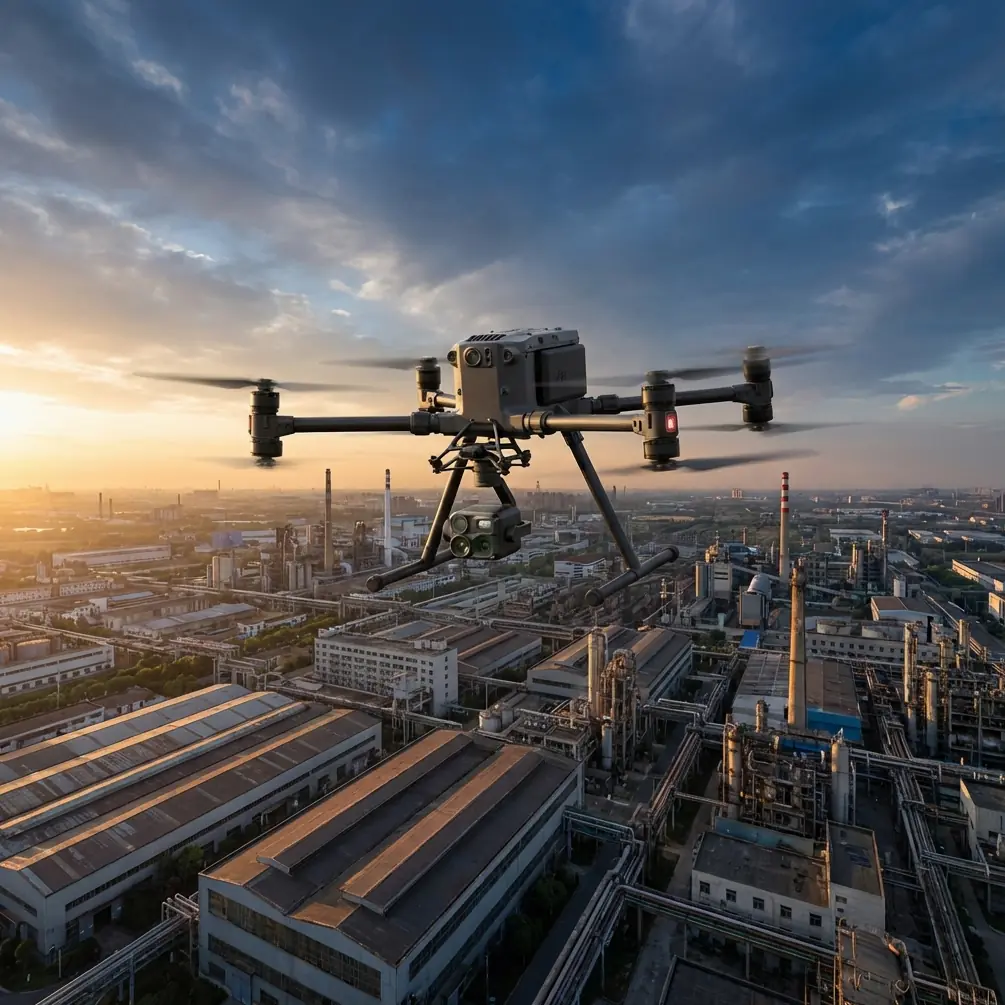
Matrice 4 Forest Capture Tips at High Altitude: What Actually Changes in the Air
META: Practical Matrice 4 guidance for high-altitude forest capture, covering pre-flight cleaning, thermal signature limits, photogrammetry planning, O3 transmission, AES-256 security, GCP strategy, and battery workflow.
By Dr. Lisa Wang, Specialist
Forests at altitude expose every weak habit in a drone workflow.
A mission that feels routine at lower elevations can start slipping the moment you climb into thinner air, colder temperatures, denser canopy variation, and more unpredictable ridgeline winds. With the Matrice 4, that does not mean the job becomes guesswork. It means the operator has to treat the aircraft as part camera platform, part sensor stack, and part environmental instrument.
For teams capturing forest data in mountain terrain, the real challenge is not simply getting airborne. It is getting usable outputs: stable image sets for photogrammetry, reliable thermal signature separation where relevant, and enough transmission confidence to keep the mission efficient without pushing the aircraft into avoidable risk.
This is where a problem-solution approach makes sense.
The real problem with high-altitude forest capture
Most failed forest missions are not dramatic. They are disappointing.
You come back with imagery that looks fine at first glance, but the dataset has subtle issues: canopy blur from wind-driven motion, inconsistent overlap on sloped ground, weak geospatial accuracy because GCP placement was too sparse, thermal images captured at the wrong time of day, or signal confidence degraded as the aircraft dropped behind terrain.
The Matrice 4 platform gives operators a strong base to work from, especially when missions depend on modern transmission reliability and secure data handling. O3 transmission matters in mountain forestry because ridges and tree density create a constantly shifting link environment. AES-256 matters because forestry work is often tied to environmental surveys, concession planning, insurance documentation, or private land records where image security is not a side note.
But those features only pay off if the mission design respects the environment.
Start with a cleaning step most pilots rush past
Before propellers, before route review, before battery status, do one simple thing: clean the forward and downward sensing areas and the camera glass.
That sounds basic. In alpine forest work, it is not.
Dust from dry access roads, moisture condensation after pulling the aircraft from a warm vehicle into cold air, fine pollen, and resin particles can degrade the very safety features pilots expect to protect them. A small film over obstacle sensing or vision positioning surfaces can reduce confidence at exactly the wrong moment, especially near uneven terrain, broken canopy edges, or forest clearings with mixed contrast.
The camera side is equally unforgiving. A faint smear on the lens can soften image edges across an entire mapping block. That may not ruin a single hero shot, but it can absolutely lower tie point quality in photogrammetry.
So the pre-flight sequence for high-altitude forest work should include:
- lens inspection in angled light
- cleaning of obstacle sensing surfaces
- gimbal movement check
- dew or condensation check after acclimatization
This is a safety step and a data-quality step at the same time. Operators often separate those two ideas. In forest capture, they are inseparable.
Why thinner air changes how the Matrice 4 should be flown
At altitude, the aircraft works harder to maintain the same stability margin. You feel this first in battery behavior and flight timing, but it also shows up in how carefully you need to manage speed over canopy.
Forests are full of repetitive textures. If the aircraft is moving too fast in gusty conditions, overlap may still look acceptable on paper while image quality quietly degrades. Leaves, branches, and treetops are not static surfaces. They move independently, creating reconstruction noise in dense mapping projects.
The fix is not simply “fly slower.” It is to match speed to the mission objective.
If your goal is photogrammetry for terrain and canopy analysis, reduce groundspeed enough to preserve shutter confidence and overlap consistency, especially on slopes where relative height above canopy changes quickly. High-altitude forests often mix steep inclines with sudden openings. That can stretch your effective ground sampling distance across a single flight line.
A well-run Matrice 4 mission in this setting is less about covering the maximum area and more about protecting dataset integrity.
Photogrammetry in forests: where operators lose accuracy
Forested terrain makes photogrammetry harder because the scene lacks stable, clean geometric surfaces. Canopy layers move. Shadows shift. Sloped terrain changes apparent image scale. And if you are trying to derive useful models beneath or around tree cover, weak control planning can turn a technically successful flight into a mediocre map.
This is where GCP strategy matters.
Ground control points are still one of the most practical ways to tighten real-world alignment in complex terrain. In mountain forests, the mistake is placing them only in obvious easy-access areas such as trailheads, road bends, or one flat clearing. That creates control imbalance. The model may look aligned in one section but drift or tilt across elevation transitions.
A better approach is to distribute GCPs across elevation bands and across the full footprint of the survey, including edge zones. The operational significance is straightforward: if your forest block crosses ridges, gullies, and mixed canopy height, a balanced control network gives the software more trustworthy anchors when image geometry becomes uneven.
This is especially useful when clients care about measurable outputs rather than attractive visuals. Reforestation planning, erosion tracking, road encroachment analysis, and timber stand documentation all depend on spatial consistency.
The Matrice 4 becomes more valuable here not because it magically solves forest mapping, but because it supports a workflow where disciplined capture and control produce dependable deliverables.
Thermal signature: useful, but easy to misuse in forests
Thermal work in forests is often oversimplified.
A thermal signature does not automatically reveal what the pilot hopes it will reveal. Canopy density, sun loading, moisture, wind, and the time of capture all affect what stands out and what disappears into thermal clutter. At high altitude, cooler ambient conditions can help separate some heat patterns, but they can also create false confidence if operators ignore how quickly surfaces change after sunrise.
For civilian use, thermal can be valuable for infrastructure checks near forest corridors, ecological observation, drainage pattern identification, and spotting temperature anomalies in managed land. But the sensor only becomes truly useful when the timing is deliberate.
Early morning often gives the cleanest differentiation before solar heating flattens contrast across rocks, exposed soil, and upper canopy. If the task mixes visible-light mapping and thermal collection, split the mission logic. Do not assume one flight window serves both equally well.
The operational significance is simple: better thermal timing reduces interpretation errors. In dense or mountainous forest scenes, that can save hours of post-processing and prevent bad decisions based on noisy heat patterns.
O3 transmission is more than a convenience in mountainous forestry
Signal reliability is easy to appreciate and hard to quantify until the terrain starts interfering.
The value of O3 transmission in a forested high-altitude mission is not just range on paper. It is resilience through constantly changing line-of-sight conditions. Trees, ridges, and folds in terrain create intermittent attenuation. A transmission system that holds video and control link stability more gracefully gives the pilot more room to make calm decisions.
That matters even more for teams working under waivers, corridor operations, or structured BVLOS planning in approved civilian contexts. Even when operations are strictly compliant and professionally managed, terrain remains the hidden variable. Strong transmission performance does not eliminate route planning discipline, observer procedures, or airspace coordination. It simply reduces the number of avoidable disruptions caused by the environment.
In practical terms, this can mean fewer aborted lines, more consistent framing during inspection passes near forest infrastructure, and better confidence during long, systematic mapping legs.
Security is not an afterthought when forests are commercial assets
Many drone articles mention encryption and move on. They should not.
AES-256 is relevant in forest operations because these missions often involve protected environmental data, private land boundaries, concession planning, utility access routes, or proprietary survey records. If your Matrice 4 workflows include image transfer, remote review, or enterprise archiving, the security model around the captured data becomes part of the service quality.
The operational significance is not abstract. Secure handling helps reduce exposure when datasets include sensitive site information or commercially important geospatial layers. Forestry clients, utility corridor managers, and environmental consultants increasingly expect this level of professionalism as standard practice.
In other words, transmission quality gets the aircraft through the mission. Data security protects the mission after landing.
Battery workflow at altitude: hot-swap thinking without rushed decisions
Cold mornings and elevation do not forgive loose battery discipline.
High-altitude forest missions often involve a narrow weather window. Pilots feel pressure to cycle quickly, especially when light is ideal or winds are expected to build. That is where hot-swap battery workflows become valuable. The ability to transition efficiently between flights helps preserve the momentum of a mapping block or repeated thermal passes.
But efficient does not mean rushed.
Use hot-swap capability to keep the sequence orderly: landing zone clear, used batteries isolated, warmed batteries staged correctly, payload settings verified before relaunch, and the next route confirmed against changing wind. This matters because mountain weather can shift noticeably within a single battery cycle. A route that was comfortable on takeoff may be less forgiving 20 minutes later.
The best operators build battery changes into mission design rather than treating them as interruptions. That improves both safety and dataset consistency.
A practical mission template for the Matrice 4 in high forests
If I were briefing a team before a real capture day, the workflow would look like this:
1. Site acclimatization
Bring the aircraft out early enough to reduce condensation risk. Cold-soak transitions matter.
2. Cleaning and sensor check
Inspect lens glass, obstacle sensing surfaces, landing gear area, and gimbal movement. This is the pre-flight step too many crews trivialize.
3. Terrain-aware route planning
Adjust line spacing and speed for slope, expected wind, and canopy motion. Do not fly a valley mission as if it were flat farmland.
4. GCP placement
Spread control across edges, interior sections, and elevation changes. One clearing is not a control strategy.
5. Thermal timing decision
If thermal is part of the project, give it its own optimal window based on surface heating, not convenience.
6. Transmission check
Assess likely ridgeline occlusion points and plan aircraft orientation and route logic around them. O3 helps, but terrain still wins if you ignore it.
7. Battery sequencing
Prepare for fast but structured swaps. Use the time savings to keep data quality high, not to force one more marginal sortie.
If you need to compare route ideas or payload planning with someone who works on these missions regularly, this direct WhatsApp channel can be useful: message a Matrice 4 workflow specialist.
What makes the Matrice 4 a serious forest tool
The Matrice 4 is most effective in forests when it is treated as a precision capture platform rather than just a drone with a good camera.
Its value comes from how its capabilities support a disciplined operating method: O3 transmission for difficult terrain, AES-256 for secure commercial workflows, thermal signature collection when timed correctly, and field efficiency helped by hot-swap battery logic. Add solid photogrammetry planning and properly distributed GCPs, and you move from “we flew the site” to “we produced data a client can trust.”
That distinction matters in high-altitude forestry because every environmental variable is amplified. Small mistakes compound. So do small improvements.
Clean the sensors before launch. Slow down when the canopy starts moving. Build your control network across elevation, not just convenience. Use thermal on purpose, not as an afterthought. Respect the terrain even when the transmission link feels strong.
That is how the Matrice 4 earns its place in the mountains.
Ready for your own Matrice 4? Contact our team for expert consultation.