
Matrice 4 for Mountain Power Lines: Expert Guide
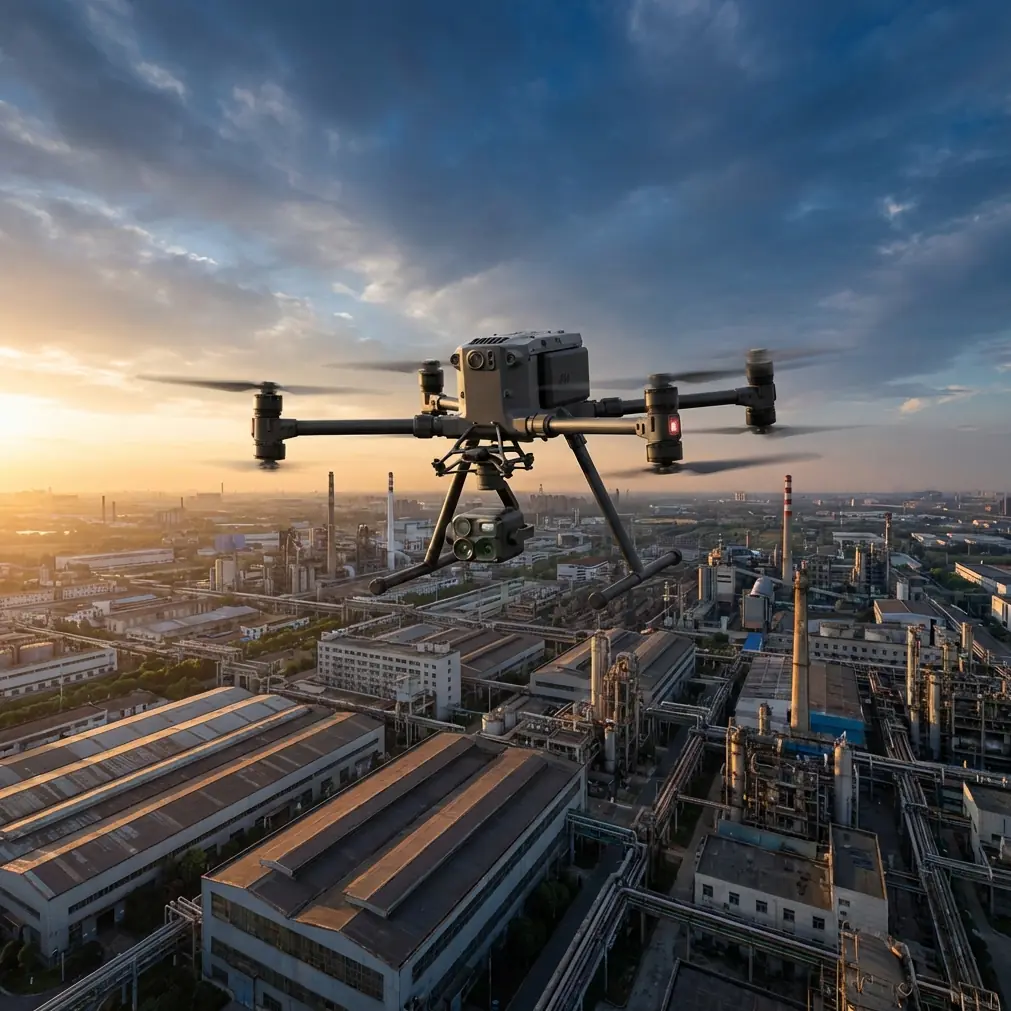
Matrice 4 for Mountain Power Lines: Expert Guide
META: Learn how the DJI Matrice 4 transforms mountain power line inspections with thermal imaging, O3 transmission, and BVLOS capability. Expert how-to guide.
By Dr. Lisa Wang, Aerial Infrastructure Inspection Specialist | 12+ years in utility drone operations
TL;DR
- The Matrice 4 combines a wide-angle thermal sensor with photogrammetry-grade RGB imaging, making it purpose-built for detecting hot spots and structural defects on mountain power lines in a single flight pass.
- O3 transmission maintains a stable video link up to 20 km, critical when flying along ridgelines and deep valleys where signal bounce is a constant threat.
- AES-256 encryption ensures all inspection data stays secure from capture to cloud, meeting utility-grade cybersecurity requirements.
- A disciplined hot-swap battery strategy can extend your effective mission window by over 60%, even in cold mountain conditions that drain cells faster than sea-level operations.
Why Mountain Power Line Inspections Demand a Purpose-Built Drone
Mountain power line corridors are among the most punishing environments for drone operations. You're dealing with unpredictable thermals, rapid weather shifts, limited GPS constellation visibility in narrow valleys, and tower access points that would take a ground crew hours—or days—to reach on foot.
Traditional helicopter inspections cost 5–8x more per line-kilometer than drone-based alternatives, and they introduce significant safety risks for flight crews navigating turbulent mountain air. Meanwhile, consumer-grade drones lack the sensor payload, transmission range, and flight endurance to cover multi-kilometer spans at inspection-grade resolution.
The DJI Matrice 4 was engineered to close this gap. Its integrated dual-sensor gimbal, enterprise-grade data security, and extended operational range make it the platform of choice for utility companies inspecting high-voltage infrastructure in complex terrain.
Essential Gear Checklist for Mountain Power Line Missions
Before you leave base camp, confirm every item on this list. Mountain environments are unforgiving of forgotten accessories.
- Matrice 4 airframe with latest firmware (check within 48 hours of deployment)
- Minimum 6 flight batteries, fully charged and stored in insulated cases
- Ground control points (GCP) — at least 5 per survey zone for photogrammetry accuracy
- Portable anemometer to verify wind speed at launch altitude
- Tablet with DJI Pilot 2 loaded with pre-planned waypoint missions
- AES-256 encrypted microSD cards (minimum 512 GB capacity)
- Signal booster antenna for O3 transmission in deep valley operations
- Emergency recovery kit: high-visibility markers, locator beacon, backup RC
Step-by-Step: How to Inspect Mountain Power Lines with the Matrice 4
Step 1 — Pre-Mission Planning and Airspace Coordination
Start with desktop reconnaissance. Import your power line corridor into DJI FlightHub 2 and overlay terrain elevation data to identify sections where towers sit on ridgelines versus in valleys. This altitude variation directly affects your flight altitude programming.
Mark each tower location as a waypoint. For spans crossing deep ravines, add intermediate waypoints at the midpoint to maintain consistent ground sampling distance (GSD). Target a GSD of 1.2 cm/pixel or better for detecting hairline fractures in conductor strands.
Coordinate with local aviation authorities for BVLOS waivers well in advance. Mountain corridors often overlap with restricted airspace near military installations or national parks. File your operations plan at least 14 business days before deployment.
Step 2 — Battery Conditioning and Thermal Management
Here's a lesson learned the hard way during a winter deployment in the Sierra Nevada range: cold mountain air at 3,000+ meters elevation can reduce lithium-polymer battery capacity by 20–30% compared to manufacturer specs measured at sea level and room temperature.
Expert Insight: On every mountain mission, I warm batteries in an insulated vehicle or heated case to 25–28°C before flight. I also cycle each battery through one short hover (90 seconds at 10 meters) before committing to a full inspection run. This "wake-up hover" activates the battery's internal heating circuit and gives you a reliable voltage reading under load. Skipping this step has caused more aborted missions than any equipment failure I've witnessed.
Implement a hot-swap battery rotation. While one battery flies, the next battery should be warming. Label your batteries A through F and track cycle counts in a spreadsheet. Retire any battery showing greater than 8% capacity degradation from its original rating.
Step 3 — Sensor Configuration for Dual-Channel Capture
The Matrice 4's integrated gimbal carries both an RGB camera and a thermal sensor. For power line work, you need both channels firing simultaneously.
Configure the RGB sensor for:
- Mechanical shutter to eliminate rolling shutter distortion on conductor lines
- ISO 100–400 to minimize noise while maintaining fast shutter speeds
- Interval shooting at 2-second intervals for photogrammetry overlap of 75% frontal / 65% side
Configure the thermal sensor for:
- Thermal signature detection range of -20°C to 150°C (appropriate for identifying overheating connectors, splice failures, and insulator defects)
- Palette: Ironbow or White Hot — both highlight thermal anomalies against cool mountain backgrounds effectively
- Spot metering mode locked on the conductor zone
Step 4 — Flight Execution Along the Corridor
Launch from a stable, level surface. In mountain terrain, carry a portable landing pad to avoid uneven ground that could damage landing gear or throw off IMU calibration.
Fly the corridor at 15–20 meters lateral offset from the conductors and 10–15 meters above the highest conductor in each span. This geometry delivers optimal thermal resolution while maintaining safe clearance from electromagnetic interference zones.
Maintain a ground speed of 3–5 m/s during inspection passes. Faster speeds reduce thermal image clarity. The O3 transmission system will deliver 1080p live feed at up to 20 km range, giving your visual observer real-time situational awareness even when the aircraft disappears behind a ridge.
Pro Tip: When flying spans that cross deep valleys, the Matrice 4's terrain-follow mode may struggle with sudden elevation drops. Switch to manual altitude hold for these sections and use your pre-planned waypoints as altitude references. I always assign a dedicated crew member to monitor the altimeter readout and call out deviations greater than 5 meters from planned altitude.
Step 5 — Data Processing and Deliverable Generation
After each flight, immediately back up all data from the encrypted microSD to a field laptop with AES-256 encrypted storage. Verify file integrity before reformatting the card for the next sortie.
Process RGB imagery through photogrammetry software (Pix4D, DJI Terra, or Agisoft Metashape) using your GCP coordinates for georeferenced accuracy. Your final orthomosaic should achieve horizontal accuracy within 3 cm when properly controlled with GCPs.
Thermal data requires separate analysis. Export radiometric TIFF files and process through specialized software like FLIR Thermal Studio or ICI Reporter. Flag any thermal signature exceeding 15°C differential from ambient conductor temperature — this threshold reliably indicates degraded connections, overloaded phases, or insulation breakdown.
Technical Comparison: Matrice 4 vs. Common Alternatives for Power Line Inspection
| Feature | Matrice 4 | Enterprise Competitor A | Consumer Prosumer Drone |
|---|---|---|---|
| Integrated Thermal + RGB | Yes, single gimbal | Requires separate payload | No thermal option |
| Transmission Range | O3, up to 20 km | Proprietary, 12 km | OcuSync, 8 km |
| Data Encryption | AES-256 | AES-128 | None |
| BVLOS Capability | Yes, with approved waiver | Yes | Not recommended |
| Hot-Swap Battery Design | Yes | Yes | No |
| Max Flight Time | ~42 minutes (sea level) | ~38 minutes | ~31 minutes |
| Wind Resistance | 12 m/s | 10 m/s | 8 m/s |
| Photogrammetry GSD (at 50m) | 1.1 cm/pixel | 1.4 cm/pixel | 2.0 cm/pixel |
Common Mistakes to Avoid
1. Skipping battery conditioning in cold weather. Flying a cold battery doesn't just reduce flight time — it can trigger a low-voltage forced landing in terrain where recovery is impossible. Always pre-warm to 25°C minimum.
2. Flying too close to conductors. Electromagnetic fields from high-voltage lines interfere with compass and GPS sensors. Maintain at least 15 meters horizontal offset. Closer passes produce marginally better images but exponentially higher risk.
3. Neglecting GCP placement for photogrammetry. Without ground control points, your photogrammetry outputs can drift by several meters in mountainous terrain where GPS accuracy is already compromised. Place a minimum of 5 GCPs per survey block.
4. Using a single thermal palette for all conditions. Ironbow works well against snow-covered backgrounds, but switches to White Hot or Black Hot when inspecting against dark rock faces. Palette choice directly affects your ability to spot subtle thermal signatures.
5. Ignoring BVLOS regulatory requirements. Operating beyond visual line of sight without proper waivers, visual observers, and detect-and-avoid protocols isn't just illegal — it jeopardizes your company's operating certificate and the broader commercial drone industry's reputation.
6. Overwriting field data before backup verification. Corrupted files happen. Always verify that every image opens and every thermal file contains radiometric data before clearing your card for the next flight.
Frequently Asked Questions
How does the Matrice 4 handle GPS signal loss in narrow mountain valleys?
The Matrice 4 uses a multi-constellation GNSS receiver (GPS, GLONASS, Galileo, BeiDou) combined with a vision positioning system for redundancy. In narrow valleys where satellite geometry degrades, the aircraft transitions to vision-based positioning for stable hover. For mission-critical accuracy, supplement with an RTK base station positioned on a nearby ridgeline with clear sky view. This setup maintains centimeter-level positioning even when direct satellite count drops below optimal levels.
Can the Matrice 4 detect power line faults that aren't visible to the naked eye?
Yes. The thermal sensor detects heat anomalies caused by resistive heating at failing connections, corroded splices, and overloaded conductors. These faults produce thermal signatures that are invisible in RGB imagery but clearly identifiable in radiometric thermal data. Field data consistently shows the Matrice 4 detecting faults 6–18 months before they would cause a visible failure or outage, enabling proactive maintenance scheduling.
What is the ideal crew size for a mountain power line inspection mission?
A minimum crew of three is recommended: one remote pilot in command (RPIC), one visual observer (VO), and one data/battery management technician. For BVLOS operations across multiple ridgelines, add one additional VO per terrain obstruction that blocks line of sight. On complex multi-day deployments in remote terrain, a safety officer who monitors weather, manages emergency protocols, and coordinates with utility dispatch rounds out the team.
Ready for your own Matrice 4? Contact our team for expert consultation.