
Matrice 4 for Mountain Power Line Capture: A Maintenance
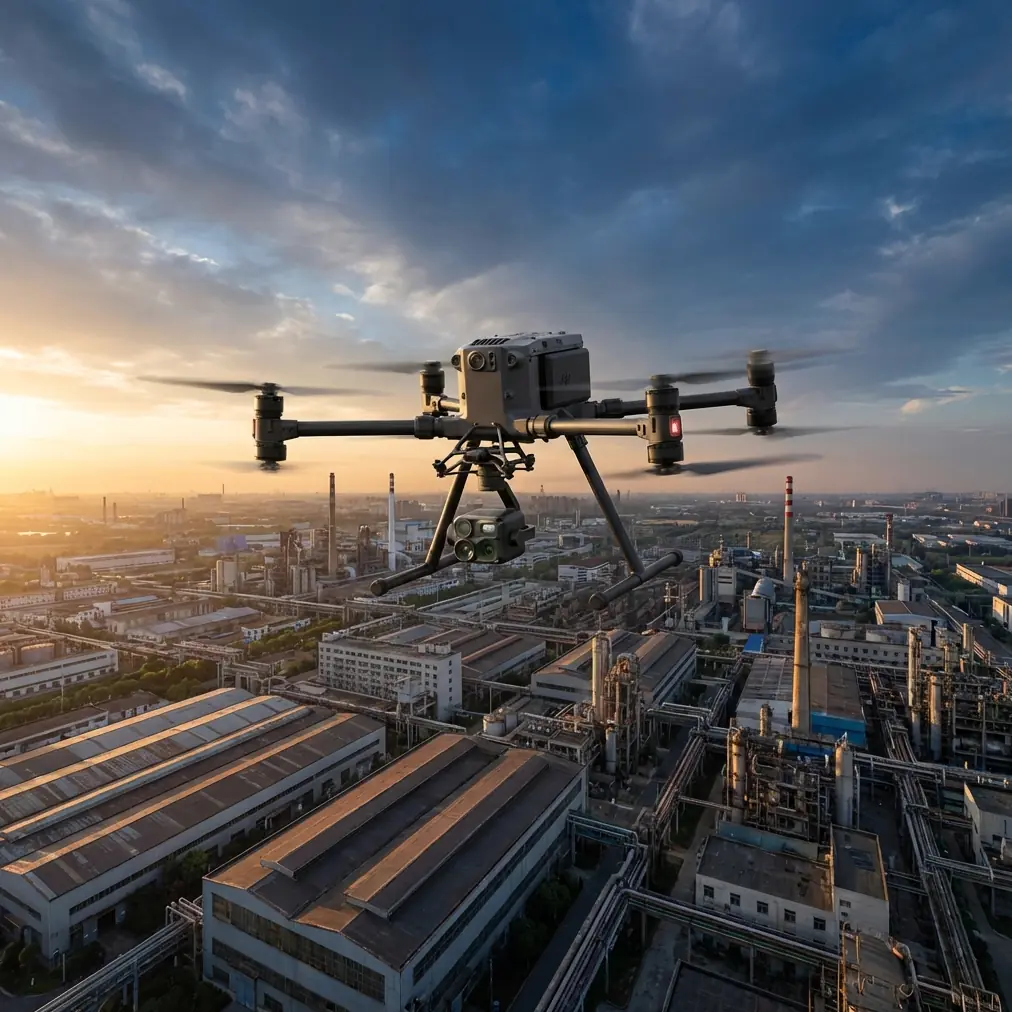
Matrice 4 for Mountain Power Line Capture: A Maintenance-Driven Workflow That Reduces Reflights
META: Expert Matrice 4 field workflow for mountain power line capture, combining maintenance logic, control mapping discipline, thermal imaging, photogrammetry, and transmission planning.
Mountain power line capture looks straightforward on a mission sheet and messy in real terrain.
Steep elevation changes distort depth perception. Wind curls around ridgelines. Signal quality can shift between one span and the next. A tower face that looks clear in RGB may still hide a thermal anomaly on a connector or insulator string. When crews talk about “getting the data,” they usually mean more than images. They mean complete, reviewable, repeatable evidence gathered under conditions that punish weak planning.
That is where a Matrice 4 operation benefits from thinking less like a casual drone flight and more like an aviation support system.
The reference materials behind this article point to two ideas that matter far more than they seem at first glance. The first is a maintenance concept from civil aircraft support: not every task should be handled the same way, and inspections need to be tied to timing, condition, and function. The second is a control-logic detail from multirotor/fixed-wing parameter mapping: flight behavior depends on clear channel assignments and threshold discipline, not pilot improvisation. For mountain power line capture with Matrice 4, these ideas form a practical backbone.
The real problem in mountain power line inspection
In flat terrain, a reshoot is annoying. In mountain corridors, it can wreck the week.
A missed angle on a suspension clamp may require another access window, another observer position, another battery cycle, and another weather gamble. If the team is collecting both visual evidence and thermal signature data, the cost of inconsistency gets even higher. Sun angle, conductor loading, and ambient temperature all affect what the thermal set reveals. If image geometry is also needed for photogrammetry, then poor overlap or unstable altitude control can turn a flight into unusable inventory.
Operators often blame terrain first. Terrain is only part of it.
The bigger issue is usually system discipline: how the aircraft is checked, how the controls are configured, how flight modes are managed, and how data goals are sequenced.
Why an aircraft maintenance mindset fits Matrice 4 work
One of the source documents compares three maintenance approaches and distinguishes between checks tied to time or usage and checks tied to condition. It also separates visual checks, operational checks, functional checks, and formal inspections. That distinction is highly relevant to Matrice 4 deployment in power utility work.
A mountain capture mission should not rely on one generic “pre-flight check.” It should be broken into layers:
- visual check
- operational check
- functional check
- scheduled inspection logic
That sounds bureaucratic until you miss a critical shot because a gimbal axis behaved normally on the ground and drifted under load in cold air.
The reference specifically mentions maintenance triggers linked to time or counts, such as pre-flight, post-flight, parking intervals, and periodic inspections analogous to A, B, and C checks. The operational significance for Matrice 4 teams is simple: aircraft reliability is not just about whether the drone powers on. It is about whether the aircraft can still perform to standard after repeated transport, altitude changes, battery swaps, and mountain-weather exposure.
For a utility contractor running frequent line patrols, this means creating a support schedule around mission frequency, not just around incident response. If your Matrice 4 fleet is flying line corridors every week, the aircraft deserves structured inspection intervals based on use cycles and mission severity. A tower survey in gusting mountain air is not equivalent to a short training hop over an open field.
Translating the source maintenance categories into field practice
The source text defines several useful check types:
- Visual check: determine whether the item appears capable of performing its function, without quantitative limits.
- Operational check: confirm the item can perform its designed function, again focused on fault discovery.
- Functional check: a quantitative check to verify one or more functions remain within prescribed limits.
- Inspection: examination against a stated standard.
For Matrice 4 power line work, that breakdown can be turned into a high-yield routine.
1. Visual check before launch
This is not a ceremonial walkaround. In mountain operations, it should focus on parts most likely to degrade mission quality rather than obvious crash damage alone.
Key areas:
- lens cleanliness for both visual and thermal payloads
- arm locking status and prop condition
- battery terminal cleanliness, latch integrity, and thermal state
- landing gear and underside contamination from dust, snowmelt, or vegetation
- accessory mounting security, especially if using a third-party strobe, RTK module mount, or glare shield
A third-party anti-glare hood for the pilot display or field monitor can materially improve framing accuracy on bright mountain ridges. It sounds minor. It is not. If the operator cannot clearly assess insulator detail or thermal contrast in the moment, framing errors multiply.
2. Operational check before entering the corridor
This stage confirms the aircraft and payload actually respond as intended.
Examples:
- verify gimbal pitch response and recenter behavior
- test zoom and thermal palette switching if required by the inspection plan
- validate O3 transmission stability from launch point before pushing into terrain masking
- confirm obstacle sensing status and map overlays
- confirm AES-256 protected data workflow if imagery will move through sensitive utility review channels
The operational significance here is that mountain line work often begins from a constrained launch site. If the aircraft shows delayed camera response or transmission instability near home point, those issues will not improve once the aircraft slips behind a ridge shoulder.
3. Functional check tied to data quality
This is where many teams underperform. A functional check needs numbers or limits.
For example:
- photogrammetry overlap target achieved or not achieved
- thermal image temperature range stable or not stable
- RTK lock quality acceptable or not acceptable
- control channel response centered and consistent or not consistent
If you are building a 3D model of structures or conductor clearances, the mission needs more than visually pleasing images. It needs geometry that can stand up in engineering review. If GCPs are part of your workflow, confirm their visibility strategy before flight. In mountain environments, crews often place GCPs where they are easy to access rather than where they are actually visible from planned capture angles. That mistake weakens the entire reconstruction.
Why RC mapping discipline matters more than pilot skill in this scenario
The second source is a parameter sheet, and on the surface it looks mundane: channel assignments, mode thresholds, and several unassigned options. Yet this kind of configuration detail decides whether a Matrice 4 crew behaves predictably under pressure.
The source explicitly maps:
- pitch to Channel 2
- roll to Channel 1
- throttle to Channel 3
- yaw to Channel 4
- flight mode selection to Channel 5
It also lists threshold values such as:
- 0.250 for acro mode selection
- 0.667 for auto mode selection
- 0.000 for loiter mode selection
Even though Matrice 4 operators may use different control ecosystems than the source platform, the underlying lesson is universal: mission safety and data consistency depend on unambiguous control mapping and deliberate mode switching.
Operational significance of the thresholds
In a mountain power line environment, accidental mode changes are not trivial. A poorly understood threshold on a switch or slider can interrupt a carefully flown inspection pass just as the aircraft threads a safe stand-off from conductors and tower steel.
That is why threshold logic deserves rehearsal. A value like 0.667 for auto mode selection or 0.250 for acro-related behavior shows how small signal differences can trigger major aircraft behavior changes. On a technical inspection mission, every assigned channel should have one clear purpose, and every unassigned option should remain intentionally disabled unless there is a documented reason to enable it.
The source also lists several channels as unassigned, including parameter tuning inputs and a kill switch channel. The practical takeaway is not that crews should add complexity. It is the opposite. In mountain inspections, unnecessary live tuning or loosely governed switch assignments create avoidable ambiguity. If a control is not mission-critical, leave it out of the active workflow.
Building a Matrice 4 capture sequence that actually survives mountain conditions
Here is the field logic I recommend.
Phase 1: Thermal first, but only if the loading and weather window support it
Thermal signature collection is most valuable when the line condition and ambient environment create usable contrast. Do not treat thermal as a box to tick after RGB imaging. For connectors, splice points, and hardware clusters, plan thermal passes specifically around expected anomaly visibility.
Use the Matrice 4 at stand-off distances that preserve safety and image utility. In broken terrain, it is often smarter to segment the route by structures rather than attempt one continuous cinematic corridor run.
Phase 2: RGB detail capture for engineering review
Once the thermal pass is complete, move to deliberate visual coverage:
- conductor attachment points
- insulators
- clamps
- jumpers
- tower members showing corrosion or deformation indicators
- vegetation encroachment zones
This is where zoom discipline matters. Over-zooming in mountain wind can degrade usable sharpness faster than crews realize. Stable framing beats dramatic framing.
Phase 3: Photogrammetry where geometry matters
Not every power line mission needs a model. Some absolutely do.
If the customer needs terrain context, asset positioning, or clearance analysis, design a dedicated photogrammetry segment with consistent overlap and geometry. Use GCPs where feasible, but place them for visibility, not convenience. If ridgelines create GPS irregularity, split the capture blocks rather than force one compromised run.
Phase 4: Battery strategy and handoff
Hot-swap batteries are a major advantage in utility workflows because they compress turnaround time between structures or segments. In mountain sites, that matters operationally. It reduces the chance that changing weather or moving cloud shadow will break consistency between capture sets.
Still, battery speed should not erase inspection discipline. After each swap, crews should repeat a short operational check, especially on gimbal behavior and transmission health.
Transmission reliability is not an afterthought
The context here mentions O3 transmission, and that belongs in this conversation. In mountain corridors, transmission is not just about distance. It is about line of sight, terrain shielding, reflective clutter from steel structures, and the operator’s decision to reposition before the link degrades.
O3-class transmission performance can support difficult commercial inspection work, but only when crews plan around the terrain rather than assume the system will brute-force through it. If the mission concept edges toward BVLOS-style thinking, the planning standard has to rise with it, especially around visual observer placement, terrain masking analysis, and handoff procedures. Even when operating strictly within local civilian rules and permissions, the discipline should resemble a structured aviation task, not an improvised camera outing.
A small accessory can have a disproportionate impact
The best third-party additions are usually the least glamorous.
For mountain power line capture, I have seen crews get real gains from a rugged tablet mount and a sun hood that improves viewability of fine asset detail in bright alpine light. Another useful add-on is a high-visibility landing pad that helps keep dust and grit away from sensors and battery interfaces on uneven roadside launch points.
These are not flashy upgrades. They reduce friction. Reduced friction leads to cleaner checks, cleaner launches, and fewer “good enough” decisions.
If your team is refining this kind of field setup and wants to compare notes on mounts, monitor visibility, or transmission planning, you can message a UAV specialist here.
The larger point: Matrice 4 performance starts before takeoff
Most articles about inspection drones spend too much time on sensor specs and not enough on support logic. The reference material used here points in the opposite direction, and that is exactly why it is valuable.
A civil aircraft maintenance framework reminds us that different faults reveal themselves in different ways. Some are caught by time-based routines. Others only surface through condition-based monitoring or functional checks. That matters for Matrice 4 because mountain power line capture is unforgiving of partial readiness.
The parameter mapping reference adds a second lesson: control clarity matters. Specific assignments such as roll on Channel 1, pitch on Channel 2, throttle on Channel 3, yaw on Channel 4, and flight mode on Channel 5 reflect a disciplined control architecture. Threshold values like 0.250 and 0.667 show that mode behavior is defined, not guessed. In the field, that translates into fewer surprises when the aircraft is close to steel infrastructure, wind-exposed, and tasked with collecting evidence that cannot be casually re-shot.
If you want better results from Matrice 4 in mountain power line work, start by changing the question. Do not ask, “Can this drone capture the corridor?” Ask, “Can our operation repeatedly produce inspection-grade thermal and visual data under mountain constraints without wasting sorties?”
That is a much tougher standard.
It is also the one that produces useful work.
Ready for your own Matrice 4? Contact our team for expert consultation.