
Matrice 4 for Urban Power Line Capture: A Specialist’s
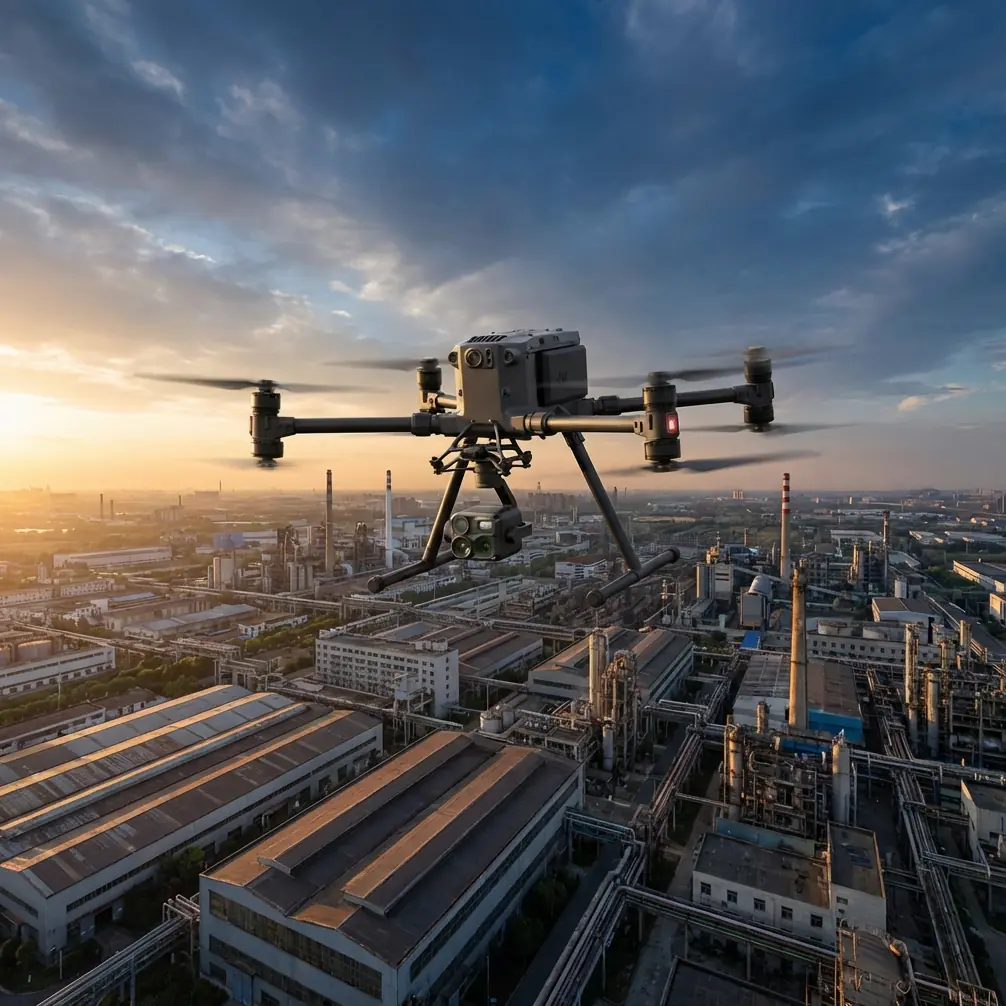
Matrice 4 for Urban Power Line Capture: A Specialist’s Technical Review
META: Expert analysis of Matrice 4 for urban power line imaging, focusing on control precision, throttle curve logic, transmission stability, thermal workflows, and real-world inspection reliability.
Urban power line capture is a strange mix of precision flying and compromise. You are threading a sensor platform through cluttered airspace, reflective glass, rooftop turbulence, signal congestion, and narrow visual lanes between poles, facades, and tree canopies. The drone matters, obviously. But the aircraft alone does not decide whether the mission produces clean data. The deeper issue is control fidelity—how predictably the platform responds when you make small corrections close to infrastructure.
That is where a serious Matrice 4 conversation becomes more interesting than a brochure summary.
As a specialist reviewing aircraft for utility imaging, I keep returning to one deceptively simple lesson drawn from legacy flight-control practice: small setup errors at neutral can cascade into very visible operational failures. One reference manual in the source material makes this plain in servo language. If the neutral position angle of a servo arm is too far off, excessive trim may push maximum movement beyond the servo’s effective range. The result is nasty in practice: you move the control, but the mechanism no longer responds as expected. The manual’s advice is blunt—keep trim correction as small as possible, and if the neutral geometry is wrong, replace the arm rather than compensate heavily in software.
That old model-aircraft logic maps surprisingly well to modern Matrice 4 work over urban power lines.
Why a servo-neutral lesson still matters in a Matrice 4 workflow
Matrice 4 operators are not manually setting up exposed servo horns for primary flight surfaces. Yet the operational principle is the same: never use software compensation as a crutch for poor physical or configuration alignment. In line inspection, this shows up in three places.
First, gimbal centering. If the camera’s neutral framing is off, crews often start “flying around the problem,” introducing unnecessary yaw or lateral offset to keep the conductor centered in frame. That adds motion blur risk, worsens parallax inconsistency for photogrammetry, and increases pilot workload near poles and crossarms.
Second, control tuning. Over-aggressive trim-style corrections in the flight stack or remote input profile can make a drone appear stable in open space but awkward when inching along wires in an urban canyon. You may not notice it until the aircraft is making repeated micro-corrections around transformers, insulators, or branch encroachment zones.
Third, payload alignment. If the visual and thermal axes are not behaving predictably, the same hotspot may drift relative to the RGB frame across a pass. For utility asset review, that is not just annoying. It slows defect validation and can compromise repeatability across scheduled inspections.
The manual extract also describes a trim adjustment path using a MODE menu, a SELECT key to choose the channel, and DATA INPUT to change values. More interesting than the buttons themselves is the adjustment logic behind them. The text notes that one trim method changes by “4” or “5” per press, while a more precise program setting allows increments of “1.” That distinction matters operationally. Urban power line capture lives in the space between gross correction and fine correction. Coarse tuning gets you airborne. Fine tuning gets you usable inspection data.
With Matrice 4, this translates into a setup philosophy: do not accept “close enough” if your mission is detailed asset imaging. Fine control sensitivity, stable hover behavior, and predictable gimbal response are worth the extra bench time because they reduce in-flight compensation later.
The hidden value of curve logic for line inspection
The same source manual shifts from trim to a 5-point throttle curve. It states that the curve consists of 5 points with an adjustable range from 0 to 100%, and that the first point is initially set low while the fifth point corresponds to full throttle at 100%. In the original context, this was about matching stick movement to engine response for the best flight condition.
Again, the underlying concept is more valuable than the vintage hardware context.
A Matrice 4 mission over city power lines is not about raw power. It is about how thrust response is distributed across the control range. A pilot inspecting overhead conductors near buildings needs delicacy around hover and crawl-speed movement, not a jumpy response curve that turns a minor stick input into a lateral surge.
Think of the 5-point curve as a mental model for modern response shaping. The important operational takeaway is that aircraft behavior should be intentionally tuned across different parts of the control envelope. Hover entry, slow advance, obstacle-proximate tracking, and brisk repositioning between structures are not the same flight state. If your setup treats them as identical, the data will show it.
For Matrice 4 users capturing urban utility corridors, this has direct impact on:
- Thermal signature consistency: smoother low-speed control helps maintain angle and distance, reducing variation when comparing heat anomalies across connectors or splices.
- Photogrammetry overlap: stable, repeatable movement improves image geometry for 3D reconstruction, especially when integrating GCP-based validation in dense built environments.
- Pilot fatigue: less overcorrection means better attention on situational awareness, wire proximity, and public-space risk management.
- Asset repeatability: when crews revisit the same span next quarter, a disciplined control profile produces more comparable datasets.
O3 transmission, AES-256, and why urban line work punishes weak links
Readers interested in Matrice 4 usually focus first on sensors. Fair enough. For urban power line capture, though, transmission resilience is equally important. O3 transmission matters because cities are noisy. Roof antennas, Wi-Fi saturation, reflective multipath, and moving signal blockers can all degrade live viewing right when the pilot needs the cleanest framing.
In utility work, link quality is not a convenience feature. It is part of data quality control. If the video feed stutters as the aircraft skirts a line corridor between buildings, the pilot may overcorrect or abandon the ideal viewing angle. That changes the inspection result. A weak downlink does not just threaten confidence—it directly alters the image set.
AES-256 also deserves mention here, not as a checkbox, but as an operational safeguard. Urban power line datasets can reveal sensitive infrastructure layouts, roof access points, substation geometry, and maintenance conditions. Secure transmission is part of responsible utility operations, especially when multiple teams, contractors, and networked review workflows are involved.
BVLOS discussions often dominate infrastructure drone strategy, but in dense city corridors the practical challenge usually appears earlier: can the aircraft maintain a stable, trustworthy control and viewing loop in RF-cluttered airspace while producing inspection-grade imagery? That is a more immediate test of platform maturity.
Thermal and visual capture: what actually separates useful missions from pretty footage
The phrase “thermal signature” is often used loosely. In urban power line operations, it should mean controlled interpretation, not just colorful imagery. A connector hotspot seen from a skewed angle, at inconsistent distance, with variable background loading from glass facades or sun-soaked masonry, can mislead less disciplined teams.
A properly configured Matrice 4 workflow helps by making the aircraft boring in the best possible way. Stable hold. Predictable camera behavior. Clean framing transitions. That stability lets the inspection team concentrate on interpreting conductor fittings, terminations, and insulator strings instead of fighting the platform.
One recent urban mission brought this home for me. We were tracking a mid-block line segment near mature roadside trees after a customer reported intermittent thermal irregularities at peak demand. As the drone advanced along the corridor, the onboard sensing suite flagged movement near a branch line crossing our route. It turned out to be a black kite lifting off from the canopy edge. The aircraft paused cleanly, held position, and allowed a safe reroute without breaking the inspection logic of the pass. Wildlife interactions are rarely dramatic in reports, but they matter. A sensor stack that can navigate a sudden bird encounter without forcing an erratic pilot correction is not just convenient; it preserves both flight safety and dataset continuity.
That kind of interruption is common enough in real utility work. Urban fauna, rooftop pigeons, nesting birds near poles, even bats at dusk around feeder lines—all of them punish twitchy control behavior.
Photogrammetry around power lines: less forgiving than many teams expect
Power line capture in urban settings often includes a photogrammetric objective, even if the client initially asks only for inspection images. Once the aircraft is up, the value of a reconstructable corridor dataset becomes obvious. Pole lean, vegetation intrusion, clearance context, facade proximity, and hardware condition all become easier to review spatially.
But line environments are hostile to casual photogrammetry. Thin conductors are difficult geometry. Repeating patterns on poles and buildings can confuse matching. Shadows shift rapidly across streets. Traffic introduces transient occlusions. This is where disciplined capture design matters more than raw sensor specs.
The old manual’s “adjust by increments of 1 when precision matters” could almost be rewritten as advice for utility mapping. Small refinements in route spacing, angle consistency, and speed control are what make GCP-backed outputs credible. If the Matrice 4 is being used for corridor modeling, teams should treat repeatable path execution as part of the sensor package.
This is especially true when combining thermal review with RGB reconstruction. If the flight path is sloppy, thermal anomalies become harder to localize precisely within the model. If it is tight, review teams can compare image layers with much more confidence.
Hot-swap batteries and mission continuity in dense urban windows
Urban utility work runs on short opportunity windows. A street closure may last minutes, not hours. Rooftop access may depend on building management timing. Wind corridors between structures can open and close with weather shifts. Hot-swap batteries matter because they preserve mission flow.
The significance is not merely faster turnaround. It is continuity. When crews can keep aircraft setup, sensor alignment, and field rhythm intact through battery changes, they are less likely to introduce inconsistencies between passes. On multi-segment line capture, that directly supports comparability across assets.
This also connects back to control discipline. The less time a team spends re-establishing its operational feel after interruptions, the better the quality of close-proximity inspection flying. Aircraft that return to the same predictable handling profile every time reduce cumulative error across a full-day corridor job.
What experienced operators should evaluate before flying Matrice 4 on city line work
A serious pre-mission review should go beyond battery count and SD card space. For urban power line capture, I would evaluate the Matrice 4 around five practical questions:
1. Is the control response tuned for low-speed precision?
The 5-point curve concept from the source material is useful here. Ask whether the aircraft behavior near hover and crawl-speed movement is refined enough for wire-adjacent inspection, not just transit between assets.
2. Has the imaging axis been mechanically and digitally validated?
The servo-neutral warning from the manual translates neatly: avoid large corrective offsets when a physical alignment issue is the real problem. Fix root causes early.
3. Can the transmission link stay clean in a congested RF environment?
O3 performance should be judged where the mission actually happens—between buildings, near rooftop equipment, beside reflective surfaces.
4. Is the security posture appropriate for infrastructure imagery?
AES-256 matters when handling sensitive utility data, especially if imagery is reviewed by distributed engineering teams.
5. Will the crew preserve repeatability across batteries and segments?
Hot-swap efficiency, route discipline, and GCP-aware workflow design all support comparable inspection records over time.
If you are mapping out a line inspection workflow and want to sanity-check your aircraft setup against real utility capture conditions, I’d suggest starting with a field-oriented discussion rather than a spec-sheet comparison. A quick Matrice 4 workflow chat on WhatsApp is often enough to identify where control tuning, sensor alignment, or corridor planning will affect the final dataset.
Final assessment
Matrice 4 makes sense for urban power line capture when it is treated as a precision inspection platform, not simply a flying camera. The most useful insight from the reference material is not about old transmitter menus. It is the operational discipline behind them: keep neutral geometry honest, use minimal compensation, and prefer fine adjustment over broad correction. Add the practical realities of O3 transmission, AES-256-secured data flow, thermal interpretation, GCP-aware photogrammetry, and hot-swap mission continuity, and the picture becomes clear.
Urban utility inspection rewards drones that respond cleanly to small inputs and crews that refuse to hide setup flaws behind software workarounds. That is the standard Matrice 4 should be judged against.
Ready for your own Matrice 4? Contact our team for expert consultation.