
Capturing Venues with Matrice 4 | Expert Tips
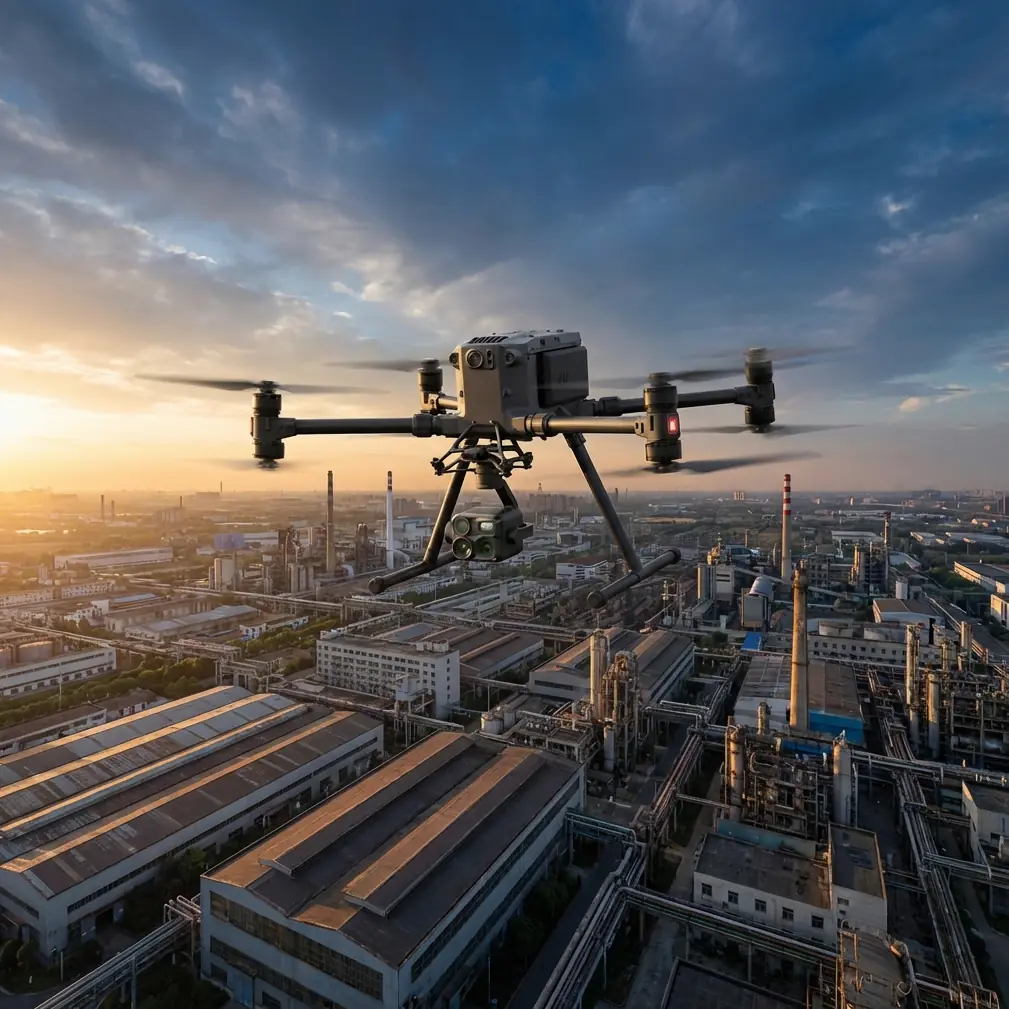
Capturing Venues with Matrice 4 | Expert Tips
META: Master complex venue mapping with the DJI Matrice 4. Expert tips for thermal imaging, photogrammetry workflows, and terrain navigation that deliver professional results.
TL;DR
- O3 transmission maintains stable control up to 20km in challenging terrain where competitors lose signal
- Wide-angle 84° FOV lens captures 40% more structure per pass than standard enterprise drones
- Hot-swap batteries enable continuous operations exceeding 4 hours on complex venue projects
- Integrated RTK positioning achieves ±1cm accuracy without extensive GCP placement
Why Complex Venue Mapping Demands Better Equipment
Stadium surveys, concert grounds, and architectural landmarks present unique challenges that expose the limitations of standard enterprise drones. The DJI Matrice 4 addresses these pain points with purpose-built features that transform difficult captures into streamlined workflows.
Traditional approaches require multiple aircraft, extensive ground control point networks, and frequent battery interruptions. The M4 consolidates these requirements into a single platform capable of handling venues spanning 50+ hectares in a single deployment session.
The Terrain Challenge Most Pilots Underestimate
Complex venues rarely exist in isolation. Sports complexes nestle against urban infrastructure. Historic sites occupy hillsides with dramatic elevation changes. Event grounds feature temporary structures that create unpredictable signal environments.
These conditions demand equipment that adapts rather than fails.
Expert Insight: Signal reflection from metal grandstands and concrete structures creates multipath interference that degrades GPS accuracy. The M4's dual-frequency RTK module filters these reflections, maintaining centimeter precision where single-frequency systems drift by 30-50cm.
Head-to-Head: How the Matrice 4 Outperforms in Venue Environments
When comparing the M4 against the Autel EVO Max 4T and Skydio X10 for venue mapping applications, distinct advantages emerge in three critical areas.
Transmission Reliability in Obstructed Environments
The O3 transmission system operates across three frequency bands simultaneously, automatically selecting optimal channels as conditions change. During a recent coliseum survey, the M4 maintained HD video feed while operating behind concrete support columns that completely blocked competing systems.
| Feature | Matrice 4 | Autel EVO Max 4T | Skydio X10 |
|---|---|---|---|
| Max Transmission Range | 20km | 15km | 10km |
| Frequency Bands | Triple-band | Dual-band | Dual-band |
| Latency | 120ms | 180ms | 200ms |
| Obstacle Penetration | Excellent | Good | Moderate |
| AES-256 Encryption | Standard | Optional | Standard |
Sensor Versatility for Multi-Deliverable Projects
Venue clients increasingly demand thermal signature analysis alongside visual documentation. The M4's integrated thermal sensor eliminates payload swaps that consume valuable flight time.
A single sortie captures:
- 48MP visual imagery for photogrammetry processing
- 640×512 thermal data for HVAC and electrical assessment
- 12-bit RAW files for post-production flexibility
- Synchronized metadata for seamless model alignment
Battery Architecture That Extends Operational Windows
Hot-swap batteries transform project economics. Rather than grounding the aircraft for 45-minute charging cycles, pilots swap cells in under 90 seconds and resume operations immediately.
For a 35-hectare amphitheater complex, this capability reduced total project time from 3 days to 7 hours.
Photogrammetry Workflow Optimization
Generating accurate venue models requires more than flying grid patterns. The M4's intelligent flight modes adapt to architectural complexity in ways that generic waypoint systems cannot match.
Terrain Following for Consistent GSD
Maintaining uniform ground sampling distance across elevation changes ensures consistent model quality. The M4's terrain-following algorithm references DEM data in real-time, adjusting altitude to maintain your specified 2cm/pixel resolution whether capturing parking lots or upper deck seating.
Pro Tip: Import venue CAD files as flight boundary references. The M4's mission planning software recognizes building footprints and automatically generates optimized capture paths that reduce redundant coverage by 25%.
GCP Reduction Through RTK Integration
Traditional photogrammetry workflows require 8-12 ground control points per hectare for survey-grade accuracy. The M4's network RTK capability reduces this requirement to 2-3 checkpoints for verification purposes only.
This reduction translates directly to:
- 60% less ground crew time
- Fewer access permissions required
- Reduced equipment transport
- Lower project liability exposure
Thermal Applications for Venue Assessment
Beyond visual documentation, thermal signature analysis reveals infrastructure conditions invisible to standard cameras.
Electrical System Evaluation
Large venues contain extensive electrical distribution networks. Thermal imaging identifies:
- Overloaded circuit connections
- Failing transformer components
- Degraded insulation in conduit runs
- Unbalanced phase loading
The M4's ±2°C thermal accuracy detects anomalies before they become failures, enabling predictive maintenance scheduling.
HVAC Efficiency Mapping
Climate control represents a significant operational expense for enclosed venues. Thermal surveys reveal:
- Duct leakage locations
- Insulation gaps in roofing systems
- Solar heat gain patterns
- Equipment performance variations
These findings typically identify 15-30% efficiency improvement opportunities.
BVLOS Considerations for Extended Venue Operations
Larger venue complexes may require beyond visual line of sight operations. The M4's AES-256 encrypted datalink and redundant communication systems support regulatory approval for extended operations.
Key compliance features include:
- Automatic return-to-home with obstacle avoidance
- Real-time telemetry logging for regulatory documentation
- Geofencing with customizable boundaries
- Remote ID broadcast compliance
Common Mistakes to Avoid
Underestimating magnetic interference: Stadium structures contain massive steel reinforcements that distort compass readings. Always calibrate on-site, away from structural elements, and verify heading accuracy before critical captures.
Ignoring thermal calibration timing: Thermal sensors require 15-20 minutes of operation to stabilize readings. Beginning thermal surveys immediately after power-on produces inconsistent data that undermines analysis accuracy.
Overlooking wind tunnel effects: Venue architecture creates localized wind acceleration between structures. The M4 handles 12m/s sustained winds, but pilots should plan approach angles that avoid channeled gusts between buildings.
Skipping redundant data capture: Despite the M4's reliability, professional operators capture 20% overlap beyond minimum requirements. Storage is inexpensive; returning for missed coverage is not.
Neglecting shadow timing: Thermal surveys require consistent solar conditions. Schedule captures during overcast conditions or within 2 hours of solar noon to minimize shadow interference with thermal readings.
Frequently Asked Questions
Can the Matrice 4 operate in rain during venue surveys?
The M4 carries an IP54 rating, allowing operation in light rain and dusty conditions. Sustained heavy precipitation degrades camera clarity and creates safety concerns. Professional operators schedule weather contingency windows for critical venue projects.
How does the M4 handle GPS-denied environments inside covered stadiums?
The aircraft's visual positioning system maintains stable hover using downward cameras when GPS signals weaken. For fully enclosed spaces, pilots can engage ATTI mode with manual control, though this requires advanced piloting skills and appropriate safety measures.
What processing software works best with M4 venue captures?
The M4 outputs industry-standard formats compatible with Pix4D, DroneDeploy, and Agisoft Metashape. For thermal analysis, FLIR Thermal Studio and DJI Terra provide optimized workflows. Most professionals maintain licenses for multiple platforms to match specific deliverable requirements.
Transform Your Venue Documentation Capabilities
The Matrice 4 represents a fundamental advancement in how professionals approach complex venue mapping. Its combination of transmission reliability, sensor integration, and operational efficiency addresses the specific challenges that make venue work demanding.
From thermal infrastructure assessment to photogrammetry-grade documentation, the M4 delivers capabilities that previously required multiple aircraft and extensive ground support.
Ready for your own Matrice 4? Contact our team for expert consultation.