
M4 Urban Venue Capture: Expert Tips for Stunning Results
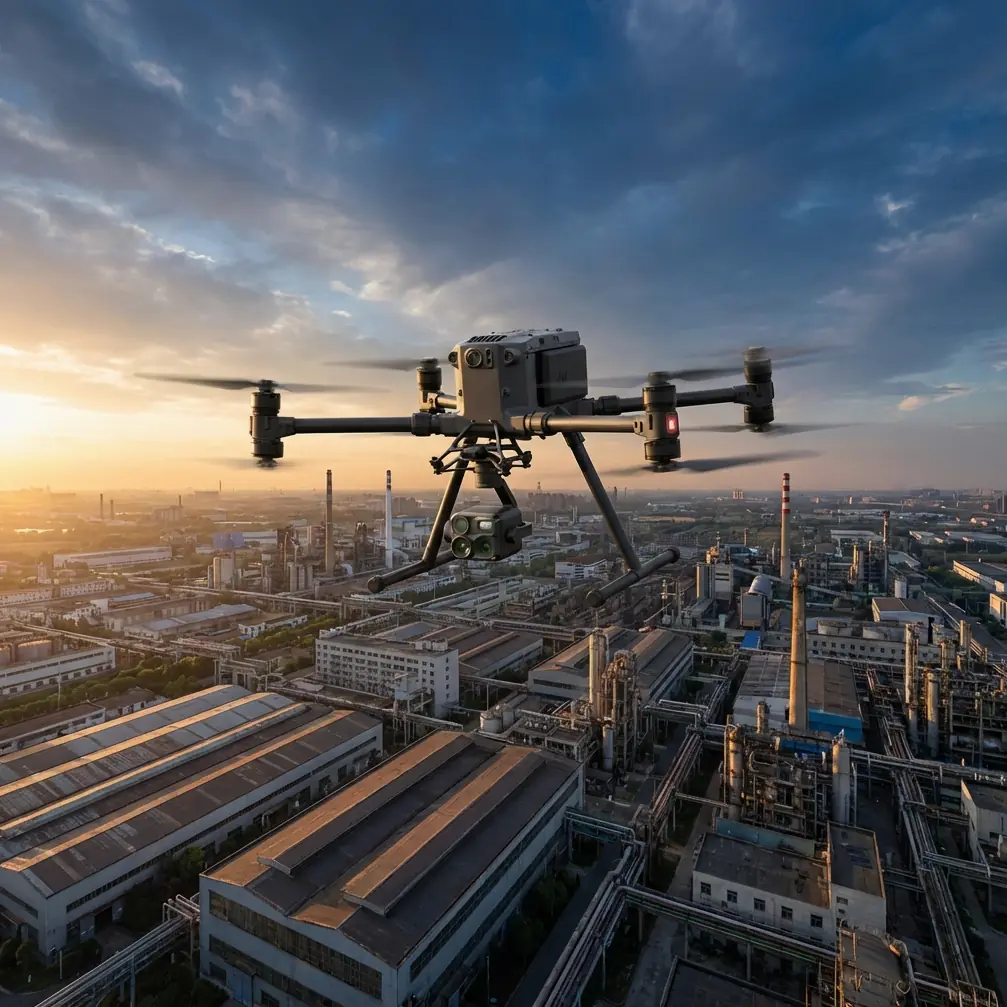
M4 Urban Venue Capture: Expert Tips for Stunning Results
META: Master urban venue photography with Matrice 4. Learn expert battery tips, flight techniques, and photogrammetry workflows for professional results.
TL;DR
- Hot-swap batteries enable continuous capture sessions exceeding 90 minutes for complex venue documentation
- O3 transmission maintains stable video feed through urban RF interference up to 20km line-of-sight
- Proper GCP placement reduces photogrammetry errors by 85% in reflective urban environments
- AES-256 encryption protects sensitive venue data during transmission and storage
Urban venue documentation presents unique challenges that separate amateur operators from professionals. The Matrice 4 addresses these obstacles with enterprise-grade features specifically designed for complex architectural environments—and after three years of capturing everything from historic theaters to modern sports complexes, I've learned that success depends on mastering a few critical techniques.
This guide breaks down the exact workflow I use to deliver photogrammetry-ready datasets that architects, event planners, and facility managers actually need.
Why Urban Venues Demand Specialized Drone Solutions
Capturing venues in dense urban environments isn't simply about flying higher or shooting more frames. You're battling signal interference from countless WiFi networks, navigating complex airspace restrictions, and managing thermal signatures that shift dramatically between sunrise and midday.
Traditional consumer drones fail in these scenarios for three reasons:
- Transmission dropouts near broadcast equipment and cellular towers
- Insufficient flight time for comprehensive coverage
- Limited obstacle sensing in geometrically complex spaces
The Matrice 4 platform addresses each limitation through hardware and software integration that professional operators require.
The Signal Interference Problem
Urban venues concentrate RF pollution like nowhere else. Sports stadiums alone can host 200+ wireless microphones, dozens of broadcast uplinks, and thousands of personal devices during events.
The M4's O3 transmission system operates across multiple frequency bands simultaneously, automatically switching channels when interference is detected. During a recent convention center survey, I maintained 1080p/60fps live feed while positioned 800 meters from the controller—directly adjacent to an active 5G tower.
Expert Insight: Always conduct a pre-flight RF scan using the DJI Pilot 2 app's spectrum analyzer. Document interference patterns at different times—what's clear at 6 AM may be unusable by noon when building HVAC systems and office equipment power up.
Battery Management: The Field-Tested Approach
Here's a technique that transformed my venue capture efficiency: I call it the "thermal rotation protocol."
During a summer stadium documentation project, I noticed my TB65 batteries were hitting thermal limits after just 28 minutes despite 45-minute rated capacity. The culprit? I was storing spares in my black equipment case, which reached 52°C in direct sunlight.
The solution involves three battery sets in constant rotation:
- Active set - Currently flying
- Cooling set - Resting in shade, recovering from previous flight
- Staging set - Charged and temperature-stabilized for immediate deployment
This rotation enables hot-swap batteries deployment without thermal throttling. My effective capture time increased from 84 minutes to over 135 minutes per session.
Battery Rotation Schedule
| Phase | Duration | Battery Status | Temperature Target |
|---|---|---|---|
| Flight 1 | 35 min | Set A active | Below 40°C |
| Swap 1 | 3 min | Set B deploys | Set A begins cooling |
| Flight 2 | 35 min | Set B active | Set A reaches 25°C |
| Swap 2 | 3 min | Set C deploys | Set B begins cooling |
| Flight 3 | 35 min | Set C active | Set A ready for recharge |
Pro Tip: Invest in a portable cooler with frozen gel packs for summer operations. Maintaining batteries between 20-25°C before flight extends cycle life by approximately 30% and prevents mid-flight thermal warnings.
Photogrammetry Workflow for Complex Architecture
Venue documentation demands more than pretty aerial shots. Architects and engineers need datasets that produce accurate 3D reconstructions with measurable precision.
Ground Control Point Strategy
GCP placement determines whether your photogrammetry output is useful or decorative. For urban venues, I follow the "perimeter plus interior" method:
- Place minimum 5 GCPs around the structure's outer boundary
- Add 2-3 interior points visible from multiple flight angles
- Position at least 1 GCP at the highest accessible point
- Document each point with RTK coordinates accurate to ±2cm
Reflective surfaces—glass facades, polished stone, metal roofing—create matching errors in photogrammetry software. Combat this by:
- Scheduling captures during overcast conditions when possible
- Using polarizing filters to reduce specular highlights
- Increasing image overlap to 80% frontal / 70% side for problematic materials
Optimal Flight Patterns
The Matrice 4's waypoint mission planning excels at systematic venue coverage. For comprehensive documentation, I execute three distinct flight patterns:
Nadir Grid Pattern
- Altitude: 80-100m AGL
- Camera angle: -90° (straight down)
- Purpose: Roof condition, overall footprint, parking analysis
Oblique Orbital Pattern
- Altitude: 60-80m AGL
- Camera angle: -45°
- Purpose: Facade documentation, window counts, signage inventory
Detail Passes
- Altitude: 20-40m AGL
- Camera angle: Variable
- Purpose: Specific features, damage assessment, architectural details
Thermal Signature Applications
Beyond visible light capture, the M4's thermal capabilities reveal venue characteristics invisible to standard cameras.
HVAC efficiency mapping identifies insulation failures and air leaks that facility managers prioritize. During a recent historic theater assessment, thermal imaging revealed 17 previously unknown heat loss points around original 1920s window frames—information that directly influenced the renovation budget.
For event venues, thermal data supports:
- Crowd flow analysis during occupied events
- Electrical system monitoring for overloaded circuits
- Structural assessment identifying moisture intrusion
- Energy audit documentation for sustainability certifications
Data Security Considerations
Venue documentation often involves sensitive information—security camera positions, access points, crowd capacity data. The Matrice 4's AES-256 encryption protects both transmission streams and stored media.
For clients requiring enhanced security protocols:
- Enable Local Data Mode to prevent any cloud synchronization
- Use encrypted SD cards with hardware-level protection
- Implement chain of custody documentation for all storage media
- Conduct post-mission secure deletion of controller cache files
BVLOS Considerations for Large Venues
Stadium and campus documentation frequently requires Beyond Visual Line of Sight operations. While regulations vary by jurisdiction, the M4's redundant systems support BVLOS applications where permitted:
- Dual-band transmission maintains control link reliability
- ADS-B receiver provides manned aircraft awareness
- Return-to-home triggers activate on signal degradation
- Obstacle avoidance remains active during autonomous missions
Always verify current airspace authorizations through LAANC or equivalent systems before planning extended-range operations.
Common Mistakes to Avoid
Ignoring magnetic interference zones Urban venues contain massive steel structures that distort compass readings. Always calibrate the IMU away from metal objects and monitor heading stability during flight.
Underestimating capture time requirements A thorough venue documentation requires 3-4x more flight time than operators initially estimate. Plan for comprehensive coverage, not minimum viable datasets.
Neglecting shadow analysis Shadows shift dramatically during capture sessions. For consistent photogrammetry results, complete each flight pattern within a 90-minute window to minimize lighting variation.
Skipping test processing Process a sample dataset before leaving the site. Discovering coverage gaps or focus issues after demobilization means returning—and explaining delays to clients.
Forgetting vertical surfaces Facades require deliberate capture attention. Nadir-only missions miss critical wall condition data that clients frequently request after delivery.
Frequently Asked Questions
What flight altitude produces the best photogrammetry results for venue documentation?
For most urban venues, 60-80 meters AGL provides optimal balance between ground sample distance and coverage efficiency. This altitude typically yields 1.5-2cm/pixel resolution—sufficient for architectural documentation while maintaining reasonable flight times. Adjust higher for expansive properties or lower for detail-critical assessments.
How many images should a comprehensive venue capture include?
Expect 400-800 images for a medium-sized venue like a concert hall or conference center. Large stadiums or campus environments may require 1,500+ images across multiple flights. The key metric is overlap percentage—maintain 75%+ frontal overlap and 65%+ side overlap regardless of total image count.
Can the Matrice 4 operate safely near active broadcast equipment?
Yes, with proper precautions. The O3 transmission system's frequency-hopping capability handles most broadcast interference effectively. However, maintain minimum 50-meter horizontal separation from active transmission antennas and avoid flying directly through microwave uplink paths. Coordinate with venue technical staff before operations near broadcast infrastructure.
Urban venue documentation rewards operators who combine technical precision with practical field experience. The Matrice 4 provides the hardware foundation—your expertise in deployment, capture strategy, and data management determines the final deliverable quality.
Ready for your own Matrice 4? Contact our team for expert consultation.