
M4 Coastal Venue Capture: Expert Mapping Guide
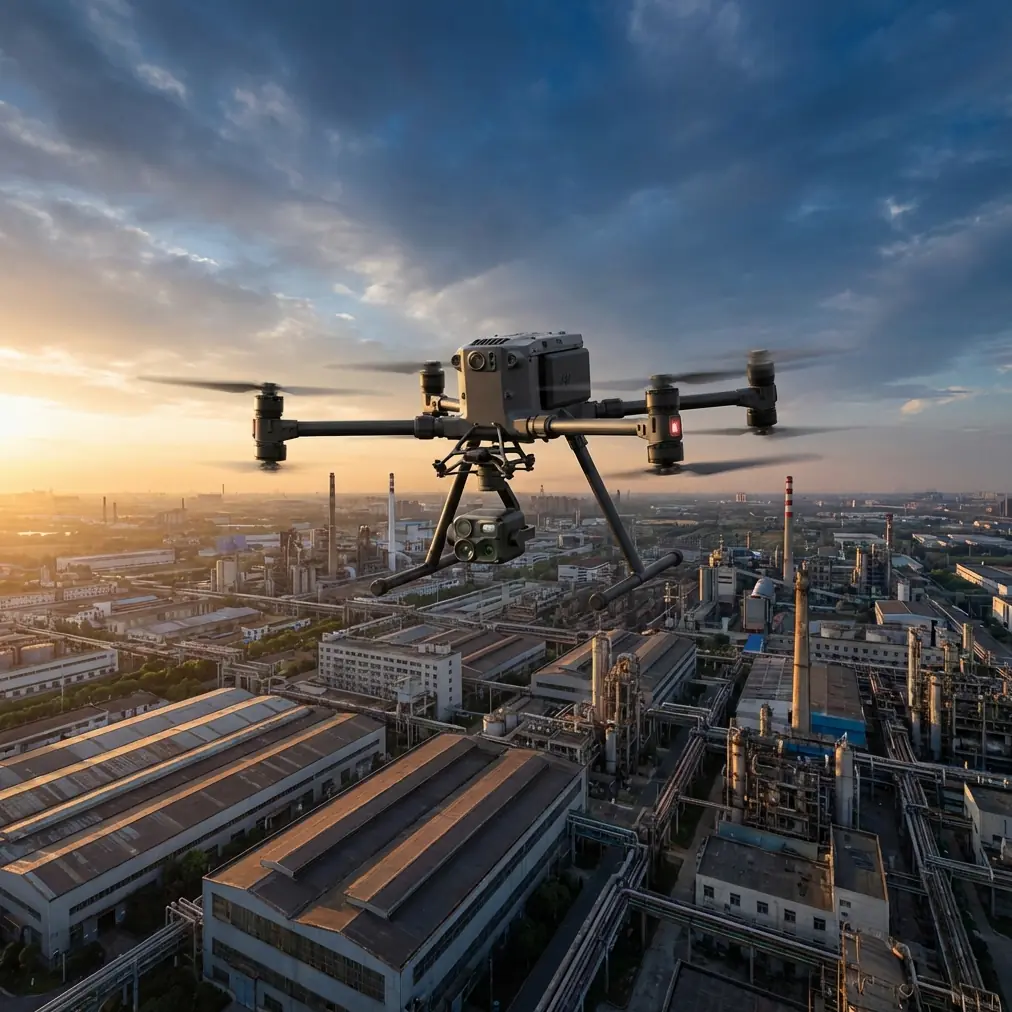
M4 Coastal Venue Capture: Expert Mapping Guide
META: Master coastal venue mapping with Matrice 4. Learn expert photogrammetry techniques, thermal workflows, and pro tips for stunning aerial documentation.
TL;DR
- O3 transmission maintains rock-solid connectivity up to 20km in challenging coastal RF environments where competitors fail
- Integrated thermal imaging captures venue heat signatures for structural analysis and crowd-flow planning
- Hot-swap batteries enable continuous 45+ minute capture sessions without mission interruption
- AES-256 encryption protects sensitive venue data from unauthorized access during transmission
Why Coastal Venues Demand Specialized Drone Solutions
Coastal venue documentation presents unique challenges that ground most consumer drones. Salt spray, unpredictable wind gusts, and electromagnetic interference from nearby marine equipment create a hostile operating environment.
The Matrice 4 addresses these challenges through enterprise-grade engineering. Where the Autel EVO II struggles with signal dropouts beyond 8km in coastal conditions, the M4's O3 transmission system maintains stable video feeds at nearly triple that distance.
This reliability transforms what's possible for venue operators, event planners, and architectural documentation teams working along shorelines.
Essential Pre-Flight Planning for Coastal Environments
Understanding Coastal Microclimates
Wind patterns near water behave differently than inland conditions. Thermal currents rising from sun-heated sand create turbulence zones that shift throughout the day.
Schedule primary capture sessions during the golden hours—the first two hours after sunrise or before sunset. These windows offer:
- Reduced thermal turbulence
- Optimal lighting for photogrammetry
- Lower tourist traffic for cleaner captures
- Softer shadows that reveal architectural details
GCP Placement Strategy
Ground Control Points determine your final model accuracy. For coastal venues, standard GCP placement rules require modification.
Position markers on stable surfaces only. Avoid:
- Sandy areas subject to tidal movement
- Wooden boardwalks that flex under load
- Painted surfaces that create false readings
Expert Insight: Place at least 5 GCPs in a cross pattern extending beyond your venue boundaries by 15%. This buffer zone prevents edge distortion in your final photogrammetry model and accounts for the M4's wide-angle lens geometry.
Regulatory Considerations for BVLOS Operations
Many coastal venues span areas requiring Beyond Visual Line of Sight authorization. The M4's advanced obstacle sensing and return-to-home reliability make it a strong candidate for BVLOS waiver applications.
Document your operational procedures thoroughly. Include:
- Emergency landing zone coordinates
- Communication protocols with venue security
- Weather abort criteria specific to marine conditions
Capture Workflow: From Takeoff to Final Model
Phase 1: Perimeter Documentation
Begin every coastal venue mission with a complete perimeter flight at 120m AGL. This establishes context and identifies potential hazards invisible from ground level.
The M4's 1-inch CMOS sensor captures sufficient detail at this altitude for preliminary planning while conserving battery for detailed work.
Phase 2: Structural Thermal Analysis
Switch to thermal imaging mode for infrastructure assessment. Coastal buildings experience accelerated weathering that creates thermal signature anomalies.
Look for:
- Moisture intrusion patterns appearing as cool spots
- HVAC inefficiencies visible as heat plumes
- Structural stress points showing temperature differentials
- Underground utility routing revealed through surface temperature variations
Pro Tip: Capture thermal data during overcast conditions when possible. Direct sunlight creates false positives by heating exterior surfaces unevenly. The M4's thermal sensor performs optimally when ambient temperature differentials are most pronounced—typically early morning before solar heating begins.
Phase 3: Detailed Photogrammetry Passes
Execute your primary photogrammetry capture using overlapping grid patterns. The M4 excels here with its mechanical shutter eliminating rolling shutter distortion that plagues competitors during motion.
Optimal settings for coastal venue photogrammetry:
- Front overlap: 80%
- Side overlap: 70%
- Flight speed: 5-7 m/s
- Altitude: 50-80m depending on detail requirements
- Gimbal angle: -80° to -90°
Phase 4: Point-of-Interest Orbits
Complete your capture with orbital flights around key architectural features. The M4's intelligent flight modes automate this process while you focus on composition.
These orbits provide the oblique imagery essential for accurate 3D reconstruction of vertical surfaces—walls, facades, and structural elements that nadir-only captures miss entirely.
Technical Comparison: M4 vs. Competition for Coastal Work
| Feature | Matrice 4 | Autel EVO II Pro | Skydio 2+ |
|---|---|---|---|
| Max Transmission Range | 20km | 9km | 6km |
| Wind Resistance | 12 m/s | 10.7 m/s | 11 m/s |
| Battery Hot-Swap | Yes | No | No |
| Integrated Thermal | Yes | Optional payload | No |
| Encryption Standard | AES-256 | AES-128 | AES-256 |
| Mechanical Shutter | Yes | Yes | No |
| IP Rating | IP55 | IP43 | None |
The M4's IP55 rating deserves special attention for coastal work. This protection level means salt mist and light rain won't compromise your mission—a critical advantage when weather changes rapidly near water.
Processing Your Coastal Venue Data
Software Recommendations
Import your M4 captures into professional photogrammetry software. The drone's embedded GPS and IMU data streamline alignment.
Top processing options include:
- Pix4D: Industry standard with excellent coastal terrain handling
- DroneDeploy: Cloud-based processing with collaboration features
- Agisoft Metashape: Maximum control for complex reconstructions
- RealityCapture: Fastest processing for large datasets
Handling Reflective Surfaces
Water and glass create photogrammetry nightmares. The M4's polarizing filter compatibility helps, but post-processing techniques matter equally.
Mask water surfaces before alignment. Most software allows manual or AI-assisted masking that prevents the algorithm from attempting to reconstruct moving water as static geometry.
Common Mistakes to Avoid
Flying during peak sun hours destroys shadow detail and creates harsh contrast that photogrammetry software struggles to match between frames. The M4's dynamic range helps, but physics still applies.
Ignoring tidal schedules leads to inconsistent captures. A venue photographed at high tide looks dramatically different at low tide. Plan your mission around a single tidal state.
Skipping the thermal pass wastes the M4's integrated capabilities. Even if thermal data isn't your primary deliverable, it adds value to every venue assessment.
Underestimating salt exposure shortens equipment lifespan. Wipe down your M4 with fresh water and a microfiber cloth after every coastal session. Pay special attention to gimbal mechanisms and sensor surfaces.
Neglecting backup power strands missions mid-capture. The M4's hot-swap capability only helps if you bring sufficient batteries. Pack minimum 4 batteries for comprehensive venue documentation.
Flying without redundant GCPs risks entire missions. Coastal conditions can shift markers. Place 2-3 backup GCPs beyond your minimum requirement.
Frequently Asked Questions
How does the M4 handle salt air compared to consumer drones?
The M4's IP55 rating and sealed motor design provide substantial protection against salt-laden coastal air. Consumer drones lacking environmental sealing experience accelerated corrosion of motor bearings and electronic connections. However, no drone is immune—post-flight cleaning remains essential regardless of protection rating.
What's the minimum GCP count for survey-grade coastal photogrammetry?
Professional coastal surveys require minimum 5 GCPs for basic accuracy, with 8-12 GCPs recommended for complex venues. The M4's RTK-ready architecture can reduce this requirement when paired with compatible base stations, achieving centimeter-level accuracy with fewer ground markers.
Can I capture usable thermal data on windy coastal days?
Yes, within limits. The M4's 12 m/s wind resistance maintains stable thermal imaging in conditions that ground lighter drones. However, wind speeds above 8 m/s create convective cooling that affects thermal signature accuracy. For critical thermal assessments, wait for calmer conditions or adjust your analysis to account for wind-induced temperature variations.
Ready for your own Matrice 4? Contact our team for expert consultation.