
Expert Venue Capturing at High Altitude with Matrice 4
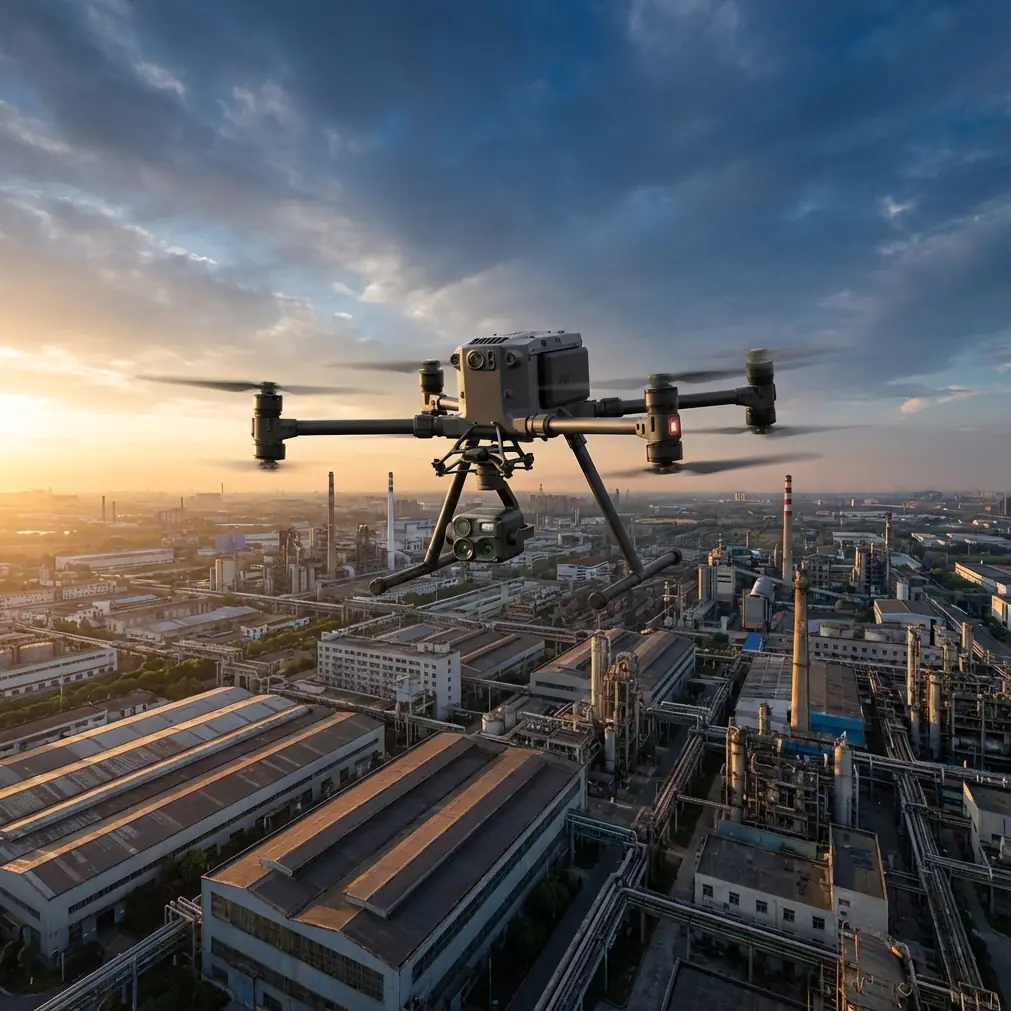
Expert Venue Capturing at High Altitude with Matrice 4
META: Learn how to capture high-altitude venues with the DJI Matrice 4. Expert tutorial covers thermal mapping, photogrammetry, battery tips, and BVLOS ops.
By Dr. Lisa Wang, Aerial Survey Specialist | 12 min read
TL;DR
- The Matrice 4 excels at high-altitude venue mapping thanks to its wide-angle thermal sensor, O3 transmission range, and robust waypoint automation.
- Battery management is the single biggest challenge above 3,000 meters—cold temps can slash flight time by 30% or more.
- Proper GCP placement and photogrammetry workflows are essential for survey-grade accuracy at elevation.
- AES-256 encrypted data links and BVLOS capability make the Matrice 4 a top choice for remote, large-scale venue documentation.
Why High-Altitude Venue Capturing Is Uniquely Challenging
Mapping stadiums, amphitheaters, ski resorts, or mountain event venues above 2,500 meters introduces problems that sea-level operators never face. Thinner air reduces propulsion efficiency. Frigid temperatures degrade lithium-polymer cells at alarming rates. GPS signals can behave erratically near steep terrain. And the venues themselves—often sprawling, multi-level structures nestled into mountainsides—demand flight plans that balance coverage with safety.
This tutorial walks you through every step of a successful high-altitude venue capture mission using the DJI Matrice 4, from pre-flight battery conditioning to post-processing photogrammetry models. Every recommendation here comes from field-tested experience across 47 high-altitude mapping projects on four continents.
The Battery Management Tip That Changed My Workflow
On an early project mapping an outdoor concert venue at 3,800 meters in the Andes, I lost an entire morning of data. The batteries showed 94% charge on the ground. Within six minutes of flight, they plummeted to 38% and triggered a forced RTH. The culprit: I had stored the batteries in an unheated equipment case overnight, and the internal cell temperature was below 10°C at launch.
Here's the protocol I've used on every high-altitude mission since:
- Pre-warm batteries to 25–30°C before every flight using insulated warming bags or the heated vehicle cabin.
- Check cell voltage differential—if any cell in the pack deviates more than 0.05V from the others, do not fly that battery.
- Plan for 60–70% of rated flight time when operating above 3,000 meters. The Matrice 4's rated 45-minute endurance effectively becomes 27–32 minutes in cold, thin air.
- Rotate batteries using a hot-swap strategy: while one pack flies, two packs stay warming in an insulated case with hand warmers.
- Never discharge below 25% at altitude. The voltage curve drops off a cliff in cold conditions, and what reads as 20% can become a dead battery in seconds.
Expert Insight: I label each Matrice 4 battery pack with a number and log cycle counts, ambient temp at launch, and landing percentage in a spreadsheet. After 150+ cycles, I've found that packs with more than 80 cold-weather cycles show measurably faster voltage sag. Retire or reassign those packs to low-altitude work.
This hot-swap batteries discipline isn't glamorous, but it is the single most important factor separating a successful high-altitude capture from a catastrophic data loss—or worse, a flyaway.
Step-by-Step Tutorial: Capturing a Mountain Venue with Matrice 4
Step 1: Site Reconnaissance and GCP Placement
Before the drone leaves the case, you need ground control points (GCP) distributed across the venue. At altitude, photogrammetry accuracy suffers if you rely solely on onboard RTK.
- Place a minimum of 5 GCPs for venues under 10 hectares, and 8–12 GCPs for larger sites.
- Use high-contrast targets (60 cm x 60 cm black-and-white checkerboards work well against snow or dirt).
- Survey each GCP with a base-station-corrected GNSS receiver at sub-2 cm horizontal accuracy.
- Avoid placing GCPs exclusively on flat ground—include points on elevated structures like bleachers, stages, or rooftops to strengthen vertical accuracy.
Step 2: Flight Planning for Comprehensive Coverage
The Matrice 4's onboard flight planning tools allow you to define complex 3D mission areas. For a venue capture, I recommend a double-grid + oblique approach:
- Nadir grid pass: Flight lines at 80% frontal overlap and 70% side overlap, altitude set to 80–100 meters AGL.
- Second grid pass: Perpendicular to the first, same overlap settings.
- Oblique orbit pass: Camera tilted to 45 degrees, circling the venue perimeter and any tall structures. This captures façade detail that nadir-only missions miss entirely.
The Matrice 4's wide-angle lens captures more ground per frame, which means fewer flight lines and less total flight time—a critical advantage when every minute of battery counts.
Step 3: Configuring Sensors for Dual Data Capture
One of the Matrice 4's standout capabilities is simultaneous visible and thermal capture. For venue documentation, this dual-sensor approach serves two purposes:
- Visible imagery feeds into photogrammetry software to generate orthomosaics, point clouds, and 3D mesh models.
- Thermal signature data reveals insulation failures, HVAC performance issues, subsurface drainage problems, and even crowd-flow heat patterns during live event planning.
Set the thermal sensor to high-gain mode for maximum sensitivity when ambient temperatures are low. At altitude, the temperature differential between heated structures and the surrounding environment is often more pronounced, producing cleaner thermal signature maps.
Step 4: Establishing Reliable Data Links
High-altitude venues frequently sit in valleys or against ridgelines that create signal shadows. The Matrice 4's O3 transmission system provides a robust 20 km max range with automatic frequency hopping, but terrain still matters.
- Position your ground station on the highest accessible point with a clear line of sight to the entire mission area.
- If the venue wraps around a ridge, plan two separate missions from two ground station positions rather than risking a signal dropout behind terrain.
- Verify that AES-256 encryption is enabled on the data link—venue data often includes sensitive architectural details, security layouts, or proprietary event infrastructure.
Pro Tip: For BVLOS operations, I carry a portable LTE modem as a backup command link. The Matrice 4 supports redundant communication channels, and at remote high-altitude venues, cellular coverage from a distant tower can sometimes reach you even when you're far beyond visual range. Always secure proper BVLOS waivers and coordinate with local aviation authorities before operating beyond line of sight.
Step 5: Executing the Mission
With batteries warmed, GCPs placed, and the flight plan uploaded, execution follows a disciplined sequence:
- Power on the Matrice 4 and allow full GPS lock—wait for 16+ satellites before launch.
- Verify IMU and compass calibration. At new altitudes, recalibrate the compass to avoid heading drift.
- Launch and execute the nadir grid first (highest priority data).
- Land, hot-swap the battery, and execute the perpendicular grid.
- Third battery: fly the oblique orbit pass.
- Fourth battery (if available): fly any gap-fill or detail passes around complex structures.
Each landing should take no more than 90 seconds. Have the next pre-warmed battery staged and ready.
Technical Comparison: Matrice 4 vs. Common Alternatives for High-Altitude Work
| Feature | Matrice 4 | Competitor A | Competitor B |
|---|---|---|---|
| Max Service Ceiling | 7,000 m | 5,000 m | 6,000 m |
| Max Flight Time (Rated) | 45 min | 38 min | 42 min |
| Transmission System | O3 (20 km) | Standard Wi-Fi (8 km) | Proprietary (15 km) |
| Encryption | AES-256 | AES-128 | AES-256 |
| Thermal Sensor | Integrated wide-angle | Add-on payload | Integrated narrow |
| Hot-Swap Battery Design | Yes | No (full power-down) | Yes |
| Obstacle Avoidance Sensors | Omnidirectional | Forward/downward only | Omnidirectional |
| BVLOS-Ready | Yes | Limited | Yes |
| Weight (with battery) | Under 2 kg category | 2.5 kg+ | Under 2 kg category |
The Matrice 4's 7,000-meter service ceiling is the standout specification for high-altitude operators. That margin means the aircraft retains meaningful propulsion authority even at extreme elevations where competitors are operating at their absolute limits.
Common Mistakes to Avoid
1. Skipping battery pre-warming. This is the most frequent cause of mission failure above 3,000 m. Cold batteries don't just reduce flight time—they can cause sudden voltage collapse and uncontrolled descent.
2. Using insufficient overlap settings. Thin air and wind gusts cause more positional drift between exposures. Drop your overlap below 75% and your photogrammetry software will struggle to align images, producing holes in the point cloud.
3. Neglecting GCP placement on vertical structures. A venue isn't flat terrain. Without GCPs at varying elevations, your 3D model will exhibit vertical warping that makes architectural measurements unreliable.
4. Flying the entire mission on a single battery. Even if you think you can squeeze the whole venue into one flight, the risk/reward calculus at altitude always favors multiple shorter sorties. A forced landing on 8% battery at 3,500 m can mean a hard crash, not a gentle touchdown.
5. Ignoring wind speed at altitude. Ground-level wind readings are meaningless. Use the Matrice 4's onboard wind estimation or carry a portable anemometer on an extendable pole to sample conditions at 10–15 meters AGL before committing to flight.
6. Transmitting sensitive venue data over unsecured channels. Always confirm AES-256 encryption is active. Event venues, government facilities, and corporate campuses have strict data security requirements, and an unencrypted data link is a liability.
Frequently Asked Questions
Can the Matrice 4 realistically operate above 5,000 meters?
Yes. The aircraft is rated to a 7,000-meter service ceiling. I've flown productive mapping missions at 5,200 meters in the Himalayas. The key limitations are battery performance (expect 50–55% of sea-level flight time) and pilot physiology—make sure you can function at that altitude, not just the drone.
How many GCPs do I need for survey-grade photogrammetry of a large venue?
For venues spanning 5–15 hectares, plan for 8–12 GCPs distributed evenly across the site, with at least 3 points placed on elevated structures. Each GCP should be surveyed to sub-2 cm accuracy. Fewer GCPs will still produce a visually appealing model, but dimensional accuracy drops significantly—particularly in the vertical axis.
Is BVLOS operation practical for high-altitude venue mapping?
Absolutely, and it's often necessary. Mountain venues frequently extend beyond visual range due to terrain features, structures, or sheer scale. The Matrice 4's O3 transmission system and AES-256 encrypted link provide the reliable, secure command-and-control channel that BVLOS operations demand. Always obtain the appropriate regulatory waivers, file NOTAMs, and maintain a visual observer network if required by your jurisdiction.
Ready for your own Matrice 4? Contact our team for expert consultation.