
Matrice 4 in Extreme Temperatures: A Field Case Study
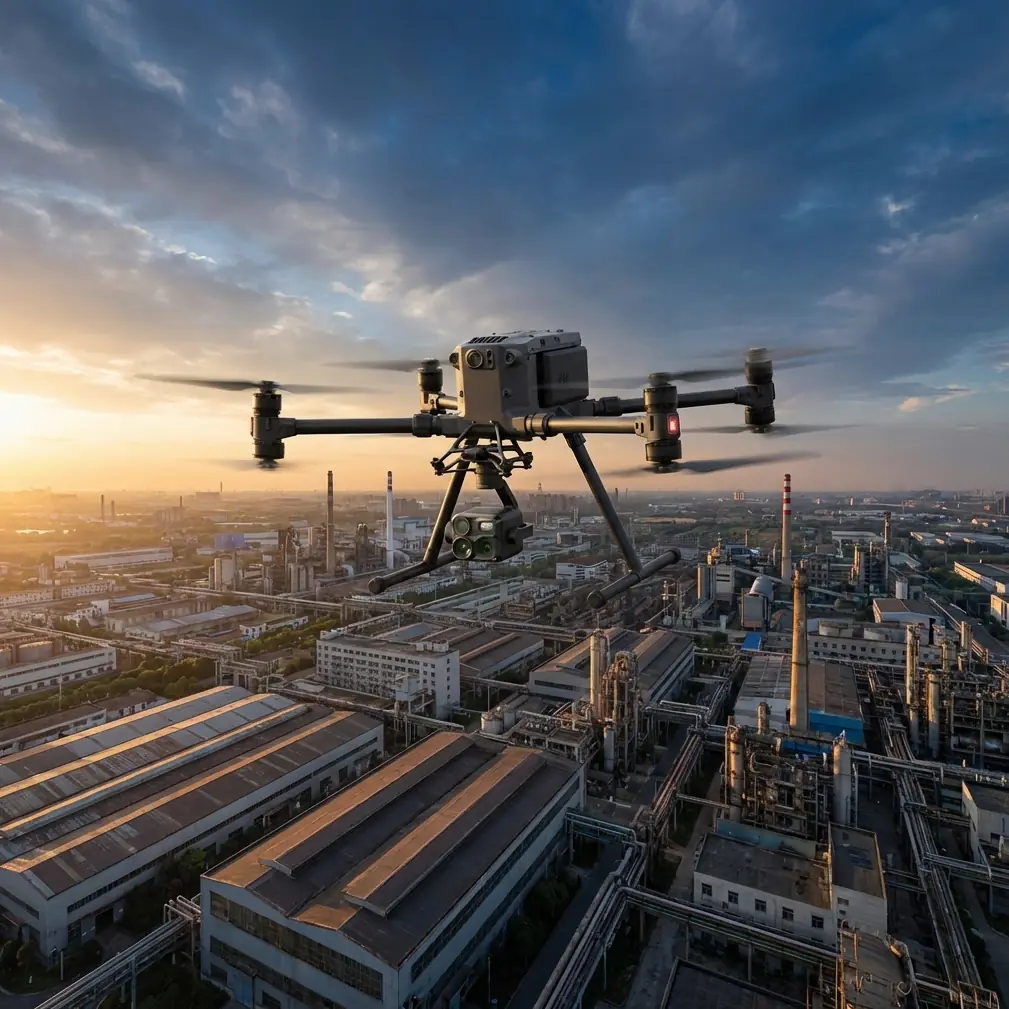
Matrice 4 in Extreme Temperatures: A Field Case Study on Venue Capture, Thermal Integrity, and Signal Discipline
META: Expert Matrice 4 case study for capturing venues in extreme temperatures, covering thermal signature control, photogrammetry accuracy, O3 transmission stability, AES-256 security, hot-swap battery workflow, and antenna adjustment in electromagnetic interference.
When operators talk about venue capture, the conversation usually drifts toward camera specs and flight time. In the field, those are rarely the first things that break a mission. Temperature does. So does electromagnetic noise. And if the venue sits inside a dense urban envelope or near broadcast equipment, clean data collection becomes less about “flying a drone” and more about controlling a chain of technical variables that can quietly degrade the entire deliverable.
This is where the Matrice 4 earns serious attention.
I have been asked more than once whether the platform is suitable for documenting large venues when conditions are punishing at both ends of the temperature spectrum. The short answer is yes, but only if the operator understands how thermal behavior, battery rotation, transmission management, and survey discipline interact. The aircraft can carry a demanding capture day. The mission still needs to be built properly.
This case study walks through a realistic venue workflow centered on the Matrice 4 in extreme temperatures. The goal is not to recite a specification sheet. It is to show what actually matters when you need useful imagery, repeatable photogrammetry, and stable command links in conditions that expose weak planning.
Why extreme temperatures change the mission
A venue is not a blank field. It is a mixed-material environment with concrete, steel, glass, rooftops, service corridors, parking structures, HVAC exhaust, reflective surfaces, and often a heavy RF footprint. Add heat or cold, and each of those elements behaves differently in both visible and thermal capture.
In very hot conditions, rooftop equipment and dark surfaces store heat and create sharp thermal contrast that can either clarify anomalies or bury subtler ones. In deep cold, battery chemistry becomes less forgiving, and what looks like a simple perimeter mapping mission can turn into a timing problem if the aircraft is left idling too long between runs. The same venue can produce two completely different operational profiles depending on whether the mission starts at dawn after a freeze or late afternoon after hours of solar loading.
For the Matrice 4 operator, the point is straightforward: extreme temperatures do not just affect endurance. They affect interpretation.
A thermal signature that appears obvious at midday may flatten out after sunset. A façade that stitches cleanly in mild weather may show inconsistent image geometry when the aircraft is pushed to compensate for wind and changing lift behavior near hot surfaces. If the end product includes inspection, digital twin creation, or incident planning, those differences have downstream consequences.
The venue scenario
The assignment involved a multi-zone venue complex requiring two outputs from one operational window: a photogrammetric model for planning and maintenance, and a thermal pass over selected roof structures, service runs, and mechanical clusters. The site included LED walls, security systems, radio equipment, utility infrastructure, and intermittent interference from nearby communications hardware.
The challenge was not simply to “cover the site.” It was to maintain data quality while temperatures stressed both the aircraft and the mission design.
In this kind of environment, the Matrice 4’s value is not found in a single feature. It comes from how several features support each other in sequence. O3 transmission matters because venue structures and RF clutter can destabilize situational awareness. AES-256 matters because infrastructure imagery and venue security layouts are sensitive. Hot-swap batteries matter because stopping a mission for a long battery reset can force changes in thermal conditions, lighting angle, and air movement that weaken dataset consistency.
Those are not brochure details. They are operational controls.
Phase one: building a clean photogrammetry dataset
Photogrammetry at a venue sounds simple until you need survey-grade repeatability. Walkways look identical. Seating sections create repetitive geometry. Rooflines can be cluttered with reflective equipment. If the model is intended for engineering or planning use, visual completeness is not enough. Positional discipline matters.
This is where GCP strategy becomes decisive.
Ground control points should not be treated as an afterthought, especially on complex sites with repeated patterns and elevation changes. On the Matrice 4 workflow, properly placed GCPs anchor the model when the venue itself offers too many similar surfaces for the reconstruction engine to trust on its own. In extreme temperatures, this matters even more because atmospheric shimmer, surface reflectivity, and changing material contrast can affect image matching reliability.
A common mistake is to reduce GCP count because the aircraft and software seem capable of carrying the job automatically. That works until you hit long roof spans, mirrored glazing, or service areas with low texture. Then the model drifts just enough to create expensive questions later. The better approach is to place GCPs where geometry changes, where elevation breaks occur, and where repetitive structures could confuse tie-point generation.
With the Matrice 4, the photogrammetry mission should also be sequenced before thermal conditions diverge too far from your planning assumptions. If the venue surface temperature is rising quickly, a long delay between passes can produce inconsistencies in shadow, reflectivity, and contrast. For practical purposes, that means launching with your mapping logic already set, battery workflow preplanned, and control positions chosen for line-of-sight stability.
Phase two: thermal capture that means something
Thermal imaging is often discussed as though the sensor alone produces the answer. It does not. Thermal usefulness depends on timing, interpretation, and scene context.
At a venue, “thermal signature” can refer to very different things: overloaded electrical components, air leakage, moisture-related anomalies, overheating mechanical systems, or residual heat patterns that indicate equipment behavior. Extreme heat or cold does not make thermal capture less useful. It makes timing more critical.
For example, if the goal is to identify mechanical stress on rooftop systems, an operator should think in terms of comparative temperature behavior, not just absolute hotspots. A roof that has been exposed to strong sun all day may produce broad heat saturation that masks smaller anomalies. In cold conditions, components under load may stand out more clearly against surrounding material, but only if the flight is timed to avoid excessive atmospheric instability or wind-driven cooling effects.
The Matrice 4 becomes especially useful when the thermal pass is integrated with a prior photogrammetry map rather than treated as a separate task. When the operator can tie heat observations to a precise 3D venue model, the result is more actionable for facilities teams. Instead of “there is a warm area on the roof,” the output becomes “this recurring thermal anomaly sits adjacent to the northeast mechanical bank, two spans from the main service corridor, with visible context for dispatch.”
That distinction saves time. It also reduces repeat flights.
The hidden problem: electromagnetic interference
On this venue, the most important decision of the day had nothing to do with the camera.
Partway through capture, the command link began showing the kind of instability that experienced pilots recognize immediately: not a complete loss of signal, but uneven behavior that suggests local electromagnetic interference rather than simple distance or obstruction. This is common near venue infrastructure. LED systems, communications hardware, security installations, and nearby broadcast environments can create ugly RF conditions even when the aircraft remains well inside a comfortable operating envelope.
The response was not to push through and hope the system recovered. It was to reposition and adjust antenna orientation deliberately.
This is one of those skills that separates competent operators from checkbox operators. O3 transmission gives the Matrice 4 a strong foundation, but no transmission system is immune to poor antenna geometry in a noisy RF environment. Small changes in controller position and antenna angle can materially improve link quality, particularly when interference is directional or when a structure is reflecting signal in a way that creates inconsistency.
In practice, that meant stepping out of the strongest interference pocket, rotating body position relative to the aircraft track, and refining antenna alignment so the link favored the most stable propagation path. The result was immediate: improved feed consistency, lower stress on the command link, and a cleaner continuation of the mission without introducing avoidable risk.
This matters operationally because venue flights are rarely flown in RF silence. If you are working around dense infrastructure, antenna adjustment is not a trivial habit. It is part of risk management.
Battery handling in the real world
Extreme temperatures expose sloppy battery habits faster than almost any other condition. A venue mission with multiple flight segments can tempt crews to stretch packs, delay swaps, or let workflow bottlenecks dictate launch timing. That is exactly how data quality deteriorates.
Hot-swap batteries are one of the most useful features in this scenario because they protect mission continuity. When you can exchange power quickly, you preserve more than flight tempo. You preserve environmental consistency. That is especially valuable when your thermal pass depends on a narrow observation window or your photogrammetry run needs stable lighting and shadow conditions.
In cold weather, efficient swap discipline reduces the amount of time batteries spend exposed before load. In hot weather, it helps prevent unnecessary dwell time on heated ground surfaces while crews reorganize. Either way, the Matrice 4 workflow benefits when power management is treated as part of the capture architecture, not as a support detail.
I advise crews to plan battery rotation alongside mission segmentation: mapping block, verification orbit, thermal inspection block, then targeted reshoots. That structure keeps each launch purposeful and reduces the temptation to improvise in the air.
Security is not an abstract concern
Venue captures can include entrances, service access patterns, security camera placement, utility routing, roof access points, and crowd-management infrastructure. That data is useful precisely because it is sensitive.
This is why AES-256 matters in the Matrice 4 ecosystem. Encryption is easy to dismiss when pilots are focused on weather, exposure settings, and battery levels. But on infrastructure-adjacent jobs, secure handling of transmission and stored operational data is part of professional practice. Clients may never ask about it in detail. They still expect it.
The significance is simple: if you are collecting detailed visual and thermal information about a high-traffic venue, security should travel with the workflow from capture to transfer. The aircraft platform does not replace policy, but strong encryption closes one more gap.
Where BVLOS enters the conversation
BVLOS is often discussed in terms of range alone, which misses the larger operational point. For venue work, BVLOS relevance is less about dramatic distance and more about future workflow design. Large event campuses, linked parking assets, and surrounding service infrastructure are increasingly managed as one operational environment rather than isolated structures.
A platform that fits into a future BVLOS-ready operating model gives teams more room to scale from one-off inspections to recurring asset programs. The Matrice 4 is interesting here because the same traits that support close-in venue work, namely stable transmission discipline, secure data practices, and repeatable sensor workflows, also support more structured enterprise deployment.
That does not change the rules of authorization or oversight. It does change how organizations should think about platform selection.
What made the mission successful
The aircraft performed well, but the real success came from respecting the venue as a hostile technical environment rather than a cinematic backdrop.
Three decisions made the difference.
First, the team used photogrammetry and GCP planning to produce a model that facilities personnel could trust, not just admire. Second, the thermal capture was timed around comparative interpretation, which made the thermal signature data useful instead of merely interesting. Third, the pilot treated electromagnetic interference as a controllable operational problem, using antenna adjustment and position changes to stabilize the O3 link before it became a safety issue.
That combination is what professional venue capture looks like with the Matrice 4.
If your team is preparing a similar workflow and wants to compare field setups, antenna practices, or thermal capture timing, you can message a specialist here. The right conversation before deployment often prevents the kind of small operational errors that ruin otherwise good data.
Final assessment
For extreme-temperature venue capture, the Matrice 4 should be judged less by headline features and more by how reliably it supports disciplined operations. O3 transmission helps when RF conditions are messy. AES-256 matters when venue data is sensitive. Hot-swap batteries preserve timing. GCP-backed photogrammetry keeps models honest. And thermal work becomes genuinely valuable when it is tied to structure, timing, and mission intent.
That is the core lesson from this kind of job. The platform is capable, but capability only becomes value when the operator understands the environment well enough to shape the mission around it.
Ready for your own Matrice 4? Contact our team for expert consultation.