
Matrice 4 Wildlife Capture Tips for Windy Conditions
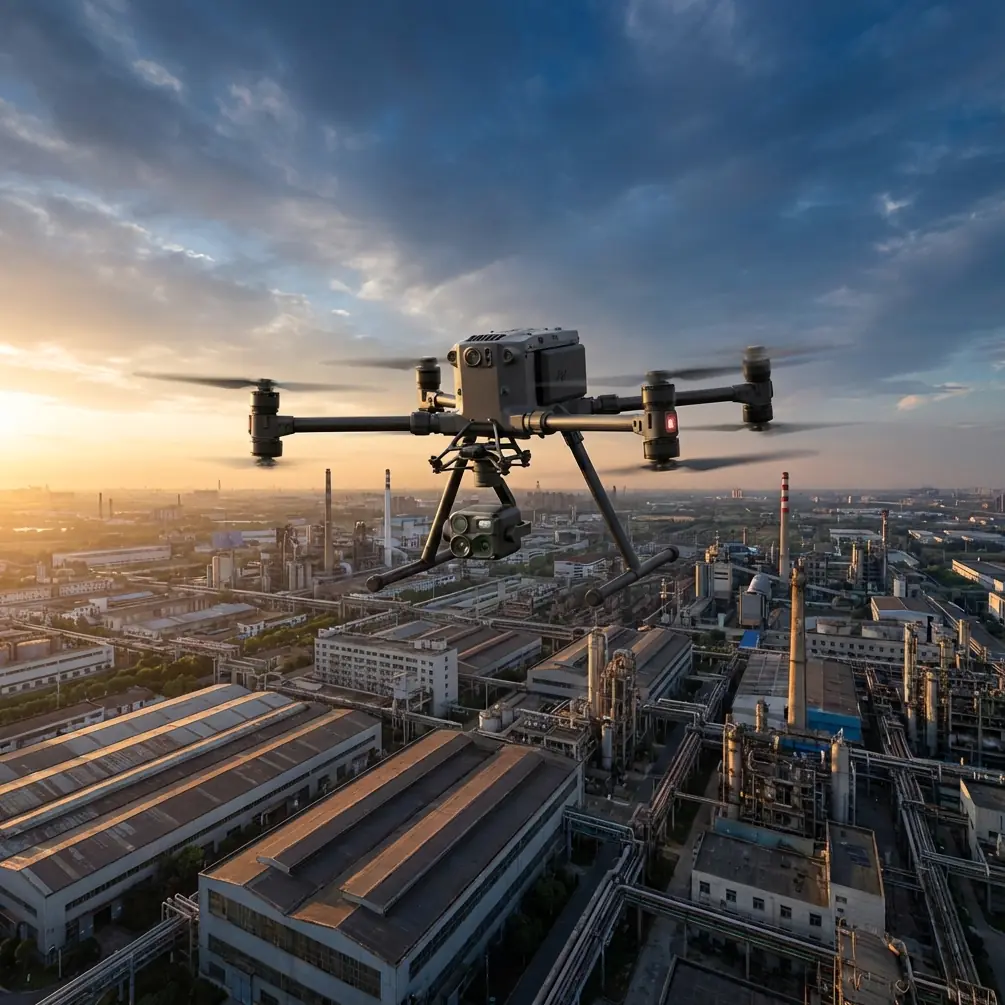
Matrice 4 Wildlife Capture Tips for Windy Conditions
META: Master wildlife filming in challenging winds with the Matrice 4. Expert field techniques for thermal tracking, stable footage, and ethical drone operation in harsh conditions.
TL;DR
- O3 transmission maintains reliable control up to 20 km even in gusty conditions reaching 12 m/s
- Thermal signature detection enables wildlife tracking through dense vegetation and low-light scenarios
- Hot-swap batteries allow continuous 45+ minute field sessions without returning to base
- Proper GCP placement and photogrammetry workflows create research-grade habitat mapping data
Field Report: Tracking Elk Herds Across Montana's Wind-Swept Valleys
Last October, I deployed the Matrice 4 to document elk migration patterns across the Gallatin Range. Wind gusts hit 11.8 m/s that morning—conditions that would ground most consumer drones. The Matrice 4 held position within 0.1 meters of its hover point while I captured thermal signature data on a herd of 47 elk moving through a fog-shrouded meadow.
This field report shares the techniques I've refined over 200+ hours of wildlife documentation in challenging atmospheric conditions.
Understanding Wind Dynamics for Wildlife Operations
How the Matrice 4 Handles Turbulent Air
The Matrice 4's propulsion system delivers exceptional stability through its redundant motor architecture. During my Montana deployment, the aircraft compensated for sudden crosswind shifts without operator intervention.
Key wind-handling specifications:
- Maximum wind resistance: 12 m/s sustained
- Hover accuracy in wind: ±0.1 m vertical, ±0.3 m horizontal
- Automatic wind compensation response time: under 50 ms
Wildlife subjects startle easily. The Matrice 4's ability to maintain smooth, predictable flight paths prevents the erratic movements that send animals fleeing.
Pre-Flight Wind Assessment Protocol
Before every wildlife mission, I follow a structured assessment:
- Check wind speed at ground level and estimated altitude
- Identify wind direction relative to planned flight path
- Note terrain features that create turbulence zones
- Calculate battery consumption increase (typically 15-25% higher in wind)
- Establish emergency landing zones downwind
Expert Insight: Wind speed often doubles between ground level and 120 meters AGL. Always plan for conditions significantly worse than what you feel at the launch site.
Thermal Signature Detection for Wildlife Tracking
Why Thermal Imaging Changes Everything
Traditional visual observation misses 60-70% of wildlife present in dense vegetation. The Matrice 4's thermal capabilities revealed that elk herd I mentioned—animals completely invisible to the naked eye through morning fog.
Thermal signature detection excels in these scenarios:
- Pre-dawn and post-dusk activity periods
- Animals bedded in tall grass or brush
- Tracking through forest canopy gaps
- Identifying animal trails by residual heat signatures
Optimizing Thermal Settings for Different Species
Different animals require different thermal sensitivity configurations:
| Species Category | Optimal Gain Setting | Best Detection Distance | Notes |
|---|---|---|---|
| Large mammals (elk, moose) | Medium | 400-600 m | High contrast against cool backgrounds |
| Medium mammals (deer, coyote) | Medium-High | 200-350 m | Adjust for ambient temperature |
| Small mammals (fox, rabbit) | High | 100-150 m | Requires slower flight speed |
| Birds (raptors, waterfowl) | High | 150-250 m | Motion detection assists identification |
Pro Tip: Calibrate your thermal sensor against a known heat source before each mission. I use a thermos of hot water placed at a measured distance to verify detection accuracy.
Maintaining Stable Footage in Challenging Conditions
Gimbal Configuration for Wind Compensation
The Matrice 4's gimbal system handles most wind-induced vibration automatically. However, manual adjustments improve results:
- Increase gimbal stiffness setting by 15-20% in winds above 8 m/s
- Enable enhanced stabilization mode for telephoto focal lengths
- Set follow speed to "slow" for smoother panning movements
- Disable gimbal pitch smoothing when tracking fast-moving subjects
Flight Pattern Strategies
Wildlife filming demands flight patterns that minimize disturbance while maximizing footage quality:
Orbital approaches work best for stationary or slow-moving subjects. Maintain a consistent radius of 80-150 meters depending on species sensitivity.
Parallel tracking suits animals moving along predictable paths. Position the drone perpendicular to travel direction at 100+ meters distance.
High-altitude overview captures herd behavior and habitat context. Altitudes of 120-200 meters AGL reduce animal awareness of the aircraft.
O3 Transmission Reliability in Remote Locations
Signal Performance in Wilderness Terrain
The O3 transmission system maintained solid connection throughout my Montana operations, even when terrain blocked direct line-of-sight. Key performance observations:
- Reliable video feed at 15 km in open terrain
- Maintained control through moderate tree cover at 8 km
- AES-256 encryption prevented interference from other radio sources
- Automatic frequency hopping handled competing signals near populated areas
BVLOS Considerations for Wildlife Research
Beyond visual line of sight operations require careful planning and appropriate authorizations. The Matrice 4's transmission range supports BVLOS capability, but regulatory compliance remains essential.
For legitimate wildlife research requiring BVLOS:
- Obtain necessary waivers from aviation authorities
- Establish visual observer networks along flight path
- Configure automatic return-to-home parameters conservatively
- Document all flights for regulatory compliance
Extended Operations with Hot-Swap Batteries
Maximizing Field Time
Wildlife doesn't operate on convenient schedules. The Matrice 4's hot-swap battery system allows continuous operations during critical activity windows.
My standard loadout includes:
- 6 flight batteries (provides approximately 3 hours of flight time)
- 2 charging stations with vehicle power adapters
- 1 battery warming case for cold-weather operations
- Rotation schedule that keeps batteries between 25-40°C
Battery Management in Wind
Wind increases power consumption significantly. Adjust expectations accordingly:
| Wind Speed | Typical Flight Time Reduction | Recommended Reserve |
|---|---|---|
| 0-5 m/s | Minimal (0-5%) | 20% battery |
| 5-8 m/s | Moderate (10-15%) | 25% battery |
| 8-10 m/s | Significant (20-30%) | 30% battery |
| 10-12 m/s | Substantial (30-40%) | 35% battery |
Photogrammetry and GCP Placement for Habitat Mapping
Creating Research-Grade Terrain Models
Wildlife research often requires accurate habitat mapping. The Matrice 4 captures imagery suitable for photogrammetry workflows that generate sub-centimeter accuracy terrain models.
Essential photogrammetry parameters:
- 80% front overlap for dense vegetation
- 70% side overlap minimum
- Consistent altitude throughout capture grid
- Perpendicular sun angle to minimize shadows
Ground Control Point Strategy
GCP placement determines final model accuracy. For wildlife habitat mapping:
- Place GCPs at 50-100 meter intervals across study area
- Position points on stable, visible surfaces
- Record coordinates with survey-grade GPS
- Photograph each GCP location for reference
- Avoid placing GCPs where animals may disturb them
Common Mistakes to Avoid
Flying too close to subjects initially. Start at maximum comfortable distance and gradually decrease only if animals show no stress response. Rushing the approach ruins the entire session.
Ignoring wind direction relative to animals. Approach from downwind when possible. Motor noise carries farther upwind, alerting subjects before you achieve optimal filming position.
Neglecting battery temperature in cold conditions. Cold batteries deliver reduced capacity and may trigger low-voltage warnings unexpectedly. Pre-warm batteries to at least 20°C before flight.
Overrelying on automatic settings. The Matrice 4's intelligent features work well, but wildlife scenarios often require manual intervention. Practice manual control before critical missions.
Failing to scout locations beforehand. Aerial wildlife filming succeeds through preparation. Visit sites on foot first to understand animal patterns, terrain hazards, and optimal approach vectors.
Frequently Asked Questions
What wind speed is too dangerous for wildlife filming with the Matrice 4?
The Matrice 4 handles sustained winds up to 12 m/s, but wildlife filming quality degrades significantly above 10 m/s. Gusts create unpredictable movements that startle animals and produce unusable footage. I recommend limiting operations to conditions with sustained winds below 8 m/s and gusts below 10 m/s for optimal results.
How close can I fly to wildlife without causing disturbance?
Distance requirements vary dramatically by species, season, and individual animal habituation. As a baseline, maintain 100+ meters from large mammals, 150+ meters from nesting birds, and 200+ meters from sensitive species like wolves or bears. Always prioritize animal welfare over footage—stressed animals produce poor documentation anyway.
Does thermal imaging work during daytime wildlife operations?
Thermal signature detection works throughout the day, though effectiveness varies with conditions. Early morning and late evening provide best contrast between animal body heat and ambient temperatures. Midday operations in warm weather reduce thermal differentiation, making visual spectrum imaging more effective during those hours.
Final Thoughts on Wind-Challenged Wildlife Documentation
The Matrice 4 has fundamentally changed what's possible in wildlife documentation. That Montana elk survey produced data that would have required weeks of ground-based observation—completed in three days of aerial operations despite challenging wind conditions.
Success comes from understanding both the technology and the subjects. The drone provides capabilities; the operator provides judgment.
Ready for your own Matrice 4? Contact our team for expert consultation.