
Matrice 4 for Coastal Wildlife Work: A Field Case Study
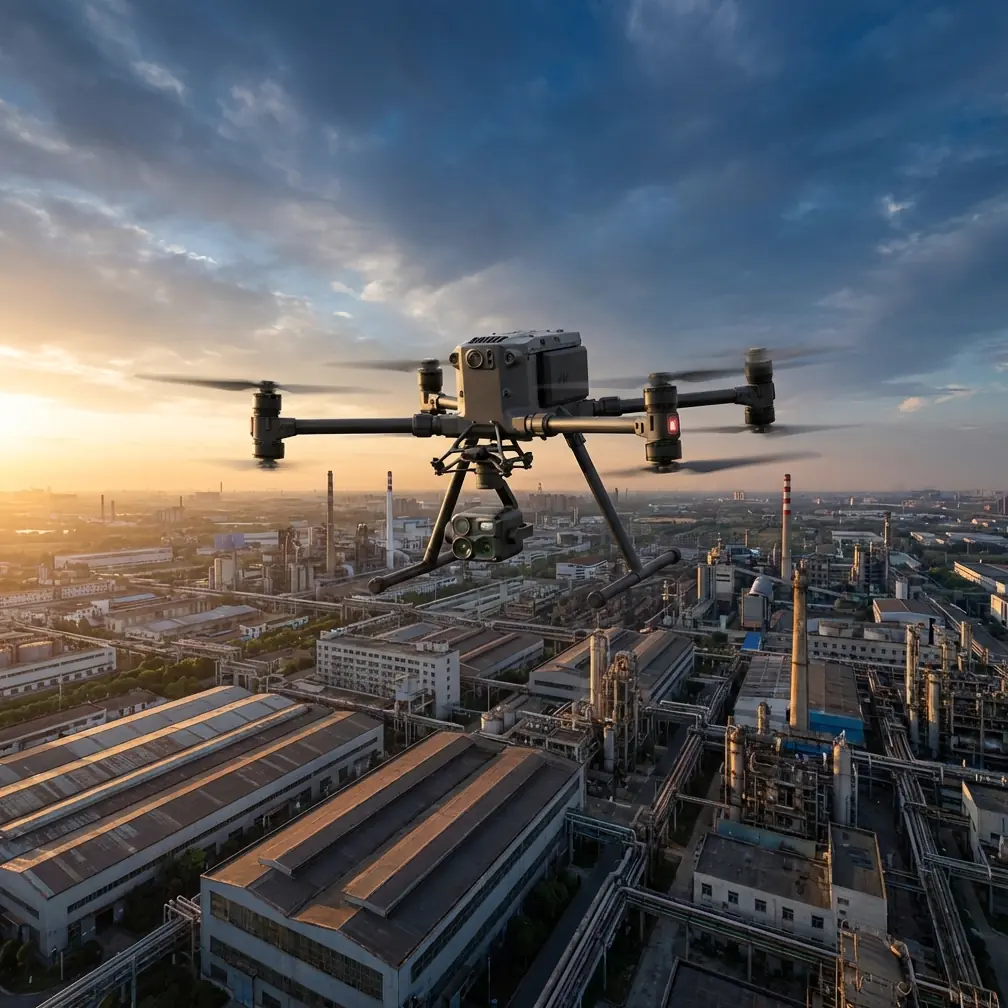
Matrice 4 for Coastal Wildlife Work: A Field Case Study from the Edge of Wind, Salt, and Silence
META: Expert case study on using Matrice 4 for coastal wildlife capture, with practical insight on thermal signature detection, O3 transmission, AES-256 security, hot-swap batteries, and mapping-grade workflow.
Coastal wildlife work exposes every weakness in an aircraft and every shortcut in an operator. Wind shifts fast. Light reflects off water in ways that confuse sensors and pilots alike. Birds do not wait for your second pass. Seals vanish into surf-colored rocks. Marsh edges look simple from shore and become operationally messy the moment you launch.
That is exactly why the Matrice 4 deserves a serious look in this environment.
I have spent enough time around shoreline monitoring teams, conservation crews, and environmental survey contractors to know that “good enough” equipment usually fails in the same places: maintaining a stable link over irregular terrain, collecting usable imagery before weather closes in, and switching from visual search to measurable documentation without changing the entire mission plan. For coastal wildlife capture, those three demands often arrive in the same hour.
This article takes a case-study approach. Not a generic brochure-style overview. The goal is to answer a more practical question: if your assignment is documenting wildlife in a coastal zone, where does the Matrice 4 actually separate itself from competing platforms, and where does that matter in the field?
The coastal mission profile changes everything
A lot of drone advice is written as if flying over a beach and flying over an inland construction site are basically the same task with different scenery. They are not.
Coastal wildlife operations usually combine four difficult conditions at once:
- long visual corridors broken by dunes, cliffs, reeds, or tidal channels
- moving subjects with unpredictable spacing
- reflective backgrounds that can flatten visible-light contrast
- short weather windows that pressure the crew to collect detection, verification, and mapping data in one sortie
That combination rewards aircraft that can do more than just “get a shot.” It favors systems that can search, classify, document, and protect the chain of custody of collected data.
This is where the Matrice 4’s feature mix starts to matter beyond the spec sheet.
Case study: dawn survey over a tidal estuary
Let’s use a realistic field scenario.
A conservation team needs to document bird congregation areas and detect warm-bodied mammals along a tidal estuary bordered by mudflats, reed beds, and rocky outcrops. The site is sensitive. Human intrusion must stay low. The crew needs to identify thermal signatures before sunrise, confirm species visually after first light, and produce location-reliable records that can support habitat management later.
A smaller prosumer aircraft can often capture attractive footage here. That is not the same as finishing the mission well.
The Matrice 4 is better suited because it supports a layered workflow rather than a single-purpose flight. Early in the mission, thermal signature detection helps separate animals from cluttered shoreline textures. Once the sun rises and temperature contrast starts collapsing, the aircraft can transition into higher-detail visual capture and structured survey work. That continuity matters. Crews lose time and confidence when they have to land, swap platforms, rebuild route logic, and re-establish situational awareness in a dynamic habitat.
Thermal performance is especially valuable in the coastal context because visual camouflage is common. A seal against wet stone, a deer at marsh edge, or nesting birds tucked into sparse vegetation can evade the eye even when the drone operator knows roughly where to look. Thermal imagery does not solve everything, but it changes the first-pass search from “scan and hope” to “scan and verify.” That is a major operational difference.
Why thermal signature matters more on the coast than inland teams expect
Thermal is sometimes misunderstood as a night-only tool. In reality, for wildlife capture near shore, it is often a timing tool.
The best window may be brief. Before full solar loading heats rocks and mud, warm-bodied targets can stand out with useful separation. Once direct sunlight hits mixed surfaces, the scene becomes thermally noisy. Operators who understand this can use the Matrice 4 to front-load detection and then shift to visual confirmation while the habitat is still relatively undisturbed.
That is a stronger workflow than relying on daylight zoom alone, and it is one reason this class of aircraft outperforms lower-tier competitors in real survey conditions. Many lighter platforms can produce acceptable daylight imagery. Fewer can support disciplined thermal-first detection followed by evidence-grade visual documentation in one coherent mission.
For coastal wildlife teams, that means fewer repeat flights over sensitive subjects and less time spent guessing whether the heat source at the edge of the frame is an animal, warmed rock, or residual heat from uneven terrain.
O3 transmission is not just a convenience feature
One of the details that matters most in shoreline work is link resilience. The keyword most people recognize is O3 transmission, but the operational significance is what deserves attention.
On coastal sites, it is common to launch with an apparently clean airspace and then discover signal complexity caused by terrain contours, vegetation bands, sea walls, vessels, or simple stand-off distance required to avoid disturbance. A robust transmission system helps maintain control confidence and image continuity when the aircraft is not hovering in ideal open-sky conditions.
That becomes even more important if the mission design includes extended route segments or future BVLOS-aligned operational planning where regulations and approvals permit. Even within visual line of sight, coastal crews often work at the edge of practical observational geometry because getting too close to the subject defeats the purpose of low-impact data collection. A stronger downlink and control link reduce the pressure to crowd the site.
This is one area where Matrice-class systems typically excel over smaller competing models. Not because smaller drones cannot reach the scene, but because they are more likely to force compromises in stand-off distance, positioning, or confidence when the environment becomes messy. In wildlife work, every unnecessary reposition can translate into more disturbance and less reliable data.
Security matters when the data is ecological, regulated, or politically sensitive
Another overlooked detail in environmental drone operations is AES-256 data security. On paper, that sounds like a technical footnote. In practice, it can be central to whether an organization is willing to deploy the aircraft at all.
Some coastal wildlife projects involve endangered species, breeding sites, anti-poaching coordination, restricted habitats, or protected shoreline infrastructure adjacent to the survey zone. Location data is not always something the client wants loosely handled. AES-256 matters because it supports a stronger security posture around stored and transmitted information.
That does not make the Matrice 4 unique for caring about data security, but it does position the platform where professional users need it: as a tool that fits institutional requirements rather than forcing field teams into awkward exceptions. If your imagery includes sensitive nesting grounds or protected animal movement corridors, stronger encryption is not abstract IT language. It is risk management.
Hot-swap batteries solve a real wildlife problem: continuity
Battery discussion often gets flattened into endurance numbers. That misses the point.
In coastal wildlife capture, the mission penalty is not only how long the aircraft stays in the air. It is what happens when you have to stop. A forced break at the wrong moment can mean losing a tide stage, missing emergence behavior, or failing to complete a repeatable observation sequence before weather shifts.
Hot-swap batteries matter because they reduce downtime between sorties. The crew can keep the operation moving without cold-starting the whole workflow. In a dawn estuary survey, for example, the thermal detection phase may identify several areas worth revisiting once visible contrast improves. Fast battery transitions let the team turn that first-pass intelligence into immediate follow-up rather than hoping the scene remains unchanged thirty minutes later.
Compared with many competing systems that are excellent for short cinematic flights but less efficient in sustained operational cycles, the Matrice 4 is better aligned with professional field tempo. Wildlife teams do not need drama-free flying alone. They need continuity.
From wildlife capture to defensible mapping
A strong coastal mission does not end when the operator spots the animals.
Decision-makers often need spatial context: where the animals were relative to dune lines, channels, vegetation boundaries, erosion fronts, or human activity corridors. This is where photogrammetry enters the picture. With the right planning, the same operation can move from detection into map-grade site documentation.
That workflow becomes more credible when the crew uses GCPs, or ground control points, to improve positional accuracy in the final model or orthomosaic. On coastlines, where features can look deceptively uniform and surfaces change with tide and moisture, adding GCP-backed control can be the difference between a visually interesting map and one that supports repeat surveys over time.
This is another area where the Matrice 4 has an edge over simpler alternatives. Many drones can create a rough site map. Fewer support a seamless shift from wildlife search to structured, professional-grade geospatial collection. For habitat managers, consultants, and research teams, that distinction affects whether one mission can answer both biological and spatial questions.
If I were guiding a field crew, I would structure the operation in three passes:
- pre-sunrise thermal reconnaissance for live target detection
- post-detection visual verification with careful stand-off distance
- photogrammetry run over the relevant habitat zone with GCP-backed processing
That is efficient. More importantly, it reduces disturbance by avoiding multiple unrelated deployments.
Where Matrice 4 stands above competing options
The most useful comparison is not “Can another drone fly here?” Of course it can.
The better question is whether another drone can handle the same mixed mission without sacrificing either detection quality or operational discipline.
In my view, the Matrice 4 separates itself when the task requires all of the following in one field day:
- thermal-assisted wildlife search
- reliable transmission over uneven coastal terrain
- secure handling of sensitive geospatial data
- fast turnaround between sorties
- a credible bridge into photogrammetry and GCP-supported outputs
That combination is why this model excels. Competitors may beat it in portability, simplicity, or casual ease of use. But in coastal wildlife work, the winning aircraft is rarely the one that looks easiest on the packing list. It is the one that still makes sense when the wind picks up, the birds move, the client wants mapped evidence, and the survey window narrows.
Practical field advice for coastal operators
If your focus is wildlife capture rather than general aerial imaging, the Matrice 4 performs best when the mission is designed around animal behavior and shoreline physics, not around battery percentages alone.
Launch early enough to exploit thermal separation before solar heating complicates the scene. Keep stand-off distance generous; use the aircraft’s transmission and sensing strengths to avoid crowding the habitat. Record exact observation logic, not just image files, so later mapping and reporting tie back to the moment of detection. If photogrammetry is part of the output, place and log GCPs before conditions become rushed.
And respect salt exposure. Coastal air degrades bad habits quickly. A high-end platform does not cancel the need for disciplined maintenance.
If you are building a workflow for a protected shoreline site and need a second set of eyes on aircraft setup, mission design, or compliance planning, you can message our field team here.
The bigger picture
The Matrice 4 is not interesting because it is new, advanced, or feature-rich in the abstract. It is interesting because, in coastal wildlife operations, it aligns with how serious missions actually unfold.
You search under low contrast and time pressure. You verify without disturbing the subject. You preserve a secure record. You return with data that can do more than fill a screen; it can support action.
That is the difference between a drone that captures wildlife imagery and a drone system that contributes to wildlife management.
For operators working marshes, estuaries, cliffs, beaches, and tidal flats, that distinction is everything.
Ready for your own Matrice 4? Contact our team for expert consultation.