
Matrice 4 in Low Light: A Field Report on Precision
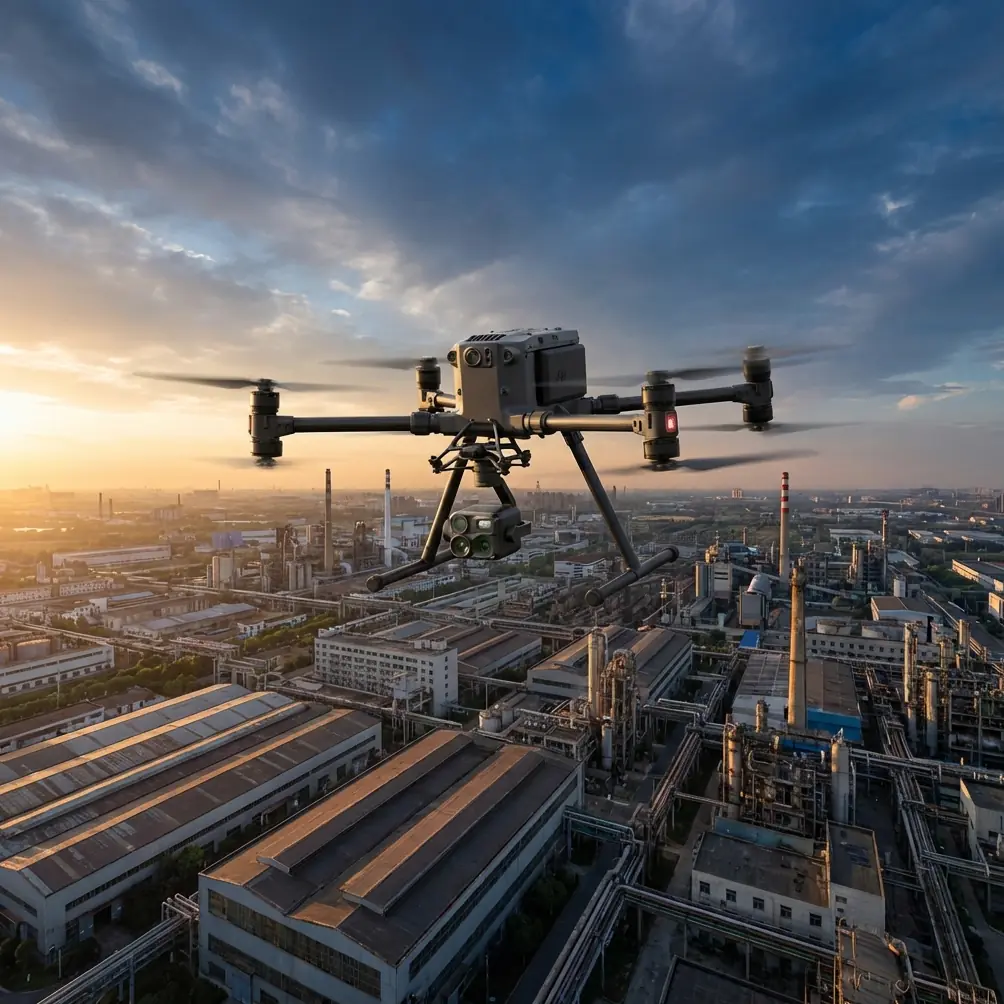
Matrice 4 in Low Light: A Field Report on Precision, Control, and What Actually Matters After Sunset
META: Expert field report on using Matrice 4 for low-light wildlife work, with practical insight on thermal signature capture, control-system reliability, transmission stability, and why engineering standards matter in real flights.
Low-light wildlife work has a way of exposing the difference between a drone that is merely capable on paper and one that holds together when conditions stop cooperating.
That was the real story on my last Matrice 4 deployment.
The brief sounded straightforward: document animal movement near a wetland edge after dusk, collect usable thermal signature data without disturbing the site, and capture enough positional consistency to support later mapping and habitat analysis. Then the weather shifted mid-flight. Wind picked up, moisture moved in, visibility flattened, and every small weakness in aircraft behavior became easier to spot.
This is where the Matrice 4 discussion gets more interesting than a spec-sheet recap. In wildlife capture under low light, the aircraft is only as good as its consistency. Not just image quality. Not just transmission range. Consistency in how the platform behaves when the environment gets unstable and the operator needs to trust every control input, every framing adjustment, and every return decision.
Why low-light wildlife missions are unusually demanding
Wildlife capture at dusk or before sunrise is not simply “normal drone work with less light.” The whole operating logic changes.
Subjects move unpredictably. Contrast drops. Depth cues get weaker. Terrain textures blend together. If you are using thermal data to isolate animal activity, you are often working with subtle heat separation rather than dramatic visual silhouettes. A warm body partially obscured by reeds, brush, or uneven ground can disappear from an image unless the aircraft position, sensor angle, and flight path remain disciplined.
That’s why low-light work rewards platforms that feel mechanically and electronically coherent. Any hesitation in gimbal response, overcorrection in flight, or signal uncertainty can cost you the one pass that mattered.
With the Matrice 4, what stood out in the field was not a single “hero” feature. It was how several technical layers reinforced each other when operating margins tightened.
The overlooked part of reliability: design discipline
Most buyers think about drone reliability in terms of batteries, motors, ingress protection, or link stability. Those matter. But reliability starts much earlier, with design logic.
Two engineering references are worth bringing into the conversation because they explain why some aircraft families behave better in demanding field use.
One reference defines standard mechanical dimensions across a very wide range: 0.01 mm to 20,000 mm. Another emphasizes that control systems should be evaluated in their most severe loading conditions, and not just at one position, but across as many critical positions as possible, including neutral and both extreme deflection states. Those are old-school aerospace principles, but they have direct relevance to modern enterprise UAVs.
Why does that matter for a Matrice 4 operator photographing wildlife at dusk?
Because smooth field performance is rarely accidental. When a platform is built around standardized dimensions and interchangeable design logic, tolerances are easier to control across mounting points, interfaces, enclosures, and structural assemblies. The first reference specifically prioritizes preferred dimension series such as R10, R20, and R40, with guidance to use larger basic series first when they satisfy the requirement. That sounds abstract until you translate it into operations: repeatable parts integration, predictable assembly interfaces, and fewer nasty surprises in long-term service.
In practical terms, this affects the things pilots notice without always naming them. Payload mounting feels secure. Mechanical interfaces line up as expected. Small dimensional inconsistencies do not accumulate into vibration, fitment stress, or alignment drift. For low-light capture, that kind of dimensional discipline helps preserve image steadiness and sensor repeatability when you are trying to compare passes over the same ground.
The second reference is even more relevant to actual flight handling. It states that every control system component should be designed against its critical load case, and that evaluation should include severe-use conditions, not ideal ones. That is exactly the kind of thinking you want behind an enterprise aircraft intended for real environmental work. Low-light wildlife operations often mean wind shear near tree lines, cold batteries at launch, damp air, and rapid pilot inputs as animals move unpredictably. A drone that has effectively been engineered around worst-case control loads is better positioned to remain predictable when the mission becomes dynamic.
What happened when the weather changed
The first fifteen minutes were calm enough. We launched at the edge of blue hour with a simple plan: rise above the marsh fringe, establish a quiet observation lane, identify movement through thermal signature separation, then descend slightly for more detailed visual context where safe and appropriate.
The Matrice 4 settled into the air without fuss. That matters more than people admit. On wildlife jobs, a noisy or twitchy aircraft changes the site. If your goal is documentation rather than disruption, stable station-keeping is not just a flight characteristic. It is part of your fieldcraft.
Then the weather turned.
A crosswind built from the west faster than forecast. Surface texture on the water changed first, then the aircraft began seeing intermittent gusts at working altitude. At almost the same time, humidity rose enough to flatten the scene visually. Shoreline definition softened. The clean visual reference points we had at takeoff became less distinct.
This is usually where crews start burning mental bandwidth. You are now tracking aircraft position, wind compensation, sensor interpretation, battery planning, and subject movement all at once.
The Matrice 4 handled that moment well because the flight picture stayed understandable.
That may sound vague, but experienced pilots know exactly what I mean. Some aircraft become busy under weather pressure. You start seeing tiny corrections cascade into larger framing problems. The platform holds, technically, but the operator loses confidence in the cadence of control. Here, the aircraft remained composed enough that we could continue the mission rather than abort immediately.
The benefit of strong transmission architecture showed up here too. In low-light work, video confidence is everything. If your downlink is unstable, you second-guess thermal readings and misjudge subject positioning. O3 transmission plays a practical role in this kind of mission because it helps preserve operator certainty when the visual scene itself is deteriorating. Add AES-256 into that ecosystem and the value is not just about data protection in the abstract. On commercial wildlife, conservation, or research projects, secure signal handling matters when location-sensitive imagery, habitat data, or protected-species observations are involved.
Thermal signature is the real story after dusk
Once the visual scene degraded, thermal signature became the primary decision tool.
This is where operators need to be honest about mission goals. If the objective is dramatic footage, low light is aesthetic. If the objective is wildlife documentation, low light is analytical. You are reading heat contrast, movement pattern, and spatial relationship to terrain.
The Matrice 4 workflow in that environment is strongest when the crew treats thermal not as a backup sensor, but as the lead layer of interpretation. We used it to identify movement first, then cross-reference with visible imagery where possible. That sequence reduces wasted repositioning and keeps the aircraft from drifting into unnecessary close-in passes.
Operational significance matters here. A clear thermal signature can reveal presence when optical detail cannot. In wetlands, woodland edges, and uneven pasture margins, that can mean the difference between missing a subject entirely and getting a clean detection corridor. For ecologists, land managers, and survey teams, this is not a cinematic advantage. It is a data-quality advantage.
Why repeatable dimensions and load-case thinking matter to imaging
Let’s connect the engineering references back to what the pilot sees on screen.
The standards document’s 0.01 to 20,000 mm dimension range is really about disciplined standardization across mechanical design. The control-load document’s insistence on designing around critical loading positions is about retaining safe function under stress. Together, these principles support an enterprise truth: image quality starts with structural and control integrity.
In the field, that means less unwanted vibration transfer, more trustworthy framing during yaw corrections, and better repeatability when flying overlapping passes for later processing. If you are building deliverables that combine thermal scouting with mapping outputs, that matters.
For example, if part of the mission expands into photogrammetry, your overlap strategy and image geometry depend on flight regularity. Add GCP placement into the workflow for improved positional control, and suddenly the aircraft’s ability to hold planned track under changing wind becomes more than a flying comfort issue. It becomes a downstream processing issue. Even wildlife teams increasingly want habitat models, drainage patterns, edge encroachment analysis, or vegetation-change records, not just isolated images.
That is where Matrice 4-class operations become more valuable than “night shooting.” The platform can support a broader environmental evidence chain when flown well.
Battery behavior and decision-making in the real world
One of the easiest ways to ruin a low-light mission is to overstay a fading weather window because the subjects are active and the footage feels promising.
That is why I rate hot-swap batteries as a workflow feature, not a convenience feature. On this flight, once the gust pattern became persistent and moisture increased, we tightened the mission logic. Rather than stretch a single sortie for every possible angle, we completed the useful thermal passes, returned deliberately, and turned the aircraft around quickly for a second launch after conditions stabilized slightly.
That fast reset preserves momentum in the field. It also reduces the temptation to keep pushing a battery cycle deeper into a worsening environment. Wildlife work benefits from short, disciplined sorties more than heroic long ones.
Low-light missions are not automatically BVLOS missions
Because Matrice 4 discussions often drift toward advanced mission capability, it is worth saying this plainly: low-light wildlife operations do not need inflated complexity to be effective.
Yes, some teams operate in frameworks where BVLOS planning becomes relevant for large-area environmental monitoring. But the most useful work I see is still built on careful visual planning, conservative route design, strong site awareness, and disciplined sensor use. Better aircraft capability should make teams more precise, not more reckless.
That distinction matters, especially in sensitive habitats. The best wildlife flight is often the one that collects enough information with the least disturbance.
What Matrice 4 gets right for this kind of work
After the weather event, reviewing the mission data made the platform’s strengths clearer.
Not because the conditions were perfect. Because they were not.
The Matrice 4 proved useful in the way serious aircraft usually do: it reduced uncertainty. It gave stable enough control behavior when wind arrived. It maintained an interpretable downlink when visual cues dropped. It supported thermal-first observation when optical detail weakened. It fit into a repeatable workflow that can scale from wildlife spotting to mapping-supported habitat analysis.
And behind that performance is a set of engineering principles that deserve more attention than marketing usually gives them. Standardized dimensions across a large design range support interoperability and repeatability. Control systems designed around severe load cases support safer, more predictable behavior under stress. The reference values may come from aircraft design literature, but the operational result is visible in the field: a drone that stays composed when the mission stops being tidy.
If you are evaluating Matrice 4 specifically for low-light wildlife capture, that is the lens I would use. Not “Can it fly at dusk?” Almost any serious enterprise drone can answer that. Ask instead: does it stay trustworthy when the wind shifts, when the thermal image becomes your primary source, when you need rapid battery turnover, when later mapping outputs depend on steady passes, and when the site itself leaves little room for sloppy repositioning?
That is a better question.
If you want to compare field setups, payload workflow, or discuss a specific wildlife or conservation mission profile, you can message the team directly here.
Ready for your own Matrice 4? Contact our team for expert consultation.