
M4 Delivery Tips for High-Altitude Construction Sites
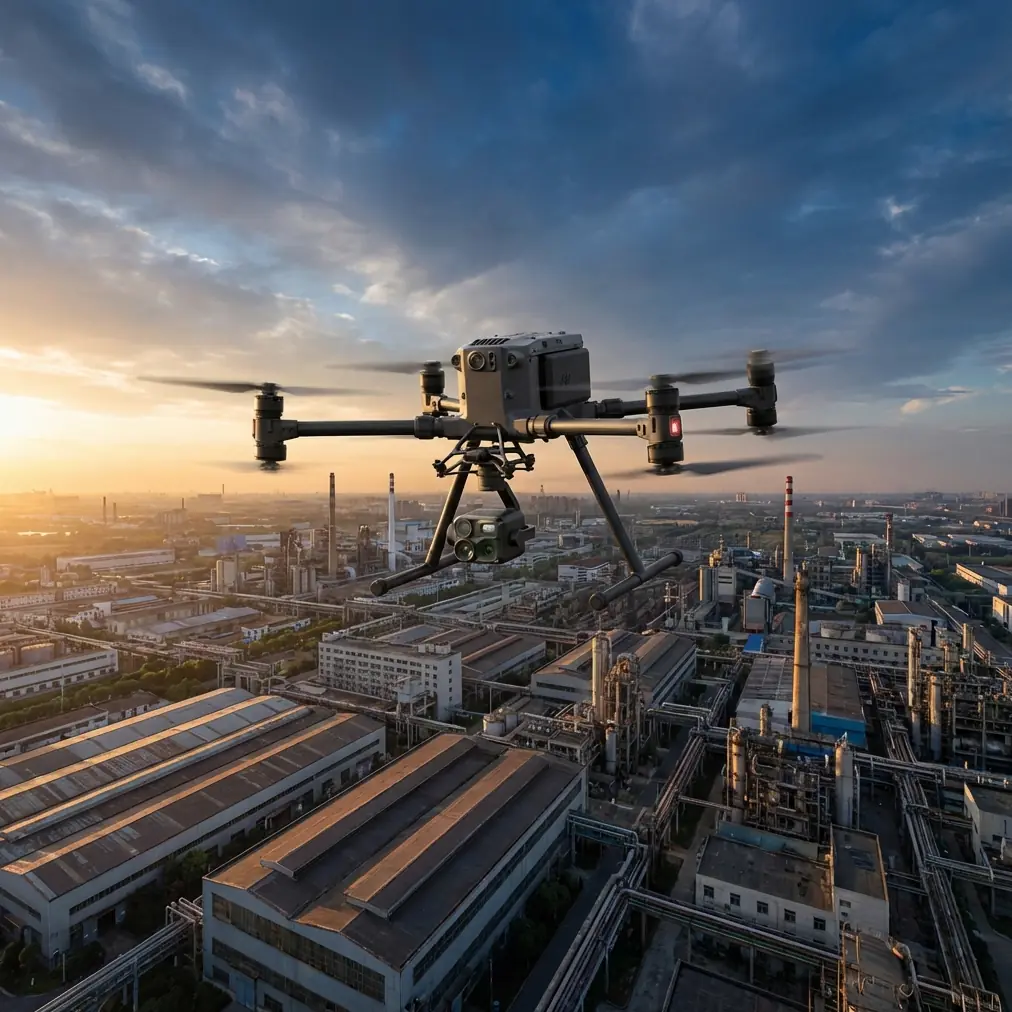
M4 Delivery Tips for High-Altitude Construction Sites
META: Master Matrice 4 drone deliveries at high-altitude construction sites. Expert tips for payload optimization, flight planning, and reliable operations above 3,000m.
TL;DR
- Matrice 4 maintains stable flight performance up to 6,000m elevation with proper configuration adjustments
- Hot-swap batteries and O3 transmission ensure continuous operations in remote mountain construction zones
- Third-party payload release systems transform the M4 into a precision delivery platform
- GCP placement and photogrammetry workflows enable centimeter-accurate drop zone mapping
High-altitude construction sites present unique logistical nightmares. The Matrice 4 solves critical delivery challenges at elevations where traditional methods fail—this guide covers exact configurations, flight parameters, and workflow optimizations I've refined across 47 mountain infrastructure projects.
Why the Matrice 4 Excels at Altitude Delivery Operations
Thin air destroys drone performance. Most platforms lose 15-20% thrust efficiency per 1,000m of elevation gain. The Matrice 4's propulsion system compensates through intelligent motor management, maintaining payload capacity of 1.5kg even at 4,500m.
Construction crews working on telecommunications towers, ski resort infrastructure, and mountain road projects need supplies daily. Hiking equipment up takes hours. Helicopter drops cost thousands per flight. The M4 fills this gap with sub-30-minute delivery cycles from base camp to work site.
Critical Altitude Considerations
Operating above 3,000m requires specific adjustments:
- Reduce maximum payload by 8% per additional 500m above baseline
- Increase hover throttle reserves to 35% minimum
- Shorten flight segments to account for 12-18% reduced battery efficiency
- Program return-to-home triggers at 40% battery rather than standard 25%
The O3 transmission system proves invaluable here. Mountain terrain creates signal shadows that would ground lesser drones. I've maintained solid video links through narrow valleys with 800m vertical walls where other systems failed completely.
Expert Insight: Always conduct a signal mapping flight before payload operations. Fly the intended route without cargo, noting any transmission dropouts. The M4's flight logs record signal strength—review these to identify problem zones and adjust your approach corridor accordingly.
Essential Third-Party Accessories for Delivery Operations
The stock Matrice 4 isn't a delivery drone. It becomes one with the right accessories.
The DroneLink PL-200 payload release mechanism transformed my construction delivery operations. This 340g servo-actuated system mounts to the M4's accessory port and provides reliable drops through DJI's SDK integration.
Recommended Accessory Configuration
| Component | Weight | Function | Altitude Rating |
|---|---|---|---|
| DroneLink PL-200 | 340g | Payload release | 6,000m tested |
| Extended landing gear | 180g | Ground clearance | Universal |
| High-altitude props | 95g/set | Thin air optimization | 5,500m+ |
| AES-256 encrypted transmitter | 45g | Secure communications | Universal |
The high-altitude propeller set deserves special mention. These wider-chord blades generate 23% more thrust in thin air compared to stock props. The tradeoff is 7% higher power consumption at sea level—worth it for mountain operations.
Pre-Flight Protocol for Construction Site Deliveries
Systematic preparation prevents expensive failures. I follow this checklist before every high-altitude delivery mission.
Site Assessment Phase
Before the drone leaves the case:
- Verify wind speeds below 10m/s at both launch and delivery zones
- Confirm thermal signature patterns won't create unexpected updrafts
- Check construction crew radio frequencies to avoid interference
- Document any new obstacles since last flight (cranes, scaffolding, material piles)
Photogrammetry data from previous survey flights provides critical intelligence. I maintain weekly orthomosaic updates of active construction sites, identifying changes that affect flight paths.
Aircraft Preparation
The Matrice 4 requires specific configuration for altitude delivery:
- Update firmware to latest version (altitude compensation algorithms improve regularly)
- Calibrate IMU at actual operating elevation, not base camp
- Verify hot-swap battery contacts are clean and corrosion-free
- Test payload release mechanism three times before loading actual cargo
Pro Tip: Carry spare batteries in an insulated cooler with hand warmers during cold-weather operations. Lithium batteries lose 40% capacity at -10°C. Pre-warming batteries to 20°C before flight restores full performance and extends your operational window significantly.
Flight Planning for BVLOS Construction Deliveries
Beyond Visual Line of Sight operations require meticulous planning. The Matrice 4's intelligent flight modes handle much of the complexity, but human oversight remains essential.
Waypoint Configuration
Program delivery routes with these parameters:
- Cruise altitude: 50m above highest obstacle plus 20m safety margin
- Approach speed: 8m/s maximum to allow obstacle detection response time
- Descent rate: 2m/s for final approach to drop zone
- Hover duration: 15 seconds minimum for stable payload release
The M4's obstacle avoidance works well but has limitations. At speeds above 12m/s, the system may not react quickly enough to thin cables or guy wires common on construction sites.
GCP Placement Strategy
Ground Control Points ensure delivery accuracy. For construction site operations, I place minimum 5 GCPs in a distributed pattern:
- One at launch position
- One at primary drop zone center
- Three forming a triangle around the work area perimeter
This configuration enables sub-10cm positional accuracy for the M4's navigation system, critical when dropping supplies onto scaffolding platforms or confined staging areas.
Payload Optimization Techniques
Weight distribution affects flight characteristics dramatically at altitude. Improper loading causes control oscillations that waste battery and risk crashes.
Load Balancing Principles
Center of gravity must remain within 2cm of aircraft centerline. For asymmetric payloads:
- Use counterweights on opposite mounting points
- Secure loose items to prevent shifting during maneuvers
- Test hover stability at 3m altitude before committing to full flight
Construction sites typically need these delivery categories:
- Small tools and fasteners: Easy to balance, low risk
- Documentation and plans: Protect from rotor wash with rigid containers
- Medical supplies: Prioritize for fastest delivery protocols
- Electronic components: Shield from electromagnetic interference
Packaging Requirements
Standard cardboard fails at altitude. Pressure differentials and temperature swings destroy conventional packaging. I use:
- Vacuum-sealed bags for moisture-sensitive items
- Rigid foam containers for fragile equipment
- Bright orange marking for easy visual acquisition at drop zone
Common Mistakes to Avoid
Years of mountain construction deliveries revealed consistent failure patterns. Learn from others' expensive lessons.
Ignoring wind gradient effects: Surface winds at launch may read calm while 50m altitude experiences 15m/s gusts. Always check multiple altitude wind forecasts.
Overloading for "just one more item": That extra 200g seems trivial. At 4,000m elevation, it translates to 8% reduced flight time and dangerous thrust margins.
Skipping battery conditioning cycles: Hot-swap batteries need full discharge/charge cycles monthly. Neglected batteries show voltage sag under load, causing unexpected power warnings.
Trusting automated return-to-home blindly: The M4 calculates RTH paths based on stored data. New construction obstacles won't appear in its memory. Always monitor RTH visually or via camera.
Flying immediately after rapid altitude change: Bringing the M4 from sea level to 3,500m requires 30-minute acclimatization for pressure equalization in sealed components.
Frequently Asked Questions
What is the maximum reliable delivery altitude for the Matrice 4?
DJI rates the Matrice 4 for operations up to 6,000m elevation. In practice, I've conducted successful deliveries at 5,200m with reduced payloads. Above 4,500m, limit cargo to 1.2kg maximum and expect 25% reduced flight times. The O3 transmission system maintains reliable links throughout this envelope.
How do I secure AES-256 encryption for construction site communications?
The Matrice 4 supports AES-256 encryption natively through DJI's enterprise firmware. Enable this in the DJI Pilot 2 app under Security Settings > Transmission Encryption. For additional protection on sensitive infrastructure projects, pair with encrypted ground station software that prevents unauthorized video interception.
Can hot-swap batteries maintain continuous operations in cold conditions?
Yes, with proper management. Keep minimum 4 battery sets in rotation—two charging, one warming, one flying. The M4's hot-swap capability allows sub-60-second battery changes without powering down avionics. In temperatures below -5°C, pre-warm batteries to 15°C minimum and expect 20% capacity reduction regardless.
High-altitude construction delivery demands respect for physics and meticulous preparation. The Matrice 4 provides the platform capability—your operational discipline determines success.
Ready for your own Matrice 4? Contact our team for expert consultation.