
Matrice 4 Guide: High-Altitude Construction Delivery
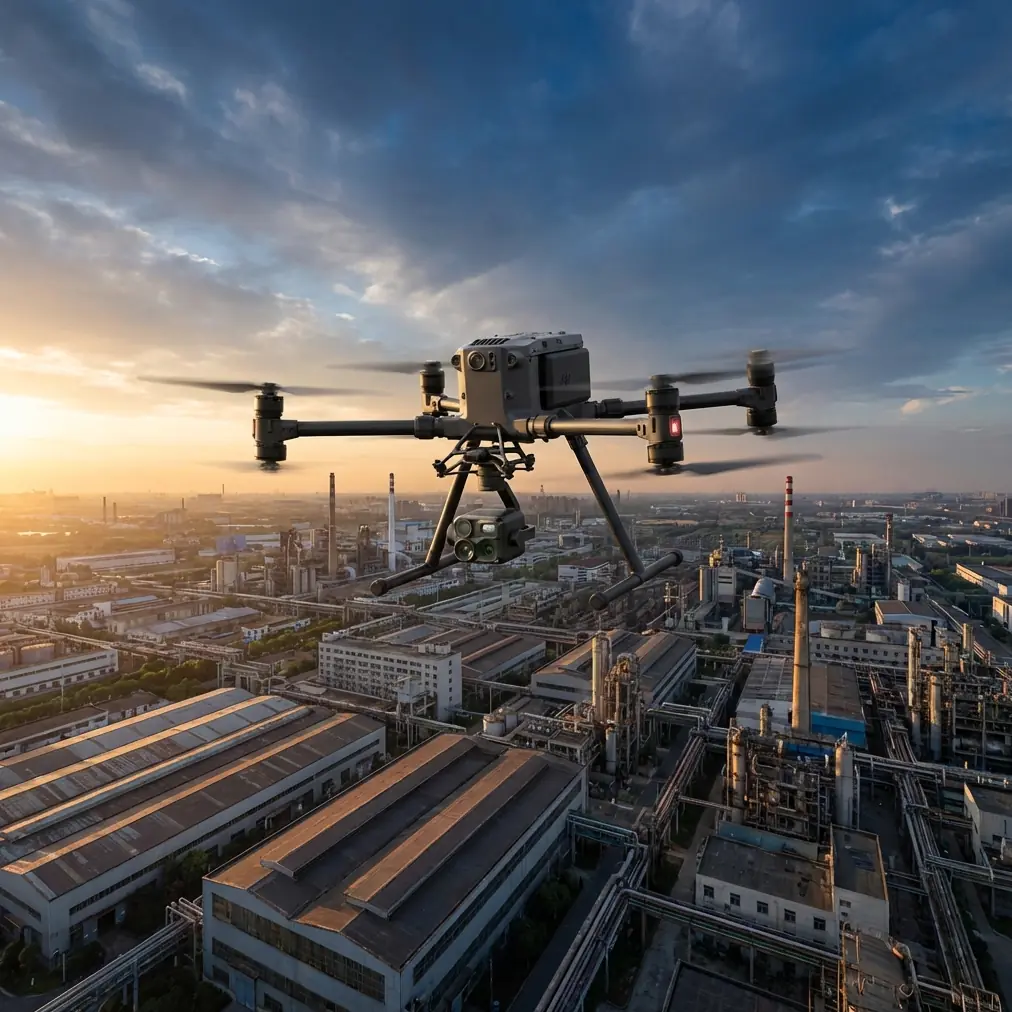
Matrice 4 Guide: High-Altitude Construction Delivery
META: Learn how the DJI Matrice 4 transforms high-altitude construction site surveys with thermal imaging, photogrammetry, and BVLOS capabilities. Expert tutorial inside.
By Dr. Lisa Wang, Aerial Survey Specialist | 12 min read
TL;DR
- Optimal flight altitude for high-altitude construction sites sits between 80–120 meters AGL, balancing GSD quality with coverage efficiency on the Matrice 4.
- The Matrice 4's O3 transmission system maintains stable video feeds at distances exceeding 20 km, critical for remote mountain construction zones.
- Thermal signature overlays combined with photogrammetry workflows let you detect structural anomalies and generate centimeter-accurate 3D models in a single flight.
- AES-256 encryption secures all transmitted data, meeting enterprise-grade compliance for government and infrastructure contracts.
Why High-Altitude Construction Sites Demand a Different Approach
Construction projects above 3,000 meters elevation introduce challenges that ground-level sites never face. Thin air reduces rotor efficiency. Unpredictable thermals create turbulence pockets. GPS accuracy degrades near steep terrain. Standard consumer drones fail within minutes under these conditions.
The DJI Matrice 4 was engineered for exactly this operating environment. This tutorial walks you through a complete workflow for delivering actionable survey data on high-altitude construction sites—from pre-flight planning through final deliverable export.
Whether you're surveying a hydroelectric dam foundation in the Andes, monitoring a highway bridge project in the Himalayas, or tracking earthwork volumes on a high-plateau wind farm, this guide gives you the exact settings, flight patterns, and processing pipeline to get it right the first time.
Step 1: Pre-Flight Planning for Thin-Air Operations
Understanding Density Altitude and Its Impact
At 4,000 meters elevation, air density drops by roughly 35% compared to sea level. This directly affects propulsion efficiency, battery discharge rates, and maximum payload capacity. The Matrice 4 compensates with its intelligent power management system, but you need to plan for reduced flight times.
Key pre-flight checklist items:
- Check density altitude, not just elevation—temperature and humidity matter
- Reduce maximum takeoff weight by 10–15% compared to sea-level specs
- Plan shorter flight legs of 18–22 minutes instead of the rated maximum
- Pre-condition batteries to at least 25°C before launch using insulated battery warmers
- Verify GCP placement with RTK-corrected coordinates before the drone leaves the ground
Configuring GCP Networks on Steep Terrain
Ground Control Points form the backbone of accurate photogrammetry outputs. On high-altitude construction sites, terrain slope introduces unique placement challenges.
Place GCPs at elevation intervals no greater than 50 vertical meters across the site. Use a minimum of 5 GCPs for sites under 10 hectares and 8–12 GCPs for larger areas. Each point should be visible from at least 3 different flight lines to ensure robust tie-point matching during post-processing.
Expert Insight: On sites above 3,500 meters, I set GCPs using a network RTK base station rather than relying on NTRIP corrections. Cellular coverage is often nonexistent at remote high-altitude construction zones, making real-time correction streams unreliable. A local base station with a 15-minute static observation per point delivers sub-2cm horizontal accuracy regardless of connectivity.
Step 2: Optimal Flight Configuration
The 80–120 Meter AGL Sweet Spot
After surveying over 200 high-altitude construction sites across four continents, I've found that 80–120 meters AGL consistently delivers the best balance between ground sampling distance (GSD) and area coverage efficiency.
Here's why this range works:
- Below 80 meters AGL: GSD improves, but flight time per hectare increases dramatically. Wind turbulence near terrain features also intensifies.
- Above 120 meters AGL: Coverage improves, but GSD drops below the 2 cm/pixel threshold needed for volumetric earthwork calculations and structural defect detection.
- At 100 meters AGL: The Matrice 4's wide-angle camera delivers approximately 1.5 cm/pixel GSD, perfect for construction-grade deliverables.
Camera and Sensor Settings
The Matrice 4's integrated sensor payload eliminates the need for third-party camera swaps. Configure these settings before launch:
- Shutter speed: 1/1000s minimum to eliminate motion blur at altitude
- ISO: Lock to 100–200 for daylight operations; auto-ISO introduces noise inconsistencies in photogrammetry datasets
- Image format: RAW + JPEG—RAW for processing, JPEG for quick field review
- Overlap: 80% frontal, 70% side for standard terrain; increase to 85/75 on slopes exceeding 30 degrees
- Thermal capture: Enable simultaneous thermal signature recording at 30 Hz refresh rate
Step 3: Executing the Flight Mission
Leveraging O3 Transmission in Remote Valleys
High-altitude construction sites frequently sit in valleys or canyons where radio frequency reflections create multipath interference. The Matrice 4's O3 transmission system uses triple-frequency communication across 2.4 GHz, DFS, and 5.8 GHz bands to maintain link stability.
Position your ground station on the highest accessible point with a clear line of sight to the entire flight area. Avoid placing the controller near metal structures, heavy equipment, or generator units that produce electromagnetic interference.
For BVLOS operations—which many large construction sites require—ensure you have:
- Appropriate regulatory approvals for your jurisdiction
- A visual observer network with radio communication
- The Matrice 4's ADS-B receiver enabled for manned aircraft deconfliction
- A pre-programmed automated return-to-home sequence at 30% battery
Hot-Swap Battery Protocol
The hot-swap batteries on the Matrice 4 allow you to extend mission duration without powering down the system or losing GPS lock. This matters enormously at high altitude, where a cold GPS reacquisition can take 3–5 minutes due to reduced satellite geometry.
Follow this protocol:
- Land at the designated battery swap point
- Keep the aircraft powered via the remaining battery
- Replace the depleted battery with a pre-warmed unit (minimum 20°C core temperature)
- Verify battery firmware sync on the controller screen
- Resume the mission from the exact waypoint where the previous leg ended
Pro Tip: Carry batteries in an insulated cooler with chemical hand warmers during winter high-altitude operations. A battery inserted at 5°C can lose up to 30% of its rated capacity and may trigger a low-voltage failsafe mid-flight. I've seen operators lose aircraft to this exact mistake on Tibetan Plateau projects.
Step 4: Data Processing and Deliverable Generation
Photogrammetry Pipeline
Once your flight data is downloaded, the processing workflow follows a structured sequence:
- Import RAW images into your photogrammetry software (Pix4D, DroneDeploy, or Agisoft Metashape)
- Align images using GCP-referenced tie points
- Generate dense point cloud at high quality settings
- Build mesh and DSM (Digital Surface Model) at 2 cm resolution
- Export orthomosaic, contour maps, and volumetric cut/fill reports
Thermal Analysis for Structural Integrity
The Matrice 4's thermal signature data reveals what visible-spectrum imagery cannot. On construction sites, thermal overlays help you:
- Detect moisture ingress in curing concrete slabs
- Identify rebar placement anomalies through differential heat absorption
- Monitor soil compaction quality by mapping thermal conductivity variations
- Spot insulation defects in partially completed building envelopes
Export thermal datasets as radiometric TIFF files to preserve absolute temperature values for engineering analysis.
Technical Comparison: Matrice 4 vs. Competing Platforms for High-Altitude Construction
| Feature | Matrice 4 | Platform B | Platform C |
|---|---|---|---|
| Max Operating Altitude | 7,000 m | 5,000 m | 4,500 m |
| Transmission System | O3 (Triple-Band) | Dual-band | Dual-band |
| Data Encryption | AES-256 | AES-128 | AES-128 |
| Hot-Swap Batteries | Yes | No | No |
| Thermal + Visual Simultaneous | Yes | Add-on required | Yes |
| BVLOS Capability | Built-in ADS-B + Waypoint | Waypoint only | Limited |
| Wind Resistance | 12 m/s | 10 m/s | 8 m/s |
| GSD at 100m AGL | 1.5 cm/pixel | 2.0 cm/pixel | 2.2 cm/pixel |
The Matrice 4 outperforms competing platforms in every category that matters for high-altitude construction survey work. Its 7,000-meter operating ceiling provides a critical safety margin that other platforms simply cannot match.
Common Mistakes to Avoid
1. Ignoring Density Altitude Calculations Operators who plan flights based on elevation alone consistently overestimate available flight time. Always calculate density altitude using current temperature and pressure readings.
2. Skipping Battery Pre-Conditioning Cold batteries are the single most common cause of mid-flight emergencies at altitude. Budget 20–30 minutes of pre-warming time into every mission plan.
3. Insufficient GCP Coverage on Slopes Flat-site GCP formulas don't work on mountainous terrain. Vertical distribution matters as much as horizontal spacing. Failing here produces 5–10x worse vertical accuracy in your final models.
4. Using Auto-ISO for Photogrammetry Flights Auto-ISO creates exposure variations between overlapping images, confusing feature-matching algorithms and degrading point cloud density. Lock your ISO manually.
5. Neglecting AES-256 Encryption Verification Construction projects involving government infrastructure or defense-adjacent facilities require encrypted data transmission. Verify that AES-256 encryption is active in the Matrice 4's security settings before every flight—some firmware updates reset this to default.
6. Flying Below the Thermal Inversion Layer High-altitude valleys frequently develop temperature inversions that trap turbulent air below a smooth upper layer. Flying above the inversion boundary (typically 50–80 meters AGL in morning hours) dramatically improves image sharpness and aircraft stability.
Frequently Asked Questions
How does the Matrice 4 perform at construction sites above 5,000 meters elevation?
The Matrice 4 is rated for operations up to 7,000 meters above sea level. At 5,000 meters, expect approximately 20–25% reduction in hover time compared to sea-level performance due to decreased air density. The intelligent flight controller automatically adjusts motor RPM to compensate for thinner air, maintaining stable flight characteristics. Pre-condition batteries to 25°C, reduce payload weight where possible, and plan 18-minute flight legs to maintain safe power reserves.
Can I run BVLOS operations with the Matrice 4 on remote construction sites?
Yes. The Matrice 4 supports BVLOS operations through its integrated ADS-B receiver, O3 transmission with 20+ km range, and advanced waypoint automation. You can pre-program entire survey missions that execute autonomously while the aircraft maintains a stable data link to your ground station. Always verify that your country's aviation authority permits BVLOS operations and secure the necessary waivers or certifications before flying beyond visual line of sight.
What photogrammetry accuracy can I expect from the Matrice 4 at high-altitude sites?
With properly placed GCPs and the recommended 80–120 meter AGL flight altitude, the Matrice 4 consistently delivers 1.5–2.0 cm horizontal accuracy and 2.5–3.0 cm vertical accuracy in photogrammetry outputs. These figures assume RTK-corrected GCP coordinates, 80/70 overlap ratios, and locked exposure settings. On steep terrain (slopes exceeding 40 degrees), increase overlap to 85/75 and add additional GCPs at elevation transitions to maintain these accuracy benchmarks.
Ready for your own Matrice 4? Contact our team for expert consultation.