
Matrice 4 in Coastal Field Operations: What a Refinery
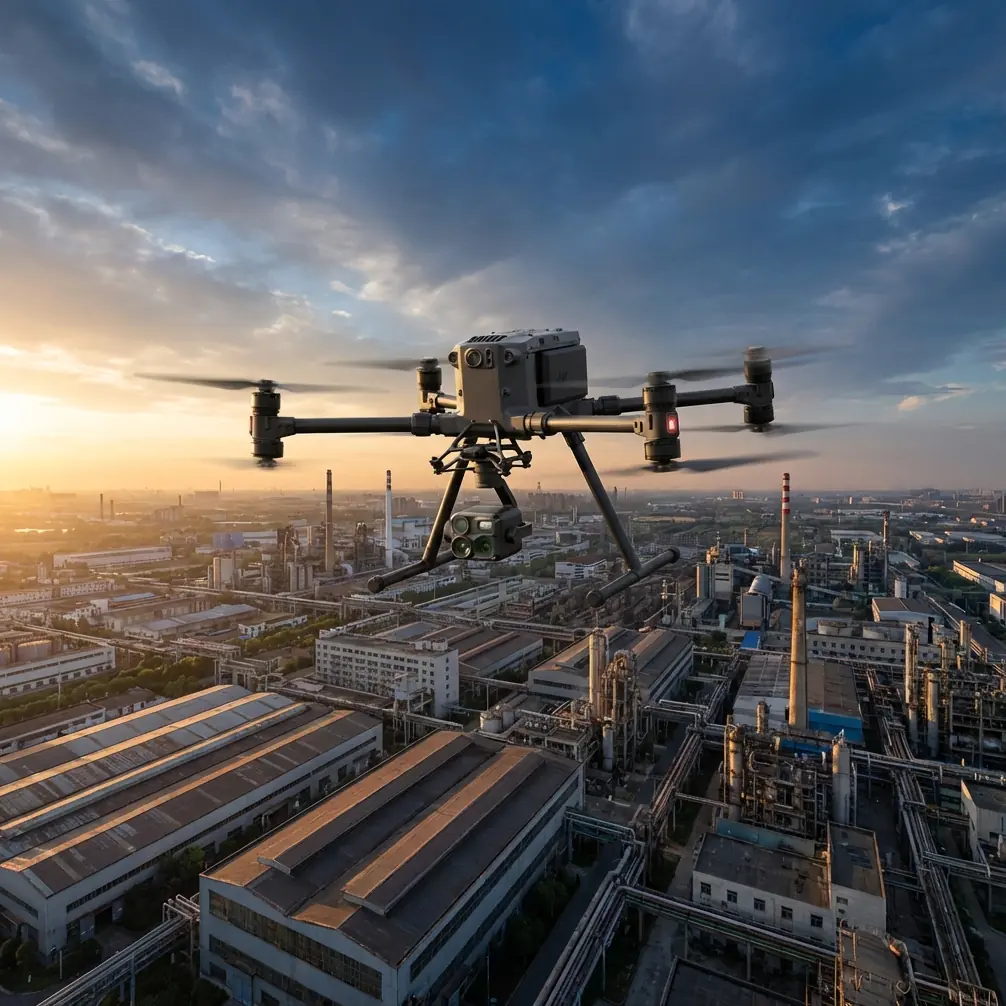
Matrice 4 in Coastal Field Operations: What a Refinery Bridge Project Reveals About Better UAV Workflows
META: A case-study analysis of how Matrice 4 fits coastal field delivery, inspection, and mapping workflows, using the Huilai crude oil terminal steel approach bridge milestone to explain what matters in real operations.
By Dr. Lisa Wang, Specialist
A short construction update can tell you a lot about what kind of drone work actually matters on the ground.
Recently, the steel approach bridge at the Huilai crude oil terminal was reported as successfully connected. That may sound like a narrow civil-engineering milestone, but it carries real operational weight. This terminal is the only oil supply channel for the Guangdong Petrochemical 20 million-ton refining and petrochemical integration project, which means the terminal is not just another coastal asset. Its construction progress is tied directly to whether the larger project can enter production on schedule.
For anyone evaluating Matrice 4 for coastal field work, that kind of project is the right lens. Not a lab test. Not a feature sheet in isolation. A real site, exposed to wind, salt air, changing light, reflective steel, logistics pressure, and schedule risk.
That is where aircraft choices stop being theoretical.
The field challenge I remember too well
Before platforms in this class became practical, coastal infrastructure jobs often forced teams into awkward compromises. You could map a site, but not revisit the same corridor quickly enough to catch fabrication or installation changes. You could inspect steelwork visually, but only after crews had already moved to the next sequence. You could collect thermal data, but not always in a way that aligned cleanly with visible imagery and georeferenced progress records.
And if the operation involved long access corridors leading to a terminal or bridge structure, every lost minute mattered. Battery changes interrupted momentum. Transmission reliability became a problem the moment you got distance, haze, or complex industrial surfaces in the mix. Data security was often treated as an afterthought even though infrastructure imagery can be commercially sensitive.
This is the kind of pain point Matrice 4 is well positioned to ease, especially in coastal delivery fields and industrial support missions where teams need one aircraft to do several jobs well enough to keep work moving.
Why the Huilai bridge milestone is such a useful case study
The reported facts are simple, but they reveal the stakes.
First, the steel approach bridge at the Huilai crude oil terminal has been successfully completed through to connection. That tells us this was a structural milestone where alignment, progress verification, and documentation would all be critical.
Second, the terminal is the only supply route for crude feeding the larger 20 million-ton integrated refining and petrochemical project. That is the detail many people skim past. Operationally, it means this asset is a single-point dependency. If progress at the terminal drifts, the downstream production timeline feels it.
For drone teams, that changes the mission profile. You are no longer just “capturing images.” You are supporting schedule assurance on a coastal asset whose progress directly affects commissioning readiness. The significance of each flight rises. Repeatability matters more. Data handoff matters more. Fast, accurate reporting matters more.
That is exactly where Matrice 4 becomes interesting.
Matrice 4 is strongest when one sortie must answer multiple questions
On a coastal bridge or terminal project, one flight rarely serves a single stakeholder.
The construction team wants visual confirmation of the latest installed sections. The project controls team wants georeferenced progress data. HSE wants awareness of access conditions and exposed work zones. Asset stakeholders may want thermal signature checks around electrical or mechanical support areas as systems come online. In agricultural or coastal logistics fields nearby, operations managers may also need route awareness, drainage visibility, or temporary staging checks.
A platform like Matrice 4 earns its place when it can capture that mix without dragging the crew through separate mission stacks.
Photogrammetry is part of that. Not because every site needs a textbook 3D model every day, but because coastal projects benefit from consistent reconstruction of terrain, access roads, embankments, laydown zones, and structural progress. Add GCP-backed workflows when higher positional confidence is needed, and the drone output shifts from “nice aerials” to evidence-grade progress support.
That distinction is not cosmetic. When a project node is as important as the Huilai terminal, the value of drone data lies in whether it helps people decide confidently and quickly.
Coastal conditions punish weak transmission and sloppy planning
Anyone who has worked near terminals, embankments, or open shoreline knows how easily environmental factors degrade UAV operations. Moist air, glare, repetitive steel geometry, vessel movement in the background, and strong lateral winds all interfere with a smooth mission.
This is why O3 transmission matters in practice. Reliable link performance is not just about flying farther. It is about maintaining a stable feed when the aircraft is operating along linear infrastructure or around visually noisy industrial scenes. In a bridge-connection environment, a stronger transmission workflow means fewer interrupted inspections, less guesswork during framing, and cleaner team coordination between pilot and observer.
That becomes even more significant in BVLOS-oriented planning discussions, where organizations are building procedures for longer corridor oversight, coastal field logistics review, and distributed asset monitoring. Even when a specific mission is not conducted under BVLOS authority, the same discipline applies: robust link management, route predictability, and contingency planning.
In older operations, the pilot often spent too much mental bandwidth protecting the signal. With Matrice 4-class capability, more attention can stay where it belongs: on the mission objective.
Why thermal signature data is not just for fault hunting
Many operators still treat thermal as a specialist function reserved for occasional diagnostics. That undersells its role in coastal project work.
On sites connected to heavy industry, thermal signature review can help teams identify drainage anomalies, water intrusion patterns, overheated temporary equipment, or insulation inconsistencies during installation phases. In nearby field operations, thermal can also support early morning terrain and moisture interpretation, especially where access routes become soft or unstable after weather shifts.
Pair that with visual and mapping outputs, and the drone becomes much more than an eye in the sky. It becomes a way to correlate what the site looks like with how it is behaving.
That is useful on a steel approach bridge because the bridge itself is only one part of the operational story. The surrounding staging zones, connection points, service access, and adjacent field conditions all influence whether the project stays on pace.
Hot-swap batteries solve a problem managers rarely see on paper
Spec sheets tend to flatten operations into flight time figures. Field teams know the real issue is continuity.
On coastal infrastructure missions, the hidden cost is often not the battery endurance itself but the disruption caused by stopping the workflow. You lose the light angle you wanted. The crew on the structure changes position. The tide shifts visual context. The supervisor you needed for confirmation gets pulled into another task. The aircraft returns, and the mission no longer matches the first pass.
Hot-swap batteries directly improve this. The benefit is not abstract efficiency. It is preserving the rhythm of an inspection or progress-mapping sequence so the data remains comparable and the team remains focused.
That is particularly valuable on projects like the Huilai terminal, where milestone verification can be time-sensitive and where every revisit adds coordination overhead.
Data security is not optional around industrial assets
There is another reality that deserves more attention. Infrastructure imagery and project progress records are often commercially sensitive even when the mission is entirely civilian.
AES-256 support matters because drone operations around terminals, bridges, and major processing projects produce data that stakeholders may need to protect carefully. Secure transmission and controlled handling are not just IT checkboxes. They are part of professional field practice.
If you are operating Matrice 4 in coastal logistics fields or around industrial delivery corridors, that security posture helps reassure project owners that UAV adoption does not mean sacrificing data discipline.
For teams trying to standardize workflows across inspection, mapping, and project documentation, that trust can determine whether drone operations remain occasional or become embedded in the daily operating model.
A better way to run a coastal field mission with Matrice 4
If I were structuring a Matrice 4 workflow around a site analogous to the Huilai terminal approach bridge, I would not split the mission by department. I would split it by decision need.
Start with a broad mapping pass for current terrain and access context. Use photogrammetry where repeatable surface and progress interpretation are needed, and support the highest-accuracy sections with GCPs. Then run a targeted visual inspection sequence on the bridge connection and adjacent support structures. Follow with thermal signature capture in areas where temporary systems, drainage conditions, or equipment heat behavior may reveal issues not obvious in RGB imagery.
That sequencing sounds simple, but it changes the output. Instead of handing over three disconnected datasets, you create one site narrative: what changed, where it changed, how confident you are in the geometry, and whether any heat-related anomalies suggest a follow-up.
For coastal delivery fields, a similar logic applies. Route readiness, staging visibility, soft ground detection, and temporary infrastructure checks can all be layered into one mission design rather than handled as separate flights.
The real advantage is fewer blind spots between milestone and decision
What struck me about the Huilai report was not just that the steel approach bridge had reached a successful connection. It was the reminder that some assets carry outsized consequence because they are the only route supporting a much larger operation.
That single fact changes how drone work should be evaluated.
When the terminal is the only oil supply channel for a 20 million-ton refining and petrochemical integration project, drone output has to do more than look impressive. It has to reduce ambiguity around progress, support fast verification, and help teams spot conditions that could slow handover or startup readiness.
Matrice 4 fits that kind of work because it can be used as a field instrument rather than a flying camera. O3 transmission supports mission stability. Thermal signature capture broadens what the site team can detect. Photogrammetry and GCP-based control strengthen repeatability and reporting quality. Hot-swap batteries keep operations moving. AES-256 aligns with the data expectations of serious industrial stakeholders.
Each element matters on its own. Together, they solve the coastal problem I used to run into repeatedly: too many site questions, too little time, and too much friction between flight and decision.
Where this matters beyond a single terminal
The Huilai bridge milestone is a strong example because the infrastructure dependency is obvious. But the lesson applies well beyond one refinery-linked project.
Any coastal field operation with a single critical access route, transfer point, or utility corridor faces the same challenge. Fertilizer depots linked to port access. Irrigation infrastructure near estuarial zones. Agricultural logistics corridors crossing reclaimed land. Coastal industrial parks with phased commissioning schedules. In all of these settings, the drone team’s job is not merely to document. It is to close the gap between field condition and management action.
That is where Matrice 4 makes sense. Not as a trophy platform. As a practical answer to the messy, repetitive, high-stakes reality of coastal operations.
If your team is evaluating workflow design for similar environments, you can share your scenario here: message our UAV specialist directly.
The best drone programs are not built around dramatic flights. They are built around the moments when one accurate sortie prevents a delay, confirms a milestone, or reveals a problem before it spreads into the schedule.
The Huilai crude oil terminal story is a perfect reminder. A bridge connection is never just a bridge connection when it feeds the only supply route that the larger project depends on. And a drone is never just a drone when the data helps keep that chain moving.
Ready for your own Matrice 4? Contact our team for expert consultation.