
Matrice 4 in Dusty Forest Operations: What Really Matters
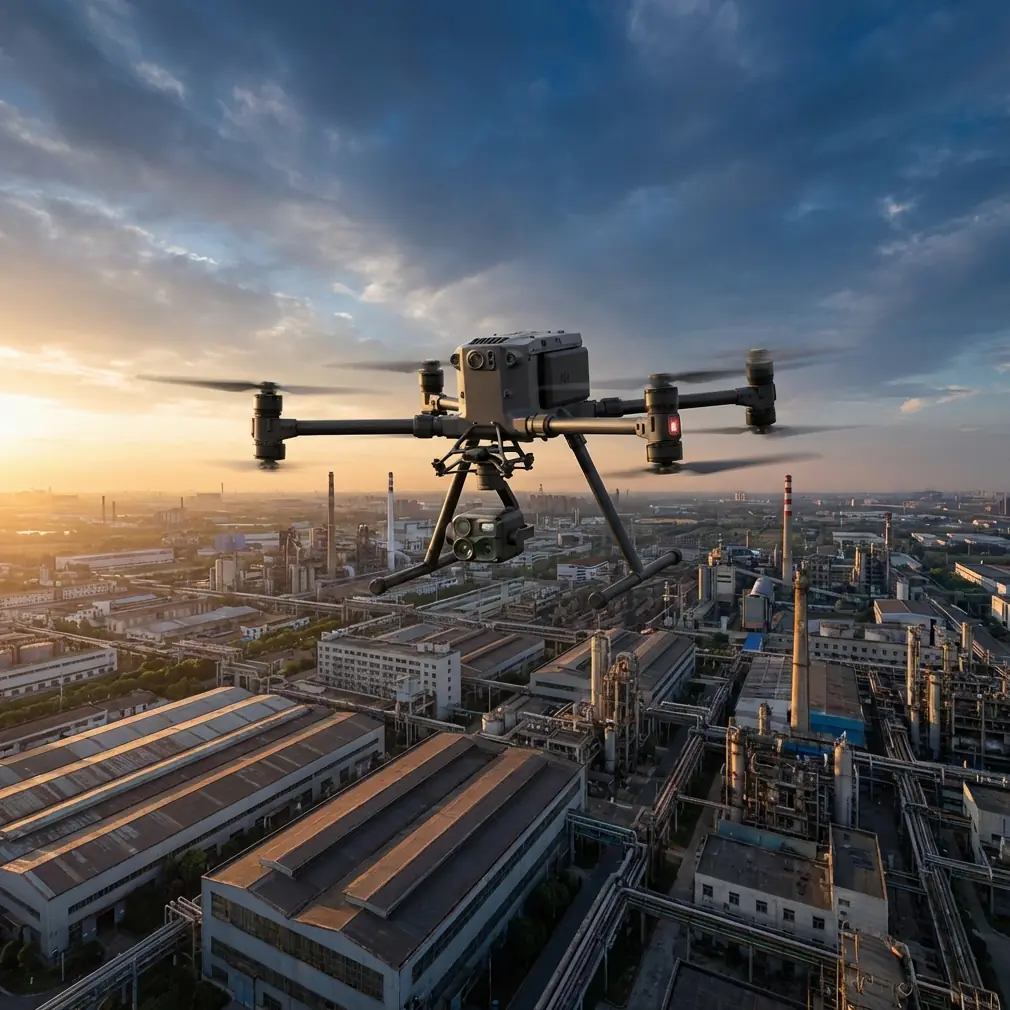
Matrice 4 in Dusty Forest Operations: What Really Matters in the Airframe, Mission Profile, and Field Workflow
META: Expert technical review of Matrice 4 for dusty forest operations, covering mission endurance, structural loading logic, mapping workflow, thermal use, BVLOS reliability, and field deployment considerations.
Forested delivery and utility work look simple on a brochure. In the field, they are not. Dust hangs in the rotor wash, canopy gaps distort line-of-sight, landing spots are improvised, and every extra minute spent swapping batteries or rerunning a flight plan compounds risk and labor. That is where the Matrice 4 conversation gets interesting.
Most discussions around Matrice 4 drift into feature recitation. That misses the point. For operators working around forests in dusty conditions, the real question is not whether the aircraft has advanced sensors or strong transmission. The question is whether the platform behaves like a professional tool when the mission profile gets repetitive, abrasive, and structurally demanding over time.
That is the lens worth using here.
Why dusty forest work exposes weak aircraft design
A drone flying repeated routes into forest edges or through logging corridors experiences a punishing pattern: climb, transit, hover, descend, reposition, repeat. That cycle may not look dramatic on a single sortie, but over hundreds or thousands of flight hours, it becomes a load-spectrum problem as much as an operational one.
One of the more useful engineering ideas from civil aircraft design is that durability is not judged from one peak event alone. It is judged from accumulated mission segments over time. In the reference material, usage is broken down by task segment and counted per 1000 flight hours. That matters because a delivery or inspection aircraft in forest service rarely flies one “average” mission. It flies a repeated mix of short transits, hover work, obstacle avoidance corrections, and landing events. The handbook’s logic is blunt: if you know how often a mission segment occurs per 1000 hours, and how much of the flight it occupies, you can estimate cumulative frequency and structural significance.
For Matrice 4 operators, this is more than theory. It explains why a platform that feels stable on day one can separate itself from weaker competitors by month twelve. A serious aircraft is not only built for good brochure performance. It is built for repeatability across mission segments.
In dusty forests, that repeatability shows up in three places: propulsion consistency, sensor usefulness after contamination exposure, and landing-cycle tolerance.
The hidden value of mission-segment thinking
Many teams choose a drone by looking at top speed, flight time, or camera resolution in isolation. Those specs are useful, but they do not tell you how the aircraft fits an actual forestry workflow.
The reference material on load and stiffness introduces a practical framework: calculate task-segment frequency from cumulative events per 1000 flight hours, then map that against how much time each segment occupies in a typical profile. Translating that to Matrice 4 operations, a forestry delivery mission might include:
- departure from a dusty clearing
- low-altitude transit over uneven terrain
- hover confirmation near a drop point
- repositioning under imperfect GNSS geometry near tree cover
- return leg under different wind direction
- another landing in loose dust
That is not one event. It is a recurring spectrum. A capable platform must remain predictable through all of them. This is where Matrice 4 has an edge if you are comparing it to lighter, less work-oriented competitors. Consumer-adjacent airframes often perform well in clean, open spaces, but their stability margin, transmission confidence, and workflow efficiency begin to fray once the mission becomes repetitive and infrastructure-poor.
Matrice 4 is better understood as a system designed for professional sortie logic rather than isolated flights. That distinction matters for BVLOS planning, route standardization, and long-term maintenance forecasting.
Transmission is not a luxury in forest corridors
The context hints at O3 transmission, and in forest operations that is not a decorative spec. Dense vegetation, broken terrain, and reflective moisture gradients can degrade situational confidence long before the aircraft reaches the theoretical edge of range. In practice, stronger transmission architecture reduces small operational penalties that add up fast: hesitant course corrections, pauses for visual reacquisition, conservative route truncation, or aborted runs due to unstable link quality.
For teams planning BVLOS or near-BVLOS style corridor work where regulations permit, robust transmission is less about distance and more about continuity. If the aircraft maintains cleaner telemetry and video through partial masking conditions, the operator makes fewer reactive decisions. Fewer reactive decisions mean smoother power use, more consistent data capture, and better confidence in repeat missions.
That matters in forests because each unnecessary correction can create dust plumes on departure and landing, alter overlap in photogrammetry runs, or compromise thermal inspection timing at the exact moment canopy shadows are changing.
Thermal signature and photogrammetry are a stronger pair than most teams realize
Forest operations often split into two camps: those using thermal and those using visible-spectrum mapping. In reality, Matrice 4 becomes most valuable when both are treated as parts of one workflow.
Thermal signature analysis is useful for identifying equipment heat anomalies, recently active ground points, stressed infrastructure, or environmental contrasts under tree cover. But thermal alone can be ambiguous. A heat source without accurate geospatial context may still send a field team walking the wrong trail or approaching from the wrong elevation.
That is where photogrammetry closes the loop. If your Matrice 4 workflow includes repeatable visible mapping, disciplined overlap, and well-managed GCP deployment where appropriate, the thermal findings can be anchored to a model that crews can actually use. The difference is operationally significant: instead of “there is a heat issue somewhere near that ridge,” you get a georeferenced point tied to terrain, access path, and neighboring obstacles.
Dust complicates this. Dusty takeoff zones and low-level transitions can degrade image quality and create inconsistency between missions. A stronger professional platform helps by making sortie execution more repeatable. If the aircraft holds line better and gives the operator more confidence under canopy edges, the resulting dataset is more usable. That is the kind of advantage that rarely shows up in headline specs yet changes whether a mapping day needs to be redone.
Why landing logic matters more than people think
One of the most revealing reference details comes from civil aircraft pavement loading: equivalent single wheel load, or ESWL. In the handbook, ESWL for a single-wheel landing gear is simply the strut load. For clustered wheels, it becomes the load of an equivalent isolated wheel producing the same stress on the pavement, subbase, and ground. The method uses five parameters, including relative stiffness radius, total contact area, wheel spacing, and ESWL itself. Standard values for the relative stiffness radius are cited as 76 cm, 102 cm, and 127 cm.
At first glance, this seems far removed from Matrice 4. It is not.
The operational lesson is straightforward: landing performance is not just about whether the aircraft touches down safely. It is about how load is transferred into the landing surface and back into the airframe over repeated cycles. Forest operators routinely land on hard clearings, compacted service roads, rough pads, or improvised staging points contaminated with grit. Every touchdown is a structural and contamination event.
For a drone, the exact mechanics are different from a manned aircraft on rigid pavement, but the principle holds. Load distribution, contact area, and repeated landing cycles matter. A platform built for hard professional use should tolerate repeated dust-affected landings without introducing excessive vibration, poor sensor alignment retention, or inconsistent touchdown behavior. This is one area where professional Matrice-class platforms usually outclass smaller competitors. They are not merely optimized to get airborne; they are engineered to return, repeatedly, on surfaces that are less forgiving than ideal launch mats.
That makes a difference in forestry logistics. If your aircraft is landing dozens of times per week at field bases and temporary clearings, reliability at touchdown is part of mission economics.
Hot-swap batteries are really about sortie continuity
Hot-swap batteries sound like a convenience feature until you work in a forest service rhythm. Then they become a mission-shaping advantage.
Dusty environments punish any delay. Set the aircraft down, expose internals for too long, fumble a battery transition, and the turnaround expands. That is not just lost time. It may shift your lighting conditions for photogrammetry, alter thermal comparability, or push a delivery window later into less favorable wind.
Hot-swap capability supports continuity. The aircraft comes down, power interruption is minimized, workflow momentum stays intact, and the operator can preserve route logic between sorties. On a day with multiple planned runs, that can be the difference between finishing a corridor set and leaving a gap that forces remobilization.
Compared with competitors that require more cumbersome reboot or mission reinitialization sequences, Matrice 4’s field usability becomes obvious very quickly. Experienced crews notice this before casual buyers do.
Data security is practical, not abstract
AES-256 encryption is often treated as a compliance bullet point. In commercial forestry and infrastructure work, it is more concrete than that.
Mapped forest assets, access roads, stockpiles, utility paths, environmental observations, and delivery coordinates can all be commercially sensitive. If Matrice 4 is being used for repeated route flights or site documentation, the transmission chain and stored mission data deserve serious protection. AES-256 matters because it reduces exposure around operational telemetry and captured information, especially when flights are conducted in remote regions using mixed field devices and temporary communications setups.
Security in this context is not corporate theater. It is part of professional deployment discipline.
Where Matrice 4 stands out against weaker alternatives
The context asked for a comparison point, so here it is plainly: Matrice 4 appears strongest when compared not to another spec-rich enterprise brochure, but to drones that promise flexibility while actually being optimized for lighter, cleaner, shorter, less repetitive flying.
In dusty forest work, the weaker category usually fails in familiar ways:
- transmission confidence drops near canopy and terrain masking
- repeat mapping outputs vary more than expected
- battery turnaround interrupts sortie rhythm
- landing repeatability suffers on rough staging points
- thermal findings are captured, but not integrated into a dependable spatial workflow
Matrice 4’s advantage is not one single sensor or one headline feature. It is the way the system supports repeated commercial missions where cumulative stress and workflow friction decide whether the program scales.
That returns us to the engineering references. The first describes how load equivalence on rigid pavement depends on more than one obvious variable. The second explains that lifetime usage should be counted by mission segment, using cumulative frequencies per 1000 flight hours. Put together, they tell a useful truth for drone buyers: the right aircraft is the one that remains consistent under repeated, real-world operating segments and repeated ground-contact cycles.
That is exactly how forestry teams should evaluate Matrice 4.
A practical deployment view for forest operators
If I were architecting a Matrice 4 program for dusty forest operations, I would focus less on abstract capability and more on measurable routine:
- Build standard mission templates for delivery, mapping, and thermal review.
- Track sortie segments, especially hover-heavy and landing-intensive profiles.
- Monitor image consistency across repeated photogrammetry runs with GCP-backed checks.
- Evaluate landing-site discipline, not just air time.
- Use encrypted workflows end to end for route and survey data.
- Exploit hot-swap efficiency to preserve environmental comparability between sorties.
That sounds procedural because it is. Professional results come from turning aircraft capability into repeatable field behavior.
If your operation is trying to decide whether Matrice 4 fits dusty, forest-adjacent work, the best discussion is not “what camera does it carry?” The better discussion is “how does this platform hold up across repeated mission segments, repeated landings, and repeated data collection cycles?”
That is the question mature operators ask.
And if you want to talk through route design, payload fit, mapping workflow, or BVLOS planning considerations with someone who understands field reality, you can message a Matrice specialist here.
Matrice 4 makes the most sense when the mission is repetitive, the environment is abrasive, and the data has to stay dependable. Dusty forest operations fit that description almost perfectly. The platform’s value is not just airborne capability. It is sustained professional behavior under conditions that quietly expose weak systems.
Ready for your own Matrice 4? Contact our team for expert consultation.