
Matrice 4 Tips for Highway Delivery Missions in Remote Corri
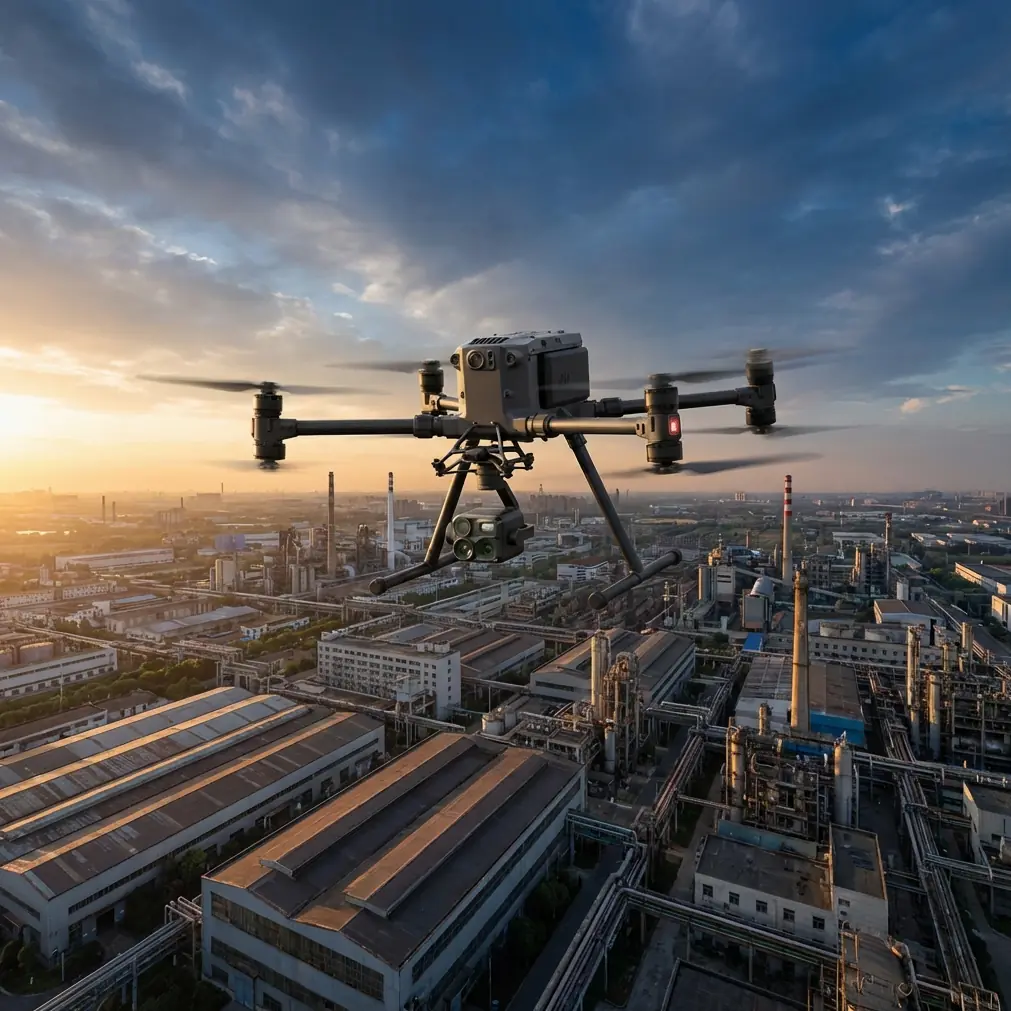
Matrice 4 Tips for Highway Delivery Missions in Remote Corridors
META: Expert tutorial on using Matrice 4 for remote highway delivery support, thermal scanning, photogrammetry, BVLOS planning, and safe operations in wildlife-prone terrain.
Highway delivery work in remote corridors looks simple on a map. In the field, it rarely is.
Long stretches of asphalt cut through uneven terrain, weak cellular coverage, shifting weather, and wildlife zones that can turn a routine flight into a risk event in seconds. If you are deploying a Matrice 4 to support highway logistics, site checks, corridor mapping, or urgent payload movement between remote work crews, the value of the platform is not just that it flies far. The real advantage is how well it combines sensing, link stability, data security, and field efficiency when the road itself is the problem.
I have seen this most clearly on remote highway jobs where the aircraft is not replacing a truck. It is replacing delay. A blocked access point, an erosion pocket near a culvert, a heat anomaly on roadside electrical equipment, or a missing survey update can stall an entire work window. In those cases, the Matrice 4 becomes less of a drone and more of a decision tool.
This tutorial is built for operators supporting highway delivery missions in isolated areas. It focuses on the practical side of using a Matrice 4 in the kind of environments where road crews, inspectors, and logistics teams cannot afford guesswork.
Start with the mission, not the aircraft
The first mistake I see is treating every remote highway operation as a standard point-to-point flight. It is not. A highway corridor creates a narrow operational geometry with recurring hazards: power lines, embankments, bridges, moving vehicles, RF shadows, and wildlife crossings. Before you configure the Matrice 4, define which of these four missions you are actually flying:
- Delivery support to fixed remote teams
- Thermal inspection of road-adjacent infrastructure
- Photogrammetry for progress tracking or damage assessment
- Mixed reconnaissance for route and safety decisions
That distinction matters because the sensor workflow changes everything. If your primary objective is photogrammetry, flight consistency and overlap discipline matter more than reactive maneuvering. If your objective is thermal signature analysis after dusk, then environmental contrast, surface emissivity, and speed management become your priority. If you are making a time-sensitive delivery to a crew beyond a washed-out access road, then transmission reliability and battery turnover will dominate the mission design.
The Matrice 4 is most effective when you stop asking, “How far can I fly it?” and instead ask, “What decision must this aircraft help me make before the road team loses time?”
Use thermal signature data for more than search work
Thermal payloads are often discussed in the context of public safety, but on highway projects they are just as valuable for operational continuity. Remote roads create blind spots in asset monitoring. A Matrice 4 configured for thermal work can help teams identify overheating roadside cabinets, drainage failures with unusual moisture patterns, vehicle hotspots at stalled machinery areas, and animal presence near work zones in low light.
One evening mission stands out. A crew was preparing for early-morning material movement along a remote highway segment with dense scrub on both sides. The visual feed showed nothing unusual near the temporary staging area. The thermal view did. A large heat signature appeared just beyond the road shoulder, then separated into a clear body outline moving parallel to the corridor. It turned out to be a moose tracking along the brush line before crossing near the crew access point. That mattered operationally because the team delayed vehicle movement, adjusted lighting placement, and avoided pushing personnel into a wildlife encounter that could have shut down work entirely.
That is the point of thermal signature analysis in a corridor environment. It is not just about seeing heat. It is about seeing timing. Wildlife movement, residual ground heating, engine temperature, and infrastructure anomalies all reveal patterns that standard visual inspection can miss.
For remote highway operators, this can be the difference between a smooth dawn launch and a preventable incident report.
Photogrammetry only works when your control is disciplined
A Matrice 4 can be a strong corridor-mapping platform, but only if the workflow is built for linear infrastructure. Highway jobs are not broad open-pit maps. They are long, narrow, repetitive surfaces that punish sloppy planning. If you want survey-grade or engineering-useful outputs, your attention should go straight to GCP strategy, overlap settings, and ground texture variation.
GCP placement is especially critical in remote highway environments because corridor distortion can creep into long runs if control points are sparse or unevenly distributed. A few well-placed ground control points at curves, elevation changes, bridge approaches, and drainage structures can dramatically improve reconstruction reliability. Operators who skip this often get attractive maps that are less accurate where it matters most: culvert alignments, shoulder deformation, and transitions at repaired sections.
Photogrammetry also plays a major role in delivery support. That sounds counterintuitive until you have worked on remote jobs where physical access is uncertain. A current corridor model allows teams to confirm staging areas, locate safe drop or handoff zones, identify fresh washouts, and compare route changes after weather events. In practice, that means the Matrice 4 is not just delivering an item or an image. It is delivering confidence that the next movement on the ground is viable.
If your field team needs help planning a corridor capture workflow before mobilization, a direct brief over WhatsApp works well here because it lets you align flight geometry, control strategy, and field conditions quickly.
O3 transmission is not just a spec sheet detail
Remote highway operations expose a hard truth: link quality decides whether a mission remains useful. A strong aircraft with weak situational awareness is not a serious field tool.
This is where O3 transmission deserves more attention than it usually gets. In remote corridors, signal behavior is shaped by cut slopes, tree lines, vehicles, bridge steel, terrain undulation, and the simple fact that a highway often stretches beyond easy visual continuity. O3 transmission matters because it improves command confidence and video stability in exactly the kind of narrow, elongated spaces where conventional flights start to feel brittle.
For a Matrice 4 pilot, operational significance shows up in three ways.
First, it supports better real-time route judgment. If you are checking a blocked service road or guiding a crew toward a safe roadside access point, a stable link is not a convenience. It is the basis for trustworthy decisions.
Second, it reduces hesitation during low-altitude inspections near embankments or infrastructure. Brief signal uncertainty can force conservative repositioning that costs time and battery.
Third, it supports safer BVLOS planning where regulations, approvals, and operational frameworks allow it. BVLOS is not simply a distance issue. It is a risk-management issue. A robust transmission architecture gives the operation more resilience, but only when paired with airspace planning, lost-link procedures, observer strategy where required, and a realistic understanding of terrain masking.
Too many corridor teams think BVLOS starts with permission. In reality, it starts with predictability.
AES-256 matters when highway data is sensitive
Road projects generate more sensitive information than many operators realize. Asset condition reports, georeferenced imagery, traffic management staging, contractor progress records, and security-related infrastructure details can all become problematic if handled casually.
That is why AES-256 encryption should be treated as an operational control, not a marketing bullet. When a Matrice 4 is collecting detailed imagery over remote transport infrastructure, the data chain matters. Encryption helps protect mission information during storage and transfer, which is particularly relevant when crews are working across multiple field devices, laptops, and temporary command setups.
This becomes even more significant on projects involving government corridors, critical logistics routes, or sites with controlled access procedures. If your drone data could reveal infrastructure vulnerabilities, temporary detours, or security layouts, then the protective architecture around that data is part of the mission itself.
A secure aircraft without a secure workflow is not secure. Build the whole chain accordingly.
Hot-swap batteries change field tempo
Remote highway work punishes wasted minutes. Every vehicle movement is longer. Every retrieval is slower. Every delay compounds.
Hot-swap batteries are one of those features that sound incremental until you work a corridor where daylight, crew timing, and access windows are all tight. On a Matrice 4 deployment, fast battery replacement can turn the aircraft from an occasional inspection asset into a persistent field presence.
The operational significance is simple. You spend less time rebooting, recalibrating around interruptions, or losing the rhythm of a multi-sortie mission. That matters when you are doing repeat passes over a washout, updating a photogrammetric section after equipment moves, or checking thermal conditions at several points along a remote route.
For highway teams, tempo is not about flying continuously for its own sake. It is about preserving continuity in decision-making. When the aircraft is back in the air quickly, the crew on the ground keeps moving with current information instead of stale assumptions.
I advise teams to build battery rotation around mission phases, not battery percentages alone. For example:
- Use fresh packs for long outbound corridor legs
- Reserve mid-cycle packs for short verification flights near base
- Keep one set dedicated for thermal work near dawn or dusk
- Log pack performance against wind and temperature, not just flight time
That is how you convert battery management from a checklist item into an operational advantage.
Build wildlife into the flight plan
The wildlife encounter I mentioned earlier was not unusual. Remote highways often cut through habitat, migration paths, and feeding zones. If you are flying a Matrice 4 in these areas, wildlife should be part of your planning matrix from the start.
This affects launch site selection, altitude choices, loiter duration, lighting use, and recovery timing. Thermal sensors are particularly useful here because they can reveal movement beyond the immediate visual field, especially at low-angle light or in broken vegetation.
For crews delivering materials or urgent components to remote teams, a wildlife-informed flight plan can also protect the handoff zone. You do not want to route personnel to a roadside meeting point just because it looks open from a map. You want to know whether that zone is clear, stable, and low-risk in real time.
The Matrice 4 gives you the sensing tools to make that judgment. The operator still has to use them intelligently.
A practical mission sequence for remote highway delivery support
If I were briefing a team for a Matrice 4 corridor mission tomorrow, I would keep the sequence tight.
Begin with a pre-flight terrain and RF review. Identify known signal shadows, likely emergency landing options, and any bridge or cut-section features that can interfere with control or video. Confirm whether your mission is primarily mapping, thermal inspection, reconnaissance, or delivery support, because that decides your sensor priorities.
Next, establish your control logic for photogrammetry if mapping is involved. Place GCPs where geometry changes, not just where access is easy. Linear infrastructure magnifies small errors.
Then configure your data handling. If the mission touches critical transport assets or restricted worksites, treat AES-256-supported protection as essential and make sure the rest of your storage workflow matches that standard.
After that, structure battery use around sortie purpose. Hot-swap capability is only valuable if your battery rotation plan keeps the mission flowing.
Finally, use thermal proactively. Do not wait for a problem to search for heat. Scan for animal presence, machinery anomalies, and unstable roadside conditions before crews commit vehicles or personnel.
That sequence has a simple purpose: reduce uncertainty before it becomes delay.
Why this matters now
Remote highway operations are under pressure to move faster without accepting more blind risk. Crews are asked to cover longer corridors with tighter staffing, shorter weather windows, and higher documentation demands. The Matrice 4 fits this environment not because it is a generic all-rounder, but because specific capabilities line up with specific corridor problems.
O3 transmission supports mission continuity where terrain and distance test the link. AES-256 supports secure handling of sensitive infrastructure data. Hot-swap batteries support sustained field tempo. Thermal signature analysis helps teams detect hazards that visual scanning misses. Photogrammetry with disciplined GCP placement turns a drone flight into a usable corridor record rather than a pretty map.
Those are not isolated features. Together, they define whether a remote highway drone operation saves time or simply adds another screen to watch.
If your job is delivering results in hard-to-reach road environments, that distinction is everything.
Ready for your own Matrice 4? Contact our team for expert consultation.