
How I’d Set Up the Matrice 4 for Dusty Highway Delivery
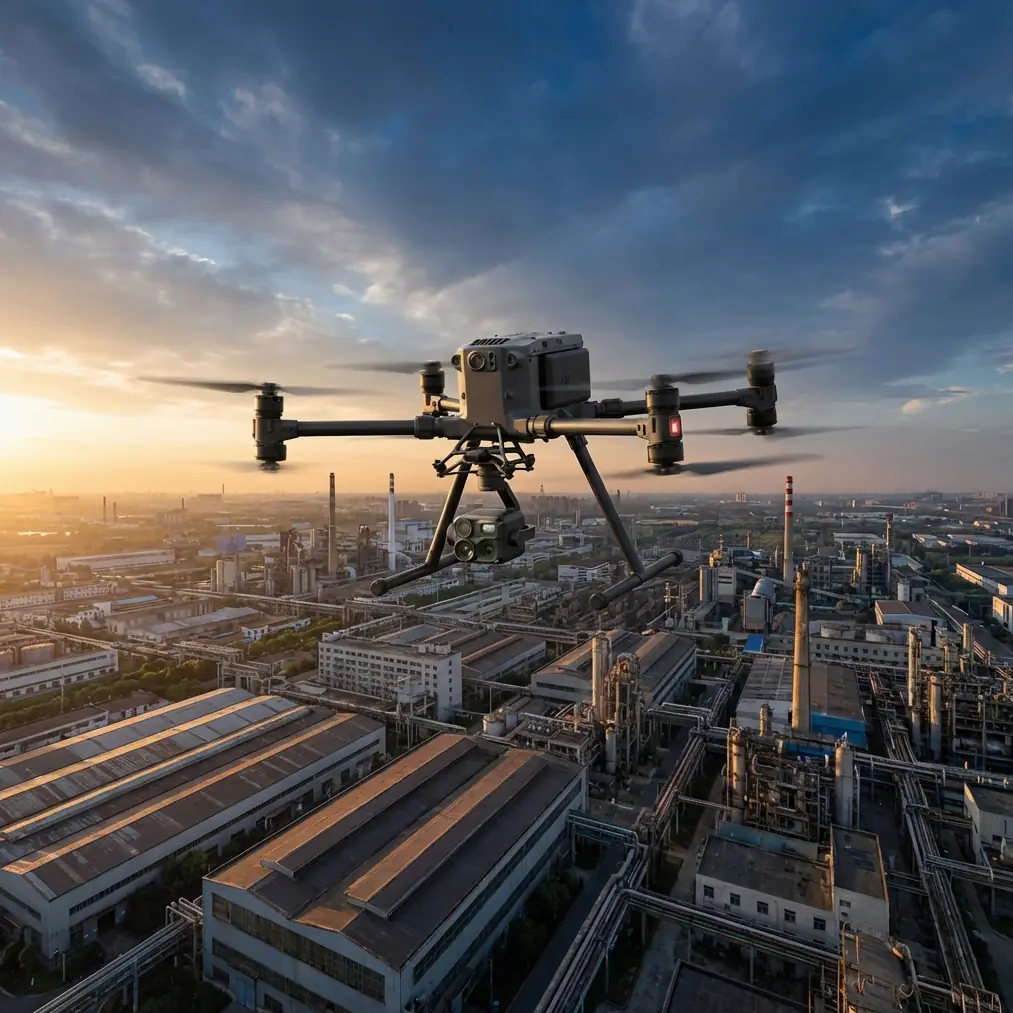
How I’d Set Up the Matrice 4 for Dusty Highway Delivery and Corridor Work
META: Practical Matrice 4 setup advice for dusty highway operations, covering thermal signature checks, photogrammetry workflow, GCP strategy, O3 transmission, AES-256 security, hot-swap batteries, and BVLOS planning.
By Dr. Lisa Wang, Specialist
Highway work looks simple from a distance. Long linear corridors, repeatable flight paths, broad visibility. Then you get on site and reality shows up: suspended dust, heat shimmer off asphalt, moving contractors, inconsistent signal conditions near overpasses, and relentless pressure to keep data collection moving without stopping the job.
That is where the Matrice 4 becomes interesting.
Not because it is “advanced” in the vague marketing sense. Because in dusty corridor operations, the value of a drone is measured by whether it can keep image quality stable, maintain a dependable link, and support a workflow that does not collapse the moment conditions become less than ideal. For highway delivery, survey support, progress monitoring, and inspection along active road networks, those details decide whether the aircraft is merely capable or genuinely useful.
This article is a practical way to think about deploying a Matrice 4 in dust-heavy highway environments, especially when the mission combines photogrammetry, thermal review, and long linear coverage.
Start with the mission profile, not the aircraft spec sheet
The first mistake many teams make is choosing settings based on what sounds impressive rather than what the corridor actually demands.
A dusty highway mission usually falls into one of four civilian categories:
- Progress documentation for construction or resurfacing
- Photogrammetry for terrain, stockpile, shoulder, and lane-edge modeling
- Thermal signature review for surface anomalies, drainage issues, or equipment checks
- Linear asset inspection across bridges, barriers, lighting, signs, culverts, and adjacent utility interfaces
The Matrice 4 matters here because it can support a mixed workflow instead of forcing a single-purpose flight plan. That sounds minor until you are trying to avoid launching separate aircraft for visual mapping, thermal follow-up, and detailed spot inspection. Consolidation saves time, but more importantly, it reduces site disruption along active highways where launch windows are often short.
Why the Matrice 4 stands out in dusty corridor work
In this type of operation, I care less about peak headline performance and more about resilience across an entire workday.
Two details are especially important.
First, O3 transmission. In highway environments, a strong transmission system is not just about distance. It is about maintaining stable command and video links around terrain variation, roadside structures, traffic signage, and changing electromagnetic conditions. Dust itself is only one part of the visibility challenge. Heat shimmer and long, low-angle visual perspectives can make aircraft orientation harder for pilots and observers. A robust O3 link supports safer and more consistent corridor flying because you are not fighting intermittent feed quality while trying to confirm image overlap or inspect a point feature.
Second, hot-swap batteries. On a dusty project, landing to shut everything down between flights slows the mission and lets dirt, crew congestion, and schedule pressure pile up around the aircraft. Hot-swapping reduces dead time. Operationally, that means you can keep your mapping cadence tight, maintain continuity in changing light conditions, and push through long road segments without rebuilding the entire setup every time you replace power. Compared with competitors that require a fuller restart cycle or create more friction between sorties, this is one of those features that looks small in a brochure and feels huge on a live corridor job.
Those two features together often have more real-world value than a marginal sensor advantage on paper.
A practical pre-flight method for dusty highways
If I were preparing a Matrice 4 for highway delivery and corridor data capture, I would use a pre-flight sequence built around contamination control, link reliability, and repeatability.
1. Define the dust profile before route planning
Not all highway dust behaves the same way.
Fresh grading near shoulders produces coarse suspended particles close to the surface. Milling and resurfacing create intermittent bursts. Dry median work often causes moving veils of fine dust that can drift directly across your image path. This matters because your flight altitude, camera angle, and speed should respond to the actual contamination layer, not an abstract “dusty site” label.
For photogrammetry, flying too low through suspended dust can reduce surface clarity and degrade tie-point consistency. Flying a bit higher may improve usable image sets even if your nominal ground sampling distance changes slightly. That tradeoff is usually worth it if it prevents a failed reconstruction.
2. Secure your data pipeline from the start
Highway projects often involve shared stakeholders: civil contractors, survey teams, engineering consultants, and infrastructure owners. If your operations involve sensitive design progress, staging plans, or georeferenced infrastructure imagery, transmission and data protection matter.
That is why AES-256 is operationally significant, not decorative. Strong encryption helps protect command, control, and data flows in commercial environments where project confidentiality matters. On public-facing jobs, crews tend to think about safety vests, cones, and traffic management. They think less about whether imagery and flight data are secure. They should think about it. If your drone is documenting a major corridor build, encrypted systems help reduce unnecessary exposure of project information.
3. Build launch and recovery around dust avoidance
In heavy dust, the cleanest flight plan can still be compromised by a poor takeoff area. I prefer a launch point offset from active vehicle movement and, if possible, slightly elevated relative to the immediate shoulder. Even a small separation from truck traffic can reduce rotor wash recirculating ground dust into the aircraft during takeoff and landing.
This is where discipline beats equipment. Do not let the convenience of roadside access push you into a contaminated launch zone.
Photogrammetry on highways: where teams lose accuracy
Photogrammetry along roads seems straightforward because the subject is linear and accessible. Yet highway datasets often fail for predictable reasons: insufficient side overlap at curves, inconsistent altitude over grade changes, dusty image softness, or weak ground control planning.
The Matrice 4 is well suited for this work if you respect those constraints.
Use GCPs where they actually improve the model
A lot of crews still scatter GCPs as if more automatically means better. On highways, control should reinforce geometry where the model is weakest: transitions, elevation shifts, intersections, ramps, bridge approaches, drainage structures, and places where repetitive pavement texture can confuse reconstruction.
If the corridor is long, do not just cluster GCPs near the launch point because it is convenient. That creates false confidence. Spread them strategically along the route and at geometry changes. The result is not just a prettier orthomosaic. It is a model that holds up when engineering teams use it to verify earthwork, edge conditions, or construction progress.
Watch the pavement, not just the software settings
Asphalt can be deceptive from the air. New surfaces may appear visually clean while still producing low-feature imagery under harsh light. Dust can either help by adding texture or hurt by softening contrast, depending on conditions. The operator needs to inspect sample frames early in the mission rather than assuming the grid will sort itself out later.
This is one of the places where Matrice 4 workflows can outshine less corridor-friendly setups. When transmission is stable and aircraft turnaround is fast, you can review, adapt, relaunch, and keep moving without losing half the day.
Thermal signature work: useful when handled carefully
The phrase thermal signature gets overused, but along highways it has legitimate value.
Thermal review can help identify uneven surface behavior, drainage-related moisture retention patterns, heat differences around repaired sections, or operational conditions in support equipment and roadside assets. In dusty environments, thermal can also provide a second layer of confirmation when visible imagery is compromised by surface haze or tonal uniformity.
That said, thermal on highways demands timing. Midday asphalt can overwhelm subtle differences. Early morning or late-day windows often produce more useful separation. The Matrice 4’s ability to support mixed mission types becomes especially helpful here. You can capture visual mapping under one set of conditions and return for thermal validation when the temperature profile is more informative.
Compared with some competitor platforms that force more fragmented workflows or slower field transitions, that flexibility is where this model earns its keep.
O3 transmission and BVLOS planning in long road corridors
Let’s address a term that attracts attention: BVLOS.
For civilian corridor operations, BVLOS planning is about methodical route design, risk controls, airspace compliance, and communication discipline. It is not simply flying farther because the aircraft can. The reason O3 transmission matters in this context is that long highway routes often include visual monotony, variable roadside clutter, and stretches where maintaining consistent situational awareness becomes harder than the map suggests.
A dependable link helps the crew make better decisions about continuity, interruption points, and recovery options. It also improves confidence when validating live framing, overlap quality, or inspection detail along extended segments.
The aircraft alone does not create a BVLOS-capable operation. The system, permissions, crew design, and procedures do. But if the transmission layer is weak, the operation is weak. That is why O3 is not a bullet point to skim past.
How I would structure a real highway workday with the Matrice 4
Here is a field-tested pattern that suits dusty corridor jobs:
Morning block: mapping first
Begin with photogrammetry while light is stable and before heavy site movement lifts too much dust. Prioritize mainline capture, shoulders, drainage runs, and work zones with fresh grade changes.
Mid-shift block: detailed visual inspection
Use the next window for closer review of bridges, culverts, barriers, stockpiles, signage, and staging areas. By this point, you already know where the mapping data is strong and where you need supplemental detail.
Late block: thermal follow-up
If thermal conditions are favorable, revisit selected anomalies rather than trying to force a full-corridor thermal mission. Target known trouble spots: moisture signatures, repaired patches, suspect drainage paths, or equipment compounds.
Battery discipline throughout
This is where hot-swap batteries change the rhythm of the day. Shorter interruptions help preserve consistent capture conditions, especially when sun angle and dust density are changing. If you have worked with aircraft that force a heavier restart interruption, you feel the difference immediately.
Where competitors usually fall behind
In highway operations, drones rarely fail because they lack one dazzling feature. They fail because the workflow gets sticky.
Maybe the transmission confidence drops when the route bends around structures. Maybe battery changes interrupt momentum enough that environmental conditions drift before the next leg. Maybe data handling feels disconnected from the needs of engineering and construction stakeholders.
The Matrice 4 excels when the mission requires continuity. Not just airborne capability, but operational flow. That is the distinction that matters in corridor work.
A competing platform may match a camera spec or quote strong range figures. But if it makes teams slower to adapt, slower to relaunch, or less confident in the live link, it becomes less effective on dusty highway assignments where every delay compounds.
One overlooked advantage: fewer fragmented crews
Because the Matrice 4 can support photogrammetry, thermal review, and detailed inspection within a unified field framework, you can reduce crew fragmentation. Instead of sending separate teams or stacking incompatible workflows, one coordinated operation can feed survey, engineering, and construction stakeholders from the same mission structure.
That saves more than time. It improves consistency in how locations are documented and interpreted.
If your team is planning a corridor workflow and wants a practical second opinion on setup, link planning, or battery rotation strategy, you can message a Matrice 4 specialist here.
Final field advice
If you are delivering highway data in dust-heavy conditions, do not think of the Matrice 4 as just a drone with a strong payload stack. Think of it as a corridor operations tool.
Use GCPs intentionally instead of decoratively. Treat AES-256 as part of project governance, not a side note. Lean on O3 transmission because stable links are central to long-route reliability. Build your day around hot-swap batteries so field conditions do not outrun your capture plan. And when thermal matters, schedule it around the surface behavior you actually need to see.
That is how you get better outputs from the same aircraft. Not by chasing abstract performance claims, but by aligning the platform to the realities of dusty highway work.
Ready for your own Matrice 4? Contact our team for expert consultation.