
Matrice 4 for Urban Highway Delivery: A Technical Review
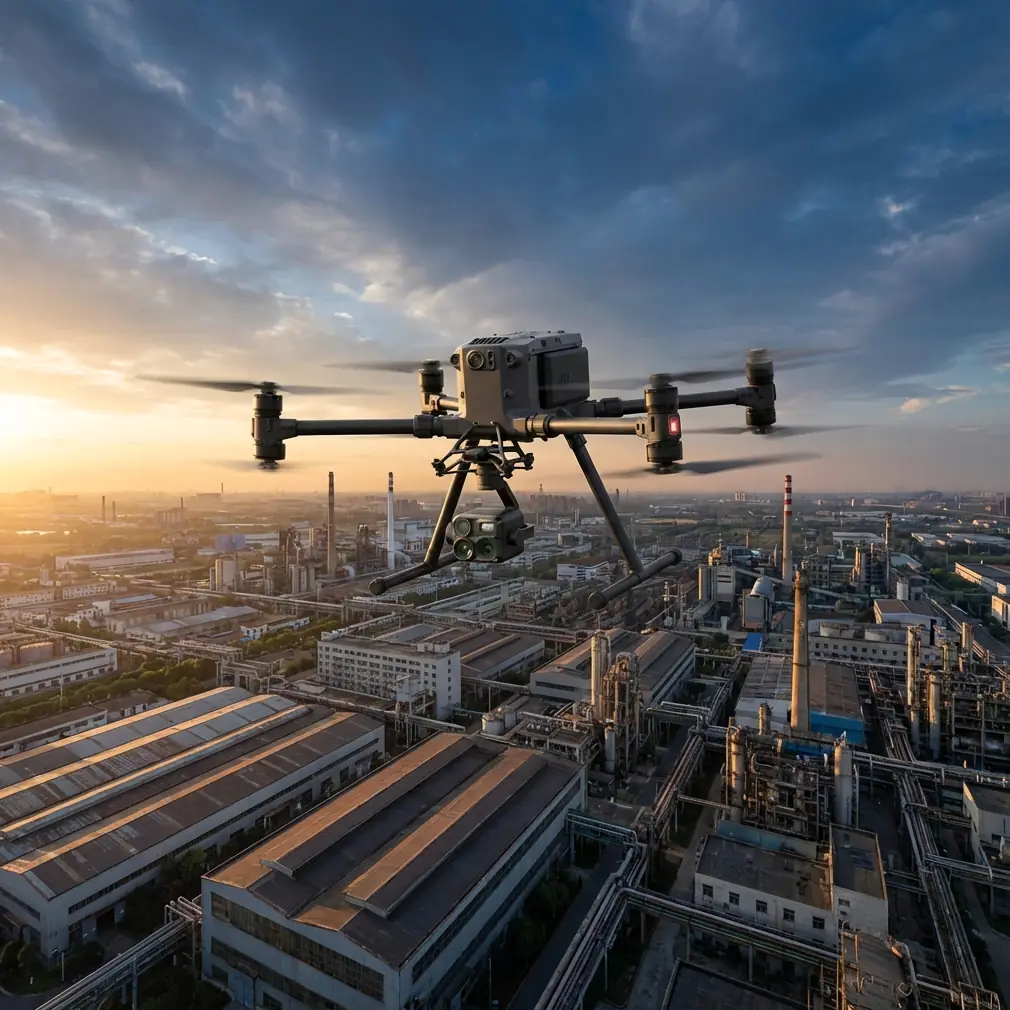
Matrice 4 for Urban Highway Delivery: A Technical Review from the Field
META: Expert technical review of the DJI Matrice 4 for urban highway operations, covering thermal imaging, photogrammetry, O3 transmission, AES-256 security, hot-swap battery workflow, GCP strategy, and BVLOS planning.
Urban highway work exposes every weakness in a drone system.
You are dealing with long corridors, layered airspace, RF noise, heat shimmer off asphalt, tight staging areas under overpasses, and a mission profile that often asks one aircraft to do three jobs in the same shift: inspect structures, document construction progress, and generate mapping data that can survive engineering review. That is where the Matrice 4 becomes interesting. Not because it is simply “new,” but because it sits at the intersection of payload flexibility, secure transmission, and field workflow efficiency in a way that matches how highway teams actually operate.
I have spent enough time around road projects to know that the aircraft itself is only half the story. The other half is whether the system helps a crew move from setup to capture to deliverable without burning daylight or introducing avoidable risk. For an urban highway environment, that means stable communications, disciplined battery handling, dependable imaging, and data quality that holds up when someone in the office starts measuring from it.
Why the Matrice 4 Fits Highway Corridors Better Than General-Purpose Workflows
Highway projects are not like compact site surveys. They stretch. A lot. Even when the active task is local—say, a bridge deck, retaining wall, lane expansion, or drainage tie-in—the context matters. You may need oblique imagery for condition documentation, nadir data for photogrammetry, and thermal views to detect moisture intrusion, delamination patterns, or abnormal heat signatures around electrical or mechanical roadside assets.
That is why a platform with support for both visible and thermal signature capture has real operational value. Thermal is not just a specialty add-on for dramatic images. On highways, it can help teams identify anomalies that standard RGB imagery can miss, especially during maintenance planning, drainage assessment, or infrastructure inspection where surface appearance alone is misleading. A concrete panel may look visually fine and still behave differently thermally. That difference can direct a closer look before crews commit labor and traffic management resources.
The second reason the Matrice 4 matters in this setting is transmission resilience. Urban corridors are crowded with interference sources: vehicles, telecom infrastructure, buildings, utility systems, and reflective surfaces that make signal behavior less predictable than open-field operations. A platform built around O3 transmission is operating from a more serious communications baseline than older-generation field habits. For highway teams, that matters less as a spec-sheet brag and more as a planning advantage. If the video downlink and control link remain stable in a cluttered RF environment, the pilot can make better decisions, the visual observer has cleaner situational awareness, and the captured data is more likely to reflect the intended flight path instead of compensation for signal anxiety.
O3 Transmission and AES-256 Are More Than Technical Footnotes
Many project stakeholders still underestimate how much transmission reliability affects deliverable quality.
On a highway mapping or inspection mission, shaky confidence in the link changes pilot behavior. Crews cut distances short. They compress mission extents. They oversimplify capture angles. They repeat segments they should have completed cleanly the first time. The practical result is wasted battery cycles and uneven data coverage.
O3 transmission helps reduce that friction. In an urban highway context, a strong link translates into smoother execution along linear assets and more controlled camera work around bridges, interchanges, sound barriers, and gantries. It also supports a more realistic path toward BVLOS-oriented planning where regulations and operating approvals allow it. Even when flights remain within visual line of sight, corridor jobs benefit from a system architecture that was not designed only for short-range, stop-and-look missions.
AES-256 is equally relevant, though for a different reason. Road and transport projects often involve sensitive construction documentation, contractor coordination records, asset-condition imagery, and georeferenced models that should not casually leak. Encrypted data transmission is not just an IT talking point. It is part of professional risk management. When you are documenting strategic infrastructure in a dense urban setting, secure handling of image and telemetry workflows becomes part of the credibility of the drone team itself.
Photogrammetry on Highways: Where Good Planning Beats Good Marketing
Photogrammetry along highways sounds straightforward until you try to produce engineering-useful outputs from a corridor with variable elevation, repetitive textures, moving traffic, and reflective surfaces.
The Matrice 4 becomes effective here when paired with disciplined mission design rather than treated like an automatic data factory. The main challenge in road work is consistency. Pavement, barriers, lane markings, drainage structures, embankments, signage, and overhead elements all create different visual conditions across the same mission. If you are capturing for volumetrics, progress tracking, or as-built documentation, the model quality depends as much on overlap, camera angle, and control strategy as it does on sensor quality.
This is where GCP planning still earns its place. Yes, modern workflows can do a lot with strong onboard positioning and well-processed imagery. But on urban highway projects, Ground Control Points remain one of the clearest ways to tighten confidence in outputs that will later be checked against survey records or engineering tolerances. A Matrice 4 corridor mission without GCP discipline can still produce attractive maps. Attractive is not the same as defensible.
For long linear jobs, I usually advise crews to think in segments rather than “one giant mission.” Break the route into operational blocks shaped by battery reserves, traffic conditions, launch/recovery constraints, and line-of-sight realities. Then place GCPs so each block has meaningful positional anchors, especially near changes in elevation, structures, and tie-in points. That approach makes processing cleaner and troubleshooting far less painful if one segment needs rework.
Thermal Signature Work Along the Highway Edge
Thermal use on highways becomes most valuable when operators understand timing.
Midday summer flights over asphalt can flood a scene with heat and flatten useful contrast. Early morning or late-day windows often reveal more meaningful thermal patterns, depending on the inspection target. For example, if you are looking at moisture intrusion, patch failure patterns, drainage issues, or abnormal heat around roadside systems, thermal contrast can shift dramatically across just a few hours. The aircraft may be ready all day; the data quality is not.
That is why the Matrice 4’s thermal capability should be treated as part of a planned inspection method, not a checkbox feature. Good thermal work asks: what thermal behavior are we trying to reveal, and when is that behavior visible? On road corridors, that question often matters more than total flight time.
Thermal signature data also works best when paired with conventional imagery in the same reporting workflow. A hot or cool anomaly with no visual context creates questions. Thermal plus RGB plus georeferenced position creates a usable maintenance note.
The Battery Management Tip I Wish More Highway Crews Used
Here is the field lesson that saves more missions than people realize: do not wait for a battery problem to become obvious before changing your rhythm.
On urban highway jobs, crews often burn extra power hovering while coordinating with spotters, adjusting for traffic disruptions, or waiting for a safe window near structures. That means the battery profile on paper and the battery profile in the field are often not the same. Add wind tunneling through overpasses or heat radiating from pavement, and your margin shrinks faster than expected.
If you are using hot-swap batteries, treat them as a workflow tool, not just a convenience. Build your mission blocks so each landing happens before the pack enters the “I can probably finish this” zone. That mindset keeps pack temperatures more manageable, reduces rushed decisions, and allows immediate relaunch while preserving mission continuity. The real gain is not only uptime. It is data consistency. A planned hot-swap turnover means the team resumes with the same capture logic instead of improvising because the battery is suddenly lower than expected.
My own rule on corridor jobs is simple: if the next segment includes a complex turn, bridge pass, or extra hover time for detail capture, I swap first. Highway missions punish optimism. Conservative battery discipline does the opposite. It protects both the aircraft and the deliverable.
BVLOS Thinking Without Pretending Every Job Is BVLOS Today
The Matrice 4 also deserves attention because highway operations naturally push teams toward BVLOS-style mission logic. That does not mean crews should blur regulatory boundaries. It means they should build procedures that are compatible with corridor-scale operations.
Linear infrastructure work benefits from predictable routes, clear handoff planning, reliable link performance, battery turnover discipline, and geospatially organized capture blocks. Those are the same habits that matter in more advanced operational frameworks. Even if your current project remains firmly within visual line of sight, selecting a platform with O3 transmission, secure AES-256 communications, and a workflow-friendly battery system helps future-proof the team’s operating standard.
Highway clients notice that maturity. They may not ask whether the aircraft supports a corridor-friendly architecture in those words, but they do notice whether your team can repeatedly cover distance, protect data, and deliver consistent outputs under urban operating pressure.
Data Delivery: The Aircraft Is Only Valuable if the Output Lands Cleanly
A Matrice 4 mission on a highway project usually has at least two audiences.
The first is the field team, which needs immediate visual confirmation and fast interpretation. The second is the office team—engineers, planners, project managers, and asset owners—who need structured outputs they can use without becoming drone specialists. That means the operator’s job is not finished when the aircraft lands. It ends when the imagery, thermal findings, and photogrammetric products are organized into something another department can trust.
For progress documentation, that may mean repeatable viewpoints and consistent map extents over time. For inspection, it may mean annotated thermal and RGB pairings tied to exact locations. For construction support, it may mean a stitched orthomosaic aligned with GCPs and supported by enough overlap to avoid reconstruction gaps around retaining walls, ramps, and bridge geometry.
If your team is building out a highway workflow and wants to compare operational setups or mission planning approaches, I usually recommend sharing project parameters directly through this field contact channel before locking in your capture plan.
Where the Matrice 4 Stands Out in Real Highway Use
The strongest case for the Matrice 4 is not that it does one thing better in isolation. It is that several details line up with the real demands of urban highway delivery:
- Thermal signature capability gives inspection teams another layer of evidence when visual imagery is not enough.
- Photogrammetry support with proper GCP workflow makes it viable for mapping, progress tracking, and documentation that needs positional confidence.
- O3 transmission improves operational confidence in interference-heavy city corridors.
- AES-256 encryption supports professional handling of sensitive infrastructure data.
- Hot-swap batteries help maintain continuity on segmented corridor missions.
- BVLOS-oriented planning logic fits the way road networks are actually surveyed and inspected, even when flights are conducted within current operational limits.
That combination matters because urban highway work is rarely a single-purpose exercise. One week the drone is documenting pavement rehabilitation. The next week it is checking drainage patterns, creating an orthomosaic for contractor coordination, and gathering thermal imagery around suspect problem areas. A platform that can move across those tasks without forcing a complete workflow reset is worth attention.
The Matrice 4, viewed through that lens, is less about headline features and more about reduced compromise. Fewer compromises in data security. Fewer compromises in corridor coverage. Fewer compromises in capture continuity. On road projects, that is what separates interesting hardware from useful hardware.
Ready for your own Matrice 4? Contact our team for expert consultation.