
Matrice 4 for Urban Power-Line Delivery: The Maintenance
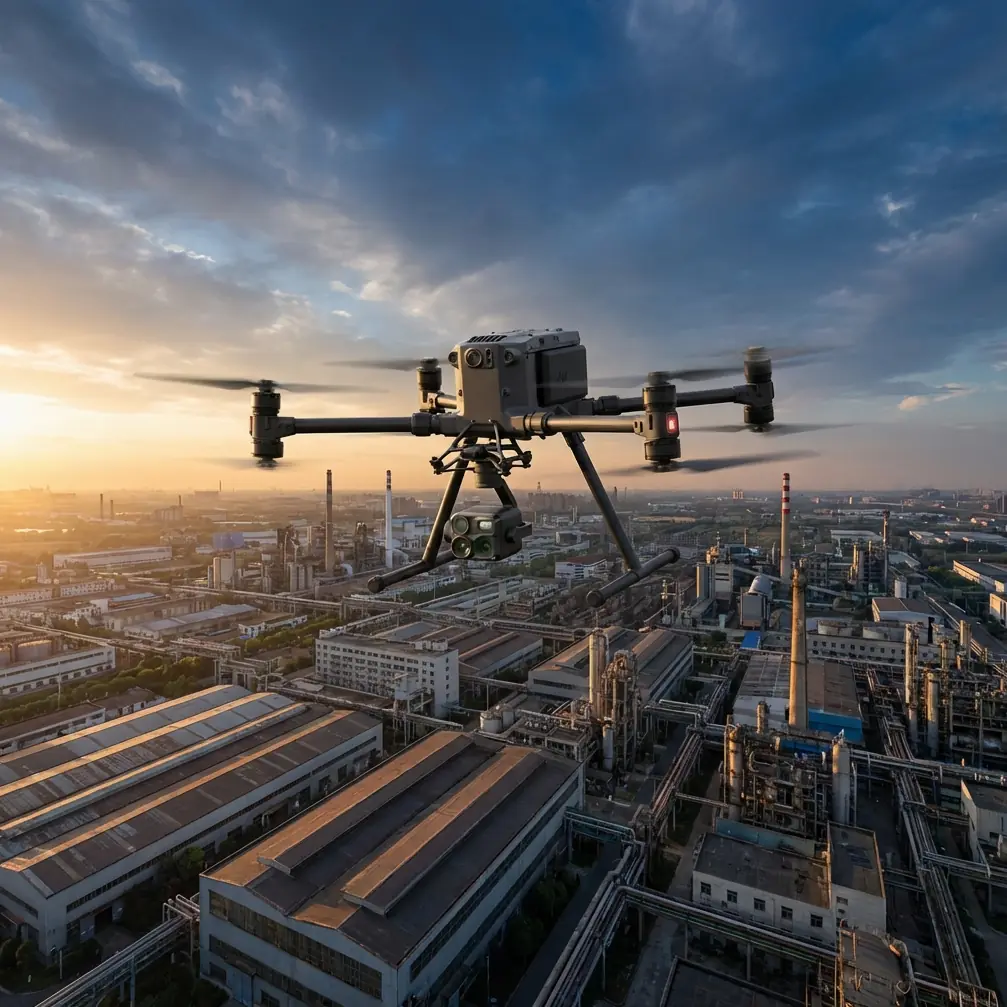
Matrice 4 for Urban Power-Line Delivery: The Maintenance and Range Habits That Actually Protect the Mission
META: Practical Matrice 4 operating advice for urban power-line delivery, with field-tested maintenance discipline, antenna positioning tips, inspection logic, and mission-planning habits that reduce downtime.
Urban power-line work exposes every weakness in a drone program. Not just in the aircraft, but in the team around it.
The usual conversation about the Matrice 4 tends to orbit around sensors, range, autonomy, and data capture. Those matter. Yet for a power-line delivery workflow in a dense city environment, the aircraft’s real performance is often decided before takeoff and after landing. That is where mission continuity is won or lost.
A Chinese maintenance article I keep coming back to makes a blunt point: “three parts use, seven parts maintenance.” It sounds old-school, but it maps surprisingly well to modern enterprise UAV operations. The piece was written from the perspective of an operator with ten years of field experience, and its lesson is painfully familiar: teams often assume design, assembly, tuning, and flying are the whole job. They are not. Repeated mission failure usually starts with poor post-flight discipline.
For a Matrice 4 team tasked with delivering materials or tools along urban power corridors, that insight is not abstract. It is operational.
Why urban power-line delivery punishes sloppy habits
A city power-line route is full of signal reflections, visual clutter, rooftop turbulence, and constrained launch zones. Add the pressure of time-sensitive delivery, repeated sorties, and handoffs between team members, and small procedural mistakes start compounding fast.
The maintenance source highlights two recurring failures that matter directly here:
- parts and tools were not returned to their proper place after flight, causing missing items on the next sortie
- the aircraft was not thoroughly inspected after flight, so damage from use went unnoticed
That sounds basic, but basic failures are exactly what stop commercial operations.
On an urban utility mission, a missing prop set, a misplaced payload fastener, or a forgotten tool is not just an inconvenience. It can stall a route window, break your handoff schedule, and create unnecessary pressure to rush the next launch. In drone teams, rushed launches are often where avoidable incidents begin.
The second failure is even more serious. The source notes that drones rarely operate from ideal runway conditions, and that impact-related damage from takeoff and landing is common, sometimes subtle, and not always visible externally. Translate that into a Matrice 4 deployment from alley access points, rooftop staging areas, gravel service lots, or temporary curbside launch zones, and the warning becomes sharper. Even when the aircraft lands “normally,” repeated vibration, contact shock, and handling wear can accumulate around landing gear, payload mounts, connectors, and structural attachment points.
If your team is flying multiple urban delivery segments per shift, post-flight inspection is not paperwork. It is the barrier between a reliable fleet and surprise downtime.
The Matrice 4 mindset: treat every sortie as part of a chain
For power-line delivery, the Matrice 4 should be managed less like a standalone aircraft and more like a chain of linked sorties. That changes how you prepare.
A fragmented team workflow creates the exact problem described in the source document: too many people touch the aircraft, tools get used without records, storage locations are inconsistent, and over time “missing one small thing” becomes normal. The article calls this a common early-stage problem for drone teams. It is still common now, even in better-equipped operations.
For Matrice 4 programs, I recommend three controls.
1. Fixed placement for every flight-critical item
No improvisation. Prop tools, batteries, payload accessories, spare fasteners, landing pads, checklists, and data media should each have a designated position in the case and in the staging area. If the same item sits in three different places depending on who packed last, you already have a process defect.
This matters more when using hot-swap batteries. Hot-swap capability helps keep the aircraft moving through repeated urban tasks, but faster turnarounds can hide sloppy handling. Speed is only useful if the pack sequence, temperature check, insertion confirmation, and logging routine are standardized.
2. Responsibility by environment, not just by person
One subtle but valuable idea from the source is accountability for each working environment. That is smarter than assigning vague collective responsibility. In urban utility operations, divide ownership by stage: vehicle staging, launch point setup, aircraft turnaround, payload verification, and data review. When every zone has a named owner, loose tools and unlogged changes are easier to catch.
3. Post-flight inspection before storage, not before the next mission
Many teams inspect only when preparing to fly again. That is too late. The maintenance article describes exactly why: damage caused during use remains hidden if no thorough inspection follows the flight. By the next deployment, you are already behind.
For the Matrice 4, that means checking prop condition, arm locks, payload attachment, lens cleanliness, landing contact points, battery terminals, and any cable or connector involved in delivery payload integration. If your mission also captures imagery for corridor documentation, add a quick sensor validation step. A delivery flight that also supports photogrammetry or thermal review is only valuable if the data remains trustworthy.
Antenna positioning: the simplest range improvement most crews underuse
You asked for practical antenna advice, so here it is plainly: in urban corridors, poor antenna orientation ruins more links than distance does.
If you are operating on O3 transmission, think less about “pointing at the drone” and more about preserving the strongest geometry between controller antennas and aircraft movement. The broadside of the antenna pattern usually performs better than aiming the antenna tips directly at the aircraft. In practice, that means keeping the flat faces oriented toward the expected flight path rather than spearing the skyline with the antenna ends.
In city power-line work, that advice matters because the drone often moves laterally along streets, alleys, or utility corridors while buildings create multipath reflections. If the pilot constantly reorients the controller late or inconsistently, the link margin can swing more than expected, especially near corners and elevation changes.
A few field habits help:
- stand where the first and last third of the route have the cleanest possible line of sight
- avoid placing yourself directly beside large metal utility structures, vehicles, or rooftop railings that can distort signal behavior
- when the aircraft turns down a corridor, rotate your body and controller as one unit instead of just tilting the antennas
- keep the controller at a steady chest-height position; erratic hand movement changes antenna geometry more than people realize
This is not about chasing headline range. It is about preserving stable control and video quality where urban obstacles make the link work hardest.
Delivery is only half the mission: use the same flight to gather better infrastructure intelligence
A Matrice 4 on a power-line delivery assignment can do more than move a small payload. If planned properly, it can also return operational context.
That may mean thermal signature review around hardware or connection points after delivery, especially when the route intersects equipment that already merits visual follow-up. It may mean corridor imagery to support asset documentation. In some workflows, the drone can contribute to photogrammetry outputs for access planning, vegetation context, or rooftop approach review.
This is where discipline in inspection and handling circles back into data quality. A scratched lens, loose mount, contaminated sensor window, or unnoticed structural knock from an earlier landing can degrade the value of everything collected afterward.
If your utility team uses GCP-backed mapping on selected projects, the Matrice 4 should not be treated as a separate “delivery-only” machine with lower procedural standards. Once a platform contributes to documentation, thermal review, or mapping, maintenance quality and chain-of-custody thinking need to match that role.
The hidden risk in repeated urban launches
The source material emphasizes that some structural damage is not easy to identify from the exterior. That point deserves more attention in drone operations than it usually gets.
In urban power-line delivery, repeated short-hop sorties often feel routine. The aircraft leaves, travels a relatively predictable route, arrives, returns, swaps batteries, and goes again. Familiarity makes crews less observant. But repeated handling can create cumulative wear in the exact places a quick glance won’t reveal well: internal fastening points, payload interface stress, battery seating surfaces, and structural connections.
The original maintenance writer specifically calls out engine, power supply, and structural connections as areas requiring focused monitoring in fixed-wing operations. For a modern multirotor like the Matrice 4, the equivalent mindset still holds. Power system health and structural interfaces deserve focused attention because they carry the repeated load of every mission cycle.
That is one reason I advise utility teams to create a “high-cycle” inspection tier. Do not wait for a generic weekly review. If the aircraft has completed a threshold number of urban delivery sorties in a day, trigger a deeper inspection that same shift.
Secure transmission matters more when flying above urban infrastructure
Urban utility flights are data flights whether you intend them to be or not. Live video, route details, asset imagery, and operational timing all have value. If your Matrice 4 workflow uses AES-256-secured transmission, treat that as an operational safeguard, not a technical bullet point.
Why? Because power-line delivery often takes place around commercial properties, rooftops, service corridors, and critical utility pathways. Even when the mission is routine, the information layer around it can be sensitive from a business and infrastructure standpoint. Secure transmission helps reduce exposure, but it does not replace good process. Device control, media handling, and mission authorization still matter.
A practical preflight and post-flight loop for Matrice 4 urban delivery
If I had to compress all of this into one repeatable habit, it would be this loop:
Before flight:
- verify every required part is physically present in its assigned location
- confirm payload attachment and battery seating
- inspect props, landing points, and connectors
- plan pilot position based on corridor line of sight and antenna geometry
- decide in advance where signal quality is most likely to drop
After flight:
- return all tools and components immediately
- inspect the aircraft before it goes back into storage
- record even minor handling strikes or rough landings
- review whether antenna positioning matched the route realities
- escalate any recurring anomaly before the next launch
That sequence addresses both major lessons from the maintenance reference: missing parts caused by poor organization, and hidden damage caused by skipping inspection.
If your route includes future BVLOS expansion, maintenance discipline becomes non-negotiable
Many utility operators are exploring BVLOS frameworks for corridor work. Whether your current operation is fully there yet or still building toward it, this changes the threshold for acceptable sloppiness.
A crew that occasionally misplaces components or delays inspections is not just inefficient. It is building weak evidence for operational maturity. If you want a Matrice 4 program that can support more advanced utility workflows over time, maintenance traceability has to look deliberate from day one.
That old phrase from the Chinese article remains surprisingly accurate: use is only a fraction of the story. The larger part is care.
And for urban power-line delivery, care is not sentimental. It is structural. It protects link quality, sortie continuity, data reliability, and team confidence.
If you are refining a Matrice 4 workflow and want a second set of eyes on route planning, payload setup, or controller positioning, you can message a field specialist here.
Ready for your own Matrice 4? Contact our team for expert consultation.