
Matrice 4 for High-Altitude Solar Farm Delivery
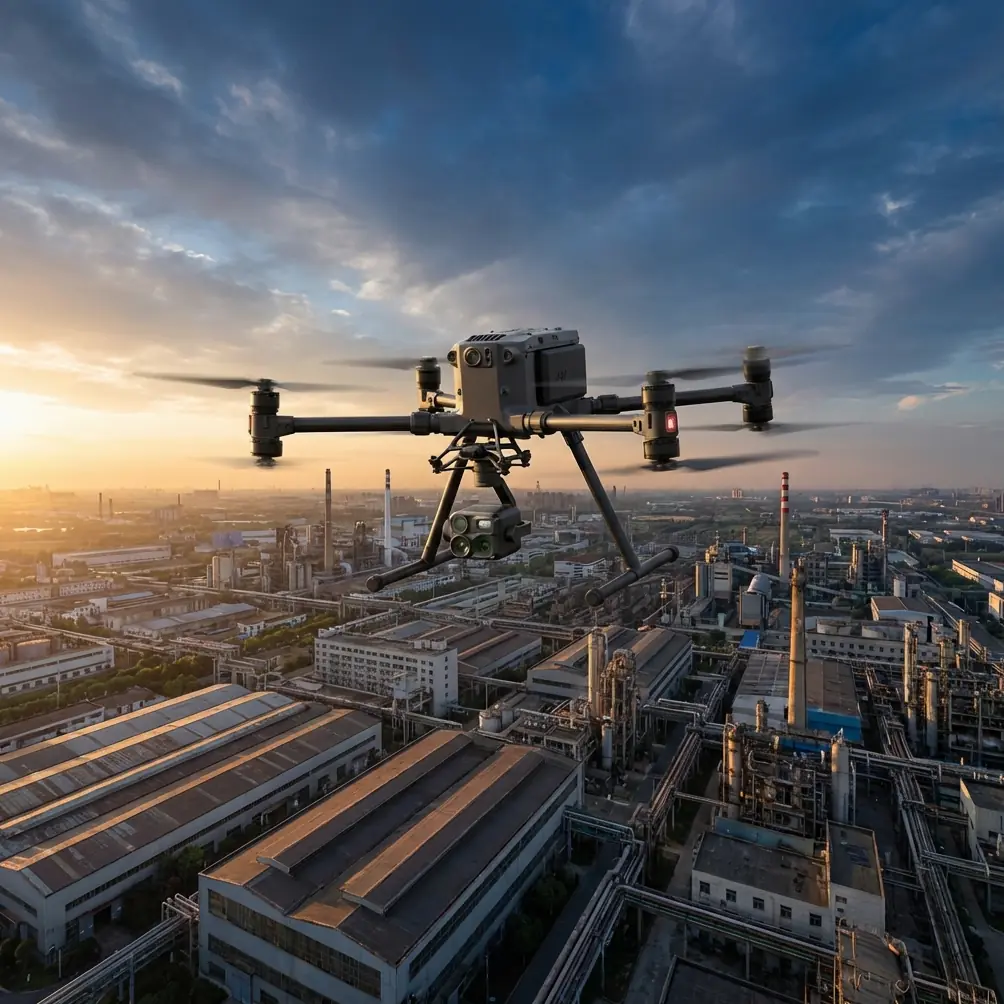
Matrice 4 for High-Altitude Solar Farm Delivery: What Actually Matters in the Field
META: Expert guide to using the Matrice 4 for high-altitude solar farm delivery, covering thermal signature, photogrammetry, O3 transmission, battery strategy, AES-256 security, and BVLOS-ready workflows.
High-altitude solar work has a way of exposing weak assumptions. Equipment that feels perfectly capable at lower elevations can become fussy, inefficient, or operationally fragile once thinner air, harsher temperature swings, and long logistics chains enter the picture. That is exactly why the Matrice 4 conversation matters in this niche. Not as a spec-sheet exercise, but as a field platform question: can it support the way real teams deliver, map, inspect, and document remote solar assets where every sortie has to count?
For operators supporting solar farms in mountain regions or elevated plateaus, the challenge is not simply getting a drone airborne. The real problem is sustaining a repeatable workflow across multiple mission types. You may start the morning building a photogrammetry dataset for progress tracking, shift into thermal signature analysis by midday as panel heating becomes more visible, and finish with close visual inspection around combiner boxes, string runs, or perimeter assets. The aircraft has to transition between those jobs without turning every battery change, data handoff, or signal issue into a bottleneck.
That is where the Matrice 4 becomes interesting.
The platform’s practical value for high-altitude solar delivery is not one isolated feature. It is the way several capabilities support each other: stable data collection for mapping, secure links for sensitive infrastructure work, robust transmission for wide site coverage, and battery handling that respects the reality of cold mornings and long travel distances. If you are planning a solar-farm workflow around the Matrice 4, those are the variables that decide whether your operation stays efficient or slowly bleeds time all day.
The real problem at altitude: efficiency collapses first
Most teams entering elevated solar environments expect weather to be the main enemy. Sometimes it is. But in my experience, the first thing to deteriorate is operational rhythm.
At altitude, batteries can feel different from one launch window to the next. Wind over ridgelines changes how you pace transects. Distances that seem manageable on a site map become more meaningful once you factor in signal quality, terrain masking, and the need to preserve enough reserve power for a conservative return profile. Then there is the inspection side. Solar sites are data-heavy by nature. If your drone workflow produces inconsistent overlap, weak thermal context, or fragmented logs, the post-flight burden can erase the speed advantage you thought you gained.
A Matrice 4 deployment only makes sense here if it helps solve those compounding inefficiencies.
For solar delivery teams, that starts with understanding that photogrammetry and thermal work do not behave the same way at high altitude. Photogrammetry rewards disciplined route design, overlap control, and reliable geospatial references. Thermal inspection, by contrast, depends heavily on environmental timing, angle discipline, and how surface heating evolves across the day. If one platform is expected to support both, it needs dependable positioning, stable transmission, and predictable power management. Otherwise, crews begin making compromises they should not make: flying too late, rushing overlap, skipping reflights, or accepting thermal captures that look usable in the field but fail under analysis.
Why photogrammetry discipline matters more on solar farms
Solar farms are visually repetitive. That seems simple until you process the data.
Long rows of nearly identical panels can create alignment challenges if your flight planning is loose or your ground control strategy is inconsistent. This is why GCP usage is still worth discussing even with modern positioning improvements. On a high-altitude site, where slope, glare, and row uniformity can all complicate reconstruction, a well-laid GCP scheme gives your map products something trustworthy to hold onto. It is not glamorous, but it protects deliverables.
With the Matrice 4, the opportunity is to build a repeatable capture workflow rather than relying on pilot intuition each day. That matters for EPC contractors, O&M teams, and asset owners who need comparable datasets across months, not one heroic mission that looked great once.
Here is the operational significance: if your Matrice 4 missions are designed around clean overlap and deliberate GCP placement, you reduce the chance of rework in terrain where rework is expensive. Every additional launch at a remote, elevated site means more crew time, more battery cycles, and more exposure to changing wind and temperature conditions. A platform that supports consistent data capture is not just improving map quality. It is protecting the economics of the field day.
Thermal signature work is where site timing separates pros from spectators
Solar inspection teams often talk about thermal as if it were a switch you can turn on at any time. It is not.
Panel-level anomalies become meaningful only when the thermal signature is captured in the right environmental window. At high altitude, that window can shift faster than expected because morning cold, strong irradiance, and wind exposure interact differently than they do at lower-elevation sites. The Matrice 4 is useful here when operators treat thermal capture as a timed diagnostic task, not an add-on to a mapping flight.
The difference matters. A weakly planned thermal sortie may still generate colorful imagery, but that is not the same as diagnostic value. If one string shows elevated heating, you need the confidence that the anomaly reflects actual panel behavior rather than changing ambient conditions, inconsistent angle, or a rushed flight profile. That requires disciplined sequencing: often mapping first when light and wind are favorable for geometry, then thermal when panel loading and surface conditions better expose faults.
For high-altitude solar delivery, this sequencing can save an entire site visit. Done correctly, the Matrice 4 can support a workflow where photogrammetry documents layout, grading progress, access roads, and installation status, while thermal passes identify hotspots, underperforming modules, and suspect electrical zones. That combination gives construction and operations teams one coherent site story instead of disconnected drone outputs.
O3 transmission is not just about distance
A lot of operators reduce transmission discussions to headline range. That misses the point for solar farms in difficult terrain.
What matters on a high-altitude site is link reliability when the landscape starts interfering with line-of-sight assumptions. Long rows, elevation changes, service roads cut into slopes, and peripheral infrastructure can create subtle signal complications even when the aircraft seems visually unobstructed. This is where O3 transmission earns its keep. The operational benefit is less about bragging rights and more about maintaining command confidence and clean video feedback over a broad work envelope.
If your Matrice 4 deployment depends on inspecting large solar blocks without repeatedly relocating the ground crew, stable transmission can preserve tempo. The crew spends less time repositioning vehicles and less time aborting flights because the edge of the site became operationally awkward. On remote jobs, that efficiency compounds quickly.
And for teams working toward more advanced operational frameworks, including BVLOS-adjacent planning or regulated beyond-visual-line-of-sight operations where permitted, transmission reliability becomes part of the risk architecture. It does not replace compliance, observers, or procedural controls. But it does shape how confidently the aircraft can be integrated into a wider operational plan.
Security matters more than many solar teams admit
Critical energy infrastructure is not a casual data environment. Yet drone conversations still too often treat cybersecurity as a back-office concern.
It should be part of mission design.
AES-256 matters here because solar farm operations generate infrastructure imagery, asset-condition records, and site-progress intelligence that may be sensitive for owners, utilities, and contractors. When you are capturing detailed thermal and visual data over generation assets, secure transmission and protected handling are not abstract technical preferences. They are part of responsible delivery.
For Matrice 4 operators, the operational significance is straightforward: if your workflow includes secure data practices from aircraft link to storage and reporting, you reduce friction with enterprise stakeholders who increasingly ask hard questions about how inspection data is transmitted, stored, and shared. That is particularly relevant for large solar portfolios, where drone outputs may flow into asset-management systems, warranty workflows, or insurer documentation.
A drone platform used around energy assets should never be evaluated on image quality alone. Security posture belongs in the same conversation.
My field battery tip: do not chase “full” performance on a cold morning
This is the mistake I see most often on elevated sites.
A crew arrives before sunrise, the batteries show healthy charge status, and everyone wants to launch as soon as first light allows. On paper, that sounds efficient. In reality, cold-soaked batteries at altitude can punish impatience. Voltage behavior is less forgiving, and the first leg of the mission can give you a misleading sense of available endurance.
My rule with hot-swap batteries is simple: use the first cycle of the day to stabilize your operation, not to maximize route length.
That means keeping packs temperature-managed before launch, avoiding the temptation to send the aircraft on your longest corridor mission immediately, and using an initial shorter sortie to confirm how the batteries are behaving in actual site conditions. Once the system is thermally settled and you have real-world consumption data for that morning, then stretch into larger blocks.
Hot-swap capability is valuable precisely because it supports this kind of disciplined pacing. You do not need to force every launch to be heroic. You can rotate efficiently, preserve aircraft uptime, and still protect battery health. On remote solar projects, that approach usually delivers more total useful data by day’s end than aggressive early flights that trigger caution returns or inconsistent reserve margins.
It also helps to group missions by power demand. If thermal inspection involves lower-speed, more deliberate work near key assets, that is often a smarter use of earlier sorties than pushing broad-area mapping while batteries and ambient conditions are still settling. Later, once temperatures rise and your battery behavior is more predictable, you can run the heavier photogrammetry blocks with better confidence.
That one scheduling change has saved crews more time than many hardware upgrades ever do.
Building a Matrice 4 workflow that actually fits solar delivery
A strong high-altitude solar operation with the Matrice 4 usually follows a simple logic.
First, establish geospatial confidence. Use GCPs where the site complexity and deliverable requirements justify them, especially on repetitive panel layouts or uneven terrain. That protects your reconstruction and keeps engineering stakeholders from questioning output integrity later.
Second, separate mapping goals from diagnostic goals. A photogrammetry mission and a thermal inspection mission may happen on the same day, but they should not be planned as if they are the same job. Different altitude, speed, overlap logic, and timing windows apply.
Third, build around transmission reality rather than ideal conditions. O3 transmission supports wider coverage, but site terrain still deserves respect. Route planning should minimize unnecessary risk pockets and preserve a conservative return path.
Fourth, treat security as an operational requirement. AES-256 is not there to decorate a brochure. It supports work on infrastructure where data protection matters.
Finally, plan battery use like a mountain operator, not a flatland operator. Hot-swap batteries help maintain momentum, but only if crews use them to support thoughtful sortie sequencing rather than nonstop maximum-length flights.
If you are refining that workflow for your own solar projects, it often helps to compare notes with teams who have already dealt with altitude-driven battery behavior and mixed thermal-mapping schedules. I sometimes share quick field checklists through this operator WhatsApp thread because battery planning mistakes are easier to prevent than to diagnose after a wasted site day.
Why the Matrice 4 fits this niche
The Matrice 4 belongs in the high-altitude solar conversation because the mission set is mixed, the environment is unforgiving, and the stakeholders care about more than pretty images. They need accurate maps, interpretable thermal results, dependable links, secure data, and a battery strategy that survives real field conditions.
That combination is harder to deliver than many marketing pages suggest.
What makes the platform compelling is not that it magically removes the friction from mountain or plateau solar work. Nothing does. Its value is that it supports a disciplined operator who understands how photogrammetry, thermal signature analysis, O3 transmission, AES-256 security, hot-swap battery routines, and BVLOS-oriented planning fit together. When those elements are aligned, site delivery becomes smoother, reporting becomes stronger, and crews stop wasting energy on preventable inefficiencies.
For solar farms at altitude, that is the standard that matters.
Ready for your own Matrice 4? Contact our team for expert consultation.