
Matrice 4 for Remote Delivery Venues: What Coastal Wind
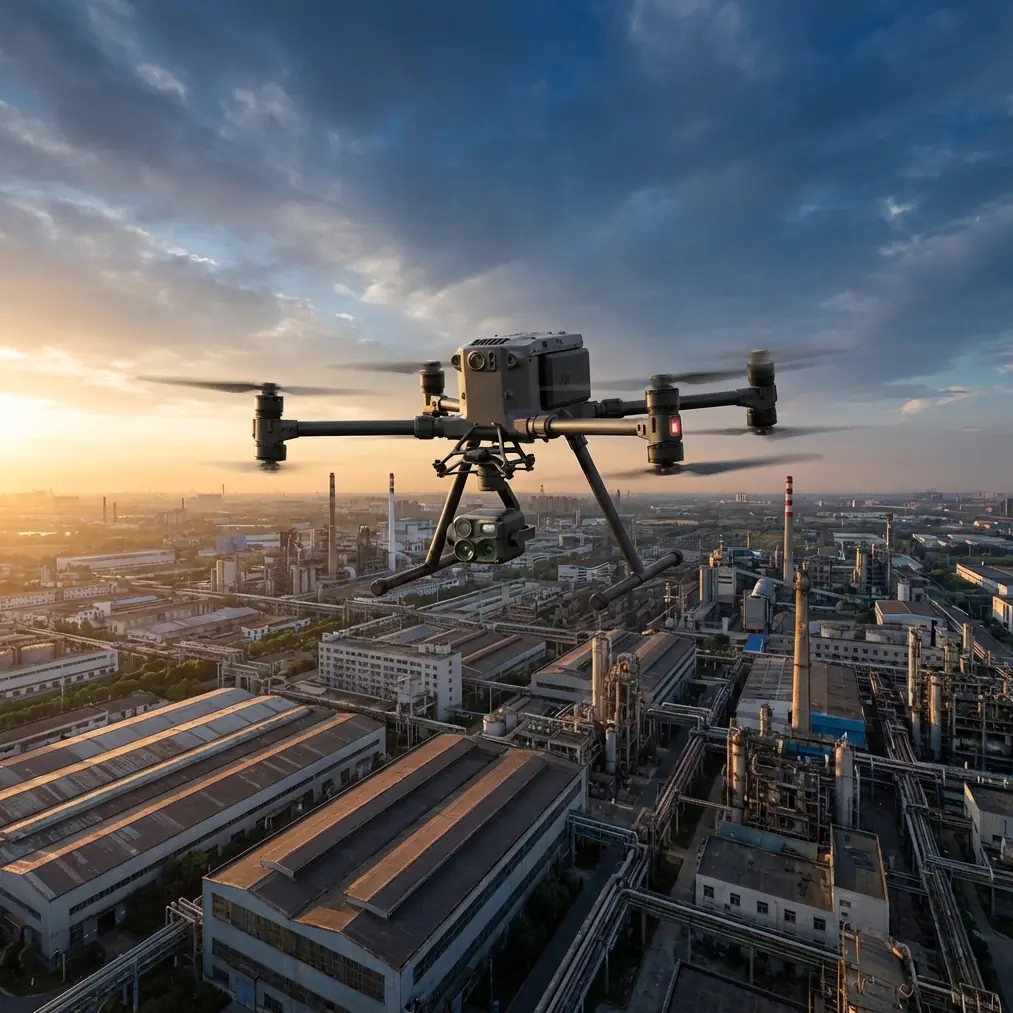
Matrice 4 for Remote Delivery Venues: What Coastal Wind Physics and Aircraft Surface Logic Actually Change in the Field
META: Expert technical review of Matrice 4 operations for remote delivery venues, focusing on coastal wind behavior, route reliability, antenna positioning, transmission integrity, and why smooth aircraft geometry still matters.
Remote delivery work sounds simple when it is reduced to a map pin and a payload. In practice, the hard part is the air between those two points.
For Matrice 4 operators supporting venues in isolated coastal or island-adjacent locations, the mission profile is rarely defined by distance alone. The real constraints come from wind direction concentration, terrain-channeling effects, link stability, and how the aircraft behaves when the atmosphere stops being uniform. That is where the reference material behind aircraft design and flight environment becomes surprisingly relevant.
This review looks at Matrice 4 through that lens. Not as a brochure object. As a working platform that has to keep a route, preserve transmission quality, and deliver repeatable results when the venue sits where local airflow is anything but polite.
The overlooked variable: the “most frequent wind direction” matters more than average wind
One of the reference points from the aircraft environment handbook is the concept of the most frequent wind direction. That sounds academic until you start planning repeated drone operations to a remote venue. Average annual wind figures can hide the pattern that actually shapes your dispatch reliability. If a site is exposed to one prevailing direction for much of the year, that directional bias affects almost everything: takeoff orientation, return-leg power reserve, antenna aiming, and whether your route remains viable during a narrow operating window.
For a Matrice 4 deployment, this matters because remote venue operations are repetitive by nature. You are not solving a one-off flight. You are building a usable corridor. If the most common wind direction aligns against your outbound or inbound leg, battery planning and route confidence become directional, not symmetrical.
That is especially relevant when your venue is near a coast, a strait, or a valley-like channel. The reference data highlights a classic example: the Taiwan Strait follows a northeast-to-southwest orientation, and when northeast or southwest winds blow, the constricted passage accelerates the airflow. The handbook goes further and notes that days with force 6 winds or above are markedly more common there because of this funneling effect.
Operationally, that is not just a weather note. It is a routing lesson.
A Matrice 4 team serving remote venues in similar geography should assume that a route crossing or paralleling a natural wind corridor can produce a much harsher profile than a nearby inland launch site suggests. Wind readings collected at the ground control position may understate what the aircraft encounters mid-route. In practical terms, that means a mission can launch in conditions that look acceptable and then lose time, stability margin, and transmission confidence once it enters the accelerated flow zone.
Sea-adjacent venues distort assumptions made on land
Another detail from the same source deserves more attention in drone planning: during strong-wind conditions along China’s eastern coast, offshore wind speeds can be about 3 to 4 m/s higher than on land. That gap is large enough to break a mission model built only on launch-point observations.
For Matrice 4 users, the significance is immediate. If your remote venue sits on an island, a causeway-connected site, a waterfront compound, or a platform-like destination near open water, the aircraft may leave a relatively sheltered area and enter stronger, smoother, more persistent airflow over the sea surface. The aircraft can appear efficient at first because the marine boundary layer often lacks the same roughness as inland terrain, but stronger sustained headwinds raise power draw and shrink the timing buffer that protects return-to-home decisions.
This is where many remote logistics plans fail—not because the aircraft lacks capability, but because the operator treats the route as a flat-distance problem. It is not. It is an energy problem shaped by directional wind structure.
With Matrice 4, that means route validation should include at least three separate checks:
- Launch-site wind
- Exposed mid-route wind
- Destination-side wind and turbulence pattern
If those three are not sampled independently, battery reserve calculations can become fiction. Hot-swap batteries help sustain sortie tempo at the operations base, but they do not repair a poor energy model in the air. In remote delivery work, rapid turnaround only matters after the route itself is proven stable.
Why smoother airflow over water is not automatically easier flying
The source text also notes that vertical air movement over the sea is generally weak because the surface is smoother and more uniform, reducing terrain- and heat-driven turbulence. That can sound favorable for drone delivery, and in some respects it is. A Matrice 4 moving over open water may face fewer abrupt convective jolts than it would over broken inland topography during the same period.
But that benefit can mislead operators.
Weak vertical mixing does not cancel the risk created by stronger horizontal flow. For remote venue delivery, a steady headwind is often more punishing than intermittent bumpiness because it degrades schedule predictability. The aircraft may fly stably while still burning through its margin. That is a subtle failure mode. The mission “looks fine” right up until the numbers stop working.
The safest Matrice 4 teams are the ones that separate aircraft stability from route viability. Stable video, clean positioning, and a calm-looking attitude do not guarantee a healthy return-energy budget. That distinction is especially important for missions that rely on O3 transmission over long, exposed links. Good link quality can create false confidence if the weather penalty is happening mainly in propulsion efficiency rather than command reliability.
Antenna positioning advice for maximum range: treat geometry as part of the mission
Since remote venue work often stretches the communication envelope, antenna discipline matters more than most crews admit. The best practical advice is simple: do not point the antenna tips directly at the aircraft. For maximum range, orient the flat face or broadside of the controller antennas toward the expected flight corridor, then make small adjustments as the aircraft moves laterally rather than chasing it continuously with exaggerated motions.
Why this matters on a Matrice 4 mission is straightforward. O3 transmission performance depends not only on raw system capability but also on how consistently the link geometry is maintained. In coastal or channelized wind environments, the aircraft may crab into the wind or fly slightly offset from the map line. If the pilot keeps aiming based on the planned route instead of the actual aircraft position, signal quality can degrade for no good reason.
A second point: elevate the operator position whenever possible, especially if the venue lies beyond shoreline clutter, low buildings, parked vehicles, or sparse tree cover. Over-water routes can feel “open,” but the near-field obstacles around the control point are often what damage the link first.
And a third: if your route bends around terrain or built structures near the destination, plan antenna orientation for the weakest segment, not the easiest one. Strong transmission near takeoff proves very little.
If your team wants to compare route geometry or antenna setup logic for a specific venue, you can message a technical specialist here and walk through the layout before committing aircraft time.
What an aircraft design handbook adds to a Matrice 4 discussion
At first glance, the second reference document—focused on civil aircraft geometry smoothing methods—seems far removed from drone delivery. It is not. It speaks to a deeper truth about aircraft behavior: shape regularity matters because aerodynamic surfaces and body lines must avoid unwanted disturbances in flow behavior.
The design text discusses methods used to identify and correct “bad points” in geometric curves. One method emphasizes that problem areas should be corrected accurately without damaging the good sections, while another describes checking curvature through neighboring points and then refining the shape until abrupt sign changes are removed. In plain English, the goal is controlled smoothness. Not visual prettiness. Predictable aerodynamic continuity.
Why should a Matrice 4 operator care?
Because reliable remote delivery is built on exactly that design philosophy. A drone that must hold trajectory in crosswinds, preserve gimbal stability, and maintain efficient cruise performance benefits from carefully managed geometry, not just powerful motors or smart software. Smooth external transitions reduce small aerodynamic penalties that accumulate across every sortie. For a remote venue operation running repeated missions, small inefficiencies become operational costs in the form of reduced endurance margin, slower legs against wind, and less forgiving behavior when gusts arrive.
The reference material also notes an engineering tradeoff: some smoothing methods are excellent at fixing local defects with minimal collateral changes, but they can struggle when multiple adjacent bad points appear and may converge slowly. That is useful as an analogy for drone route planning itself. In remote delivery, one isolated issue—say, a single RF shadow or one windy ridge crossing—can often be managed locally. But when several weak segments stack together, such as obstructed line of sight, channelized wind, and offshore speed increase, the route should not be “tuned” endlessly. It should be redesigned.
That is the practical lesson. Do not polish a fundamentally bad corridor.
Thermal and photogrammetry are not side features here
The context terms around Matrice 4 include thermal signature, photogrammetry, and GCP. In remote venue operations, these are not just mapping extras.
Before regular delivery flights begin, a thermal pass can help identify environment-specific friction points: heat-plume activity near structures, generator exhaust zones, roofing hotspots, or sun-exposed landing surfaces that may affect visual contrast and local air behavior. On large isolated compounds, thermal data also helps crews confirm whether the selected arrival zone remains clear of active equipment or personnel during the delivery window.
Photogrammetry has an even broader role. A detailed site model built with proper ground control points gives the operations team better elevation awareness, obstacle context, and approach consistency. That matters because many remote venues are not “empty.” They are cluttered in subtle ways—cables, antenna masts, utility poles, service sheds, uneven terrain, and edge-of-site vegetation that become significant when wind pushes the aircraft off a nominal line.
A Matrice 4 workflow that combines mapping-grade site capture with delivery route design is far more defensible than one based on satellite imagery and guesswork. The difference shows up in reduced aborted missions and more stable approach paths.
AES-256 and BVLOS thinking, without pretending regulation is the easy part
For remote operations, secure communications and operational discipline belong in the same sentence. AES-256 matters because many commercial deliveries involve sensitive site data, route histories, or customer scheduling information. Strong encryption does not make the mission safer in the aerodynamic sense, but it does make the operation more robust as a professional system.
BVLOS is the other phrase people mention too casually. For venue delivery, it is often the only model that makes geographic sense. But BVLOS planning is not just a matter of transmission range or policy paperwork. It depends on route repeatability, terrain understanding, emergency logic, and realistic weather gating. The environmental facts in the reference material make that point clearly: coastal and channelized routes can be harsher than surface-level observations imply. A Matrice 4 may be technically sophisticated enough for demanding operations, but the airspace and microclimate still write the final draft.
The real takeaway for Matrice 4 operators serving remote venues
If I had to reduce the reference material to one operational rule, it would be this: study the shape of the environment as seriously as you study the drone.
The flight-environment handbook gives two crucial reminders. First, prevailing wind direction is more useful than a generic average when you are building repeated routes. Second, marine and strait environments can amplify wind in ways that directly affect mission viability, including 3 to 4 m/s stronger offshore wind than nearby land and more frequent strong-wind days where geography channels the flow.
The aircraft design text contributes a different but equally valuable lesson. Good performance comes from eliminating local irregularities without disturbing what already works. Applied to Matrice 4 operations, that means preserving strong route segments, identifying true weak points, and resisting the temptation to force a bad corridor into service.
For remote venue delivery, that mindset is what separates experimental flights from an actual operation.
Matrice 4 is best understood not as a single capability statement, but as a platform whose value appears when route design, transmission geometry, wind logic, and site modeling are treated as one system. Get those pieces aligned and the aircraft can do serious work. Ignore them, and even short missions become unreliable for reasons that never show up on a marketing sheet.
Ready for your own Matrice 4? Contact our team for expert consultation.