
Matrice 4 Field Report: Low-Light Vineyard Delivery Tactics
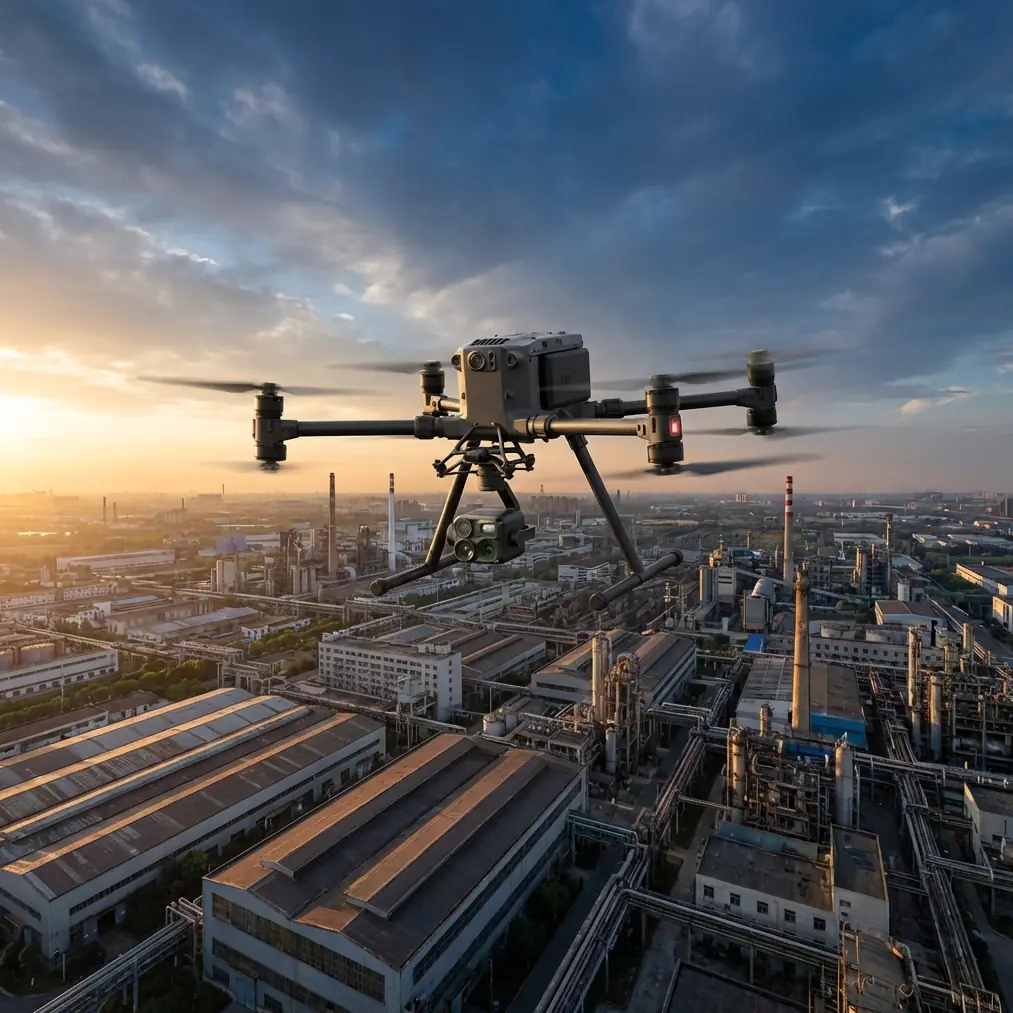
Matrice 4 Field Report: Low-Light Vineyard Delivery Tactics That Actually Hold Up
META: Expert field report on using the Matrice 4 for low-light vineyard delivery, covering thermal signature management, O3 transmission, AES-256 security, GCP workflows, hot-swap batteries, and practical accessory choices.
The Matrice 4 makes the most sense in vineyards when the mission is narrow, time-sensitive, and uncomfortable for conventional ground access. Low light sharpens all of those constraints. Rows become repetitive visual corridors. Moisture shifts contrast. Terrain hides obstacles until they are too close. And when the payload matters—replacement sensors, field tools, sample kits, emergency components—the margin for sloppy workflow disappears.
I have been looking at the Matrice 4 through that exact lens: not as a generic enterprise platform, but as a vineyard support aircraft operating at dusk, before sunrise, or under heavy canopy shadow. That changes the priorities. Sensor flexibility matters more than headline specifications. Link integrity matters more than advertised range. Battery handling becomes an operational discipline, not a convenience feature. And any crew that plans to scale toward BVLOS-style workflows has to build repeatable habits long before regulation and waiver pathways catch up.
This field report is built around that scenario.
Why vineyards are hard after sunset
A vineyard looks organized from the access road. From the air in low light, it often behaves like a maze. Repetitive vine rows can confuse visual orientation, especially when one section closely resembles the next. Dust, humidity, and lingering ground heat alter the scene in ways that standard daylight reconnaissance does not prepare you for. If you are delivering to a crew that is moving between blocks, the target itself may not be fixed for long.
That is where the Matrice 4 platform stands out if configured and flown with discipline. The aircraft is well suited to mixed mission profiles where delivery support intersects with inspection, thermal confirmation, and mapping. For a vineyard operator, that means one sortie can do more than move an item from point A to point B. It can confirm row access, identify heat anomalies around pumps or power units, document ground conditions for follow-up photogrammetry, and keep the mission data protected in transit.
Those are not theoretical perks. They determine whether the operation saves time or quietly introduces new risk.
The low-light advantage is not just “seeing in the dark”
Many teams oversimplify low-light flying by reducing it to camera sensitivity. In vineyards, the bigger issue is interpretation. A thermal signature can reveal more than a visible camera at dusk, but only if the crew understands what they are looking at. Irrigation lines cooling after a warm day, recently operated machinery, and livestock near perimeter fencing can all create patterns that seem operationally urgent but are completely routine.
On the Matrice 4, thermal work becomes valuable when used as a decision filter. Before committing to a delivery path down a narrow corridor between rows, a quick thermal pass can help identify people, vehicles, or active equipment obscured by shadow. That matters because vineyards often have uneven work rhythms. One crew may have stopped for the evening while another is still handling pumps, bins, or treatment equipment in the next block.
The practical takeaway is simple: thermal is not just for detection. It is for deconfliction. In low light, that can be the difference between a clean final approach and an unnecessary abort.
It also helps with payload recovery. If the delivery zone is improvised—a turnout, a service platform, a patch of compacted soil beside an irrigation manifold—the visible scene may be flat and ambiguous. Thermal contrast can make the human receiver or recently driven vehicle stand out immediately, which reduces loiter time and helps preserve battery.
O3 transmission changes confidence at the edge of the block
Vineyards are deceptively hostile to radio consistency. Terrain undulates. Treelines clip line of sight. Utility structures, metal sheds, and localized interference can all affect signal behavior. That is why O3 transmission is not a marketing detail in this context. It is operationally significant.
A stable digital link gives the pilot and visual support crew more confidence when the aircraft moves beyond the clean geometry of open staging areas and into the more complicated spaces between agricultural infrastructure. In practical terms, O3 transmission helps maintain usable video and control responsiveness when the aircraft transitions from broad overflight to the more demanding final segment of a delivery route.
That does not eliminate the need for route planning. It raises the reliability ceiling when the route has already been planned well.
For vineyard deliveries in low light, I recommend treating transmission quality as a route-design variable rather than a passive spec. Map the known weak zones. Note where foliage density changes. Record where relay vehicles or operators usually stage. If one block consistently produces signal degradation near a pump house or storage area, build that knowledge into the next mission instead of trusting the system to brute-force through it.
The crews that get the best results with Matrice 4 do this almost automatically. They stop talking about “maximum range” and start talking about “repeatable signal geometry.”
AES-256 is not background admin. It matters in agricultural operations
There is a persistent habit in agriculture to treat data security as secondary until something sensitive is exposed. That is shortsighted. Vineyard operations generate information that can be commercially meaningful: block condition imagery, infrastructure status, harvest timing indicators, treatment activity, and site layouts. If you are running an aircraft over valuable acreage and transmitting mission data in low light when fewer people are on site, secure handling should not be optional.
This is where AES-256 support becomes a meaningful part of the Matrice 4 story. Not because encryption is glamorous, but because it closes off a category of avoidable exposure. If you are documenting thermal anomalies around irrigation control points, surveying access routes, or recording infrastructure conditions during after-hours flights, you are creating data that may reveal operational patterns. Protecting that link and the associated workflow is basic professionalism.
For larger vineyards or multi-site operators, this becomes even more relevant when different teams share mission outputs. One crew may fly a delivery-support sortie, another may use the imagery for maintenance planning, and a third may archive it for compliance or seasonal comparison. Once data starts moving between teams, weak handling practices spread fast. Strong encryption support helps set the right baseline.
Delivery succeeds or fails on battery choreography
Low-light missions have a way of compressing time. The window is either before full darkness, after active field work, or during a narrow maintenance interval. Every minute lost on the ground becomes a bigger percentage of the available mission period. This is why hot-swap batteries deserve more respect than they usually get.
In vineyard operations, hot-swap capability is not just about flying more sorties. It is about protecting continuity. If one aircraft is supporting deliveries across several blocks while also capturing verification imagery, the crew needs to keep the platform turning without dragging the mission into a less stable light environment. A slow battery process can force the final sortie deeper into darkness, where visual confirmation becomes harder and contingency margins shrink.
That is the operational significance: hot-swap batteries help preserve mission quality, not just endurance.
I have seen teams improve performance simply by changing their handoff rhythm. Battery pairs are staged in order, receiver locations are confirmed before landing, and the payload packaging is standardized so there is no improvisation during swap cycles. Small procedural changes matter more than most hardware additions.
Still, one accessory has proven especially useful in this vineyard scenario: a high-intensity third-party strobe mounted for better aircraft conspicuity during low-light transits. Used correctly and within local operational constraints, a quality anti-collision strobe helps ground crews maintain visual awareness of the aircraft during the most cluttered part of the mission. It does not replace training or route discipline, but it adds a layer of practical visibility that many vineyard environments badly need.
Photogrammetry still belongs in a delivery workflow
At first glance, photogrammetry sounds separate from delivery. In practice, the two often reinforce each other. If your Matrice 4 is already supporting logistics between vineyard blocks, there is strong value in collecting structured imagery that improves future route planning and hazard awareness.
This is where GCP strategy becomes relevant. Ground control points are not only for high-precision mapping teams chasing textbook outputs. In vineyards, even a modest GCP framework can improve the usefulness of repeat mapping runs, especially where row spacing, service tracks, drainage features, and infrastructure edges need to be modeled accurately over time.
For low-light delivery support, the benefit is indirect but substantial. Better terrain models lead to better route confidence. Better route confidence reduces unnecessary altitude changes, hover time, and approach hesitation. That pays off immediately when the aircraft is carrying a payload in marginal lighting.
One of the smartest workflows I have seen combines daytime photogrammetry with evening delivery execution. The mapping mission captures block geometry, obstacle locations, and ground access constraints using carefully placed GCPs. Later, the Matrice 4 flies a lower-stress low-light mission because the route was informed by solid spatial data rather than operator memory.
If your team wants to compare notes on building that kind of repeatable workflow, this quick vineyard UAV ops line is an easy place to start.
The BVLOS mindset should begin before you need it
Many vineyard operators talk about BVLOS as though it becomes relevant only when a formal long-range program is underway. That is backwards. The discipline required for BVLOS-style operations starts with shorter, simpler flights. Low-light delivery missions are a good proving ground because they expose weaknesses early.
Do your route notes actually reflect terrain and obstruction reality? Are your landing zones standardized or improvised? Can a second crew member interpret the mission plan without the original pilot narrating every detail? Is the data trail secure? Are battery swaps documented? Are thermal cues being interpreted consistently across operators?
Those are BVLOS questions in miniature.
The Matrice 4 is especially useful here because it sits comfortably between tactical field deployment and more structured enterprise operations. It gives small vineyard teams a platform on which to build habits that scale. Even if every current mission remains within conventional visual constraints, the operating philosophy should move toward repeatability, documentation, and disciplined communication.
That shift is not bureaucratic. It is what allows a drone program to stay useful after the novelty wears off.
What works best in the field
For vineyard delivery in low light, the Matrice 4 performs best when crews stop expecting one perfect mission profile and instead build a layered workflow:
First, use daytime or late-afternoon flights to collect the route intelligence that low-light operations should not be guessing at. If photogrammetry is part of the program, tie it to GCP placement that reflects the actual delivery corridors and service zones that matter most.
Second, use thermal deliberately. Not as a flashy add-on, but as a tool to verify that the path and receiving area are clear of people, vehicles, or active equipment hidden by shadow and canopy.
Third, treat O3 transmission as part of route design. A strong link in a brochure is not the same thing as a stable link near treelines, utility structures, and rolling agricultural terrain.
Fourth, build secure habits around AES-256-supported workflows from the beginning. Agricultural aviation data can be more sensitive than many crews assume.
Fifth, make hot-swap battery procedures boringly efficient. If the team has to think too hard during a swap, the process is not ready for repeated low-light work.
And finally, do not underestimate the value of a well-chosen third-party accessory. In this use case, a reliable anti-collision strobe improves visibility for ground coordination in a way that has immediate operational payoff.
Final assessment
The Matrice 4 is not automatically good at vineyard delivery because it is a capable aircraft. It becomes good at vineyard delivery when its capabilities are aligned with the realities of low-light agricultural work. In that setting, thermal signature interpretation helps prevent conflicts in shadowed rows. O3 transmission supports confidence in the sections of a route where terrain and infrastructure start to interfere with clean line of sight. AES-256 matters because operational data in agriculture is worth protecting. Hot-swap batteries keep narrow mission windows usable. GCP-informed photogrammetry improves the next sortie, even when the current task is just getting a small payload to the right crew on time.
That is the real story. Not a spec sheet. A workflow.
Ready for your own Matrice 4? Contact our team for expert consultation.