
Matrice 4 in Vineyard Extremes: A Field Report on Heat
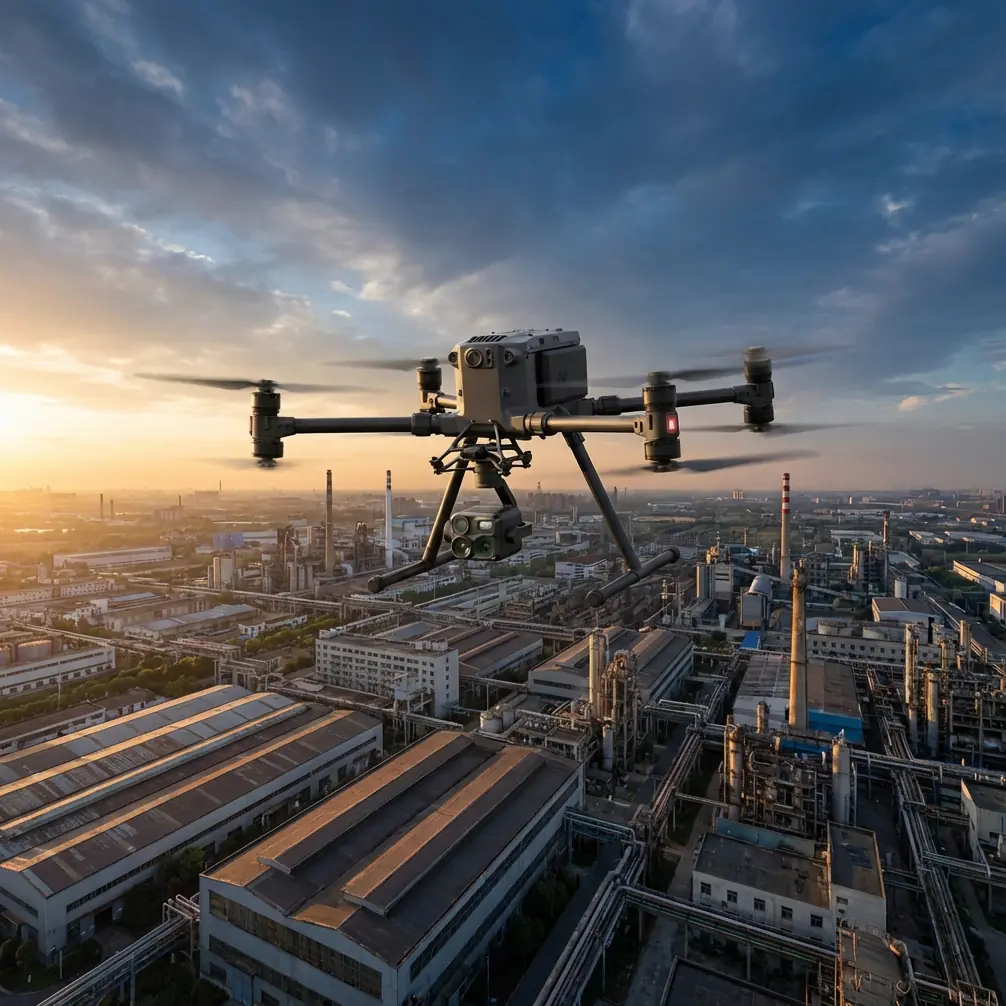
Matrice 4 in Vineyard Extremes: A Field Report on Heat, Cold, and the Altitude That Actually Works
META: Expert field report on using Matrice 4 for vineyard operations in extreme temperatures, with practical guidance on flight altitude, thermal signature capture, photogrammetry accuracy, battery strategy, and secure long-range workflows.
When growers ask whether the Matrice 4 is a fit for vineyard work in punishing heat or sharp morning cold, the real answer is not about brochure-level capability. It is about whether the aircraft can deliver stable data when the vines, the soil, and the microclimate are all working against consistency.
That is the test.
A vineyard is one of the more demanding environments for aerial work because everything that matters is subtle. Row spacing creates repetitive visual patterns that can confuse reconstruction if the mission is poorly planned. Leaf temperature can shift quickly as the sun angle changes. Slopes, reflective trellis wire, irrigation variation, and mixed canopy density all distort what a pilot thinks they are seeing. In extreme temperatures, these effects become more pronounced, not less.
For operators evaluating the Matrice 4 for this job, the useful conversation starts with mission design, battery handling, transmission stability, and data integrity. Those four elements decide whether the drone produces insight or just imagery.
From my perspective in field operations, the Matrice 4 makes the most sense in vineyards when it is treated as a precision inspection and mapping platform, not simply a camera in the sky. That distinction matters because vineyards rarely need one generic flight. They need a sequence: first-pass thermal review, visible-light follow-up, and in many cases a photogrammetry mission tied to GCP placement for repeatable block-to-block comparison.
The most practical flight altitude for this scenario is usually 45 to 60 meters above ground level for routine vineyard intelligence, with a strong preference toward the lower half of that band when thermal interpretation is the priority. If the goal is canopy stress detection in extreme heat, I typically favor around 50 meters AGL as the starting point. That altitude tends to preserve enough thermal separation between vine rows, bare ground, and weak canopy sections while still covering acreage at a useful pace. Go much higher and the thermal signature begins to blend, especially by late morning when radiative heating from the soil starts contaminating the picture. Go much lower and efficiency drops, while row-by-row perspective changes can make larger-area comparisons harder.
That single altitude decision has operational significance. It affects overlap, battery turnover, reconstruction quality, and whether thermal anomalies represent plant stress or simply environmental noise.
In hot-weather vineyard work, thermal timing is everything. The common mistake is launching too late, after the ground has absorbed enough heat to flatten contrast. Under those conditions, the sensor may still produce a readable image, but the grower gets a weaker answer to the question they actually care about: which rows are deviating from the expected plant temperature pattern, and why? The Matrice 4 becomes more valuable when the mission is flown early enough to isolate the canopy response before the ground starts shouting over it.
That is where thermal signature interpretation needs discipline. A warm patch is not automatically water stress. A cool patch is not automatically healthy vigor. In vineyards, thermal data is best treated as a triage layer. It points you toward rows that deserve attention, then visible imagery and field checks confirm whether the issue is irrigation irregularity, disease pressure, canopy inconsistency, or a terrain-driven effect. The Matrice 4 earns its place when those layers are captured close enough together in time that the comparison is still valid.
Extreme cold introduces a different set of problems. Early winter scouting or frost-response flights can look clean in the air but become messy in execution if battery management is casual. This is where hot-swap batteries are not just convenient; they directly protect mission continuity. On a large vineyard, swapping packs quickly reduces the delay between adjoining flight segments, which helps preserve comparable lighting and thermal conditions across the dataset. If a frost event is being assessed and one block is flown twenty or thirty minutes later than the next, the data may still be technically correct but operationally uneven. Fast turnaround limits that drift.
The same battery logic applies in heat, just for different reasons. High ambient temperature can compress the margin for error. Packs warm faster, operators fatigue faster, and rushed handling often leads to flawed mission sequencing. A platform that supports fast battery exchange lets the crew keep the aircraft moving while maintaining a tighter inspection window. In vineyard operations, consistency is often more valuable than speed alone.
Transmission performance also deserves more attention than it usually gets in marketing discussions. In rolling vineyard terrain, especially where blocks stretch beyond a ridge or tree line, signal behavior shapes what kind of operation is realistically possible. O3 transmission is especially relevant here because it supports more reliable situational awareness at distance, which matters when a pilot is tracking a mission across long, repetitive rows with limited visual landmarks. For teams building toward BVLOS workflows where regulations and approvals allow, transmission reliability is not a luxury feature. It is part of the operational backbone.
That matters even in legal VLOS setups. Why? Because vineyard crews often work in patchy terrain where line-of-sight quality changes within a single mission. A stable link reduces interruptions, minimizes unnecessary repositioning of the pilot team, and improves confidence when the aircraft is collecting data over uniform-looking blocks that are otherwise easy to misread.
Security is the other quiet issue that deserves to be surfaced, especially for commercial agricultural operators who manage block health data across multiple sites. AES-256 matters because vineyard imagery is not always just pretty overhead content. It can reveal irrigation layout, infrastructure placement, crop variability, and operational weaknesses. For estate vineyards, contract operators, and large agricultural groups, secure transmission and data handling are part of professional practice. They are not abstract checklist items. They affect whether a client is comfortable using aerial intelligence at scale.
If the mission includes mapping for topography, drainage analysis, or replant planning, photogrammetry should not be treated as a side feature. Vineyard blocks with repeating row geometry can expose weaknesses in flight planning fast. This is where GCP use becomes operationally significant. Ground control points provide a hard reference that helps anchor the reconstruction, especially where terrain undulates and the visual scene contains long, repetitive textures. Without that control, elevation surfaces and measurements may be good enough for a quick look but not good enough for confident agronomic decisions.
In practice, I recommend separating thermal inspection missions from dedicated photogrammetry missions unless the acreage is small and the data need is simple. Trying to force one flight profile to do both usually means compromising one dataset. For thermal stress detection, the mission should prioritize environmental timing and canopy interpretability. For mapping, it should prioritize overlap, geometric consistency, and GCP visibility. The Matrice 4 is most useful when operators respect those differences instead of flattening everything into a single generic flight plan.
There is also a crew management angle that is easy to overlook. Vineyard work in extreme temperatures is physically demanding on the human side. Heat shimmer can affect visual interpretation from the ground. Cold conditions reduce dexterity during battery changes and launch preparation. That means the best Matrice 4 workflow is one with low-friction routines: pre-labeled packs, pre-planned altitude presets, fixed overlap standards by block type, and a simple decision tree for when thermal findings trigger a second-pass inspection. Mature operations do not improvise these details in the field.
A typical high-value sequence for a hot-weather vineyard mission looks like this:
Launch shortly after first light, before the soil begins dominating the thermal scene. Fly the primary thermal survey at about 50 meters AGL. Mark anomalous rows or zones immediately after landing. Swap batteries without delay. Then run a visible-light confirmation mission over the flagged areas, either at similar altitude for context or lower where canopy detail is the priority. If structural analysis or terrain modelling is also required, schedule a separate photogrammetry sortie with GCPs already laid out and logged.
That workflow sounds simple, but its strength is that each stage answers a different operational question. Thermal asks where the block is behaving oddly. Visible inspection asks what the anomaly appears to be. Photogrammetry asks whether the issue may relate to terrain, drainage, row geometry, or long-term structural patterns.
When growers or operators want to compare mission planning options for their site, I usually suggest they first map out the vineyard’s thermal problem, not just its boundaries. A flat, uniformly irrigated block behaves very differently from a hillside parcel with mixed sun exposure and variable soil depth. If you want a quicker way to discuss block layout and mission logic, this vineyard drone planning chat is often the fastest place to start.
One caution on altitude: operators often assume that higher is safer and more efficient in vineyards. It is safer in some obstacle scenarios, yes. But for crop intelligence, higher is not automatically better. Once altitude begins to dilute row-level separation, especially in thermal work, the mission can become less decisive. The right answer is usually not “as high as regulations permit.” The right answer is the lowest altitude that still preserves efficient coverage and stable overlap for the specific sensor objective. In many vineyard inspections, that puts the Matrice 4 right around the 45 to 60 meter zone, not dramatically above it.
This is also why repeatability beats experimentation after the first few missions. If a vineyard is being monitored across a season, keeping altitude, timing, overlap, and GCP strategy consistent creates datasets that can actually be compared. Otherwise, teams end up arguing over whether the vines changed or the mission profile did.
The Matrice 4 fits vineyard work well when the operator values disciplined aerial intelligence over ad hoc flying. In extreme temperatures, that discipline becomes non-negotiable. Thermal signature quality depends on timing. Photogrammetry quality depends on structure. O3 transmission supports confident operations across difficult terrain. AES-256 supports secure handling of sensitive agricultural data. Hot-swap batteries help preserve the narrow environmental window where the data remains comparable.
Those are not isolated features. They form a system.
And in vineyards, systems win. Not because the crop is simple, but because it is not. The aircraft that performs best here is the one that helps the crew notice the small things before they become expensive things: a stressed section of canopy, a weak irrigation pattern, a drainage-driven hot spot, a frost-affected pocket hidden from the ground team, a reconstruction error caught early because the GCP discipline was there from the start.
That is the standard I would use for the Matrice 4 in vineyard extremes. Not whether it can fly the block, but whether it can return data that stands up to real agronomic scrutiny. If the mission is built around that standard, the aircraft becomes far more than a platform for images. It becomes a reliable instrument for vineyard decisions.
Ready for your own Matrice 4? Contact our team for expert consultation.