
Matrice 4 for Remote Wildlife Delivery: What a Mid
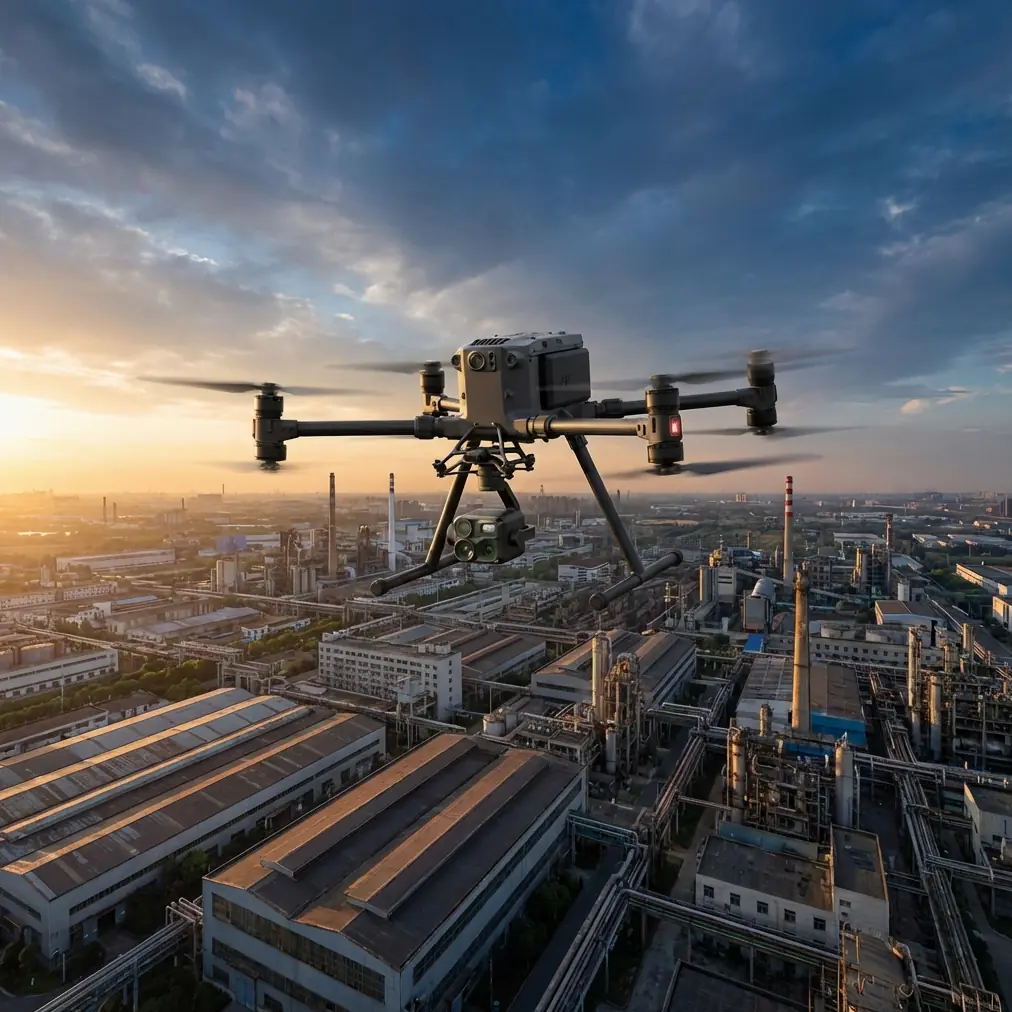
Matrice 4 for Remote Wildlife Delivery: What a Mid-Flight Weather Shift Revealed About Real-World UAV Design
META: A field-based Matrice 4 case study for remote wildlife delivery, covering vibration control, reliability thinking, thermal signature awareness, BVLOS workflow, and how changing weather affects mission outcomes.
I’ve seen plenty of drone discussions collapse into spec-sheet chatter. That’s rarely useful when you’re trying to move critical supplies to wildlife teams operating far from roads, with weather turning and terrain doing everything it can to interfere with aircraft stability, communications, and battery planning.
So let’s ground this in a realistic Matrice 4 scenario.
A conservation group was supporting a remote wildlife rehabilitation operation. The task was not cinematic, and it wasn’t glamorous. It involved moving lightweight, time-sensitive field materials to a team working beyond easy vehicle access. The route crossed uneven ground, patchy vegetation, and a section of exposed terrain where wind behavior was less predictable than the morning forecast suggested. This is exactly the kind of civilian mission where a Matrice 4 platform starts to make sense: not because of hype, but because reliability margins matter when the payload is meaningful and retrieval is inconvenient.
What made this mission especially revealing was a weather change mid-flight. Conditions on launch were manageable. Minutes later, the aircraft encountered stronger gusting and more vibration-inducing airflow as it moved into a more exposed section of the route. That shift is where design principles become visible.
Why wildlife delivery is harder than it sounds
When people hear “delivery,” they often picture point-to-point transport as a simple endurance exercise. In wildlife operations, it is usually a stability problem first.
The payload may be small, but the consequences of rough handling are not. Field kits for animal support, monitoring tags, sample containers, or sensitive biological materials all benefit from a flight profile that limits unnecessary shock and oscillation. It’s not only about reaching the destination. It’s about arriving without subjecting the payload, airframe, gimbal-adjacent components, or onboard sensing stack to avoidable stress.
That is where one of the reference engineering ideas becomes surprisingly relevant to a Matrice 4 discussion.
In the aircraft design material on vibration control, Chapter 46 focuses on how spring characteristics change the relationship between maximum deformation and maximum acceleration. One detail stands out: for the same step-like excitation condition, a hard spring produces smaller maximum deformation than a soft spring. On paper, that sounds abstract. In the field, it maps directly to an old drone tradeoff: how much motion isolation you want versus how much acceleration you are willing to transmit through the system.
A softer isolation approach can absorb motion with more travel. A harder setup limits displacement but can pass sharper loads. That balance matters on a delivery aircraft because a suspended or mounted payload system, camera assembly, or internal support structure has to deal with both deflection and acceleration. If weather changes mid-flight, especially with gust loading, the drone is no longer operating in the tidy regime suggested by bench testing.
For wildlife teams, this has operational significance in two ways:
- Payload protection is not just about padding. It starts with how the aircraft manages energy from vibration and gust response.
- Sensor reliability depends on motion behavior. If you are combining delivery with thermal observation, photogrammetry, or landing-zone confirmation, vibration control affects data quality as much as physical hardware does.
The weather changed. The mission priorities changed with it.
About a third of the way into the route, the wind shifted. Not enough to force an immediate abort, but enough to change the pilot’s assumptions. The aircraft began working harder to hold a clean line over exposed ground, and that had consequences downstream: battery draw, attitude corrections, and link discipline all became more important.
This is where inexperienced operators tend to think only about “can it still fly?” Experienced teams ask a better question: what margin is being consumed right now, and which subsystem will show it first?
With a Matrice 4 workflow, you’re usually monitoring more than battery percentage. You’re watching transmission integrity, route geometry, return options, and whether payload drop-off or handoff remains sensible under the new conditions. If you are flying with an O3-class transmission mindset and secure data handling expectations such as AES-256, the link itself is not just a convenience; it becomes part of the mission assurance architecture. In remote wildlife operations, where the team may be coordinating over sensitive habitat locations or active animal movement patterns, secure and stable transmission is not an optional luxury.
The mid-flight weather shift underscored a practical truth: robust transmission helps, but communications resilience does not erase airframe dynamics. The aircraft still has to absorb and respond to changing airflow in a way that preserves control quality and payload integrity.
What vibration theory tells us about drone operations in the field
The most useful line from the vibration reference is not the comparison between hard and soft springs by itself. It’s the design logic that follows: the acceptable range of spring stiffness K should be set by two limits. The lower bound comes from the maximum allowable deformation of the isolation system, and the upper bound comes from the maximum allowable acceleration.
That is a clean engineering framework, and it translates beautifully to commercial UAV mission planning.
For a Matrice 4 wildlife delivery mission, think of those same two limits as field constraints:
- Too much deformation or movement and the payload, mount, or sensor package may swing, shift, or lose useful alignment.
- Too much acceleration and delicate contents, onboard electronics, or captured imaging quality may suffer.
This is not just a hardware design concern. It informs how you plan speed, route, altitude, and descent profile when weather starts changing. In our mission example, the correct response was not to stubbornly preserve the original flight plan. It was to reduce unnecessary dynamic loading. That meant moderating the profile through the gustier segment, reassessing the approach path, and preserving enough energy for a controlled contingency return if the landing area proved unstable.
That decision-making process often separates professional drone operations from casual flying. The drone may be capable of brute-force progress, but the smarter move is usually to fly in a way that keeps deformation and acceleration within tolerable mission limits.
Reliability is not just a number on a spreadsheet
The second reference source, from helicopter reliability and maintainability design, makes an even more valuable point for Matrice 4 operators: quantitative analysis has uncertainty and must be supported by qualitative analysis and persuasive engineering judgment.
That sentence should be pinned to the wall of every serious UAV operation.
The source also notes that failure-state probability assessments are often framed as average probability per flight hour, and one example assumption uses an average flight duration of 1 hour for analysis purposes. A wildlife delivery sortie with a Matrice 4 may not last that long, but the principle still matters. Reliability metrics are useful only when you understand what mission profile they assume.
For remote wildlife delivery, the environment refuses to behave like a neat average case. Routes vary. Wind funnels through terrain. Launch zones are improvised. The receiving team may be moving. The aircraft may need to pivot from transport to visual confirmation or thermal scanning before final release.
That is why reliability in practice is never just “what is the chance of failure?” It becomes:
- What does the route demand from the aircraft today?
- What kind of fault can be tolerated?
- Which subsystem degradation still allows a safe outcome?
- What mission changes are justified when uncertainty grows?
The reliability reference also highlights formal methods such as FMEA and FTA. For enterprise drone teams, those are not academic ornaments. They are useful tools for breaking a wildlife mission into manageable failure modes: loss of link, unstable landing zone, increased vibration, inaccurate positioning near canopy, rising wind, unexpected battery consumption, or degraded visual conditions.
When the weather changed in this Matrice 4 case, the best decision was driven by exactly that kind of thinking. The team did not wait for a hard failure. They recognized a shift in the operating envelope and managed the mission before the margins collapsed.
Thermal signature and landing-zone judgment
Wildlife missions introduce one more layer: the aircraft is often doing more than delivering a package. It may also be helping locate the receiving team, confirm safe ground conditions, or identify nearby animals before descent.
That is where thermal signature work matters.
A thermal view can help distinguish warm-bodied animals from surrounding terrain during a cautious approach, especially in low-contrast environments where the visible scene is less informative. For conservation teams, that reduces the chance of disturbing wildlife concentrated near the handoff point. It also improves the odds of choosing a final approach path that avoids unnecessary overflight of animals already under stress.
But thermal imaging only earns trust when the platform remains stable enough to deliver interpretable data. Again, we circle back to vibration and acceleration. Airframe behavior affects image confidence. If the weather adds motion and the aircraft begins making frequent corrections, your thermal observations may still be useful, but only if the operator understands the limitations introduced by flight dynamics.
Mapping discipline still helps, even on delivery missions
One mistake I see often is treating photogrammetry and delivery as separate worlds. They are not.
Even when the primary mission is remote wildlife support, prior mapping can be the difference between a smooth operation and a messy one. Photogrammetry can define approach corridors, identify obstructions, and reveal terrain features that matter when wind shifts. If the team has already built a terrain model with GCP support, landing-zone confidence improves dramatically. You know where the slope is deceptive. You know where vegetation is taller than it looked from the road. You know which route segments expose the drone to rotor wash recirculation near natural barriers.
That pre-mission discipline becomes even more valuable for BVLOS planning. Wildlife operations often occur beyond easy line of sight because the very point is to reach places people cannot access quickly. If you are building a repeatable Matrice 4 workflow for these missions, route knowledge and terrain accuracy are not administrative extras. They are part of flight safety.
The battery question is really a continuity question
On remote missions, batteries are never just about endurance. They are about operational continuity.
A platform that supports hot-swap batteries changes how teams stage repeated sorties during a narrow weather window. In wildlife response, that matters. If an animal care team needs multiple small loads moved over a few hours, or if conditions are deteriorating and you need to cycle aircraft quickly while keeping ground delay low, battery workflow becomes mission architecture.
During the case flight, the weather deterioration did not force an emergency action, but it did alter follow-on planning. The team shortened the next sortie profile, rotated packs sooner, and treated the original wind forecast as obsolete. That is exactly how mature operations should respond. The drone is not there to prove toughness. It is there to deliver a reliable service under changing constraints.
Secure links, calm procedures, better outcomes
One of the less glamorous advantages in professional UAV work is disciplined data handling. In conservation, location data can be sensitive. Nesting areas, rehabilitation points, and animal movement corridors should not be casually exposed. That is why operators increasingly care about secure transmission practices and encrypted workflows such as AES-256 where available.
Pair that with stable long-range link performance and you get something far more useful than marketing language: a system that supports calm decision-making when the mission stops being routine.
If your team is building or refining this kind of operation, it helps to speak with people who understand both field realities and aircraft behavior. If you want to compare route planning, payload setup, or Matrice 4 mission architecture for wildlife support, you can message a UAV specialist here.
What this Matrice 4 case actually teaches
The headline lesson from this wildlife delivery flight is not that the Matrice 4 can handle bad weather. That is too simplistic, and it encourages poor judgment.
The better lesson is that aircraft performance in remote conservation work depends on how well the operator respects the relationship between vibration behavior, allowable acceleration, route reliability, and changing environmental margins.
The reference material gave us two ideas worth carrying into every real mission:
- From the vibration design handbook: spring behavior changes the tradeoff between maximum deformation and maximum acceleration, and stiffness selection should be bounded by both allowable deflection and allowable acceleration.
- From the reliability handbook: probability-based safety thinking is useful, but it must be reinforced with qualitative analysis and engineering judgment, especially when uncertainty rises.
Those are not abstract aviation lessons. They are directly relevant to a Matrice 4 flying wildlife support into remote terrain while conditions shift mid-flight.
In my view, that is the right way to discuss this platform. Not as a generic “best drone” claim. Not as a pile of features. As a tool whose value emerges when the mission gets slightly untidy, the weather stops cooperating, and the operator still needs to complete a civilian task safely, cleanly, and with enough margin left to fly again.
Ready for your own Matrice 4? Contact our team for expert consultation.