
How I’d Set Up a Matrice 4 for Dusty Wildlife Delivery Work
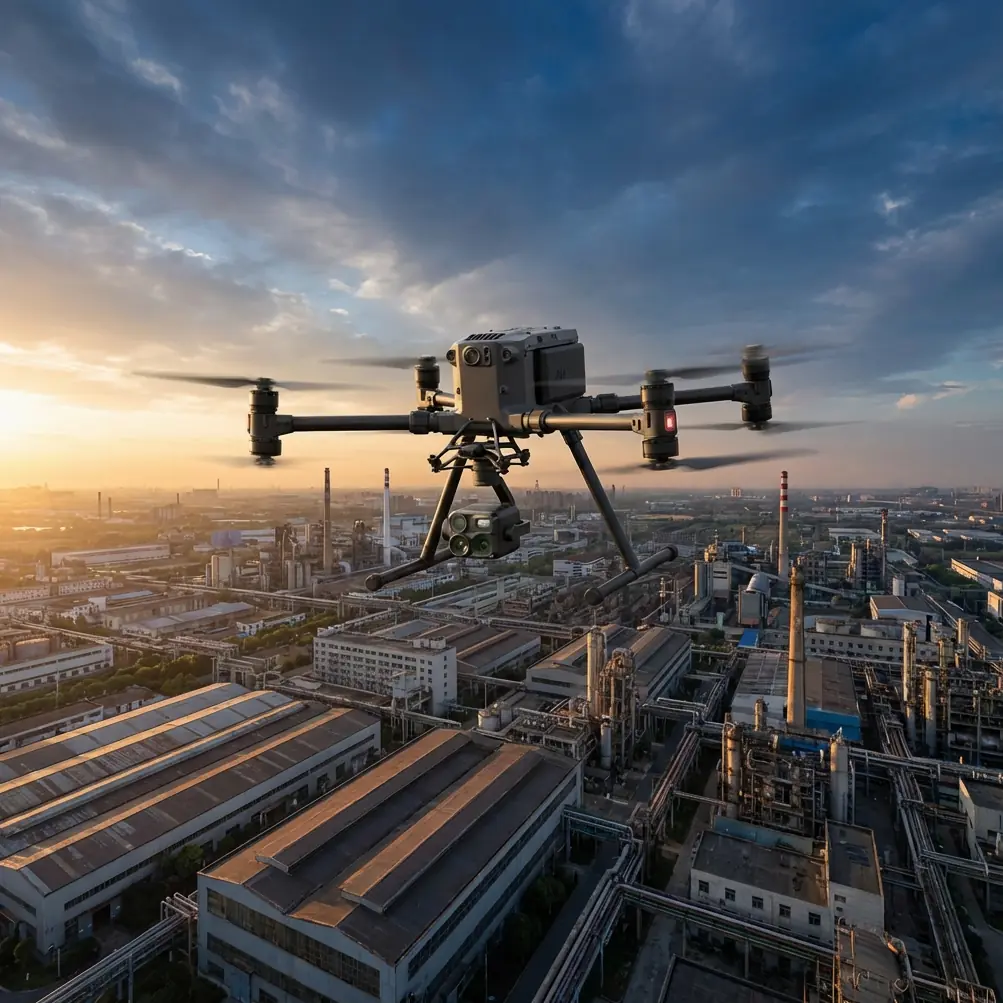
How I’d Set Up a Matrice 4 for Dusty Wildlife Delivery Work Without Losing Control or Data
META: A field-focused Matrice 4 guide for dusty wildlife delivery missions, covering control stability, EMI mitigation, power redundancy, transmission discipline, thermal use, mapping support, and practical flight planning.
By Dr. Lisa Wang, Specialist
Wildlife support flights look simple on paper. Launch, carry payload, fly low risk corridors, deliver, come home. In the field, especially in dusty environments, the job becomes a systems problem.
Dust changes visibility, contaminates connectors, degrades cooling, and makes every landing zone less predictable. Wildlife operations add another layer: you may be flying near uneven terrain, sparse infrastructure, temporary camps, metal fencing, radio equipment, and vehicles with their own electromagnetic noise. If the aircraft is a Matrice 4, the real question is not whether it can fly the route. The question is how to configure the mission so the aircraft keeps stable guidance, preserves transmission quality, and protects critical onboard loads when conditions stop being clean.
That is where older aircraft design logic still matters. Two reference points stand out from the source material. First, helicopter safety design emphasizes that equipment, systems, and installations must be designed so that failures do not create unsafe effects, with particular attention to powered control systems, electrical loads, and hydraulic-related protections under sections such as 27.1309 and 29.1309. Second, classic automatic lateral beam guidance shows something operationally useful: lateral deviation can be translated into roll commands through the control channel, and the beam deviation angle is approximately proportional to the integral of yaw angle under simplified conditions. That sounds academic, but for Matrice 4 operators it points to a practical truth: bad heading behavior compounds into track error. In dust, glare, and EMI-prone sites, heading discipline is not optional.
So if I were planning a civilian wildlife delivery mission with Matrice 4 in dusty terrain, this is how I would do it.
Start with the route, not the drone
Most failed missions are decided before takeoff. In wildlife delivery, the route must be designed around disturbance control, radio cleanliness, and fallback landing logic.
I would build the corridor from a map base first, then refine it with photogrammetry where possible. If the delivery zone is used repeatedly, produce a current surface model and tie it to a few solid GCP placements outside animal movement paths. A lot of crews skip this because the aircraft can “just fly the line.” That is fine until a dusty service track, berm, or recently moved container changes the airflow and visual texture around the drop point. A current model helps you separate a theoretically safe approach from an actually repeatable one.
This matters even more if you plan future BVLOS operations. BVLOS is not just a permissions question. It is a terrain and communications predictability question. The more accurate your route geometry, the less you rely on improvisation when visibility softens.
Treat lateral control as a tracking problem, not a stick problem
One of the most useful ideas from the flight-control reference is that lateral guidance is created by converting deviation into roll correction through the autopilot’s lateral channel. In plain field language, the aircraft corrects path error by banking to rejoin the intended line. The reference also notes that beam deviation angle is approximately proportional to yaw angle integration. Operationally, that means small heading errors can accumulate into larger lateral misses over time.
For a Matrice 4 wildlife mission, that has two immediate consequences.
First, do not accept lazy heading drift during outbound cruise just because the aircraft “looks stable.” In a dusty valley or open plain, visual cues are weak. If the aircraft is slowly accumulating yaw error, you can end up off corridor before the operator feels anything significant.
Second, keep turns deliberate and shallow near the delivery area. Fast heading changes in visually degraded air can create path overshoot, especially if the aircraft is also negotiating crosswind and signal reflections from structures or vehicles nearby.
This is where operators often misdiagnose the problem. They blame GNSS quality or “autopilot weirdness,” when the real issue is poor guidance geometry plus unmanaged yaw behavior. A clean route with disciplined heading control usually fixes more than another round of sensitivity tweaking.
Handle electromagnetic interference before it handles you
Your prompt mentions antenna adjustment, and that is exactly the right place to get specific.
In wildlife field operations, EMI rarely announces itself dramatically. You more often see it as intermittent transmission degradation, unstable HD preview, delayed telemetry refresh, or a brief control confidence drop when the aircraft passes a generator trailer, radio mast, metal roofline, solar inverter bank, or vehicle cluster.
The practical response is not panic. It is antenna geometry and site discipline.
With O3 transmission, antenna orientation is often the first fix that operators underuse. I teach crews to think in planes, not points. Do not aim antenna tips directly at the aircraft. Present the broad face of the antenna pattern toward the expected flight segment, then adjust as the aircraft changes bearing. When flying outbound low over dusty ground with sparse reflective clutter, a clean line-of-sight posture may be enough. Near camps or utility hardware, small antenna misalignment can magnify multipath problems.
If I see signal quality degrade in one sector only, I do three things in order:
- Reconfirm operator position relative to local interference sources. Sometimes moving the pilot station 10 to 20 meters away from a vehicle, portable repeater, or metal shed does more than any control menu change.
- Re-orient antennas to maintain the strongest practical radiation pattern across the active leg.
- Raise the aircraft slightly, if mission constraints allow, to improve link geometry and reduce ground reflection effects.
The old lateral guidance principle is useful here too. If telemetry lag or interference is making heading cues ambiguous, path error can build quietly. That is why EMI management is not just a link-quality issue. It is a navigation quality issue.
For teams that need a second set of eyes on site setup, I often suggest sending a quick field layout and antenna photo pack through direct mission support chat before launch.
Prioritize critical electrical loads like an aviation engineer
The helicopter safety reference spends a surprising amount of attention on power systems, circuit protection, and essential loads. That mindset belongs in Matrice 4 operations.
The source mentions that equipment and installations must be designed so failures do not produce unsafe effects, and it highlights critical-load continuity after failures in powered systems. For a drone mission, the translation is straightforward: know what must stay alive for a safe completion.
In a dusty wildlife delivery profile, your essential loads are typically:
- Flight control and stabilization
- Navigation and positioning
- Command and control link
- Primary downlink video or mission situational view
- Obstacle sensing or terrain awareness functions as required by site risk
- Payload release logic, if used
- Thermal sensor if it is part of landing zone verification
That last point is easy to miss. Thermal signature work is not only for searching animals. In dusty delivery zones, thermal can help distinguish live movement, recently active vehicles, or warm machinery near the drop area when visible contrast is poor. If the landing or release decision depends on that information, the thermal system becomes operationally important, not optional.
This is also where hot-swap batteries change workflow quality. Hot-swap does not simply save turnaround time. It reduces rushed power-cycle behavior between sorties and supports tighter fleet rhythm when delivery windows are short. In wildlife support, that can mean the difference between a clean relay sequence and a delayed mission that pushes flying into harsher wind or lower visibility.
Dust-proof the mission in layers
People ask for a single “dust setting.” There isn’t one. Dust resilience comes from stacked discipline.
1. Launch and recovery surface
Use a raised or protected pad whenever possible. Fine particulate kicked into motors and gimbal assemblies during takeoff is a preventable self-inflicted problem.
2. Battery handling
Keep battery terminals covered until installation. Dust-contaminated contacts are a hidden cause of intermittent power behavior and unnecessary maintenance inspections.
3. Optics and thermal windows
Clean with the correct field kit between sorties, not only at the start of the day. Dust haze on the lens can quietly degrade inspection confidence and thermal interpretation.
4. Cooling awareness
If ambient conditions are hot and still, shorten turnaround loiter on the ground. Let the system manage heat instead of baking in dust while stationary.
5. Landing zone discipline
If the destination is improvised, use a quick airborne visual and thermal pass before committing. Dust can erase surface detail. Thermal signature differences can reveal occupied ground or equipment that is hard to see in flat light.
Build a safer delivery workflow around confirmation loops
Wildlife logistics should avoid unnecessary disturbance. That means fewer repeated approaches and fewer low-level corrections.
My preferred Matrice 4 workflow is:
- Pre-map the route and destination
- Establish a clean radio position for the pilot station
- Validate O3 transmission quality on a short test leg
- Use thermal and visual confirmation for the delivery zone
- Execute a single stable approach
- Deliver or release without prolonged hover if site design allows
- Exit on a pre-briefed path instead of improvising a scenic return
Notice what is missing: heroic stick work. In dusty environments, the best operation is usually the least dramatic one.
Security and data handling still matter in conservation logistics
Some wildlife missions involve sensitive locations, temporary care sites, or endangered species movement patterns. That makes data discipline relevant even in ordinary delivery work.
AES-256 is worth using where operationally available because route files, imagery, and live feed context can reveal more than people expect. This is not abstract IT language. If your maps show where animals are staged, where veterinary teams are posted, or where supplies are being delivered repeatedly, those datasets deserve protection.
The same applies to mission archive structure. Separate mapping products, thermal imagery, and transport logs. If a team member only needs delivery completion proof, they do not need full environmental imagery from the site.
When to bring mapping and GCPs into a “simple” delivery mission
A lot of operators reserve photogrammetry and GCP work for survey jobs. That leaves value on the table.
If the wildlife delivery site is semi-permanent, repeated mapping can improve:
- approach consistency
- obstacle awareness
- post-rain terrain change detection
- dust source identification
- route standardization for future BVLOS applications
A modest GCP network can keep your map products aligned enough to compare conditions over time. That is especially useful when support teams are rotating and local familiarity is uneven.
What operators should watch in the first 90 seconds
The first minute and a half tells you whether the sortie should continue.
I look for:
- unusual yaw correction demand
- weak or fluctuating transmission sectors
- dust plume behavior at lift-off
- delayed gimbal response
- inconsistent telemetry confidence
- unexpected thermal clutter near launch or route start
If any of those trends show up early, I would rather reset than force the mission. The control theory reference reminds us that small directional errors accumulate. The safety design reference reminds us to think in terms of system consequences, not isolated symptoms. Together they support a conservative field habit: treat early anomalies as leading indicators.
The bigger lesson for Matrice 4 wildlife delivery
The Matrice 4 is capable, but capability is not the same as reliability under field stress. Dust, EMI, and route geometry can turn a routine support flight into a chain of small degradations. The crews who perform best are the ones who think like aircraft system managers.
Two source details deserve to be underlined because they are directly useful. The first is the airworthiness logic around critical electrical loads and failure-safe equipment design under sections like 27.1309/29.1309. For Matrice 4 operators, that translates into identifying which onboard functions are essential and protecting them operationally. The second is the lateral guidance concept that deviation is corrected through roll commands and that deviation angle can build with yaw integration. In practice, that means heading quality and link clarity are tightly connected to route accuracy.
That is the kind of thinking that keeps wildlife delivery flights calm, repeatable, and useful.
Ready for your own Matrice 4? Contact our team for expert consultation.