
Delivering Wildlife in Low Light With Matrice 4
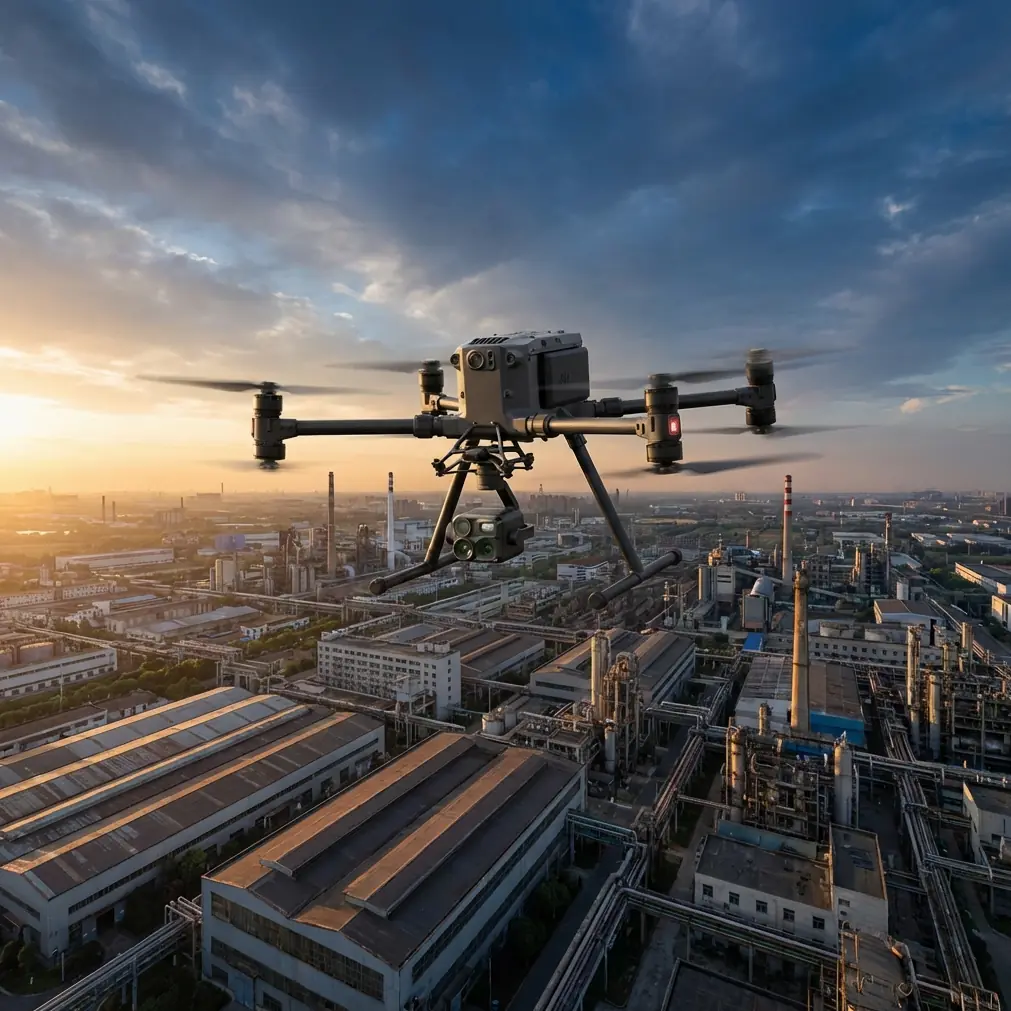
Delivering Wildlife in Low Light With Matrice 4: What Actually Matters in the Field
META: Expert breakdown of Matrice 4 low-light wildlife delivery workflows, from thermal signature interpretation and transmission resilience to battery planning, data validation, and support logistics.
Low-light wildlife missions have a habit of exposing every weak point in a drone program at once. Optics, thermal interpretation, link stability, battery swaps, payload handling, post-flight review, maintenance planning—none of it can hide after sunset.
That is why the most useful way to think about the Matrice 4 is not as a flying camera, but as a field system. If your job involves delivering wildlife support items in dim conditions—feed drops, tracking tags, veterinary supplies, habitat monitoring tools, or survey payloads—the aircraft itself is only one part of the outcome. The other part is the discipline wrapped around it.
I keep coming back to two ideas from civil aviation engineering and support practice. One comes from structural analysis: never accept a single high-level output at face value when the stakes are real. The other comes from spares logistics: when equipment is grounded waiting on parts, the operation has already failed, no matter how good the platform looked on paper. Those lessons map surprisingly well to Matrice 4 wildlife work.
The real problem is not darkness. It is uncertainty.
In low light, a wildlife delivery mission rarely fails because it is dark. It fails because darkness multiplies ambiguity.
A thermal signature can look clean until terrain, moisture, foliage density, or body orientation shifts the contrast. A drop zone can appear open on the primary view but still conceal branches, fencing wire, or uneven ground. A route that felt conservative by day may become marginal once transmission quality starts changing behind tree lines or valley edges. Even battery planning becomes more critical, because pilots tend to overcorrect in the dark with wider margins, more hovering, more re-approaches, and more visual confirmation passes.
This is where Matrice 4 crews need a verification mindset. One of the engineering references behind this article makes a sharp point: broad stress analysis should not be used on its own to make final strength conclusions, especially when values are close to allowable limits. In plain field language, that means summary outputs are useful, but they are not the truth. They are the start of judgment.
The same applies to wildlife delivery in low light. A single thermal image is not enough. A single map layer is not enough. A single flight path drawn in software is not enough. If you are working near trees, embankments, wetland edges, cliff faces, or rough scrub, the mission should be checked from more than one angle before the aircraft ever departs.
Why thermal alone is not a decision engine
Thermal is often the hero of dusk and night operations, but it is not a substitute for interpretation. That matters for wildlife more than many crews admit.
Animals partially obscured by brush can produce fragmented thermal returns. Ground still holding heat can flatten contrast. Water margins can distort expectations. If the job is “delivery” rather than pure observation, this becomes operationally significant because the aircraft is not merely locating life; it is placing something in relation to it.
A useful Matrice 4 workflow is to pair thermal signature identification with a second layer of confirmation. Sometimes that is a visible-light pass at a safe stand-off distance. Sometimes it is a prebuilt photogrammetry base map from daylight operations. Sometimes it is a GCP-backed site model prepared in advance for repeatable drop accuracy on fixed conservation sites.
That may sound excessive until you have had to distinguish between a clear landing corridor and a false opening in tall vegetation.
The aircraft can give you data. It cannot give you certainty without method.
Pre-mapping changes the quality of night decisions
If your wildlife operation repeats around the same reserve, rehabilitation corridor, nesting zone, or feeding route, daylight mapping pays for itself quickly. This is where photogrammetry and GCP discipline stop being “survey extras” and become risk controls.
A prebuilt terrain model lets your Matrice 4 team understand slope, obstacle height, tree line density, and likely signal shadow areas before the low-light mission starts. GCP-supported maps are especially valuable when the drop or placement zone is narrow and repeatability matters across multiple visits.
This connects to another detail drawn from the engineering reference: modern software with strong front-end and back-end tools reduces error probability because it makes raw input issues easier to spot and output easier to diagnose. That idea translates directly to drone fieldwork. Good mission prep software, clean base mapping, and visualized route data reduce the chances of carrying a bad assumption into darkness.
In practical terms, if your crew can review terrain as contours, orthomosaic, and obstacle overlays before launch, you are less likely to waste battery on improvisation in the air. Less improvisation means cleaner flights. Cleaner flights mean safer wildlife interactions and more reliable delivery placement.
Transmission resilience matters more when the aircraft is doing something, not just watching
Low-light wildlife work is often discussed as a sensing problem. It is equally a control problem.
If the mission involves carrying and releasing a lightweight payload, transmission confidence matters differently than it does on a passive observation sortie. You are not just trying to see; you are trying to act at the right point in space, with stable timing and full awareness of aircraft position, surrounding hazards, and target movement.
That is why O3 transmission quality has a practical role here beyond headline range claims. In the field, what matters is not theoretical maximum distance but how consistently the link holds when foliage, terrain masking, and changing aircraft orientation start to interfere. For teams operating under approved BVLOS frameworks in suitable civilian contexts, that consistency becomes even more significant. Every interruption adds friction. Every friction point increases hover time, decision lag, and battery consumption.
If your Matrice 4 workflow also includes AES-256 for secure data handling, that is not just an IT checkbox. Conservation projects, protected species data, and sensitive habitat coordinates often should not circulate loosely. Encryption supports responsible stewardship of location intelligence, especially when multiple contractors or partner organizations are involved.
The battery question is usually a workflow question
Pilots often ask whether they have enough battery for a low-light wildlife delivery mission. The better question is whether the mission design is wasting battery before the real work starts.
Hot-swap batteries help keep aircraft availability high during narrow activity windows—dusk feeding periods, nocturnal movement windows, or short veterinary response windows. But hot-swap capability does not solve poor planning. It simply makes good planning more productive.
This is where the second aviation reference becomes surprisingly relevant. It discusses how grounded aircraft waiting for urgent spares create intense time pressure, and how support systems must move fast enough to meet that demand. The phrase used there is effectively “aircraft on ground”: a machine that cannot fly because a needed part is unavailable. For drone wildlife programs, the lesson is obvious. A Matrice 4 sitting in a case because a prop set, latch, cable, payload bracket, or charger component was not stocked is every bit as useless as a larger aircraft waiting on a part.
The same source also stresses something that many drone teams still neglect: spare planning must be scientific enough to avoid both shortages and dead inventory. That balance matters in conservation and field biology because budgets are finite, remote deployments are punishing, and replacement timelines are rarely kind.
So yes, carry batteries. But also carry the right fast-wear and mission-critical items, and review actual consumption data over time rather than guessing what your kit needs.
A better support model for Matrice 4 wildlife teams
The most effective operators build a support loop between field data and equipment planning.
The aviation support reference notes that parts planning improves when organizations continuously monitor consumption, adjust planning parameters, and accumulate real usage experience. That principle fits Matrice 4 operations perfectly. If your team records which components wear fastest in humid reserves, dusty grassland sites, or coastal wind corridors, you can make better stocking decisions with each month of flying.
This matters more than people think. Wildlife operations tend to be geographically awkward. They often involve vehicle transfers, pop-up launch points, narrow weather gaps, and limited charging infrastructure. A weak spare strategy quietly erodes mission readiness until one missing item stops an entire week of work.
I have seen crews improve reliability dramatically just by treating consumables and accessories as data points rather than afterthoughts.
One third-party accessory that can genuinely improve low-light delivery work
Not every accessory deserves space in a serious workflow discussion. One category does: a well-integrated third-party drop mechanism designed for controlled release of lightweight civilian payloads.
For wildlife support, that can be the difference between an improvised rig and a repeatable delivery process. A proper release unit helps with predictable payload separation, cleaner pilot procedure, and safer stand-off from sensitive animals. That is especially helpful in low light, where repeated manual repositioning can raise disturbance risk.
The key is integration discipline. Any accessory added to the Matrice 4 changes weight, balance, endurance, and possibly sensor framing. It should be tested in daylight first, then validated in a low-light rehearsal with representative payload mass and release altitude. Do not bolt on hardware and assume the aircraft will behave the same way.
If you are comparing release options or trying to work out a clean wildlife delivery setup, you can message a Matrice 4 integration specialist here and discuss fitment constraints before field deployment.
Post-flight review is where expert crews separate themselves
One of the strongest points in the structural analysis reference is that software output should be organized visually—curves, tables, graphics, and files—so humans can diagnose whether the result actually makes sense. That mindset is gold for Matrice 4 teams.
After low-light wildlife missions, do not just archive the footage. Review patterns.
- Where did thermal interpretation become uncertain?
- Which route segments produced transmission degradation?
- Did hover time expand near release?
- Was battery margin consumed by verification passes?
- Did the payload release alter aircraft stability more than expected?
- Were mapped obstacles missing from the preflight model?
This kind of review turns a drone operation into a learning system. Without it, every night flight starts from scratch.
I also recommend classifying observations by confidence, not just by event. For example, identify whether an animal sighting was thermal-confirmed only, thermal-plus-visible confirmed, or geospatially cross-checked against a pre-mapped site model. That simple habit improves operational honesty. It prevents teams from acting on weak evidence just because the screen looked convincing at the time.
What good Matrice 4 wildlife delivery looks like
At its best, a low-light wildlife mission with Matrice 4 is calm, not dramatic.
The site has already been mapped where possible. GCPs have been used on repeat-critical zones. A thermal signature is interpreted in context, not in isolation. O3 transmission performance has been considered along the route, especially where terrain or canopy can interfere. AES-256 is enabled where habitat or species data requires tighter control. Hot-swap batteries support tempo without replacing judgment. The payload release system has been tested, not improvised. And the support kit includes the parts most likely to stop the mission if ignored.
That may sound less exciting than talking about raw capability. It is also how real field performance is built.
The two civil aviation references behind this discussion point in the same direction from different angles. First: broad digital outputs are only trustworthy when checked, interpreted, and refined before high-stakes decisions. Second: operational readiness depends on spares, data discipline, and fast support loops, not just vehicle capability. Those are not abstract lessons. They are highly practical for anyone running a Matrice 4 in low-light wildlife work.
When the job is delivering support to living systems that do not wait for daylight, professionalism shows up in the details.
Ready for your own Matrice 4? Contact our team for expert consultation.