
Filming Coastlines at Altitude With Matrice 4
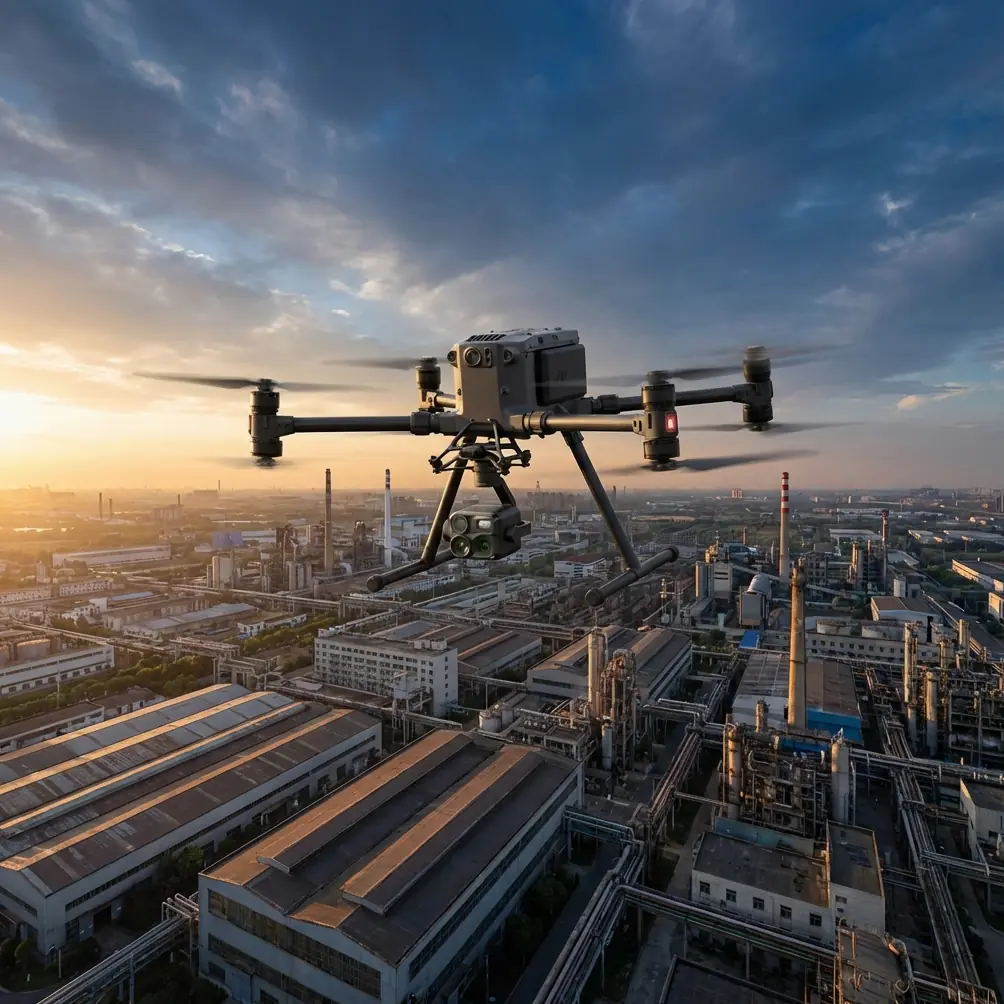
Filming Coastlines at Altitude With Matrice 4: A Field Report on Signal Discipline, Mapping Accuracy, and Wind-Aware Capture
META: Expert field report on using Matrice 4 for high-altitude coastline filming, with practical guidance on O3 transmission, EMI mitigation, photogrammetry, GCP workflow, thermal use, and battery strategy.
Coastline work has a way of exposing weak planning. The terrain is open, the light is unstable, the wind stacks in layers, and the RF environment can be deceptively dirty. On paper, a cliff edge and a clean horizon look simple. In practice, filming coastlines at high altitude with the Matrice 4 demands disciplined setup, especially when the mission needs more than cinematic footage. Many crews now want one flight window to produce both visual assets and survey-grade outputs. That is where the aircraft stops being just a camera platform and starts behaving like a field instrument.
I have been asked repeatedly whether the Matrice 4 is really suited to this kind of mixed mission. My answer is yes, but only when the operator understands what the environment is doing to the aircraft, to the link, and to the data. The platform has the right ingredients for serious coastal work, yet the value comes from how those ingredients are used under pressure: managing electromagnetic interference near maritime infrastructure, preserving transmission stability along cliff faces, planning battery changes around gust bands, and deciding when thermal signature data adds something meaningful instead of becoming an attractive distraction.
This field report focuses on that reality.
The assignment was straightforward on the brief: capture dramatic high-altitude passes over a rugged coastline, then collect imagery suitable for photogrammetry around the headland and adjacent erosion zone. The location, however, had the usual complications. There was sea spray in the lower band, stronger winds above the lip of the cliffs, and several probable sources of electromagnetic interference from communications equipment and utility hardware near the launch area. Anyone who has worked these sites knows that interference rarely announces itself with drama. It shows up as inconsistent signal confidence, brief image breakup, delayed control response, or a transmission link that feels less clean than it should.
For the Matrice 4, that is where O3 transmission matters operationally. People tend to talk about transmission only in terms of range, which misses the point for coastline work. High-altitude filming is often less about maximum distance than about maintaining a dependable live view and control link when the aircraft is moving through changing geometry. A cliff line can create awkward reflections and partial masking. Antenna orientation becomes a practical skill, not a checklist item. On this mission, the most useful intervention was also one of the simplest: we adjusted the ground antenna angle twice during the opening passes to keep the broad face of the antenna pattern aligned with the aircraft’s actual flight corridor, not the path we had imagined while still standing on flat ground.
That change cleaned up the link immediately.
This is the part many pilots underestimate. Electromagnetic interference is not always solved by leaving the area or reducing mission scope. Sometimes the answer is to stop treating antenna position as static. Along coastlines, especially elevated ones, the aircraft can be above, below, or off-axis from the controller in a matter of seconds. If the launch point is close to metal fencing, towers, parked vehicles, or maritime communication hardware, the operator should expect reflections and localized noise. With the Matrice 4, a deliberate antenna adjustment strategy can preserve O3 transmission integrity far better than brute-force repositioning after the mission has already begun to unravel.
I tell crews to think in terms of corridor management. Before the first take, identify the actual three-dimensional arc where the aircraft will spend most of its time. Then orient for that volume, not for a single point on the horizon. If the mission includes lateral shoreline runs followed by a climb and orbit, build in a pause to reassess antenna alignment. A ten-second correction on the ground is often worth more than a minute of trying to rescue a deteriorating link in the air.
Security also deserves more respect in coastal operations than it typically gets. The Matrice 4’s support for AES-256 matters when the flight is tied to sensitive infrastructure documentation, environmental compliance, or pre-development site assessment. Not every coastline job is public-facing. Some involve restricted assets, privately commissioned inspection, or ecological monitoring where location data and imagery should not move casually through unsecured workflows. AES-256 is not a marketing line in that context. It is part of the chain of custody for the mission. The aircraft captures the scene, but the operator is responsible for protecting the data package attached to it.
That is especially relevant when one sortie is expected to feed both film editors and mapping specialists. Cinematic users often care about light, movement, and framing. Survey users care about repeatability, overlap, coordinate control, and distortion management. The Matrice 4 can serve both camps, but not with the same flight behavior. If you want photogrammetry outputs that hold up in post-processing, you must fly with purpose. The coastline is visually seductive; the software is unimpressed. It wants consistency.
On this mission, the mapping segment was built around a GCP-backed workflow. Ground control points are still the quiet backbone of reliable coastal photogrammetry, especially in places where vertical relief and repeating textures can mislead reconstruction. Water edges, rock shelves, sand transitions, and low vegetation create scenes that look rich to the eye but can produce uneven confidence in the model if the control framework is weak. A properly distributed GCP layout anchors the data. It gives the resulting orthomosaic and surface model a reference structure that survives scrutiny later.
Operationally, that means the Matrice 4 is most useful when the crew decides in advance whether the aircraft is gathering footage, building geometry, or doing both in separate blocks. Trying to improvise that distinction in the air usually degrades the output of each. For coastline work, my preference is a cinematic capture window during the best light, followed by a stricter photogrammetry pattern once the visual sequence is secure. The headland does not care that the golden edge light looks perfect. Your overlap and control accuracy still need to be there.
Battery handling is another point where field results diverge from brochure assumptions. High-altitude coastal filming burns time in ways inland crews do not always anticipate. Headwinds on outbound legs, cautious repositioning near cliff structures, and repeated altitude changes all eat into endurance. This is where hot-swap batteries change the tempo of the day. They reduce downtime between sorties and allow a well-drilled team to keep a narrow light window productive. That is not just a convenience. Along coastlines, weather shifts fast enough that a delayed relaunch can mean a totally different sea state and a completely different reflective profile from the water below.
Hot-swap discipline also supports safer decision-making. When operators know they can turn the aircraft around quickly, they are less tempted to stretch a battery into the unattractive margin where wind, return routing, and reserve planning begin to fight each other. I would rather see a conservative landing and a fast battery exchange than a crew trying to save five minutes while the aircraft works harder than expected on the return leg over broken terrain and salt air.
Thermal work deserves a narrower, more professional framing. The phrase thermal signature gets thrown around loosely, but along coastlines it has real value when used for a defined purpose. Early morning cliff inspections, wildlife separation studies, search support near rock fissures, or identifying moisture-related anomalies in certain structures can all benefit from thermal interpretation. But thermal is not automatically useful just because the payload can see heat contrast. The operator needs to know what the expected signal is, what the background is doing, and whether the marine environment is helping or masking the target.
Over water and wet rock, thermal scenes can flatten or behave unpredictably as the sun angle changes. That means timing matters. If the mission includes thermal capture, I advise separating that segment from the hero footage mentality. Treat it as diagnostic collection. Fly stable lines. Record environmental notes. Mark any anomalies precisely. The Matrice 4 becomes far more valuable when thermal is used to answer a question, not simply to add an interesting visual layer.
One area where crews are pushing harder is BVLOS planning, or at least operating with BVLOS logic in mind even when missions remain within current local line-of-sight requirements. Coastal corridors naturally invite longer route thinking. The temptation is obvious: the shoreline continues, the subject remains visible, and the aircraft feels capable. But high-altitude coastal work punishes complacency. Wind can shear differently at 60 meters and 120 meters. Seabirds can appear without warning. Signal behavior can change as the aircraft crosses different reflective surfaces and topographic breaks. The Matrice 4 can support ambitious route design, yet the operator should build the mission around recoverability first. If a section cannot be flown with a clean contingency plan, it does not belong in the active route.
That same mindset improves filmmaking. Some of the strongest coastline sequences come from restraint. Instead of flying ever farther, fly better lines. Use altitude to reveal terrain relationships. Let the aircraft track the contour of the cliff, then rise just enough to expose the next geological layer. The Matrice 4 is particularly effective when the pilot and camera operator think in terms of topographic storytelling rather than pure spectacle.
For teams new to this type of operation, I usually recommend a three-pass structure. First, perform a link confidence pass near the launch corridor with deliberate antenna checks and no creative ambition. Second, capture the priority visual route while conditions are clean and the crew workload is manageable. Third, switch mentally into data collection mode for photogrammetry or thermal tasks with GCP validation and more rigid flight parameters. Mixing those stages too aggressively is how operators end up with footage that is almost good and survey data that is almost usable.
The difference between a successful coastline mission and a compromised one often comes down to whether the crew respected the invisible factors. Not the cliff. Not the sea. The invisible layer: radio behavior, wind gradient, data integrity, and battery pacing. The Matrice 4 is well suited to this environment because it combines serious transmission capability, secure data handling with AES-256, practical battery workflow through hot-swapping, and the flexibility to support both visual capture and photogrammetry-backed mapping. But the aircraft does not remove the need for judgment. It rewards it.
If you are building your own coastal workflow and want a second opinion on mission design, link setup, or mapping structure, you can message the flight team here. I would start with your launch geometry, expected interference sources, target altitude bands, and whether GCP placement is feasible at the site. Those four details usually reveal where the real bottleneck is.
The Matrice 4 is not at its best on coastlines because the scenery is dramatic. It is at its best because it can stay useful when the mission asks for more than one type of output under less-than-friendly conditions. When you manage antenna orientation actively, treat O3 transmission as a live operational system, use GCPs to stabilize photogrammetry, and lean on hot-swap batteries to protect timing and reserves, the aircraft becomes a reliable coastal tool rather than a hopeful one.
That distinction matters in the field. It is the difference between coming back with attractive fragments and returning with material that can actually be used.
Ready for your own Matrice 4? Contact our team for expert consultation.