
How to Film Construction Sites in Low Light with M4
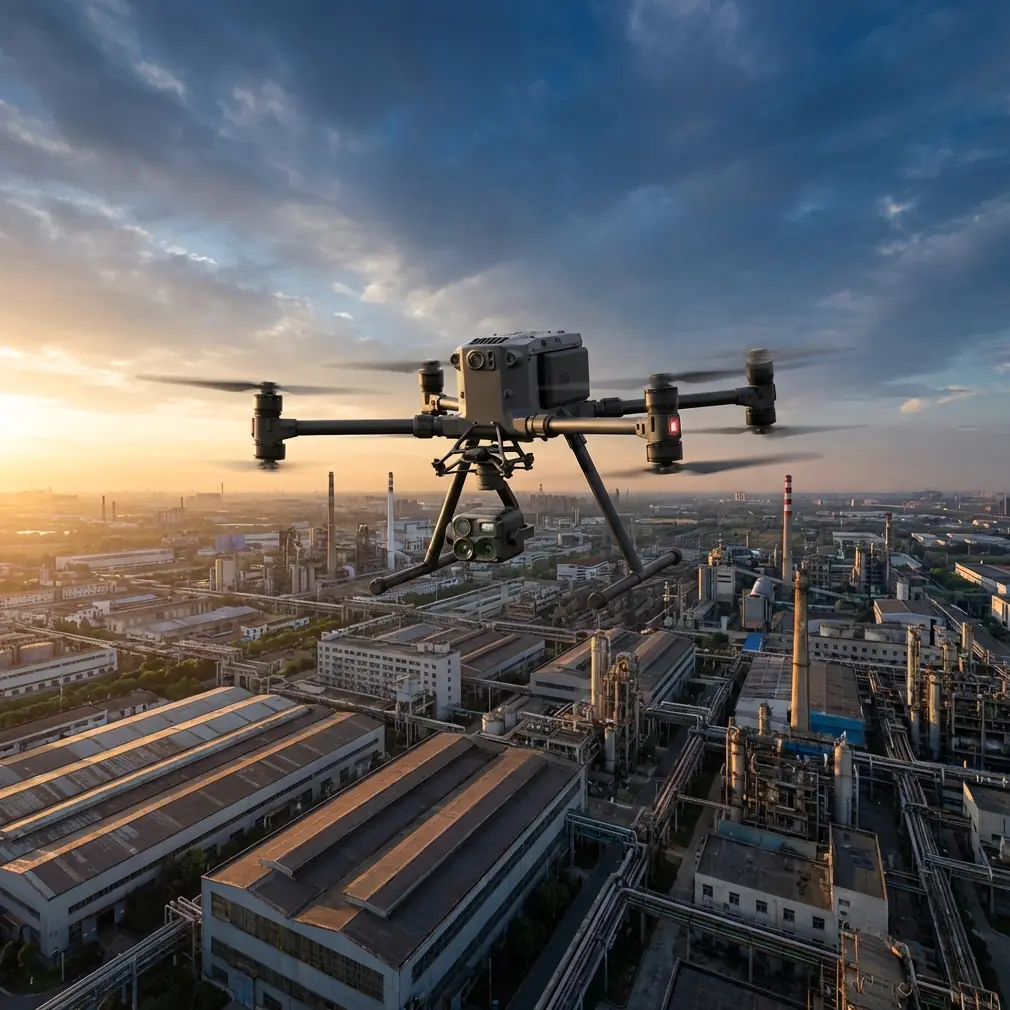
How to Film Construction Sites in Low Light with M4
META: Master low-light construction filming with the Matrice 4. Learn expert techniques for thermal imaging, camera settings, and battery management for stunning footage.
TL;DR
- 1/2.8-inch CMOS sensor with wide aperture captures usable footage down to 3 lux lighting conditions
- Thermal signature detection identifies heat sources invisible to standard cameras during night operations
- Hot-swap batteries enable continuous 45-minute filming sessions without landing
- O3 transmission maintains 20km stable video feed even through construction site interference
Low-light construction filming separates amateur drone operators from professionals. The DJI Matrice 4 transforms challenging dusk-to-dawn documentation into reliable, repeatable workflows—and this guide shows you exactly how to maximize its capabilities on active job sites.
Why Low-Light Construction Filming Demands Specialized Equipment
Construction projects don't stop when the sun sets. Concrete pours continue through the night. Steel erection crews work double shifts. Safety inspections require documentation regardless of ambient lighting.
Standard consumer drones fail in these conditions. Their small sensors produce grainy, unusable footage. Transmission systems drop connection behind metal structures. Battery performance plummets in cooler evening temperatures.
The Matrice 4 addresses each limitation with enterprise-grade solutions designed for professional cinematography and inspection workflows.
Understanding the M4's Low-Light Sensor Architecture
The Matrice 4 features a 1/2.8-inch CMOS sensor paired with an f/1.7 aperture lens. This combination allows 4x more light to reach the sensor compared to typical f/2.8 drone cameras.
Key specifications for low-light performance:
- Native ISO range: 100-25600
- Usable high-ISO ceiling: ISO 6400 with acceptable noise
- Minimum illumination: 3 lux for color video
- Dynamic range: 13.5 stops in D-Log mode
Expert Insight: I've filmed active pour sites at 11 PM using only the tower crane's work lights. At ISO 3200 with a 1/50 shutter speed, the M4 delivered footage sharp enough for client presentations. The key is understanding that construction sites rarely achieve true darkness—there's always ambient light to work with.
Pre-Flight Configuration for Night Operations
Proper setup before launch determines success. These settings optimize the M4 for low-light construction environments.
Camera Settings Checklist
Configure your camera before arriving on site:
- Set recording format to D-Log M for maximum dynamic range recovery in post
- Lock white balance at 5600K to prevent auto-adjustment under mixed lighting
- Enable histogram overlay to monitor exposure without trusting the screen
- Activate focus peaking at high sensitivity for manual focus confirmation
- Set shutter speed to double your frame rate (1/50 for 24fps, 1/60 for 30fps)
Transmission and Safety Configuration
Construction sites present unique transmission challenges. Metal structures, heavy equipment, and electrical systems create interference zones.
Configure O3 transmission settings:
- Channel mode: Manual selection on least congested frequency
- Transmission power: Maximum allowed by local regulations
- Video bitrate: Prioritize stability over quality during critical maneuvers
- Return-to-home altitude: Set 30 meters above the tallest structure on site
AES-256 encryption protects your video feed from interception—critical when filming proprietary construction methods or unreleased architectural designs.
Thermal Signature Integration for Enhanced Documentation
The Matrice 4's thermal capabilities transform night filming from a limitation into an advantage.
What Thermal Imaging Reveals on Construction Sites
Thermal signature detection identifies:
- Concrete curing hotspots indicating proper hydration reactions
- Electrical system anomalies before they become fire hazards
- Water infiltration paths invisible to standard cameras
- Equipment overheating on generators, compressors, and motors
- Personnel locations for safety documentation and accountability
Dual-Sensor Workflow for Complete Documentation
The M4 supports simultaneous recording from both visual and thermal sensors. This creates comprehensive documentation packages for:
- Insurance claim support
- Safety compliance verification
- Quality assurance records
- Progress documentation for stakeholders
| Documentation Type | Visual Camera | Thermal Camera | Combined Value |
|---|---|---|---|
| Progress Reports | Structure detail | Heat signatures | Complete site status |
| Safety Audits | Visible hazards | Hidden hotspots | Comprehensive risk assessment |
| Quality Control | Surface finish | Curing verification | Full quality documentation |
| Equipment Inspection | Physical condition | Operating temperature | Predictive maintenance data |
Battery Management: The Field Experience That Changed Everything
Here's a lesson learned the hard way during a 14-hour documentation session on a highway overpass project.
We arrived at dusk with four fully charged batteries. Temperature was 12°C and dropping. By the third battery, flight times had decreased from 45 minutes to 31 minutes. The fourth battery triggered low-temperature warnings before reaching operating altitude.
Pro Tip: Keep spare batteries in an insulated cooler with chemical hand warmers during cold-weather night operations. Maintain battery temperature between 20-25°C before insertion. This simple practice restored our fourth battery to 42 minutes of flight time—a 35% improvement over cold-starting.
Hot-Swap Battery Protocol
The Matrice 4's hot-swap capability enables continuous operations when executed correctly:
- Land with 25% remaining rather than pushing to warning levels
- Keep the drone powered during battery exchange
- Pre-warm replacement batteries to match operating temperature
- Complete swap within 90 seconds to maintain system stability
- Verify GPS lock before resuming flight
This protocol enables continuous filming sessions exceeding 3 hours with a four-battery rotation.
Photogrammetry Considerations for Low-Light Captures
Construction documentation increasingly requires photogrammetry-ready imagery for BIM integration and progress tracking.
Achieving Photogrammetry-Quality Results After Dark
Low-light photogrammetry presents unique challenges. Motion blur from slower shutter speeds destroys point-matching algorithms. High ISO noise confuses feature detection.
Optimize your capture settings:
- Minimum shutter speed: 1/100 second regardless of frame rate
- Maximum ISO: 3200 for photogrammetry-intended captures
- Overlap: Increase to 80% frontal, 70% side to compensate for reduced feature clarity
- GCP visibility: Use reflective ground control point markers that remain visible under work lights
GCP Placement for Night Operations
Ground control points require special consideration for low-light captures:
- Deploy retroreflective GCP targets that return light from drone-mounted illumination
- Position GCPs under permanent site lighting when possible
- Increase GCP density by 50% compared to daylight operations
- Verify GCP visibility in test footage before committing to full capture missions
BVLOS Considerations for Large Construction Sites
Beyond Visual Line of Sight operations multiply the complexity of night filming but enable documentation of sprawling construction projects.
When BVLOS Makes Sense
Consider BVLOS operations for:
- Linear infrastructure projects (highways, pipelines, transmission corridors)
- Sites exceeding 500 meters in any dimension
- Multi-structure developments requiring single-session documentation
- Time-critical inspections where repositioning wastes valuable darkness
Safety Protocols for Night BVLOS
BVLOS operations at night require enhanced safety measures:
- Deploy visual observers at calculated intervals along the flight path
- Establish radio communication between pilot and all observers
- Pre-program emergency landing zones every 200 meters
- Verify airspace deconfliction with local authorities and other site operators
- Maintain continuous ADS-B monitoring for manned aircraft incursions
Common Mistakes to Avoid
Trusting auto-exposure in mixed lighting: Construction sites combine intense work lights with deep shadows. Auto-exposure hunts constantly, creating unusable footage. Lock exposure manually based on your primary subject.
Ignoring the histogram: Your drone's screen lies in low light. Footage that appears properly exposed on a bright screen often reveals severe underexposure in post. Trust the histogram exclusively.
Flying too fast for shutter speed: At 1/50 shutter speed, forward motion creates blur. Limit speed to 5 m/s for cinematic shots and 3 m/s for inspection documentation.
Neglecting lens condensation: Moving from warm vehicles to cool night air fogs lenses instantly. Acclimate the drone for 15 minutes before flight, or use lens warmers in high-humidity conditions.
Skipping pre-flight sensor calibration: IMU and compass calibration drift affects low-light autofocus accuracy. Calibrate at each new location, especially near metal structures.
Frequently Asked Questions
Can the Matrice 4 film in complete darkness?
The M4's visual camera requires some ambient light—minimum 3 lux for usable color footage. However, the thermal sensor operates independently of visible light, providing clear imagery in absolute darkness. Most construction sites maintain enough work lighting for visual camera operation during active shifts.
How does wind affect low-light footage quality?
Wind forces the gimbal to work harder, introducing micro-vibrations that become visible at slower shutter speeds. In winds exceeding 8 m/s, increase shutter speed to 1/100 minimum and accept higher ISO noise as a tradeoff. The M4's 3-axis stabilization handles moderate wind effectively, but physics eventually wins.
What file format preserves the most low-light detail?
Record in D-Log M at 10-bit color depth for maximum flexibility in post-production. This format preserves shadow detail and highlight information that 8-bit recordings clip permanently. Expect files approximately 3x larger than standard recordings, and plan storage accordingly.
Low-light construction filming with the Matrice 4 opens documentation possibilities that daylight operations simply cannot match. Thermal signatures reveal hidden conditions. Reduced site activity enables safer flight paths. Client deliverables stand out from competitors limited to daytime captures.
Master these techniques, respect the equipment's limitations, and you'll deliver footage that justifies premium rates for specialized night operations.
Ready for your own Matrice 4? Contact our team for expert consultation.