
Matrice 4 on a Dim Construction Site: A Low
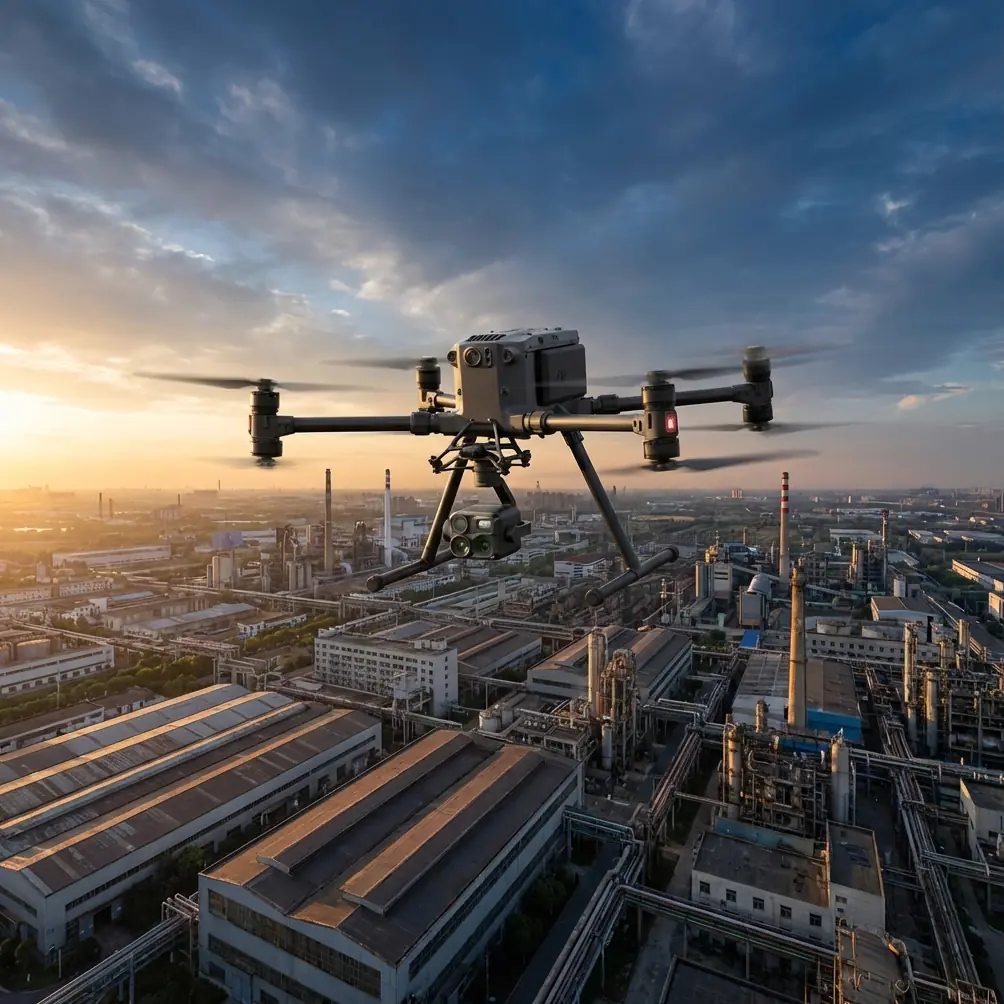
Matrice 4 on a Dim Construction Site: A Low-Light Case Study from Land Consolidation Monitoring
META: A field-based Matrice 4 case study on low-light construction filming, orthophoto capture, and progress verification for land consolidation projects using UAV remote sensing.
By Dr. Lisa Wang, Specialist
Land consolidation projects rarely fail because no one worked hard enough. They fail quietly, in the gaps between design intent and what was actually built. A drainage segment ends short. A production road is graded but not to spec. A culvert appears complete in a report yet still needs rework on site. When monitoring relies on sporadic ground checks, those gaps widen, and the financial consequences follow.
That is why the reference project behind this discussion matters. The source material describes a practical use of low-altitude UAV remote sensing for construction monitoring in land consolidation, built around a simple but powerful idea: use high-resolution orthophotos captured quickly and repeatedly to verify progress, confirm quantities, and preserve an evidentiary record of site conditions. The paper is blunt on the problem it addresses. It states that there had been no effective way to monitor construction progress for land consolidation works. Its answer was equally direct: a UAV workflow with short turnaround, relatively low cost, and imagery detailed enough to support dynamic monitoring of implementation.
For anyone evaluating the Matrice 4 for filming construction sites in poor light, that matters more than product hype. The useful question is not whether the aircraft can “capture stunning visuals.” It is whether it can produce reliable information when ambient light is weak, ground conditions are uneven, and project stakeholders need proof, not impressions.
Why this case fits the Matrice 4 discussion
The source project was not a cosmetic media job. It involved real civil works spread across a large land improvement program: 1 pond, 3 culverts, 13 bridges, and 9 sluices were part of the monitored asset set. Road work was also significant, with 5,410 meters leveled and 63,193 meters newly built or reconstructed. Those numbers change the operating picture immediately.
A drone covering this kind of site is not just collecting scenery. It is documenting distributed infrastructure, measuring completion status across multiple work packages, and doing it frequently enough that managers can compare what they see against design requirements and claimed progress. In the source text, one of the clearest operational benefits is the ability to “quickly verify” whether each individual engineering item was built according to plan and schedule. That rapid verification is tied directly to reducing financial leakage caused by weak oversight.
This is where a Matrice 4 deployment in low light becomes especially interesting. Construction sites do not always wait for textbook daylight. Winter afternoons compress usable light. Haze can flatten contrast. Moist ground, canals, and compacted roads create reflective surfaces that confuse less capable capture workflows. If your mission is progress verification rather than cinematic mood, the airframe and sensor stack have to preserve enough detail for photogrammetry and visual interpretation even when the site is visually dull.
What low-light actually changes on a construction mission
Low-light filming is often treated as a camera-only issue. In field operations, it is not. It affects positioning confidence, motion discipline, route planning, image overlap, transmission reliability, and the threshold at which a “good enough” visual record becomes a legally and operationally useful one.
The source paper emphasizes high-resolution orthophotos as the core output. That matters because orthophotos are not merely images. They are geospatial documents. When a contractor says a segment was completed, an orthophoto allows the owner or survey team to check alignment, continuity, and extent across the site. In the paper, this was not abstract. It specifically notes that digital orthophoto imagery preserved the authenticity of current conditions and provided dependable traceability for future land disputes. That is a critical detail. It shifts the UAV from a progress-report accessory to a record-keeping instrument.
With Matrice 4, the practical implication is clear: low-light capture has to be planned around evidence quality. If a mission will feed photogrammetry, I would treat overlap discipline, speed control, and ground control point strategy as non-negotiable. GCPs help preserve mapping integrity when surface textures are weak and shadows lengthen. Low light can reduce feature contrast, which in turn makes tie-point generation less forgiving. A robust GCP layout stabilizes the deliverable when image conditions are less than ideal.
That does not mean every twilight flight becomes a survey mission. It means the operator should decide before launch whether the aircraft is gathering promotional footage, construction verification imagery, or a hybrid of both. The source material supports the second category. Its entire value proposition rests on measurable oversight.
A field scenario: dusk over leveled roads and canal structures
On one recent style of mission that echoes the reference project, the brief was straightforward: document newly formed road sections, verify drainage connectivity, and capture enough georeferenced imagery to compare visible progress against the construction schedule before the next payment checkpoint. Light was fading faster than expected, and the site mixed embankments, water edges, and partially completed concrete structures.
This is where Matrice 4 earns its place if flown correctly. I would structure the mission in layers.
First, a stable mapping pass for orthophoto generation. This creates the baseline product that aligns with the source paper’s most important contribution: rapid access to high-resolution orthophotos for dynamic monitoring. On a land consolidation project, that can reveal whether a road truly extends to its planned endpoint, whether a drainage corridor remains obstructed, or whether a bridge approach is functionally connected rather than only visually present.
Second, targeted oblique capture over structures such as culverts, sluices, and bridge transitions. The source material lists 3 culverts, 13 bridges, and 9 sluices in its monitored works. These are exactly the kinds of assets that benefit from oblique context because plan-view imagery alone can miss sidewall conditions, approach grading, and inlet or outlet clarity.
Third, selective thermal signature review where conditions justify it. Thermal is not a replacement for visible photogrammetry, but on dim sites it can help distinguish water flow paths, moisture-retaining ground, or recently worked surfaces with different cooling profiles. Used carefully, thermal context can support site interpretation, especially around drainage-related features central to land improvement projects.
During one such dusk operation near a reed-lined drainage edge, a small group of egrets lifted from the bank and crossed the planned route just as the aircraft transitioned toward a culvert line. This is the kind of moment that exposes whether a pilot is running a rigid template or actually reading the environment. The aircraft’s sensor awareness and cautious rerouting prevented a rushed correction. We widened the orbit, held altitude, and resumed the inspection leg once the birds cleared the channel. That was not dramatic. It was exactly how civilian site flying should work: mission continuity without forcing the airspace, and without compromising wildlife.
Why transmission and security matter more after sunset
Low-light work tends to magnify small operational weaknesses. A marginal video link is more stressful when the site itself offers fewer visual cues. This is why O3 transmission quality is not just a convenience item in practical construction filming. It directly supports safer framing, steadier route execution, and cleaner handoff between pilot and visual observer or project lead if multiple people are reviewing the live feed.
Security also deserves more attention than it usually gets in marketing copy. The reference paper frames UAV monitoring as a way to reduce losses tied to poor oversight. Once drone data becomes part of payment verification, dispute resolution, or progress certification, its handling matters. AES-256 data protection is operationally relevant here because site imagery is no longer casual media. It can document incomplete works, exposed utilities, staging conditions, and location-specific project evidence. For owners, consultants, and contractors alike, encrypted workflows are a sensible baseline.
The hidden value of repeatability
One sentence from the source material stands out because it captures the real management advantage of UAV monitoring: it enables dynamic monitoring of whether construction follows design requirements and schedule. Dynamic is the key word. A single dramatic flight does little. Repeatable flights create accountability.
That repeatability becomes more valuable when hot-swap batteries are part of the workflow. On large linear or distributed sites, battery interruptions can break continuity and reduce consistency between capture blocks. Hot-swap capability shortens the gap between sorties and helps the crew preserve similar light conditions across adjacent sections. When you are trying to compare one monitoring phase against another, that consistency matters. It helps keep change detection meaningful instead of muddied by different capture conditions.
The original project also references multiple monitoring stages, including second- and third-phase monitoring summaries. Even though the extracted text is fragmented, the structure is revealing. This was not a one-off proof of concept. It was staged oversight. That is precisely the model where Matrice 4 can be strongest: recurring site intelligence, not one-day spectacle.
Orthophotos, traceability, and disputes
Construction teams often underestimate the long-tail value of imagery. The source paper does not. It explicitly says that applying digital orthophotos to land consolidation construction preserved the truthfulness of current site conditions and offered reliable traceability for future land disputes.
That is an unusually practical point. In land projects, disagreements do not always emerge during active construction. They can surface later around occupied irrigated land, filled ponds, removed village land, or changed access routes. The source text references several land-use changes, including 33,845 square meters of filled pond water surface and 27,419 square meters of village land removal. Once terrain and land use shift, memory is a poor archive. Orthophotos are not.
For Matrice 4 operators, the implication is straightforward: fly in a way that future you can defend. Maintain consistent mission parameters. Use GCPs where survey-grade alignment is needed. Keep metadata intact. Store raw and processed outputs securely. A construction client may initially ask for “some footage.” What they may actually need six months later is a verifiable record.
If a team needs help designing that kind of workflow around site communications and deliverable handling, I often suggest they start with a direct field conversation rather than a long procurement chain: message the operations desk.
Can Matrice 4 support BVLOS-style thinking?
Any mention of BVLOS must stay inside local regulations and approved operating frameworks, but the planning mindset is still useful. Large land consolidation projects often sprawl across roads, canals, and separated work zones. Even when the mission remains within legal visual constraints, operators benefit from BVLOS-style discipline: segment the site, define relay points, map hazards, formalize battery swaps, and standardize capture altitudes and overlap.
This is how you turn a drone into a monitoring system rather than a flying camera. The source project’s emphasis on short cycle time and practical deployment supports that broader lesson. The technology works because it fits the pace of construction, not because it looks sophisticated on paper.
What this means for readers focused on low-light filming
If you are considering Matrice 4 for construction sites in dim conditions, the strongest takeaway from the reference material is not that UAVs can “see more.” It is that the right UAV workflow can close the gap between progress claimed and progress proven.
The paper demonstrates three things that should guide your own deployments:
- High-resolution orthophotos are central, not optional, when the goal is monitoring implementation.
- Frequent UAV checks can verify engineering quantities and schedule status fast enough to reduce losses caused by inadequate supervision.
- The imagery has value beyond immediate progress reporting because it can preserve traceable evidence for later disputes.
Those are not abstract benefits. They are operational outcomes.
Matrice 4 fits this environment when used with discipline: visible imaging for orthophoto production, oblique passes for structures, thermal signature review where surface interpretation benefits, O3 transmission for dependable live monitoring in weak light, AES-256 for secure handling of project-sensitive data, and hot-swap batteries to preserve repeatability across long sites.
The source paper described low-altitude UAV remote sensing as a feasible method for quickly obtaining high-resolution orthophotos and bringing a new approach to land consolidation surveying and monitoring. That assessment still holds. What changes with Matrice 4 is not the logic of the workflow but its refinement. Better low-light performance, cleaner transmission, and more structured data practices mean the aircraft can support the kind of site documentation that construction managers, survey teams, and asset owners can actually use.
And that is the real test. Not whether the footage looks impressive on a screen, but whether the flight helps answer hard site questions before they become expensive ones.
Ready for your own Matrice 4? Contact our team for expert consultation.