
Matrice 4 Field Report: Low-Light Construction Site Filming
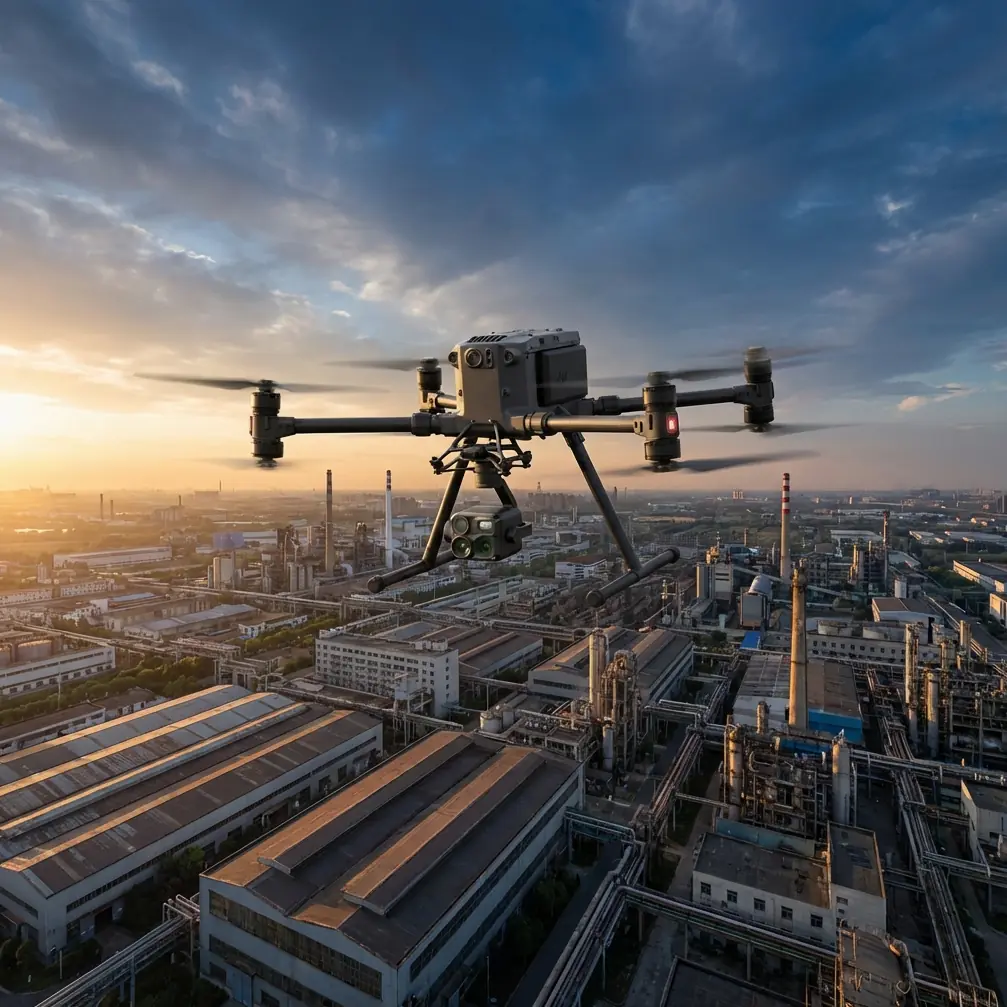
Matrice 4 Field Report: Low-Light Construction Site Filming Without Losing Survey Discipline
META: Expert field report on using Matrice 4 for low-light construction site filming, with practical altitude guidance, EMI-aware setup, and mission planning insights for safer, cleaner data capture.
Low-light construction work is where a drone stops being a camera platform and starts revealing the quality of its system design.
That sounds abstract until you fly a site before sunrise or after dusk. Tower cranes are still. Temporary lighting throws harsh pools across concrete decks. Reflective metal surfaces flare in one frame and disappear in the next. If your aircraft, payload, transmission link, and mission planning are not working together, the result is unstable footage, inconsistent overlap, noisy thermal interpretation, and mapping outputs that are hard to trust.
For operators looking at the Matrice 4 for this kind of work, the real question is not simply whether it can “see in the dark.” The better question is whether it can film an active construction environment in poor light while preserving the discipline needed for documentation, progress comparison, and photogrammetry.
That is where a few old aerospace design lessons become surprisingly relevant.
Why low-light construction missions are harder than they look
Construction sites are electrically messy and operationally uneven. Temporary generators, site offices, lift systems, floodlights, rebar grids, communication gear, and improvised cable routes all create a more difficult electromagnetic and visual environment than a clean test field.
At the same time, the mission often has two outputs, not one.
First, the client wants cinematic or at least clean visual footage for progress communication. Second, the same flight window may be the most practical time to gather mapping, thermal signature observations, roof moisture clues, façade status checks, stockpile visibility, or earthwork change records before crews arrive.
These goals can conflict. The settings and flight style that make pretty footage are not always the same ones that support accurate reconstruction or repeatable inspections. With Matrice 4, the opportunity is to build one repeatable workflow that respects both.
The most useful altitude insight for this scenario
If I had to give one field rule for low-light construction filming with Matrice 4, it would be this:
Start your primary visual documentation passes around 45 to 60 meters AGL, then adjust by the tallest structure and light spill pattern rather than defaulting to a dramatic low orbit.
That range is a practical sweet spot on many medium to large sites. It is high enough to reduce the exaggerated contrast shifts caused by isolated work lights, vehicle lamps, and reflective puddles, but still low enough to preserve useful detail on slab edges, material staging zones, façade openings, and crane interfaces. It also helps the aircraft maintain safer lateral clearance from unfinished vertical elements.
Why not lower? In poor light, flying too low over an active site tends to amplify three problems:
- Parallax inconsistency around columns, scaffold, and protruding steel.
- Hotspot exposure swings from portable lighting towers.
- More complicated obstacle management when depth cues are weaker for both pilot and camera system.
Why not much higher? Because once you climb too far, the site can flatten visually, and small but operationally important details—water pooling, missing edge protection, material displacement, thermal anomalies—become less readable. For photogrammetry, excessive altitude can also reduce the practical benefit of the sensor if the ground sample requirement is tight.
So 45 to 60 meters is not a magic number. It is a disciplined starting point. On a dense urban build, you may shift upward. On a compact residential site, you may work lower. But beginning in that band usually gives Matrice 4 enough spatial context to produce footage that is stable, repeatable, and analytically useful.
What aerospace wiring rules teach us about cleaner drone operations on site
One of the source references is an avionics design text, and its core lesson is simple: electromagnetic compatibility is never accidental.
The manual specifies that different classes of wiring should be separated, with a minimum spacing of 50 mm between certain harness types to reduce interference. It also notes that signal reception equipment should be kept away from strong emitting sources, and that audio-range interference above 30 mV can begin to affect intelligibility.
This was written for aircraft systems, not drones on construction sites, but the operational meaning carries over beautifully.
A low-light site is often full of interference sources. Portable site communications, temporary power distribution, metal-dense structures, rooftop equipment, and nearby commercial transmitters can all stress a drone link or corrupt the working environment for clean control and data transfer. If you are using Matrice 4 with O3 transmission in an urban construction corridor, you should think like an aircraft integrator, not just a pilot.
That means:
- Launch away from temporary generators and high-power site cabins when possible.
- Avoid standing your ground station directly beside cable bundles, inverter units, or metallic barriers.
- Keep your controller and any external display setup physically tidy rather than draping signal and power leads into a compact tangle.
- Plan antenna orientation with the same seriousness you give lens selection.
- If you are documenting from a vehicle staging area, verify that you are not boxed in by reflective surfaces that degrade consistency.
The source text also emphasizes placing antenna-related equipment close enough to keep feed lines short. On a drone mission, the equivalent principle is reducing unnecessary complexity in your field setup. Every extra adapter, relay point, monitor bridge, or improvised accessory mount is another chance to introduce instability into a mission that already has limited light and compressed timing.
When crews say a site “felt noisy” from a link-quality perspective, they are usually describing the consequences of poor electromagnetic hygiene.
Thermal signature work in low light: useful, but only if you respect context
Low light is often attractive for thermal work because the visual scene is calmer and heat patterns can separate more clearly. On construction sites, this can help with roof inspection, building envelope checks, moisture suspicion areas, mechanical equipment review, and identifying uneven curing or thermal leakage around installed systems.
But thermal signature interpretation on an unfinished site is easy to overstate. Fresh materials, exposed cavities, temporary lighting, active machinery, and retained heat in concrete or metal can all create misleading contrasts.
This is another reason the 45 to 60 meter starting altitude matters. At that height, Matrice 4 can often give you enough area context to distinguish a meaningful pattern from a localized artifact. A hot patch beside a generator cable route is a very different finding from a repeating anomaly across a roof section.
For teams building a dual-use mission, I usually recommend this sequence:
- Capture the thermal overview first while ambient conditions are still stable.
- Move to broad visual documentation passes.
- Finish with lower, targeted inspection segments only after the overview dataset is secured.
That order reduces the risk that you spend the best environmental window chasing dramatic close-ups while losing the consistent whole-site record.
Mapping discipline still matters, even on a filming mission
Many contractors say they only want “video,” then later ask whether the same flight can support measurement, progress verification, or volumetric comparison. If you flew it casually, the answer may be no.
Matrice 4 operators who want future-proof site data should borrow habits from formal photogrammetry, even during low-light filming missions.
Use repeatable flight lines where possible. Maintain deliberate overlap. Keep turns smooth and predictable. Record takeoff location, weather conditions, ambient light notes, and any changes in site lighting configuration. If the project requires measurable outputs, tie the mission to GCP placement or at least maintain a control strategy that allows later comparison.
The key point is that low-light filming should not become a free-form orbit festival. Construction stakeholders often care less about cinematic flair than they do about whether deck 7 on this week’s capture can be compared to deck 7 from two weeks ago.
This is where Matrice 4 becomes more than a content tool. With a repeatable plan, it becomes a site record system.
Battery strategy matters more after sunset than most crews admit
Low-light operations punish rushed decision-making. People stay up longer trying to get “one more pass.” That is when framing drifts, obstacle margins shrink, and battery discipline gets sloppy.
If your Matrice 4 workflow supports hot-swap batteries, use that advantage to preserve mission continuity rather than stretch flights to the edge. Build the sortie around shorter, well-defined segments:
- one thermal overview block,
- one mapping-grade visual block,
- one cinematic oblique block,
- one inspection follow-up block.
This structure is safer and produces cleaner data. It also makes post-processing much easier because each block has a defined purpose. Too many low-light site flights fail not because the aircraft lacks capability, but because the operator turns a structured mission into an improvised wandering capture.
The hidden maintenance lesson from old fuel-system engineering
The second source reference that deserves attention comes from an aircraft fuel system design manual. It discusses microbial contamination in integral fuel tanks and notes that reports of this problem go back to the 1950s. It also states that more than 200 kinds of microorganisms have been detected in aircraft fuel tanks, and that accumulated water enables growth. The operational effects are not subtle: corrosion under deposits, leakage, and sludge-like material that can clog filters, pumps, regulators, and other components.
No, a Matrice 4 is not a transport aircraft. But the maintenance lesson is absolutely relevant for drone fleets working around construction environments.
Moisture plus contamination plus neglect always becomes a system problem.
On drone programs, the equivalent risk is not a corroding wing tank. It is water intrusion, residue buildup, connector degradation, and hidden contamination around power interfaces, charging gear, transport cases, and field accessories. Low-light construction missions often happen in dew, mist, drizzle, dust, and muddy launch conditions. Crews are tired, and pack-down is rushed.
That is exactly when small contamination issues begin.
The fuel-system text makes a broader engineering point: a system can fail because growth or residue accumulates in places operators do not inspect closely until performance is affected. For Matrice 4 teams, that should translate into a stricter post-mission routine:
- inspect battery contacts and charging interfaces,
- dry the aircraft and payload area before casing,
- check landing gear and sensor windows for film or residue,
- review any vented storage for moisture exposure,
- log flights that involved fog, standing water, or airborne cement dust.
This is not glamorous, but it is what keeps a reliable site drone reliable.
Transmission security and client confidence
Construction projects increasingly involve sensitive timelines, proprietary methods, and restricted-site imaging. If your Matrice 4 workflow uses AES-256 protected links or storage practices, say so in your operations brief. Not as a buzzword. As a trust mechanism.
Clients are often less concerned with the exact encryption standard than with whether you have thought seriously about data handling. A team that can explain transmission integrity, controlled media handling, and repeatable capture procedures will usually win more confidence than one promising “high-end drone footage.”
The same is true for BVLOS discussions where regulations and project scope allow structured deployment. The technology headline is less important than the operating maturity behind it: route planning, link resilience, site communications, contingency procedures, and clear mission segmentation.
A practical Matrice 4 workflow for low-light construction filming
Here is the field model I recommend most often:
1. Pre-dawn or dusk site read
Walk the perimeter first. Identify active light sources, generator zones, crane radii, reflective water, and likely interference pockets.
2. Establish the baseline altitude
Begin at 45 to 60 meters AGL for the main overview set. Adjust only after checking exposure behavior and obstacle context.
3. Capture the broad dataset first
Secure your thermal signature overview and wide visual documentation before creative passes.
4. Protect mapping value
If progress comparison matters, fly repeatable lines and preserve overlap. Use GCP-supported workflows when measurement quality matters.
5. Control your field electronics
Treat electromagnetic discipline seriously. The source material’s 50 mm separation principle is a reminder that signal integrity starts with layout, not luck.
6. Segment flights around batteries
Use hot-swap efficiency to maintain quality across shorter, purpose-built sorties.
7. Finish with maintenance, not just media download
Low-light moisture exposure is a fleet issue if ignored repeatedly.
If you want a second opinion on mission design for a difficult site, send your layout and flight objective here: message our operations desk on WhatsApp.
Where Matrice 4 fits best
Matrice 4 is most useful on construction projects when the operator wants one aircraft to serve several roles at once: progress filming, inspection support, thermal review, and mapping-aware documentation. In daylight, many platforms can produce acceptable output. Low light is where platform discipline, payload integration, transmission stability, and operator method start separating serious tools from casual ones.
That is why the old aircraft design references matter. One teaches us that interference control begins with physical separation, routing logic, and grounding discipline. The other shows how hidden contamination can quietly undermine a system long before the failure looks dramatic. Both lessons apply directly to drone operations on real construction sites.
The crews who get the most from Matrice 4 are not the ones chasing the most dramatic reveal shot. They are the ones who can fly the same site every week, in difficult light, and come back with footage that looks clean, data that compares well, and hardware that keeps performing.
Ready for your own Matrice 4? Contact our team for expert consultation.