
How to Film Fields in Extreme Temperatures With the Matrice
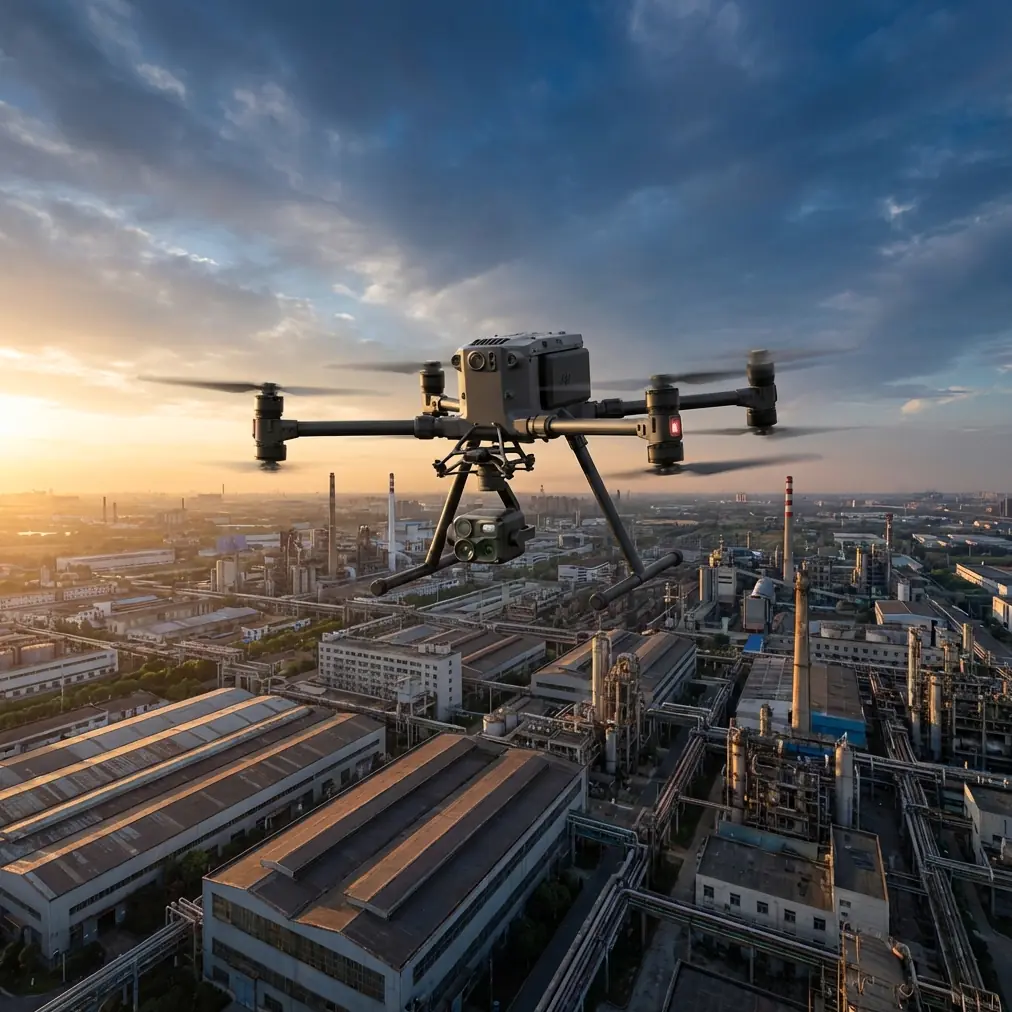
How to Film Fields in Extreme Temperatures With the Matrice 4
META: A field-tested Matrice 4 tutorial for filming farmland in extreme heat or cold, covering battery management, thermal signature control, photogrammetry accuracy, O3 transmission reliability, and secure field workflows.
Extreme temperatures expose every weak point in an aerial workflow. Batteries sag faster, lenses fog, wind layers become less predictable, and data quality can fall apart before the pilot notices. If your job is filming fields with the Matrice 4, the aircraft itself is only part of the equation. The real challenge is keeping image consistency, flight safety, and mapping accuracy intact when the environment is working against you.
I’ve seen this most clearly during agricultural missions that begin before sunrise, when the field surface is cold, irrigation lines hold residual moisture, and the aircraft launches into air that feels stable at ground level but shifts hard a few dozen meters up. Later in the same day, the problem flips. Heat shimmer softens detail, battery temperatures climb, and a mission planned for clean repeatable passes starts drifting from its original assumptions.
That is why extreme-temperature field filming with the Matrice 4 should be treated as a systems exercise, not just a flying task. You are managing power, optics, radio link, sensor behavior, and the timing of your capture windows. Done well, the aircraft becomes a dependable data platform. Done casually, even a technically successful flight can produce footage or survey outputs that are difficult to use.
Start with the mission objective, not the aircraft settings
Before touching exposure or route planning, define what the field video is supposed to show.
That sounds obvious, but it changes everything. If the goal is crop stress detection, your timing and thermal signature interpretation matter more than cinematic motion. If the goal is photogrammetry for field drainage analysis, overlap, altitude discipline, and GCP placement become the backbone of the mission. If the client wants documentation of irrigation coverage or storm damage, the flight path must prioritize repeatability so the same zones can be compared later.
The Matrice 4 is well suited to this kind of work because it can support both visual documentation and technical data collection in one platform. That matters in temperature extremes because you do not want to fly separate missions if conditions are degrading by the hour. In practice, I recommend building the flight around the most temperature-sensitive deliverable first.
Usually, that means thermal work at dawn or near dusk, and photogrammetry when the light is higher but still controlled enough to avoid excessive glare or strong convective disturbance.
The battery rule I use in the field
If you remember one thing for extreme-temperature operations, make it this: do not judge batteries by percentage alone.
A battery showing a healthy state of charge can still behave poorly if its internal temperature is outside its ideal working range. In cold conditions, I never assume the first minute of flight tells the full story. Voltage can dip early under load, then stabilize once the pack warms. In high heat, the opposite problem appears. The battery may launch normally, then accumulate heat over repeated passes until the aircraft starts reducing your operational margin.
My field habit is simple and it has saved missions: rotate hot-swap batteries with a written temperature-and-cycle note, not just a charge note. If I’m filming a large agricultural block, I mark each pack after landing with a quick status line—ambient conditions, whether the mission involved long climbs or hover-heavy work, and whether the pack came down warmer than expected. That pattern matters more over a day than one single battery reading.
Hot-swap batteries are extremely useful on the Matrice 4 class of workflow because they shorten turnaround time, but they also create a trap: crews assume a fast replacement means the next sortie is equivalent to the last one. It often isn’t. A battery inserted into an aircraft after sitting in direct sun is not starting from the same condition as a battery kept in a shaded case. In cold weather, a pack left exposed in a vehicle can produce a very different power profile from one kept warm and staged properly.
My operational tip is to separate packs into three categories during the day: ready, recovering, and reserve. Ready packs are within the working temperature range you want for launch. Recovering packs are recently used and need time to normalize. Reserve packs are held back for contingency, not routine turnover. That simple discipline prevents crews from accidentally cycling the same two batteries too aggressively because they are physically closest at hand.
Extreme cold: where field filming usually goes wrong
Cold missions often fail quietly. The aircraft still flies. The camera still records. What suffers is consistency.
The first issue is condensation. If you move the Matrice 4 from a warm vehicle into freezing air and rush to launch, the camera system can fog subtly enough that the operator notices only after the first pass. The footage looks slightly flat, and fine crop detail loses crispness. On a thermal mission, moisture and temperature transitions can also distort how surfaces present across the field, especially near waterlogged zones or recently irrigated sections.
Give the aircraft and payload time to acclimate before takeoff. Not forever. Just enough that you are not forcing optics and electronics through a sharp thermal shock.
Second, cold air changes how pilots interpret distance and movement. Visibility can be excellent, which creates false confidence, but wind layers above the field may still be stronger than they appear from the ground. This is where a reliable link becomes critical. The Matrice 4 workflow benefits from O3 transmission because stable video and control feedback let the crew detect small problems earlier, particularly when operating long linear passes over open agricultural land. That matters even more if the mission design pushes toward BVLOS procedures under the appropriate regulatory framework and waivers. In those cases, link reliability is no longer a convenience. It is part of risk control.
Third, cold mornings are ideal for certain thermal tasks, but only if you understand what you are actually seeing. A thermal signature is not a diagnosis by itself. Field edges, buried moisture differences, livestock tracks, irrigation equipment, and even compacted soil can all create temperature variation. The Matrice 4 becomes valuable when the operator can pair thermal observations with visual context and repeatable flight geometry. Otherwise, the output may look impressive without being operationally useful.
Extreme heat: the hidden enemy is not always the drone
Heat does not just stress hardware. It changes the subject you are filming.
By late morning, fields begin radiating stored heat unevenly. Surfaces with different moisture content diverge. Air starts moving in shimmering layers. If you are capturing video for agronomic review or progress documentation, fine detail may soften even if your focus is technically correct. Operators sometimes blame the camera when the real culprit is atmospheric distortion above the ground.
This is why I often tell crews to think of heat as an image-quality problem first and a battery problem second. Yes, battery management matters. Yes, aircraft cooling matters. But if the purpose of the mission is analytical, not cinematic, then the smarter move may be to shorten the flight window and shift the schedule rather than pushing through poor thermal conditions.
For photogrammetry, heat introduces another issue: inconsistency in the dataset. If the field is large and the mission stretches across a changing temperature window, the resulting imagery may not match cleanly from one section to another. That does not always break processing, but it can reduce the quality of the final model and make interpretation more difficult.
When accuracy matters, I prefer to combine disciplined route planning with well-placed GCPs. Ground control points give your processing workflow an external reference that helps stabilize the model, especially across broad agricultural sites where visual texture can be repetitive. Repetitive texture is already a challenge in fields. Add heat shimmer and the software has even less to work with. GCPs become less of a best practice and more of a practical necessity.
Thermal and visual capture should support each other
A lot of agricultural drone operators split thermal and RGB thinking into separate buckets. In the field, that is a mistake.
If the Matrice 4 mission is designed properly, thermal and visual data should explain each other. A hot line in the thermal view might indicate stressed irrigation infrastructure, but the visual pass can reveal whether the issue is actual equipment strain, exposed pipe, dry soil, or simply surface reflectivity. A cool patch may suggest moisture retention, but without a visual check you may miss canopy density, shadow effects, or soil disturbance.
That pairing becomes especially important in extreme temperatures because the environment exaggerates anomalies. Some are meaningful. Some are artifacts.
My recommendation is to capture a short verification segment every time you identify a temperature anomaly that could affect a field decision. Do not rely only on the wide-area mission result. Fly a brief, deliberate follow-up pass while conditions are still stable enough to compare both sensor views. That extra minute often prevents hours of second-guessing later.
Secure workflows matter more than many field teams admit
Agricultural missions can involve sensitive operational data: crop condition, irrigation layout, land management patterns, and site boundaries. When teams are filming across multiple properties or for commercial operators, data handling should be treated seriously.
This is one reason secure transmission and storage practices deserve attention. If your Matrice 4 workflow supports AES-256 protection, use it as part of a broader operational policy rather than as a checkbox feature. Encryption is most valuable when paired with disciplined media handling, controlled upload paths, and clear team roles around who moves data off the aircraft and when.
Extreme weather increases the chance of rushed decisions. Crews swap batteries fast, shelter under vehicles, move controllers between operators, and postpone file organization until the end of the day. That is exactly when data mistakes happen. Build a simple routine instead: land, verify critical captures, label storage immediately, and confirm the mission set before the next launch.
If you need a second opinion on field setup or flight planning, I usually recommend sending the mission outline for a quick technical review before mobilization through direct field support chat. That is often faster than trying to redesign the workflow once you are already on-site with weather moving against you.
Build your route around field geometry, not convenience
Many poor agricultural flights come from a simple planning flaw: the route is drawn around what looks easy on the screen rather than what the field requires.
In extreme temperatures, efficiency matters, but not at the expense of clean data. Long rectangular fields tempt crews into aggressive pass lengths that maximize area per battery. That can work in mild conditions. In cold or heat, it often leads to a weak finish on the final third of the sortie, exactly when battery performance and operator concentration start slipping.
I prefer routes that preserve a healthy reserve and leave room for a targeted revisit if conditions shift. If a thermal anomaly appears near the far end of the property, you want enough margin to inspect it without turning the entire flight into a power-management exercise.
For photogrammetry, keep overlap conservative enough to survive environmental variability. For visual filming, avoid excessive yaw changes mid-pattern when the wind is unstable. For thermal capture, maintain consistent altitude and angle whenever possible so comparisons across rows remain meaningful.
These are not glamorous adjustments. They are the difference between footage that looks good in the field and footage that remains useful once reviewed on a larger screen.
A practical preflight checklist for temperature extremes
Before launching the Matrice 4 over fields in severe heat or cold, I use a stripped-down sequence:
Confirm the real purpose of the flight.
Check battery condition by temperature and recent use, not only charge level.
Inspect optics for fogging, dust, and rapid temperature transition effects.
Review radio conditions and line coverage for O3 transmission stability.
Decide whether the first sortie is thermal-first or RGB-first based on the day’s temperature curve.
Verify GCP visibility if the mission includes photogrammetry.
Set a shorter initial mission than the aircraft could theoretically handle.
That final point is often the smartest one. A short first sortie gives you real environmental feedback. You learn how the batteries are behaving, how the air is moving, what the thermal scene looks like, and whether the field surface is producing image artifacts. After that, you can scale intelligently.
What the Matrice 4 does well in this scenario
For field teams working in harsh temperatures, the Matrice 4 stands out when used as a disciplined capture platform rather than a one-button solution. It supports mixed mission types, can fit into secure workflows where AES-256-level protection matters, and benefits from robust transmission performance through O3 in large open environments. Combined with hot-swap battery operations, it allows faster field tempo without forcing unnecessary power-down delays.
But none of those strengths fix poor mission judgment. The aircraft rewards operators who understand temperature effects on energy, optics, and sensor interpretation.
That is the main lesson. Filming fields in extreme temperatures is not about forcing the drone to endure the environment. It is about adapting the mission so the aircraft, batteries, and sensors all stay inside a workable envelope long enough to produce data you can trust.
If you approach the Matrice 4 that way, you do not just come home with footage. You come home with material that can support real agricultural decisions.
Ready for your own Matrice 4? Contact our team for expert consultation.