
Matrice 4 in Mountain Fields: An Expert Pre
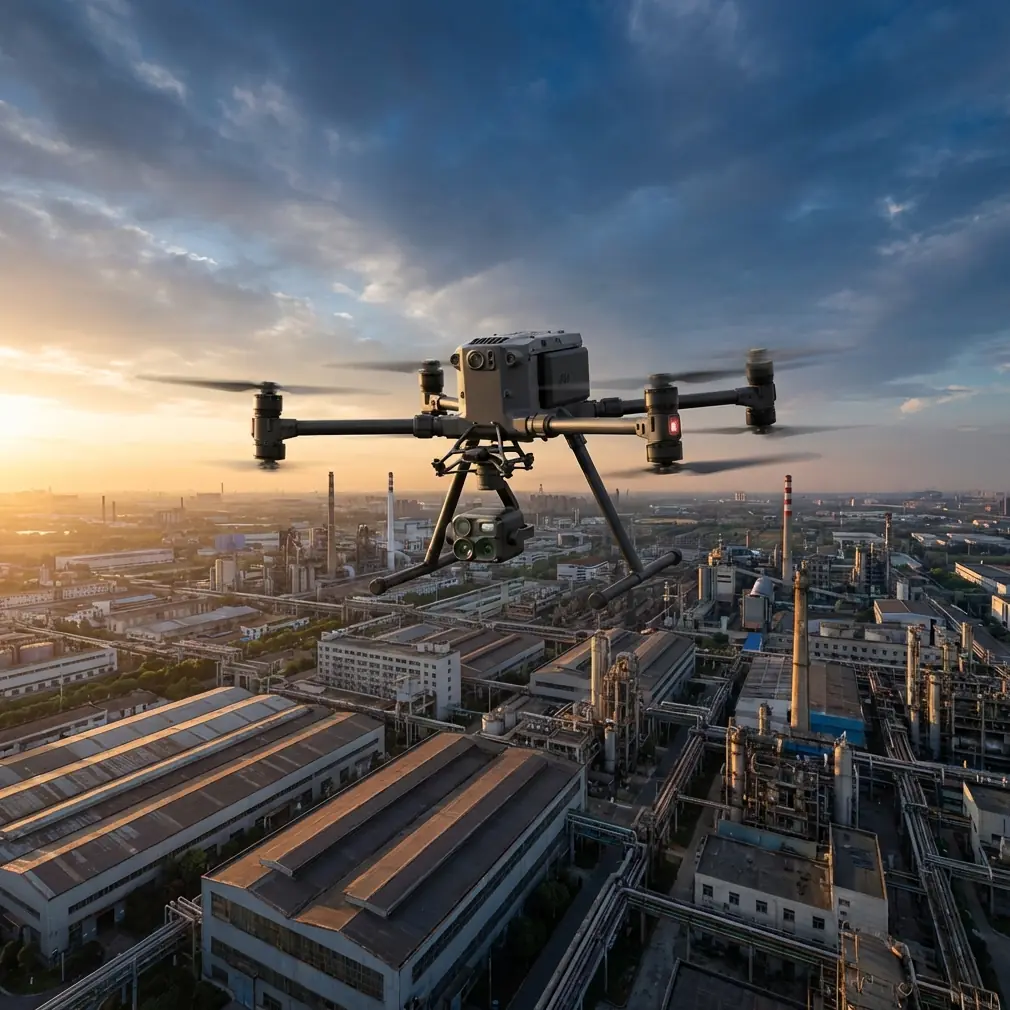
Matrice 4 in Mountain Fields: An Expert Pre-Flight and Capture Workflow
META: Expert tutorial for flying the Matrice 4 over mountain fields, covering pre-flight cleaning, thermal work, photogrammetry, O3 transmission limits, GCP planning, battery strategy, and safer mission execution.
Mountain field work punishes lazy workflows.
You are dealing with slope lift, patchy signal paths, cold-soaked batteries, dust on optics, and light that changes by the minute as clouds cross ridgelines. If you are flying a Matrice 4 in that environment, the aircraft is only half the story. The other half is how you prepare it before the props ever spin.
This guide is built around a practical question: how do you use a Matrice 4 effectively when filming or mapping fields in mountain terrain, without wasting sorties or compromising data quality? I will start with one step that operators routinely underestimate: cleaning the aircraft’s safety and imaging surfaces before flight. In mountain agriculture, that step is not cosmetic. It directly affects obstacle awareness, image consistency, and your confidence when the aircraft is working near uneven terrain.
Why mountain fields expose weak pre-flight habits
A flat farm gives you margin. A mountain field does not.
Terraced plots, tree lines, rock edges, irrigation hardware, and abrupt elevation changes create a flight environment where the aircraft’s sensing and positioning systems have to work harder. Add morning moisture, pollen, or fine dust kicked up from access roads and you have the perfect recipe for degraded sensor performance. A streak on a vision sensor or a smudge on the payload lens can turn a clean mission into a frustrating one.
That matters even more if your job mixes cinematic capture with inspection or mapping. A single sortie may need to collect smooth oblique footage, then transition into a photogrammetry pattern over irregular parcels. The Matrice 4 platform is attractive in this setting because operators often need a compact enterprise workflow with strong transmission, secure data handling, and payload flexibility. But mountain terrain exposes every shortcut in setup.
The cleaning step that actually protects your mission
Before checking route logic or camera profiles, clean the aircraft properly.
I do not mean a quick wipe with whatever cloth is in the case. I mean a deliberate inspection and cleaning pass focused on the surfaces that influence flight safety and image reliability:
- Forward, rear, upward, downward, and lateral sensing windows
- Primary camera lens and any thermal imaging window
- Auxiliary lights or positioning-related surfaces
- Battery contacts and bay edges
- Propeller roots and motor tops where grit can accumulate
Use a clean lens-safe cloth, a blower for loose particles, and avoid pressing debris across optical surfaces. On mountain jobs, this is especially important after hiking to launch points or setting up near gravel tracks where airborne dust is constant.
Why does this matter operationally?
Because a dirty sensing surface can reduce the aircraft’s ability to interpret terrain and obstacles consistently. In mountain fields, that can show up when you are tracking along a contour line, passing near trees at parcel edges, or descending over uneven ground for landing. A dirty camera window creates a second problem: inconsistent image quality. For photogrammetry, haze, smearing, or contrast loss can degrade tie points and reduce reconstruction quality. For thermal work, contamination on the thermal window can interfere with how clearly you read a thermal signature across crop stress zones, irrigation leaks, or animal intrusion paths.
This is the least glamorous part of the mission. It is also one of the cheapest ways to protect it.
Build your launch plan around terrain, not convenience
The most common mistake I see in mountain-field operations is choosing a launch point because it is easy to stand there, not because it supports the mission.
Pick a site with a clear overhead view and the cleanest possible radio path toward the working area. Terrain can block and reflect signal in unpredictable ways, especially when the aircraft drops behind a ridge shoulder or descends into a narrow fold in the field. If your workflow relies on O3 transmission for stable live view and command reliability, your launch geometry matters as much as the system spec sheet.
A strong transmission link helps you in two ways here:
- It supports more confident framing for filming passes where the aircraft moves laterally across uneven terrain.
- It reduces the temptation to drift into poor positioning decisions just to maintain visual feedback.
That does not turn every mountain mission into a BVLOS operation, and it does not remove legal or operational constraints. It means you should respect the limits of the terrain and plan routes that preserve signal quality instead of assuming the aircraft will brute-force through every ridge and stand of trees.
If you are working with a local team or need a second set of eyes on route planning, I often recommend operators share a quick field map and mission goal before arriving on site using this direct planning chat: https://wa.me/example
Battery management is different in the mountains
Battery strategy in cold or elevated terrain should never be an afterthought.
Mountain mornings often begin with lower battery temperatures, and that affects performance and confidence margins. If your Matrice 4 kit supports hot-swap batteries, use that advantage with discipline. Hot-swap capability is not there to encourage rushed turnarounds. It is there to preserve operational continuity while reducing downtime between flights.
Here is the useful way to think about it in field production:
- Keep reserve packs protected from cold exposure before use
- Rotate packs with a written sequence, not memory
- Log which batteries handled mapping runs versus cinematic runs
- Avoid stretching a mission just because the return path looks short on screen
Mapping flights over sloped parcels are deceptive. Ground distance and energy use can change quickly with wind shifts and altitude adjustments. A pack that feels fine over a flat field may feel far less generous when the aircraft is climbing, repositioning, and correcting in broken air.
Hot-swap becomes truly valuable when you are trying to capture a narrow weather window. You can land, replace power quickly, and relaunch while lighting remains consistent across the field set. For photogrammetry, that consistency can protect the quality of your stitched outputs. For visual storytelling, it helps preserve continuity in color and shadow direction across takes.
Filming fields in mountain terrain: the shot logic
When operators say they are “filming fields,” they often mean three different deliverables at once:
- Hero footage for presentation or land documentation
- Inspection footage for agronomy or infrastructure checks
- Structured imagery for mapping and measurement
The Matrice 4 workflow becomes much stronger when you separate those objectives before takeoff.
Start with the hero footage while winds are calm and light is still directional. Ridgeline passes, low-angle reveals over terraces, and contour-following shots work best when the aircraft is not being bumped around by midday turbulence. Then move into structured collection once the creative sequences are complete.
Do not mix these mindsets in the same flight unless the parcel is tiny. Cinematic flying encourages reactive adjustments. Photogrammetry rewards repeatability. Trying to do both simultaneously usually weakens both outputs.
For mountain fields, I recommend planning three image layers if mapping is part of the objective:
- A nadir set for orthomosaic consistency
- A moderate oblique set for edge definition on sloped terrain
- A targeted low-altitude pass over problem zones
That third layer is where the mission becomes more useful than a generic map. If you see erosion lines, irrigation anomalies, animal tracks, or inconsistent plant vigor, fly those areas intentionally. This is also where thermal imagery can add practical value.
When thermal signature matters in agricultural hillsides
Thermal is often misunderstood in field work because operators treat it like a dramatic visual effect instead of a diagnostic layer.
In mountain agriculture, thermal signature is useful because slope, water movement, and uneven sun exposure create micro-conditions that are easy to miss in visible imagery alone. A thermal pass can help isolate irrigation irregularities, drainage problems, or localized stress patterns that do not read clearly from RGB footage.
The key is timing.
If the sun has already heated stone walls, exposed soil, and equipment surfaces unevenly, your thermal image can become harder to interpret. Early windows are often cleaner for comparison. Clean optics matter here again. A contaminated thermal window can soften the distinctions you need to evaluate subtle temperature differences across field sections.
This is not a substitute for agronomic analysis on the ground. It is a faster way to decide where the ground check should happen.
Photogrammetry in steep fields: GCPs are still your friend
Some operators assume modern enterprise drones remove the need for ground control. In mountain fields, that assumption can be expensive.
Photogrammetry across sloped parcels is exactly where GCP placement still earns its keep. Ground control points help anchor your model where elevation shifts, repeated crop patterns, and irregular field geometry can make reconstruction less forgiving. If the end goal includes measurement, drainage planning, or terrain-aware documentation, GCPs improve trust in the output.
A few field-tested principles matter:
- Spread GCPs across elevation changes, not just across the horizontal footprint
- Place points where they remain visible and distinct from crop texture
- Avoid clustering controls near the launch zone out of convenience
- Record them carefully and confirm they appear in imagery before leaving site
The operational significance is simple: mountain terrain can produce attractive models that are still wrong in the places that matter. GCPs reduce that risk.
Security and data handling are part of the workflow
Mountain work often happens on private agricultural land, managed estates, infrastructure corridors, or environmentally sensitive areas. That means image data is not just footage. It may be operationally sensitive.
If your workflow includes AES-256 data protection, use it deliberately and make it part of your standard operating procedure rather than a box you tick once. Enterprise drone work increasingly involves landowner privacy expectations, contractor coordination, and archived inspection records. Secure handling helps protect those relationships.
That matters even more when flights combine visible and thermal capture. Together, those datasets can reveal far more about a site than a simple scenic video ever would. Treat storage, transfer, and access control as part of the mission design.
A practical mission sequence for Matrice 4 in mountain fields
If I were briefing a new crew member for this exact job, I would give them a sequence like this:
- Inspect the aircraft before assembly and remove all dust from sensing windows and camera surfaces.
- Check props, motors, battery contacts, and payload mounting points.
- Confirm the launch site gives the cleanest line toward the field blocks and avoids ridge masking.
- Review wind direction relative to uphill and downhill passes.
- Fly the cinematic set first while light and air are stable.
- Swap batteries methodically and relaunch for the mapping set.
- Use GCP-aware coverage planning for any photogrammetry output that needs measurement integrity.
- Add thermal passes only when environmental conditions support useful interpretation.
- Review sample imagery on site before packing out.
- Clean the aircraft again after the mission so contamination does not harden during transport.
That last step matters more than people think. Mountain dust mixed with moisture can cling to sensor and camera surfaces, and if it sits in the case overnight, the next mission starts at a disadvantage.
The real value of the Matrice 4 here
For mountain-field operations, the Matrice 4 is not interesting because it checks a marketing category. It is interesting because it can support multiple serious tasks in one compact field workflow: visual documentation, thermal inspection, and photogrammetry-informed terrain understanding.
But none of that helps if the mission is built on weak fundamentals.
Clean the aircraft carefully. Respect line-of-sight and terrain effects on O3 transmission. Use hot-swap batteries as a planning tool, not an excuse to rush. Deploy GCPs when output accuracy matters. Treat thermal signature as evidence, not decoration. Secure your data with the same discipline you apply to flight safety.
That is how you get useful results in the mountains. Not by flying more aggressively, but by making the aircraft easier to trust before it ever leaves the ground.
Ready for your own Matrice 4? Contact our team for expert consultation.