
Filming Coastal Fields With Matrice 4: Range
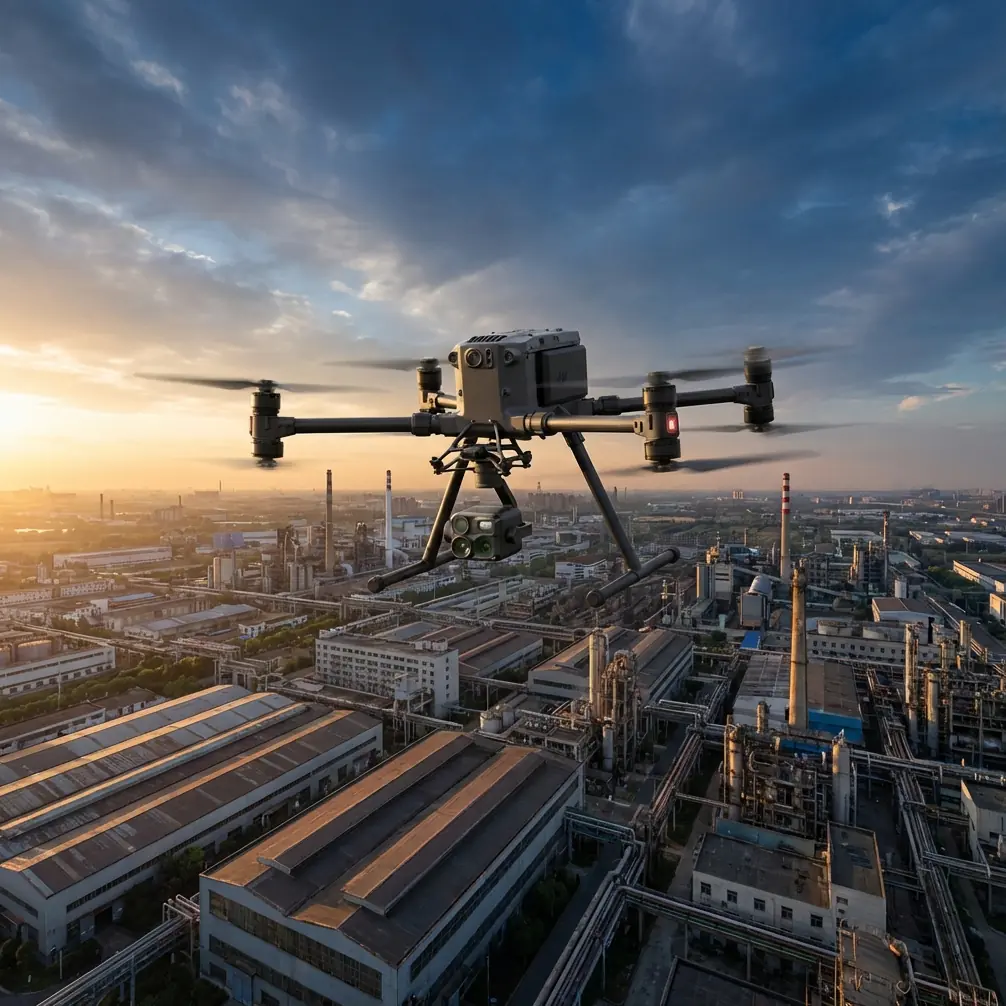
Filming Coastal Fields With Matrice 4: Range, Ground Conditions, and Smarter Mission Setup
META: Practical Matrice 4 field-filming advice for coastal farms, with antenna positioning, transmission reliability, mapping accuracy, and why ground load and maintainability matter in daily operations.
Coastal farmland exposes every weakness in a drone workflow. Salt haze cuts contrast. Wind shifts direction without warning. Wet soil, hard-packed access roads, and reflective water channels can all complicate launch planning. If you’re using a Matrice 4 in this environment, camera specs alone won’t save the mission. What matters is how the aircraft, launch surface, transmission link, and maintenance routine come together under real field conditions.
That is where a more engineering-led approach pays off.
I want to frame this around two reference ideas that are easy to overlook when people talk about drone field filming. The first comes from civil aircraft ground-load methodology: the ACN-PCN system, developed by ICAO, which separates the effect of the aircraft from the capacity of the pavement. The second comes from aircraft structural design practice: maintainability and manufacturability are treated as design priorities, not afterthoughts. Those may sound far removed from a Matrice 4 shooting coastal fields, but they map directly to how you should think about launch point choice, repeatable operations, and downtime control.
Why coastal field filming is not just a camera problem
Inland crop work often lets you get away with rough habits. Coastal operations do not.
Fields near the shoreline tend to include:
- narrow dikes or raised service roads
- soft or waterlogged edges
- stronger electromagnetic clutter around ports, substations, greenhouses, or utility corridors
- long open sightlines that tempt pilots to push range
- variable sun reflection from water and plastic-covered agricultural surfaces
For a Matrice 4 operator, this means three systems have to stay stable at once: imaging, positioning, and command link. If one slips, the footage suffers or the mission slows down.
That is why I advise crews to stop thinking in terms of “Can the drone reach the far field?” and start thinking in terms of “Can the whole operating chain remain predictable from launch to recovery?”
The airport pavement lesson that actually helps drone crews
One of the most useful concepts in the reference material is the ACN-PCN separation model. In simple terms, ACN represents the loading effect of the aircraft, while PCN represents what the pavement can support without restriction. They are measured on the same scale. If the aircraft’s loading effect is below the pavement’s capacity, use is unrestricted.
For large civil aircraft, this calculation uses aircraft weight, landing gear geometry, tire pressure, and subgrade strength category. The source specifically notes four ground-strength classes: high, medium, low, and ultra-low. It also describes how equivalent single wheel load, or ESWL, is used to express the interaction between the gear and the pavement, rather than relying on simplistic assumptions.
Now translate that mindset to Matrice 4 field filming.
You are not landing a transport aircraft on a taxiway, but the operational logic is the same: separate the aircraft’s ground interaction from the launch surface’s actual bearing quality. Coastal farms often look flat and usable, yet the top layer can conceal saturated soil or a crust over soft substrate. A hard visual surface is not always a stable operating surface.
What this means in practice
Before launching Matrice 4 beside coastal fields, classify your site in your own simplified way:
- High support: compact gravel, concrete pad, paved farm road
- Medium support: dry firm dirt, dense short grass
- Low support: moist soil, uneven crop edge, loose sand mix
- Ultra-low support: muddy edge, reclaimed wet ground, soft embankment
That four-level logic mirrors the source material’s ground strength classification and gives crews a quick decision framework. The benefit is operational, not academic. It helps you decide:
- whether you need a landing pad
- whether rotor wash will kick up salt dust or fine sand
- whether the aircraft will face unstable takeoff attitude
- whether repeated battery swaps in one spot will degrade the launch zone over the day
On coastal jobs, I often see excellent mission planning undone by poor launch-point discipline. A Matrice 4 may fly flawlessly, but if you begin from low-support ground, every takeoff and landing adds risk to gimbal cleanliness, downward sensing consistency, and turnaround speed.
Antenna positioning advice for maximum range
Let’s get to the part most operators actually ask about: how to get the strongest possible transmission performance across large coastal fields.
If you are using O3 transmission in broad open farmland, your bottleneck is usually not raw distance. It is angle, polarization mismatch, and signal obstruction created by your own body, vehicle, or field-side structures.
Here is the rule I give crews: point the flat face of the controller antennas toward the aircraft’s operating area, not the tips of the antennas. Many pilots still make the mistake of aiming antenna ends at the drone. That reduces effective link quality.
My field method
- Stand so your body is not blocking the controller from the aircraft corridor.
- Raise the controller to chest or upper-abdomen height, not down at waist level.
- Angle the antenna faces toward the main flight sector.
- If the mission line runs left-to-right across fields, rotate your torso with the aircraft instead of planting your feet and letting your shoulder block one side.
- Keep the launch point slightly elevated if possible. Even a small rise or raised farm road can help maintain a cleaner Fresnel zone over crops and irrigation lines.
- Stay away from parked trucks, corrugated metal sheds, and utility poles during long-range passes.
Why this matters more at the coast
Coastal farmland often looks obstruction-free, but transmission can still degrade because of:
- reflective water surfaces
- greenhouses with metallic framing
- communications infrastructure near shoreline roads
- vehicle-mounted electronics and handheld devices clustered around the pilot
If you are flying BVLOS under lawful local frameworks and approved procedures, controller orientation becomes even more critical. A strong link margin is not just about distance; it preserves video stability for framing decisions and reduces avoidable failsafe behavior.
One small habit that helps: before the first long run, send the Matrice 4 80 to 120 meters out at a modest height and rotate the controller slowly while watching signal bars and live-view smoothness. You can often identify the best holding angle in under 30 seconds.
Thermal and visual work: don’t treat them as separate missions unless you must
Coastal fields can create subtle thermal patterns. Irrigation leaks, drainage blockages, stressed vegetation bands, and moisture-retaining zones may show up in thermal signature data before they are obvious in RGB imagery. If your Matrice 4 payload configuration supports thermal work, build the mission so thermal and visual data support each other rather than collecting them as disconnected outputs.
That matters because visual footage alone can be deceptive near the coast. Low-angle sunlight off wet leaves or plastic mulch can hide patterns. Thermal, on the other hand, may reveal temperature differentials caused by water content or plant stress.
The practical workflow:
- fly visual passes for contextual footage and boundary recognition
- capture thermal passes over suspect irrigation or drainage sections
- compare anomalies against field geometry and sun angle
- revisit targets with lower-altitude oblique shots if needed
For growers and agronomists, this shortens the gap between “something looks odd” and “we know where to inspect.”
Photogrammetry near the shoreline: accuracy starts on the ground
Photogrammetry in coastal fields is often undermined by one of three things: repetitive crop texture, reflective surfaces, or weak control setup. If you need map-grade outputs from Matrice 4, especially for drainage analysis, stand counts, or field boundary updates, use GCPs when precision matters.
Ground control points do two jobs here:
- They stabilize the geometry of the map product.
- They give you a reality check when wind and surface texture reduce tie-point quality.
Coastal scenes can be visually messy in a way software does not always like. Water channels, shiny film, and uniform planting rows may produce uneven feature matching. Good GCP placement can rescue an otherwise mediocre reconstruction.
A simple rule: place GCPs at corners, edge transitions, and one or two interior positions where the field texture changes. Avoid placing them where tidal moisture or wheel traffic may shift them during the day.
Why a maintainability mindset matters for Matrice 4 crews
The second reference source points to something experienced operators already know instinctively: maintainability deserves design attention. The document’s structure includes sections on structural maintainability design, methods to improve maintainability, and the relationship between design and manufacturability. That perspective is valuable for Matrice 4 ownership because coastal work punishes equipment over time.
Salt-laden air is not dramatic in one mission. It is cumulative. Hinges, connectors, exposed surfaces, battery contacts, landing gear interfaces, and cooling paths all age faster if you treat post-flight care casually.
So think like an aviation maintenance planner, not just a pilot.
A coastal post-flight routine that saves trouble
After each day:
- wipe down the aircraft exterior with appropriate non-abrasive materials
- inspect motor areas and folding joints for fine residue
- check battery contacts and seating surfaces
- clean lens filters and thermal windows carefully
- review propellers for nicks from sand or shell fragments
- inspect landing pad edges and storage cases
If your operation depends on hot-swap batteries to maintain tempo across multiple fields, this matters even more. Fast battery cycling only works when battery seating, latch integrity, and contact cleanliness stay consistent. A rushed swap on gritty ground is one of the easiest ways to create intermittent problems that are hard to diagnose later.
Maintainability is also a planning issue. If one field block requires six launches because of access limits, choose a cleaner staging area and drive farther rather than relocating repeatedly onto unstable field edges. Fewer dirty resets often beat theoretically shorter repositioning.
Security and data handling in commercial field work
Agricultural clients increasingly care about where imagery goes and who can access it. If your Matrice 4 workflow includes AES-256 protected data handling or secure transfer practices, explain that in plain language to the client. Not as a buzzword. As risk control.
This is especially relevant when you are capturing:
- crop condition imagery tied to yield planning
- infrastructure details like pumps and storage
- contractor progress records
- recurring seasonal comparative maps
Security credibility is built the same way flight credibility is built: through procedures. Label cards properly. Separate field datasets by client. Verify upload destination. Keep a clean chain from aircraft to archive.
A sample coastal mission setup for Matrice 4
Here is a practical sequence I recommend for filming fields near the coast:
1. Select the launch area first, not the shot first
Use the high/medium/low/ultra-low support logic. Prioritize a compact road shoulder, concrete apron, or firm gravel edge.
2. Test transmission before committing
Face antenna surfaces toward the work sector. Walk a few meters if needed to avoid vehicle shadowing or metal clutter.
3. Fly a short reconnaissance pass
Check wind drift, glare direction, and whether reflective channels are affecting exposure.
4. Capture your establishing footage early
Coastal haze tends to worsen later. Get your broad context shots first.
5. Run the mapping segment with GCP support if accuracy matters
Do not rely on visual uniformity across planted rows to carry the model.
6. Add thermal only where it answers a question
Drainage, uneven moisture, stress bands, and pump-line checks are the usual high-value targets.
7. Recover to the same clean launch point
Consistency speeds battery swaps and reduces contamination.
8. Inspect and clean before packing
This is part of the mission, not an optional extra.
The hidden value of thinking like a bigger-aircraft operator
The ACN-PCN method in the reference material is built on mature engineering logic and elastic mechanics, including established models such as Westergaard for rigid pavements and Boussinesq for flexible loaded surfaces. You do not need to run those calculations for a Matrice 4. But the underlying discipline is worth borrowing.
It teaches a habit: don’t judge a surface casually. Analyze how load and support interact.
The maintainability reference teaches another habit: design your operation so servicing and repeat use are easy, not improvised.
Put those together, and your Matrice 4 field workflow becomes more resilient:
- fewer dirty launches
- more reliable O3 link behavior
- better battery-turn efficiency
- cleaner optics
- more trustworthy photogrammetry
- less unplanned downtime
That is what experienced commercial crews eventually learn. The aircraft matters, but the operating system around it matters just as much.
If you want help refining a coastal field workflow or antenna setup for your specific Matrice 4 configuration, you can message our flight team directly here.
Ready for your own Matrice 4? Contact our team for expert consultation.