
Matrice 4 Filming Tips for Coastal Fields
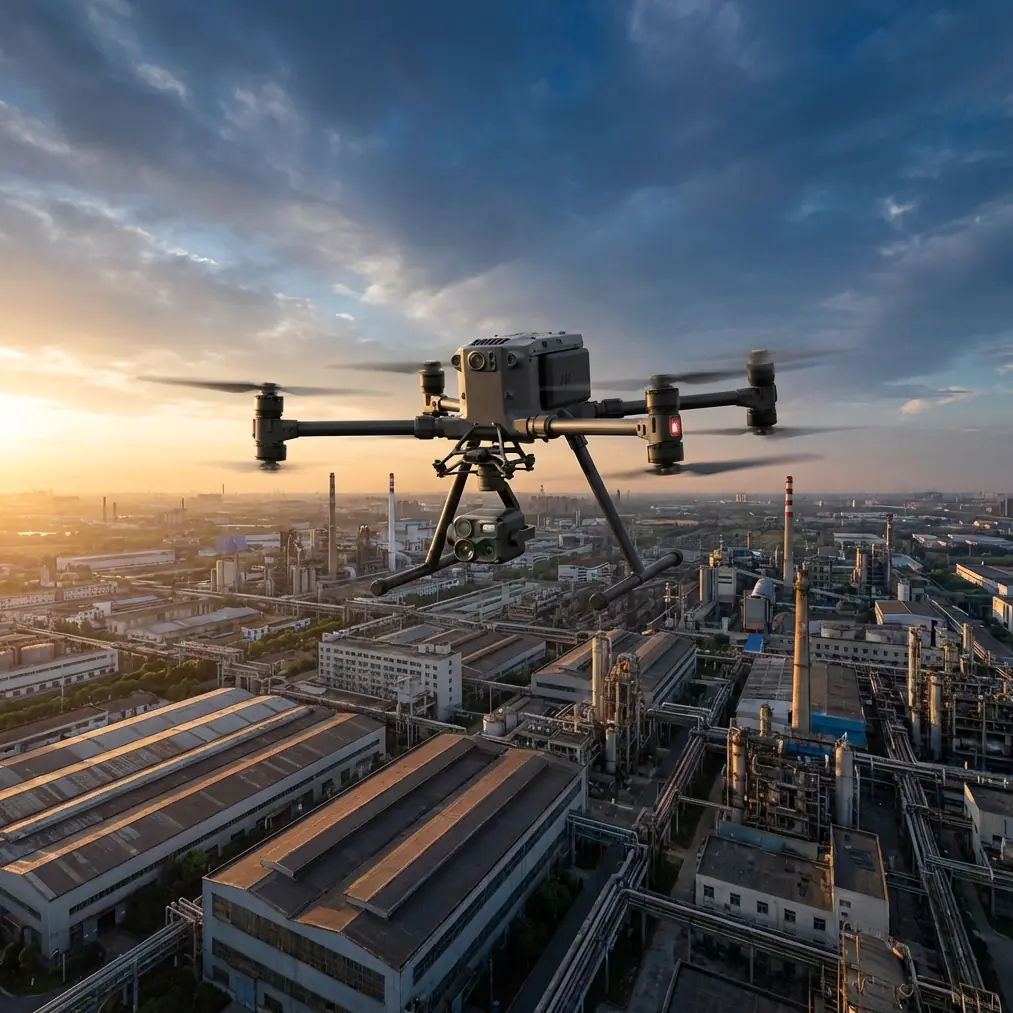
Matrice 4 Filming Tips for Coastal Fields: What Actually Matters in a Busier Low-Altitude Airspace
META: Expert Matrice 4 tutorial for filming coastal fields with safer route planning, thermal workflows, wind-aware operations, and practical insights tied to Chengdu’s latest low-altitude policy shift.
Coastal field filming looks simple until you try to do it well.
You have flat terrain, yes. But you also get salt haze, reflective water, shifting wind, thin access roads, and a surprising amount of airspace friction once you start flying repeatable missions. For Matrice 4 operators, the real challenge is not getting a beautiful clip on one good day. It is building a workflow that can be repeated across seasons, lighting conditions, and administrative constraints.
That is why the most interesting recent signal around Matrice 4 is not a single camera spec. It is the policy direction coming out of Chengdu.
The city has published a two-year low-altitude development roadmap that aims to push its low-altitude industry to 45 billion yuan by the end of 2026, with growth above 20%. More telling for working drone crews, the plan targets more than 100 low-altitude application scenarios, over 150 low-altitude routes, and 3.75 million drone flights by the end of 2026. It also explicitly calls for optimizing drone-suitable trial airspace and continuing the “scan-to-fly” innovation pilot.
If you fly Matrice 4 for agricultural imaging, field documentation, coastal land management, or production content, those numbers matter. They tell you where the market is headed: toward routine operations, denser flight activity, more structured corridors, and less tolerance for improvised field work.
For coastal field filming, that changes how you should use the aircraft.
The Matrice 4 advantage is not just image capture
A lot of buyers still compare drones on the most obvious line items: zoom reach, thermal capability, low-light output, flight time, transmission link. Those matter, especially if your Matrice 4 package includes thermal workflows for irrigation checks, drainage tracing, or temperature contrast at sunrise and dusk.
But in real field operations, the stronger differentiator is how well the aircraft fits a disciplined mission system.
Matrice 4 sits in a category where one aircraft often needs to do three jobs in the same day:
- cinematic field passes for stakeholders
- orthomosaic or photogrammetry capture for agronomy or land records
- thermal signature collection for drainage, water stress, or equipment checks
That mix is where Matrice 4 tends to outperform lighter, more consumer-oriented competitors. A smaller platform may produce attractive footage in calm weather, but once coastal wind picks up and you need repeat passes with stable framing, secure transmission, and precise waypoint execution, the professional platform starts to show its value.
O3 transmission is part of that story. In open agricultural zones, especially near coastal edges where line-of-sight can be visually clear but radio conditions change with humidity and infrastructure, a robust link is not a luxury. It is what keeps your mission consistent when you are trying to capture the same field edge from the same angle over multiple visits. Add AES-256 security into the workflow and the aircraft becomes easier to justify for land managers, infrastructure partners, and enterprise users who care about operational data protection, not just pretty video.
Why Chengdu’s “scan-to-fly” direction should matter to a coastal field operator
At first glance, a Chengdu policy update sounds unrelated to filming fields by the coast. It is not.
The explicit push to optimize drone-suitable airspace and continue “scan-to-fly” pilots points toward a future where launch authorization and mission logging become faster, more digital, and more standardized. For enterprise drone teams, that is operational gold.
Here is the significance: when a region builds systems around structured low-altitude access, your mission planning can become more repeatable. Instead of treating each flight as a custom negotiation with conditions changing every time, you start working within established corridors, approved scenario types, and clearer infrastructure rules.
For Matrice 4 crews filming coastal farmland, that could reduce the hidden cost that rarely appears in brochures: downtime.
Downtime comes from waiting on site, reworking routes, changing takeoff points, and cutting shots because the airspace picture is unclear. A future shaped by more than 150 low-altitude routes and over 100 application scenarios suggests something better—predictable operations at scale. The operators who benefit most will be the ones already flying like professionals now.
That means using Matrice 4 less like a camera with propellers and more like a field data aircraft.
Start with wind, not the shot list
On coastal farmland, the temptation is to launch early, chase golden light, and decide compositions in the air. That works for hobby content. It is wasteful for commercial output.
With Matrice 4, build the mission around the wind map first.
Coastal fields often have a deceptive surface calm near the takeoff zone while the aircraft meets stronger crosswind a little higher up. For broad field reveals, that changes gimbal behavior, ground speed consistency, and battery drain. It also affects photogrammetry overlap if you are trying to produce usable mapping outputs from the same sortie.
My practical rule: design the first leg of the mission into the more demanding wind direction while batteries are freshest, then let the return segments use the easier geometry. If you are collecting both video and survey data, do the structured grid work first and the creative tracking passes second. That way, if conditions deteriorate, you still leave with your essential dataset.
Hot-swap batteries matter here more than many pilots admit. On a coastal site, conditions can shift in short windows. Being able to turn the aircraft quickly for another pass without a long reset helps you exploit those brief periods of stable light and manageable gusting.
Thermal is not just for “inspection”
Many field crews underuse thermal because they think of it as a niche sensor for utilities or roof work. In coastal agriculture, thermal signature can quietly become one of the most informative layers you collect.
Water movement, poor drainage, stressed crop sections, and even subtle differences in soil moisture can create visible thermal contrast at the right time of day. If your Matrice 4 workflow includes thermal capture, use it strategically:
- just after sunrise for moisture differentiation
- late day to compare retained heat across surface conditions
- after irrigation events to identify uneven distribution
- along field boundaries to reveal drainage paths toward ditches or coastal runoff points
This is where the aircraft becomes more than a filming tool. It turns visual content into operational intelligence.
And if the client asks why one platform is preferable to a cheaper alternative, this is the answer. A competitor may get a nice field panorama. Matrice 4 can document the scene, map it, and add thermal context that changes decision-making.
Photogrammetry in fields: accuracy starts before takeoff
Coastal farmland can be unforgiving for mapping. Repeating textures, reflective water, muddy edges, and wind-driven crop movement all reduce clean reconstruction.
If you are using Matrice 4 for photogrammetry, do not rely solely on automated grid confidence. Build in field discipline:
1. Use GCPs where they actually improve the result
Ground control points are most valuable where the site lacks stable visual anchors or where legal/property boundaries matter. In coastal plots, place them away from standing water glare and ensure they are visible above low vegetation. Even a strong drone dataset benefits from reliable terrestrial reference when the deliverable has planning or documentation value.
2. Fly lower than your ego wants
High-altitude capture feels efficient but often weakens edge definition in agricultural scenes. If the mission is about agronomic interpretation or boundary clarity, tighter altitude and stronger overlap are usually worth the extra flight time.
3. Separate the cinematic sortie from the mapping sortie
This saves disappointment. The smooth reveal you want for a presentation is rarely the same flight geometry needed for a quality orthomosaic. Matrice 4 can do both, but not best at the same time in the same pattern.
4. Watch crop motion
Wind moving crops creates reconstruction noise. If your schedule gives you a choice, map during the calmest part of the day and save dynamic video passes for when the field has a bit of movement.
What rotorcraft engineering teaches drone crews, even if they never read a design manual
One of the more overlooked truths in aircraft design is that rotor systems are a balancing act between responsiveness and dynamic stress. A rotorcraft engineering reference notes that hingeless or bearingless rotor systems can deliver control effectiveness and angular rate damping roughly 4 to 5 times that of articulated rotor designs, but that this comes with stronger aerodynamic-structural coupling and potentially higher fatigue loads if not managed correctly.
You do not need to be designing helicopters to understand the lesson.
Operational significance for a Matrice 4 pilot is simple: sharper response is useful, but aggressive inputs in windy conditions are not free. Any aircraft that tracks crisply can also be driven too hard by an impatient operator. In coastal field filming, where you may be correcting for gusts while maintaining composition, smooth control inputs protect both shot quality and airframe longevity.
That matters even more during repeated enterprise missions. The pilot who “flies clean” gets more consistent data, fewer unstable segments, and a healthier maintenance record than the pilot who treats every pass like a manual rescue.
The same engineering reference also highlights how stiffness matching and parameter tuning can manage coupling effects in rotor systems. In drone terms, that is a reminder to respect the platform’s flight tuning, payload configuration, and mission profile as a system. Once you start adding thermal tasks, waypoint repetition, and long field runs, consistency beats improvisation.
Heat management is not only a manned-aircraft problem
Another aerospace reference in the source set deals with heating and cooling loads and cites figures such as 17,000 W for cooling and 8,500 W for heating in an aircraft environmental analysis, with wind speed materially affecting heat transfer. Those are not drone numbers, of course, but the operational principle transfers neatly to coastal field work: thermal environment changes equipment behavior more than many crews expect.
On coastal sites, direct sun on the airframe, warm ground radiation, reflective water, and humid air can all affect battery temperature behavior, sensor readiness, and the pacing of your sorties.
Here is the practical takeaway for Matrice 4 operations:
- keep spare batteries shaded before use
- avoid leaving the aircraft sitting powered-on on hot vehicle tailgates
- plan thermal imaging windows around real surface temperature contrast, not just your arrival time
- factor wind into cooling assumptions; a breezy site can help the aircraft in flight but does not necessarily help batteries baking on the ground
In other words, treat environmental control as part of mission quality, not an afterthought.
A tutorial workflow for filming coastal fields with Matrice 4
If I were setting up a repeatable field mission tomorrow, I would use this structure.
Pre-site planning
Check airspace status, route constraints, local coastal wind trends, tide-adjacent access conditions, and sun angle. If the job involves recurring work, build named mission templates rather than planning from scratch each time.
Arrival and ground read
Walk the site before launch. Look for irrigation channels, wet ground, power lines, reflective water bands, and livestock or machinery movement. Confirm your recovery zone in case wind shifts.
First flight: data priority
Run your photogrammetry or documentation sortie first. Use waypoint precision. If the client may later ask for measurement, compliance, or drainage review, this is the flight that protects the project.
Second flight: thermal pass
Capture thermal signature while contrast still supports interpretation. Focus on edges, pooling zones, and crop irregularities. Narrate observations into your field notes immediately so you do not lose context later.
Third flight: production visuals
Now shoot the hero footage. Low obliques, boundary reveals, push-ins from access roads, and vertical-to-forward transitions all work well over fields. Because the core data is already secured, you can be more selective and creative.
Post-flight handling
Tag datasets by mission type. Keep visual, thermal, and mapping outputs separate until processing. If the operation is part of a repeat program, compare against prior orthomosaics and thermal sets rather than judging each flight in isolation.
If you are building a coastal field workflow and want a second opinion on route design, payload setup, or repeat mission planning, you can message a Matrice 4 specialist here.
The bigger picture for Matrice 4 operators
The Chengdu roadmap is a local policy story, but it points to a broader truth. Commercial drone work is moving toward scale, structure, and accountability. More flights. More routes. More defined applications. Less room for casual operating habits.
That is good news for serious Matrice 4 users.
An aircraft like this earns its keep when the mission needs to be done repeatedly, securely, and with outputs that support real decisions. Coastal field filming is a perfect example. The client may come asking for visuals, but the mission often expands into land records, crop observation, drainage analysis, stakeholder reporting, and seasonal comparison. One well-run Matrice 4 workflow can support all of it.
The pilots who stand out will not be the ones with the flashiest one-off clips. They will be the ones who understand airspace normalization, thermal timing, mapping discipline, secure transmission, and environmental control as parts of the same job.
That is where Matrice 4 excels. Not in isolation, but in the field, under pressure, with repeatability.
Ready for your own Matrice 4? Contact our team for expert consultation.