
Matrice 4 Field Report: Filming Agricultural Fields
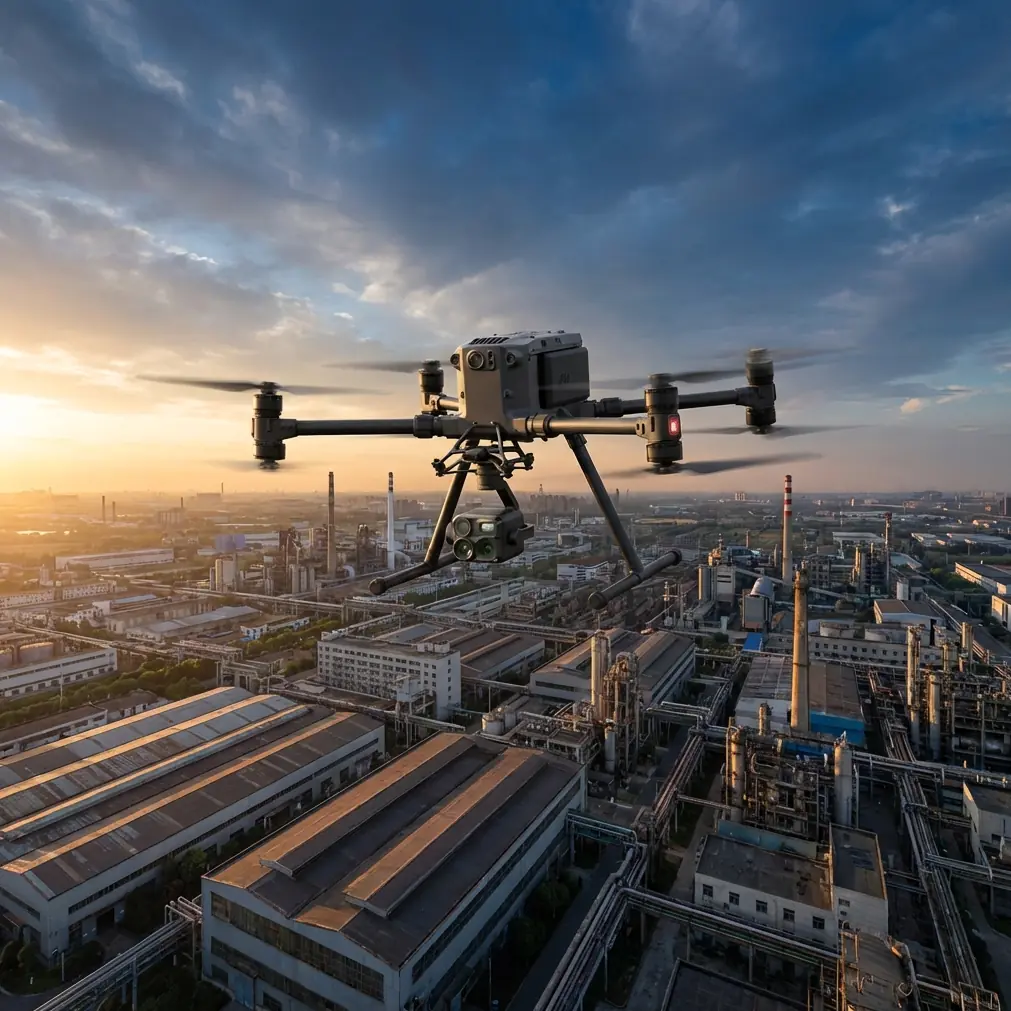
Matrice 4 Field Report: Filming Agricultural Fields in Extreme Temperatures Without Losing Detail
META: Expert field report on using Matrice 4 for filming fields in extreme temperatures, including flight altitude strategy, thermal interpretation, battery planning, transmission reliability, and mapping-grade capture discipline.
Extreme-temperature field work exposes the gap between a drone that simply flies and a drone system that can produce dependable footage and usable data. That gap matters most over agricultural land, where the visual story changes fast: crop stress appears before the human eye catches it, irrigation defects show up unevenly, and heat shimmer can wreck image clarity long before a pilot notices the footage softening.
For Matrice 4 operators filming fields in hot afternoons, cold mornings, or high-contrast shoulder seasons, the real question is not whether the aircraft can get airborne. It is whether the mission can hold image quality, transmission stability, and repeatability long enough to create footage that agronomists, farm managers, and media teams can trust.
I approach this as a field report, not a brochure. The useful lessons come from understanding how materials, thermal cycling, structural fatigue, and hardware tolerances affect work in the air. Oddly enough, two old aerospace reference points help explain why this matters for a modern drone mission.
One source cites low-cycle fatigue performance for welded 30CrMnSiA steel joints at 0.17 Hz, while another references mechanical strength ranges reaching roughly 1765 to 1960 MPa in high-strength alloy steel contexts. A separate standards document lists component dimensions down to 0.006 scale increments. These are not Matrice 4 specifications, and they should not be misread as such. Their operational value is more basic and more relevant: in temperature extremes, structural behavior, joint reliability, and tight tolerance management stop being academic topics. They become flight-planning topics.
That is exactly how you should think about Matrice 4 in the field.
Why extreme-temperature filming is harder over farmland than most pilots expect
Agricultural sites create a messy thermal environment. Bare soil, standing water, metal irrigation hardware, greenhouse film, crop canopy, and tractor paths all radiate differently. If you are using thermal signature cues to identify water stress, drainage failure, or uneven germination, those contrasts can help. They can also mislead.
A field that looks uniform from 30 meters can fragment into false hotspots at 10 meters because reflected heat from irrigation hardware starts dominating the frame. Go too high and you gain consistency but lose the spatial detail needed to isolate rows, edge effects, or disease patterns.
That is why altitude is the first serious decision in extreme-temperature field filming.
Optimal flight altitude insight: start at 35 to 45 meters, then adjust by thermal contrast, not by habit
For Matrice 4 field filming in extreme temperatures, my preferred starting band is 35 to 45 meters AGL for thermal and visible acquisition over broad crop blocks. This range usually gives the best compromise between three competing demands:
Thermal readability
You are high enough to reduce misleading micro-hotspots from individual pipes, posts, or exposed hardware.Image stability and composition
Lower-altitude heat shimmer is often worse over sun-baked soil, especially around noon. A little more height can clean up apparent softness.Operational efficiency
You can maintain cleaner passes for photogrammetry-style coverage without constantly overcorrecting for row-level obstacles or elevation fluctuations.
That does not mean 35 to 45 meters is always “the answer.” It is the decision point I trust as a baseline.
If the goal is cinematic field coverage for a marketing video or progress documentation, I often descend toward 25 to 30 meters during cooler light windows to add texture and crop movement. If the goal is analytical imaging—especially when comparing thermal signature across irrigation zones—I go higher only when necessary, because every extra meter reduces the practical value of subtle canopy differences.
The mistake I see most often is pilots choosing altitude based on what looks dramatic on screen rather than what preserves interpretability. In farm work, interpretability wins.
Thermal signature discipline matters more than thermal imagery itself
A Matrice 4 mission in extreme temperatures should never treat thermal as a “special effect.” It is a measurement layer with visual form.
That distinction changes your workflow.
A hot field at midday may show dramatic thermal separation, but not all separation is agronomically useful. Plant stress, soil moisture deficiency, exposed ground, wheel tracks, and reflective infrastructure can produce overlapping patterns. Without a repeatable flight height, time window, and camera angle, you may end up comparing noise instead of field conditions.
This is where mapping habits improve filming results. Even when the deliverable is video, borrow discipline from photogrammetry:
- keep altitude constant across each block
- avoid aggressive yaw changes during thermal runs
- maintain clean parallel lines over the field
- log environmental conditions
- repeat passes from matching headings when comparing multiple dates
If you are using GCP workflows elsewhere on the farm, think the same way here. Ground control points are mainly discussed in mapping, but the underlying principle is repeatability. Extreme-temperature filming becomes far more valuable when each mission can be compared to the last one with confidence.
What the aerospace material references actually teach us about drone work
The reference material includes fatigue, weld treatment, and high-strength steel data from aircraft design literature. On paper, that seems far removed from crop filming. In practice, the lesson is direct.
The cited 0.17 Hz low-cycle fatigue test context is a reminder that repeated loading events matter, especially where joints, repairs, or stress concentrations exist. Drone aircraft are not those exact steel assemblies, but field operations in extreme temperatures do create repeated stress cycles: takeoff, climb, hover, braking, descent, pack swaps, vehicle-to-field temperature transitions, and repeated missions in a single day.
The cited 1765–1960 MPa strength range from alloy steel contexts points to something else: aerospace systems are built around the reality that material performance changes with process control and treatment. For drone operators, the operational translation is simple—do not assume yesterday’s aircraft behavior is today’s aircraft behavior if the machine sat in a freezing truck before dawn or baked in a field case at noon.
The standards reference with fine dimensional increments such as 0.006 reinforces tolerance thinking. Small deviations add up. In the field, that means:
- inspect prop interfaces and folding elements carefully
- watch for fit changes after repeated hot-cold cycles
- check gimbal behavior before the first mission, not after the first anomaly
- review landing gear contact points and payload mounting security
- keep calibration discipline tight when ambient temperature swings are severe
None of that is glamorous. All of it affects whether your Matrice 4 footage is clean, level, and repeatable.
Battery strategy in extreme temperatures: plan around mission continuity, not nominal endurance
Extreme-temperature field work punishes casual battery planning. Heat increases the chance of performance sag under sustained load. Cold reduces available output until packs warm into a healthier operating window. Either condition can distort how much useful mission time you really have.
This is where hot-swap batteries become more than a convenience. They preserve mission rhythm. Over large agricultural blocks, continuity matters because lighting, canopy reflectance, and thermal contrast change minute by minute. If you have to fully shut down, cool down, relaunch, and rebuild the route, your “same field” may no longer be the same scene.
On summer days, I avoid stacking back-to-back aggressive runs with battery sets left sitting in direct sun. In winter or near-freezing dawn operations, I do the opposite: I keep packs managed so they do not enter the aircraft cold-soaked and underperform on the first climb.
The practical takeaway is that endurance figures mean less than thermal battery behavior. Build your field plan around stable capture windows, not around brochure-style flight times.
O3 transmission and AES-256 matter most when the farm is large enough to punish weak links
Readers often treat O3 transmission and AES-256 as spec-sheet extras. They are not, especially on agricultural sites.
Large farms create long sightlines, reflective surfaces, patchy terrain, and sparse launch options. Reliable transmission becomes the foundation for safe framing and consistent data capture. If you are filming along irrigation corridors, drainage edges, or irregular parcel lines, any instability in the link forces slower flying, more hover correction, and greater operator fatigue.
O3-class transmission stability matters operationally because it protects the mission from becoming fragmented. You keep cleaner track lines. You spend less time re-flying sections. You make fewer framing mistakes when the aircraft transitions over thermally active ground.
AES-256 matters for a different reason: farms increasingly treat imagery as operational intelligence. Crop health, infrastructure condition, planting progress, and site logistics are commercially sensitive. Secure transmission and handling are not just IT concerns. They affect whether growers and managers are comfortable approving recurring drone work at all.
If you are coordinating repeated capture over large properties and want a practical workflow suggestion, I usually recommend setting expectations with the client upfront and sharing mission coordination details through a direct briefing channel like this field support line. It shortens the feedback loop before the aircraft ever leaves the ground.
BVLOS conversations should begin with field geometry, not ambition
A lot of operators mention BVLOS too early, as if distance itself is the goal. In agricultural filming, the better question is whether the field geometry and operating framework justify expanding the mission envelope.
Long, uninterrupted crop blocks can make beyond visual line of sight workflows attractive, particularly for repeated inspection, progress documentation, and seasonal mapping. But extreme temperatures complicate that discussion. Heat shimmer, changing winds over open ground, and battery behavior can all erode the margin you thought you had.
So even where BVLOS capability or planning is relevant, I suggest first proving your mission architecture inside shorter, repeatable sectors:
- same launch point
- same altitude band
- same heading logic
- same battery reserve threshold
- same thermal timing window
Once the aircraft, sensor results, and environmental behavior are consistent, then scale.
Visible footage and photogrammetry should support each other
Some Matrice 4 operators separate cinematic filming from survey work too sharply. On agricultural sites, that usually leaves value on the table.
A well-flown visible-light pass can do three jobs at once:
- produce client-facing footage
- document canopy condition for later review
- provide frames useful for photogrammetry if overlap discipline is sufficient
This does not mean every video mission should pretend to be a survey. It means the aircraft should be flown with enough structure that your footage remains useful beyond the first edit.
In extreme temperatures, this matters because field conditions can change quickly. If a heat event stresses a block for only a few days, footage captured with mapping discipline may later become the best comparative record you have.
My recommended Matrice 4 field workflow for extreme-temperature agricultural filming
Here is the workflow I trust most:
1. Fly during a purpose-built temperature window
Do not just avoid the middle of the day automatically. Match the timing to your goal.
- For thermal stress separation, a warmer window may help.
- For cleaner visible footage and reduced shimmer, early or late sessions often win.
2. Start at 35 to 45 meters AGL
Use this as your decision baseline. Adjust only after reviewing what the field itself is doing thermally and visually.
3. Run one clean reference pass first
Before you chase hero angles, record a disciplined straight-line pass. It becomes your comparison layer if later clips become harder to interpret.
4. Watch the field, not just the screen
Heat shimmer, gust channels, irrigation spray, and reflective surfaces often reveal themselves in the environment before they appear as obvious image problems.
5. Use battery swaps to preserve consistency
Hot-swap quickly, but do not rush pre-launch checks. Continuity is valuable only if the aircraft relaunches in a known-good state.
6. Log your altitude, heading, and time of capture
This is basic fieldcraft. It turns one useful mission into a repeatable operational standard.
Final assessment
Matrice 4 is at its best over farmland when the operator treats temperature as a mission variable, not a background condition. That mindset changes everything. Flight altitude stops being aesthetic guesswork. Thermal imagery stops being spectacle. Transmission security, battery handling, and route repeatability become part of image quality.
The old aircraft handbook references supplied here may seem obscure, but they reinforce the right instinct. Repeated stress matters. Heat treatment and material behavior matter. Tight tolerances matter. In extreme-temperature field filming, those principles show up as cleaner flights, fewer anomalies, and footage that can stand up to scrutiny after the drone lands.
For most agricultural filming missions in these conditions, 35 to 45 meters AGL is the smartest starting altitude on Matrice 4. It is high enough to calm the noise and low enough to keep the field talking.
Ready for your own Matrice 4? Contact our team for expert consultation.